Jewelry Craftsmanship Gemstone Setting Methods Explained: Prong, Bezel, Pave, and More
Jewelry Craftsmanship Gemstone Setting Methods Explained: Prong, Bezel, Pave, and More
Understanding jewelry craftsmanship gemstone setting starts with one simple fact. A setting does more than hold a stone. It defines security, light return, wear resistance, serviceability, and production cost.
That matters in commercial sourcing. A visually impressive ring or pendant can still fail technical review if the setting method does not match the stone type, expected use, or manufacturing tolerance.
In practical terms, jewelry craftsmanship gemstone setting affects four decision areas. These are structural integrity, aesthetic outcome, maintenance burden, and repeatable production quality.
This guide explains the major setting styles, including prong, bezel, pavé, channel, and related methods. It also outlines where each method performs well, where it introduces risk, and what should be checked during evaluation.
Why Setting Choice Matters in Jewelry Craftsmanship Gemstone Setting
A gemstone setting is a mechanical interface between metal and stone. Its quality depends on precise seat cutting, proper pressure distribution, and controlled finishing.
A poor setting can chip girdles, loosen stones, distort alignment, or trap dirt. Even when defects are subtle, they shorten product life and increase after-sales service.
From a sourcing perspective, jewelry craftsmanship gemstone setting is also a process capability indicator. Clean settings usually reflect stronger bench skills, better tooling, and tighter process control.
More importantly, each setting style creates a different trade-off. There is no universal best option. The right method depends on stone hardness, cut shape, product category, and end-use conditions.
Prong Setting: Maximum Light, Higher Exposure
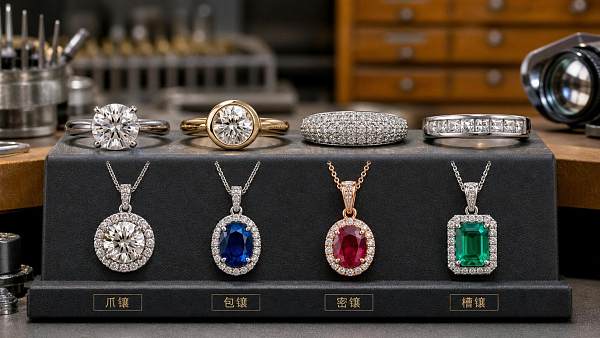
Prong settings are among the most recognized forms of jewelry craftsmanship gemstone setting. Metal claws rise from the mounting and grip the gemstone at selected contact points.
Typical layouts use four, six, or more prongs. The design keeps much of the stone exposed, which supports strong light entry and visual brilliance.
Technical Advantages
- High visibility of the gemstone and strong sparkle performance.
- Good fit for round, oval, princess, and many center-stone formats.
- Easier cleaning access than enclosed settings.
- Efficient for premium presentation where light performance is a priority.
Technical Risks
- Prongs can snag, bend, or wear down over time.
- Stone edges remain more exposed to impact.
- Uneven prong pressure can create tilt or localized stress.
- Poor finishing leaves sharp tips or inconsistent symmetry.
When reviewing prong work, check prong thickness, tip finish, seat accuracy, and stone levelness. On cornered stones, pay special attention to vulnerable points and V-prong execution.
For technical evaluation, prong settings often suit statement pieces and center stones. They are less forgiving in high-contact applications unless maintenance cycles are well understood.
Bezel Setting: Strong Protection and Clean Geometry
Bezel setting surrounds the gemstone with a continuous or partial metal rim. In jewelry craftsmanship gemstone setting, this method is widely valued for protection and controlled appearance.
The metal edge is pushed over the stone’s girdle, locking it into place. Full bezels offer maximum coverage, while partial bezels leave some sides open for a lighter look.
Why Buyers Often Favor Bezel Work
- Excellent stone protection against knocks and abrasion.
- Smooth profile for active wear and hospitality-facing environments.
- Strong retention for softer or more delicate gemstones.
- Modern, architectural appearance with clear edge definition.
Common Limitations
- Less light entry than prong settings in some designs.
- Visible metal may reduce perceived stone size.
- Poorly executed bezels can look heavy or uneven.
- Tight rims may complicate resizing or repair work.
The evaluation focus here is consistency. Look for even wall thickness, smooth burnishing, flush contact, and no visible gaps between metal and stone.
Bezel-based jewelry craftsmanship gemstone setting is especially relevant for commercial lines requiring durability, lower snag risk, and reliable daily wear performance.
Pavé Setting: Surface Brilliance with Tight Tolerances
Pavé setting uses many small stones placed closely together. Tiny beads or shared metal points hold them in position, creating a near-continuous field of sparkle.
This form of jewelry craftsmanship gemstone setting is visually powerful, but it is also precision-sensitive. Small errors become obvious when repeated across a surface.
Performance Strengths
- High sparkle density and luxury visual effect.
- Works well for halo rings, bands, and decorative surfaces.
- Can elevate perceived value without one large center stone.
Operational Concerns
- More vulnerable to stone loss if beads are undersized or uneven.
- Cleaning and repair can be labor-intensive.
- Casting porosity or finishing errors are easier to spot.
- Consistency across rows is critical for premium acceptance.
In real sourcing work, pavé quality is often judged by alignment, bead uniformity, seat depth, brightness balance, and how cleanly the surface transitions at edges.
This means pavé should not be assessed only by sparkle. It should be reviewed as a micro-engineering process with high labor sensitivity and elevated maintenance implications.
Channel, Tension, and Other Common Setting Methods
Beyond the major styles, several other methods matter in jewelry craftsmanship gemstone setting. Each serves a distinct design and manufacturing purpose.
Channel Setting
Channel setting places stones between two metal walls. The stones usually sit in a row, with no prongs visible from above.
It offers a clean, protected surface and is widely used for bands. Watch for wall symmetry, stone spacing, and edge chipping during setting.
Tension-Style Setting
Tension-style designs create the impression that the stone is floating. In practice, the metal applies calibrated pressure to secure the stone.
This method demands exact engineering and strong material control. It is visually striking, but tolerance failure can have severe consequences.
Flush or Gypsy Setting
Flush setting sinks the stone into the metal surface. The top remains smooth, making it durable and suitable for wearable, low-profile products.
The trade-off is reduced light exposure. It works best when security and sleek form are more important than maximum brilliance.
How to Evaluate Jewelry Craftsmanship Gemstone Setting Quality
A useful review framework combines visual inspection, dimensional control, and wear-risk analysis. This keeps assessment grounded in both design intent and long-term performance.
- Check stone seating. The gemstone should sit level, centered, and proportionate to the mounting.
- Inspect metal contact points. Prongs, beads, rims, or walls must show even pressure and finished edges.
- Review symmetry under magnification. Inconsistent spacing usually signals weak process control.
- Test retention carefully. There should be no movement, rattling, or visible looseness.
- Assess serviceability. Repairs, cleaning, and resizing should be realistic for the product category.
- Match the method to the stone. Hardness, cleavage, cut, and girdle thickness all matter.
For supplier screening, request close-up process samples across multiple production runs. Consistency across batches says more than one polished hero piece.
Setting Selection by Application and Risk Profile
Recent buying patterns show a clearer split between showpiece design and long-wear reliability. That shift makes application-based selection more important than style preference alone.
In business terms, this also affects return rates, warranty claims, and perceived product value. A technically appropriate setting usually protects both brand image and operating margin.
Final Takeaways for Better Sourcing Decisions
The most reliable jewelry craftsmanship gemstone setting is not always the brightest one, and the most dramatic design is not always the smartest commercial choice.
Prong settings favor light and visibility. Bezel settings favor protection. Pavé favors surface impact. Channel and flush methods support cleaner, more controlled wear profiles.
The stronger signal is fit between method, material, and use case. That is where jewelry craftsmanship gemstone setting shifts from decoration into technical value.
For sourcing teams, the practical next step is simple. Compare setting style against stone properties, wear scenario, repair expectations, and batch consistency before approving production.
That approach leads to better quality control, fewer field issues, and more defensible supplier decisions across premium jewelry programs.
Search News
Hot Articles
- Fashion & Gem JewelryThermal Diamond Testers: How They Work and When They Can Misidentify StonesOct 07, 2026
- Commercial KitchenWhat Is Driving Demand for Commercial Hospitality Projects Across the GCC?Oct 06, 2026
- Hotel Room AmenitiesHow to Select Hotel Hair Dryers That Balance Guest Safety, Durability, and CostOct 05, 2026
Popular Tags
Need ExpertConsultation?
Connect with our specialized leisureengineering team for procurementstrategies.
Recommended News
 Oct 07, 2026Thermal Diamond Testers: How They Work and When They Can Misidentify StonesThermal diamond tester guide: learn how it works, spot false positives from moissanite, and choose reliable verification methods for jewelry trade and retail.● Luxury Retail Analyst
 Oct 02, 2026Diamond Tester Wholesale: How to Vet Accuracy, Calibration, and MOQ Before OrderingDiamond tester wholesale guide: verify accuracy, calibration records, supplier quality controls, and MOQ terms before ordering. Source reliable testers with confidence.● Luxury Retail Analyst
 Sep 09, 2026Wholesale Coral Earrings: How Buyers Can Assess Quality, Treatments, and Supply RiskCoral jewelry earrings wholesale guide for buyers: assess quality, treatments, secure settings, documentation, and supply risks before ordering.● Luxury Retail Analyst
 Sep 01, 2026How to Choose a Jewelry Laser Engraving Machine Manufacturer for Custom ProductionChoose a jewelry laser engraving machine manufacturer with proven sample testing, precision fixtures, workflow-ready software, and reliable support for custom production.● Luxury Retail Analyst
 Aug 27, 2026Evaluating Luxury Retail Accessories Suppliers: Quality, Lead Times, and Brand FitLuxury retail accessories supplier selection made clearer: assess quality, lead times, compliance, costs, and brand fit to protect premium launches and margins.● Luxury Retail Analyst
 Jul 29, 2026Fine Jewelry Price Guide: What Affects Cost and How to Judge Real ValueFine jewelry price guide for buyers: learn what drives cost in metals, gemstones, craftsmanship, certification, and branding so you can judge real value, reduce sourcing risk, and buy with confidence.● Luxury Retail Analyst
 Jul 14, 2026What to Ask an Enamel Jewelry Manufacturer Before Sampling and Mass ProductionEnamel jewelry manufacturer selection starts with the right questions. Learn what to ask about materials, color matching, MOQ, QC, compliance, and lead times before sampling and mass production.● Luxury Retail Analyst
 Jul 12, 2026Surgical Steel Belly Rings vs Titanium: Material Differences, Safety, and CostSurgical steel belly rings vs titanium: compare safety, nickel exposure, comfort, durability, and cost to choose the best option for sensitive skin or budget-friendly style.● Luxury Retail Analyst
 Jul 12, 2026Natural Coral Jewelry Guide: How to Identify Real Coral, Treatments, and QualityNatural coral jewelry guide covering how to identify real coral, spot treatments, assess quality, and buy with confidence. Learn the key signs before you choose.● Luxury Retail Analyst
 Jul 11, 2026Braided Leather Bracelets OEM: Material, Clasp, and MOQ Factors Before SamplingBraided leather bracelets OEM guide covering material grades, clasp options, and MOQ factors before sampling. Learn how to reduce sourcing risk, control cost, and choose the right supplier.● Luxury Retail Analyst
 Jul 09, 2026Jewelry Craftsmanship Gemstone Setting Methods Explained: Prong, Bezel, Pave, and MoreJewelry craftsmanship gemstone setting explained clearly: compare prong, bezel, pavé, channel, and more to choose secure, beautiful, and commercially smart jewelry designs.● Luxury Retail Analyst
 Jul 06, 2026Photo Locket Necklace Manufacturer Selection Guide: Materials, MOQ, and Custom OptionsPhoto locket necklace manufacturer selection guide covering materials, MOQ, custom options, compliance, and quality checks to help buyers source smarter and build stronger jewelry lines.● Luxury Retail Analyst
 Jul 05, 2026What to Check When Comparing a Sterling Silver Clasp ManufacturerChoosing a sterling silver clasp manufacturer? Learn what to check first: 925 silver claims, finish quality, testing, compliance, lead times, and hidden sourcing costs.● Luxury Retail Analyst
 Jul 02, 2026Jewelry Craftsmanship Techniques Explained: Casting, Stone Setting, Engraving, and PolishingJewelry craftsmanship techniques explained: discover how casting, stone setting, engraving, and polishing shape quality, durability, and sourcing confidence.● Luxury Retail Analyst
 Jul 01, 2026Lost Wax Casting Machines Explained: Types, Capacity, and Metal CompatibilityLost wax casting machines explained: compare types, real capacity, and metal compatibility to choose the right system for precision casting, higher quality, and smarter sourcing.● Luxury Retail Analyst
 Jun 29, 2026How to Evaluate a Luxury Accessories Online Store Before You BuyLuxury accessories online store buying guide: learn how to verify authenticity, compare policies, check reviews, and avoid costly mistakes before you place an order.● Luxury Retail Analyst
 Jun 22, 2026Matching Couple Rings: Popular Materials, Fit Differences, and How to ChooseMatching couple rings guide: compare popular materials, fit differences, comfort, durability, and resizing options to choose a stylish pair that truly lasts.● Luxury Retail Analyst
 Jun 19, 2026How to Build a Fashion Accessories Catalog That Improves Product Discovery and SalesFashion accessories catalog strategies that improve product discovery, filtering, and conversions. Learn how to structure pages, categories, and data to drive more qualified sales.● Luxury Retail Analyst
 Jun 19, 2026How to Choose Luxury Accessories for Women by Material, Style, and Price PointLuxury accessories for women: learn how to choose the right pieces by material, style, and price point for better value, timeless appeal, and smarter buying decisions.● Luxury Retail Analyst
 Jun 18, 2026Stainless Steel Rings Bulk: 304 vs 316L, Finishes, and Custom Order FactorsStainless steel rings bulk guide: compare 304 vs 316L, explore finish options, and learn key custom order factors to reduce sourcing risk and improve product value.● Luxury Retail Analyst
 Jun 18, 2026Body Piercing Jewelry Bulk Buying Guide: Materials, Sizes, and MOQ QuestionsBody piercing jewelry bulk buying guide covering safe materials, size checks, MOQ strategy, supplier screening, and compliance tips to reduce risk and source with confidence.● Luxury Retail Analyst
 Jun 18, 2026How to Evaluate a Luxury Jewelry Exporter for Quality, Compliance, and DeliveryLuxury jewelry exporter evaluation starts with more than design. Learn how to verify quality, compliance, and delivery control to source premium jewelry with less risk.● Luxury Retail Analyst
 Jun 17, 2026Iced Out Watches Wholesale: How to Compare MOQ, Stone Quality, and MarginsIced out watches wholesale guide: compare MOQ, stone quality, and real margins to choose reliable suppliers, reduce risk, and grow resale profits with smarter sourcing.● Luxury Retail Analyst
 Jun 15, 2026How to Evaluate an Amber Jewelry Manufacturer: Quality Grades, OEM Options, and Lead TimesAmber jewelry manufacturer selection starts with quality grades, OEM capability, and realistic lead times. Learn how to compare suppliers, reduce sourcing risk, and choose with confidence.● Luxury Retail Analyst