How Reliable Are diamond testers oem Devices?
How Reliable Are diamond testers oem Devices?
For technical evaluators, the reliability of diamond testers oem devices is not just a matter of detection accuracy—it directly affects procurement confidence, quality control, and brand reputation in jewelry and luxury accessory markets.
As sourcing teams compare OEM suppliers, performance consistency, calibration standards, sensor technology, and compliance documentation become critical indicators of real-world value.
This article examines how reliable these devices truly are, what factors influence testing precision, and how buyers can assess manufacturers before committing to large-scale sourcing or private-label partnerships.
Why Reliability Needs a Structured Checklist
Diamond identification is no longer limited to traditional mined stones. Lab-grown diamonds, moissanite, simulants, coated stones, and mounted jewelry increase testing complexity.
A diamond testers oem device may perform well in a demonstration, yet fail under store counters, factories, trade shows, or warehouse inspections.
Reliability depends on more than one reading. It reflects hardware design, thermal response, electrical conductivity, software logic, and repeatable calibration.
A checklist approach helps compare suppliers objectively. It also prevents overreliance on price, appearance, or marketing claims.
Core Checklist for Evaluating diamond testers oem Reliability
The following checklist can support technical verification, sample approval, supplier comparison, and private-label product development.
- Verify the sensor type before approval, because thermal-only testers may misread moissanite without electrical conductivity support or advanced detection logic.
- Request test data across natural diamond, lab-grown diamond, moissanite, cubic zirconia, white sapphire, glass, and coated imitation stones.
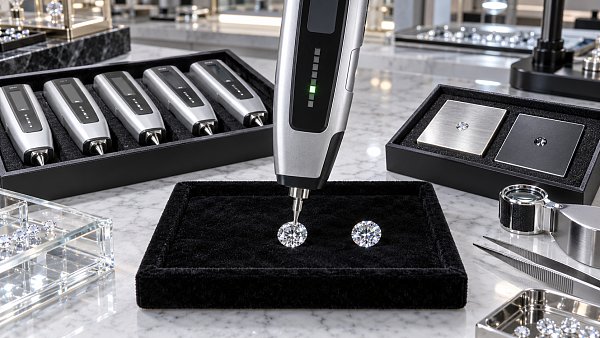
- Check repeatability by testing the same stone multiple times under consistent temperature, pressure, battery level, and probe contact conditions.
- Assess warm-up time carefully, since unstable preheating can cause inconsistent readings during retail demonstrations or high-volume inspection work.
- Confirm whether calibration is factory-set, user-adjustable, or service-dependent, then review how calibration drift is monitored over time.
- Inspect probe durability, tip alignment, spring tension, and anti-slip design, as poor contact can reduce diamond testers oem accuracy.
- Review battery performance under continuous use, because voltage instability may affect readings, alerts, display brightness, and sensor response.
- Evaluate alert design, including sound, light, scale display, and error indication, so non-specialist operators receive clear testing feedback.
- Compare performance on mounted jewelry, since metal settings, small stones, and limited surface access create practical testing challenges.
- Require documentation for CE, RoHS, FCC, battery safety, instruction manuals, warranty terms, and traceable production inspection records.
- Audit packaging strength, private-label printing, accessory quality, and user guide clarity before approving any diamond testers oem shipment.
- Run random incoming inspections on bulk orders, because reliable samples do not automatically guarantee consistent mass-production quality.
How Sensor Technology Affects Accuracy
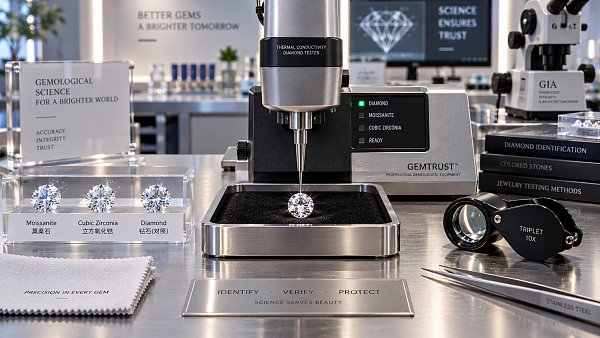
Most handheld diamond testers measure thermal conductivity. Diamond conducts heat differently from many common simulants, allowing fast preliminary identification.
However, moissanite also conducts heat strongly. This is why basic thermal devices may generate false-positive results.
More advanced diamond testers oem devices combine thermal and electrical conductivity checks. This improves separation between diamond and moissanite.
Some devices also use algorithmic thresholds. These thresholds interpret sensor signals and convert them into pass, fail, or warning indicators.
Reliability improves when the sensor system is stable, well-shielded, and matched with clear operating instructions.
Useful Comparison Points
Application Scenarios That Change Reliability Expectations
Jewelry Retail Counters
At retail counters, diamond testers oem products must be fast, simple, and visually clear. Confusing results damage customer trust immediately.
Strong retail devices use intuitive indicators, audible alerts, stable battery output, and durable probes. Clear manuals reduce operator mistakes.
Wholesale and Trade Inspection
Wholesale inspection involves repeated testing across parcels, sample trays, and mixed jewelry lots. Speed and repeatability matter more than cosmetic design.
A dependable diamond testers oem program should include batch consistency reports, spare tips, and replacement policies for intensive commercial use.
Factory Quality Control
Factory environments introduce dust, handling pressure, vibration, and long working periods. Devices must tolerate daily operational stress.
For production control, diamond testers oem suppliers should provide clear inspection procedures and acceptable error-handling guidance.
Private-Label Commercial Programs
Private-label projects require more than working samples. Branding, packaging, manuals, certification marks, and after-sales terms must align.
A diamond testers oem supplier with structured engineering support can adapt firmware, indicators, packaging, and accessories without weakening performance.
Common Overlooked Risks
False Confidence from One Successful Sample
A single approved sample does not prove production consistency. Mass output may involve component substitution, assembly variation, or weaker inspection.
Sample approval should be followed by pilot orders and random testing. This reduces hidden risk in diamond testers oem sourcing.
Poor Testing on Small or Mounted Stones
Small stones are difficult because probe contact is limited. Mounted stones add metal interference, angle restrictions, and surface contamination.
Reliable diamond testers oem devices should include guidance for small stones, rings, earrings, bracelets, and multi-stone settings.
Unclear Lab-Grown Diamond Claims
Many handheld testers confirm diamond-like conductivity. They may not separate natural diamond from lab-grown diamond.
Marketing should not imply advanced origin detection unless supported by gemological testing methods and verified documentation.
Weak Compliance Records
Compliance files matter when devices enter regulated markets. Labels, battery documents, manuals, and material restrictions must match destination requirements.
A credible diamond testers oem partner should provide consistent technical files, not vague certificates without model linkage.
Practical Steps Before Large-Scale Sourcing
- Build a stone test set that includes confirmed diamonds, moissanite, simulants, coated stones, and mounted jewelry samples.
- Test each diamond testers oem sample repeatedly under different room temperatures, battery levels, and operating speeds.
- Record every reading in a comparison sheet, including false positives, false negatives, unstable signals, and user comments.
- Request a teardown-level component explanation when possible, especially for probe material, sensor source, circuit protection, and battery design.
- Confirm the supplier’s inspection process, including incoming component checks, finished product testing, aging tests, and packing inspection.
- Approve artwork only after functional approval, because attractive branding cannot compensate for unreliable testing behavior.
- Use pilot shipments to validate packaging durability, instruction accuracy, barcode control, and after-sales responsiveness.
These steps create measurable evidence. They also make diamond testers oem comparison more transparent across cost, quality, and delivery factors.
How to Judge a Strong OEM Supplier
A strong supplier explains limitations clearly. Overpromising absolute accuracy is a warning sign, especially for mixed stones and complex settings.
Reliable diamond testers oem cooperation usually includes technical drawings, compliance files, sample testing support, packaging proofing, and production traceability.
The best evaluation also reviews response speed. Technical questions about calibration, false readings, or replacement parts should receive precise answers.
Long-term reliability depends on supply continuity. Confirm whether critical components remain stable across repeat orders and seasonal production peaks.
Summary and Action Guide
Diamond testers can be reliable when sensor design, calibration, assembly quality, and operating procedures are properly controlled.
However, no handheld device should be treated as a universal gemological laboratory. It is a screening tool, not complete origin certification.
For diamond testers oem sourcing, reliability should be proven through repeatable tests, documented standards, realistic claims, and supplier accountability.
The next practical step is to create a controlled sample matrix, compare at least three OEM options, and verify batch consistency before scaling orders.
When the evaluation process is disciplined, diamond testers oem devices can support confident jewelry screening, stronger quality control, and safer commercial branding.
Search News
Hot Articles
- Office Furniture & EquipChoosing Commercial Air Conditioners for Offices: Capacity, Zoning, and NoiseOct 13, 2026
- Fashion & Gem JewelryHow to Choose Designer Eyewear That Fits Your Store’s Customer ProfileOct 12, 2026
- Musical InstrumentsA Practical Guide to Identifying Wooden Orchestral Instruments by Family and ToneOct 10, 2026
Popular Tags
Need ExpertConsultation?
Connect with our specialized leisureengineering team for procurementstrategies.
Recommended News
 Oct 12, 2026How to Choose Designer Eyewear That Fits Your Store’s Customer ProfileDesigner eyewear buying guide for retailers: match frames, price points, brand appeal, fit, and supplier support to your store’s customer profile for stronger sales.● Luxury Retail Analyst
 Oct 07, 2026Thermal Diamond Testers: How They Work and When They Can Misidentify StonesThermal diamond tester guide: learn how it works, spot false positives from moissanite, and choose reliable verification methods for jewelry trade and retail.● Luxury Retail Analyst
 Oct 02, 2026Diamond Tester Wholesale: How to Vet Accuracy, Calibration, and MOQ Before OrderingDiamond tester wholesale guide: verify accuracy, calibration records, supplier quality controls, and MOQ terms before ordering. Source reliable testers with confidence.● Luxury Retail Analyst
 Sep 09, 2026Wholesale Coral Earrings: How Buyers Can Assess Quality, Treatments, and Supply RiskCoral jewelry earrings wholesale guide for buyers: assess quality, treatments, secure settings, documentation, and supply risks before ordering.● Luxury Retail Analyst
 Sep 01, 2026How to Choose a Jewelry Laser Engraving Machine Manufacturer for Custom ProductionChoose a jewelry laser engraving machine manufacturer with proven sample testing, precision fixtures, workflow-ready software, and reliable support for custom production.● Luxury Retail Analyst
 Aug 27, 2026Evaluating Luxury Retail Accessories Suppliers: Quality, Lead Times, and Brand FitLuxury retail accessories supplier selection made clearer: assess quality, lead times, compliance, costs, and brand fit to protect premium launches and margins.● Luxury Retail Analyst
 Jul 29, 2026Fine Jewelry Price Guide: What Affects Cost and How to Judge Real ValueFine jewelry price guide for buyers: learn what drives cost in metals, gemstones, craftsmanship, certification, and branding so you can judge real value, reduce sourcing risk, and buy with confidence.● Luxury Retail Analyst
 Jul 14, 2026What to Ask an Enamel Jewelry Manufacturer Before Sampling and Mass ProductionEnamel jewelry manufacturer selection starts with the right questions. Learn what to ask about materials, color matching, MOQ, QC, compliance, and lead times before sampling and mass production.● Luxury Retail Analyst
 Jul 12, 2026Surgical Steel Belly Rings vs Titanium: Material Differences, Safety, and CostSurgical steel belly rings vs titanium: compare safety, nickel exposure, comfort, durability, and cost to choose the best option for sensitive skin or budget-friendly style.● Luxury Retail Analyst
 Jul 12, 2026Natural Coral Jewelry Guide: How to Identify Real Coral, Treatments, and QualityNatural coral jewelry guide covering how to identify real coral, spot treatments, assess quality, and buy with confidence. Learn the key signs before you choose.● Luxury Retail Analyst
 Jul 11, 2026Braided Leather Bracelets OEM: Material, Clasp, and MOQ Factors Before SamplingBraided leather bracelets OEM guide covering material grades, clasp options, and MOQ factors before sampling. Learn how to reduce sourcing risk, control cost, and choose the right supplier.● Luxury Retail Analyst
 Jul 09, 2026Jewelry Craftsmanship Gemstone Setting Methods Explained: Prong, Bezel, Pave, and MoreJewelry craftsmanship gemstone setting explained clearly: compare prong, bezel, pavé, channel, and more to choose secure, beautiful, and commercially smart jewelry designs.● Luxury Retail Analyst
 Jul 06, 2026Photo Locket Necklace Manufacturer Selection Guide: Materials, MOQ, and Custom OptionsPhoto locket necklace manufacturer selection guide covering materials, MOQ, custom options, compliance, and quality checks to help buyers source smarter and build stronger jewelry lines.● Luxury Retail Analyst
 Jul 05, 2026What to Check When Comparing a Sterling Silver Clasp ManufacturerChoosing a sterling silver clasp manufacturer? Learn what to check first: 925 silver claims, finish quality, testing, compliance, lead times, and hidden sourcing costs.● Luxury Retail Analyst
 Jul 02, 2026Jewelry Craftsmanship Techniques Explained: Casting, Stone Setting, Engraving, and PolishingJewelry craftsmanship techniques explained: discover how casting, stone setting, engraving, and polishing shape quality, durability, and sourcing confidence.● Luxury Retail Analyst
 Jul 01, 2026Lost Wax Casting Machines Explained: Types, Capacity, and Metal CompatibilityLost wax casting machines explained: compare types, real capacity, and metal compatibility to choose the right system for precision casting, higher quality, and smarter sourcing.● Luxury Retail Analyst
 Jun 29, 2026How to Evaluate a Luxury Accessories Online Store Before You BuyLuxury accessories online store buying guide: learn how to verify authenticity, compare policies, check reviews, and avoid costly mistakes before you place an order.● Luxury Retail Analyst
 Jun 22, 2026Matching Couple Rings: Popular Materials, Fit Differences, and How to ChooseMatching couple rings guide: compare popular materials, fit differences, comfort, durability, and resizing options to choose a stylish pair that truly lasts.● Luxury Retail Analyst
 Jun 19, 2026How to Build a Fashion Accessories Catalog That Improves Product Discovery and SalesFashion accessories catalog strategies that improve product discovery, filtering, and conversions. Learn how to structure pages, categories, and data to drive more qualified sales.● Luxury Retail Analyst
 Jun 19, 2026How to Choose Luxury Accessories for Women by Material, Style, and Price PointLuxury accessories for women: learn how to choose the right pieces by material, style, and price point for better value, timeless appeal, and smarter buying decisions.● Luxury Retail Analyst
 Jun 18, 2026Stainless Steel Rings Bulk: 304 vs 316L, Finishes, and Custom Order FactorsStainless steel rings bulk guide: compare 304 vs 316L, explore finish options, and learn key custom order factors to reduce sourcing risk and improve product value.● Luxury Retail Analyst
 Jun 18, 2026Body Piercing Jewelry Bulk Buying Guide: Materials, Sizes, and MOQ QuestionsBody piercing jewelry bulk buying guide covering safe materials, size checks, MOQ strategy, supplier screening, and compliance tips to reduce risk and source with confidence.● Luxury Retail Analyst
 Jun 18, 2026How to Evaluate a Luxury Jewelry Exporter for Quality, Compliance, and DeliveryLuxury jewelry exporter evaluation starts with more than design. Learn how to verify quality, compliance, and delivery control to source premium jewelry with less risk.● Luxury Retail Analyst
 Jun 17, 2026Iced Out Watches Wholesale: How to Compare MOQ, Stone Quality, and MarginsIced out watches wholesale guide: compare MOQ, stone quality, and real margins to choose reliable suppliers, reduce risk, and grow resale profits with smarter sourcing.● Luxury Retail Analyst