Stainless Steel Rings Bulk: 304 vs 316L, Finishes, and Custom Order Factors
Stainless Steel Rings Bulk: 304 vs 316L, Finishes, and Custom Order Factors
When evaluating stainless steel rings bulk for commercial sourcing, technical buyers need more than a price list.
Material grade affects corrosion resistance, hardness, polish quality, and service life.
Finish selection changes both appearance and wear behavior.
Custom order details also shape consistency, compliance, and total landed cost.
For stainless steel rings bulk programs, the best decision usually comes from balancing environment, design intent, and production control.
Why Grade Selection Matters in Stainless Steel Rings Bulk
In practice, many sourcing issues start with the wrong alloy choice.
A ring may look identical at first inspection.
However, moisture, sweat, salt, cleaning chemicals, and plating processes reveal real differences over time.
That is why stainless steel rings bulk projects should start with use-case mapping.
- Fashion jewelry for dry indoor markets may fit 304.
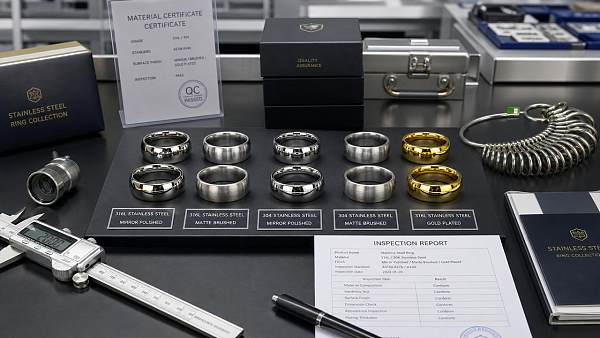
- Marine-adjacent, humid, or premium applications often favor 316L.
- Longer wear cycles increase the value of better corrosion resistance.
- Frequent polishing or engraving may change the preferred finish route.
A lower unit price can become expensive if returns, tarnish complaints, or inconsistent batches appear later.
304 vs 316L: Core Technical Differences
Both 304 and 316L are widely used austenitic stainless steels.
Both offer good formability, a modern appearance, and reliable strength for ring manufacturing.
The key difference is molybdenum content in 316L.
That addition improves resistance to pitting and chloride exposure.
The “L” in 316L means low carbon.
This helps reduce carbide precipitation after welding or thermal processing.
For rings, that matters less than in heavy industry, but it still supports cleaner processing control.
When 304 Is the Better Commercial Choice
304 remains a strong option for many stainless steel rings bulk orders.
It is widely available, cost-efficient, and suitable for standard fashion and accessory lines.
If the target market is inland, low-humidity, and price-sensitive, 304 often performs well.
It also works well when rings are decorative rather than worn continuously.
- Promotional jewelry collections.
- Fast-turn retail replenishment programs.
- Private label lines with tight cost targets.
- Short seasonal launches requiring broad size runs.
The important point is not to overspecify material where the business case does not support it.
When 316L Justifies the Premium
316L is often the smarter choice when brand reputation depends on long-term wear stability.
This becomes more obvious in coastal markets, tropical climates, and premium gift channels.
It is also common in collections marketed as durable, skin-friendly, or luxury-adjacent.
For stainless steel rings bulk, fewer claims can offset the higher raw material cost.
- Better resistance to sweat and saline exposure.
- Stronger premium positioning in product storytelling.
- More confidence for longer shelf life and export handling.
- Improved consistency for demanding end-user expectations.
From a sourcing perspective, 316L is less about marketing language and more about risk reduction.
Surface Finishes: More Than an Appearance Decision
Finishes influence visual appeal, scratch visibility, fingerprint resistance, and production repeatability.
That means finish selection should sit beside alloy selection in any stainless steel rings bulk review.
Common finish options
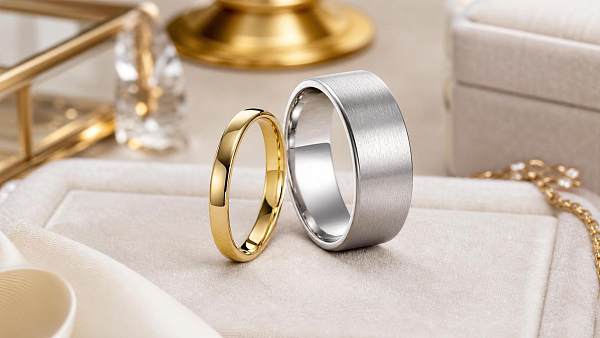
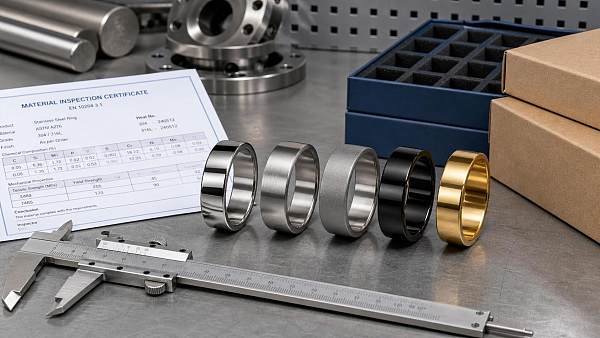
- High polish: Bright, reflective, premium-looking, but shows scratches quickly.
- Brushed: Modern and understated, with better scratch masking.
- Matte or satin: Soft visual effect, often used in minimalist collections.
- Sandblasted: Textured appearance, useful for contrast areas.
- IP plated or PVD colored: Adds gold, black, rose, or other tones.
A polished ring may win on first impression.
A brushed ring may perform better in daily wear.
For stainless steel rings bulk, the right finish depends on expected use, not just catalog aesthetics.
Custom Order Factors That Affect Quality
Custom orders add flexibility, but they also add technical variables.
This is where many stainless steel rings bulk programs either become scalable or become unstable.
Key specification points
- Ring width, thickness, and inner comfort fit profile.
- Size tolerance across full production lots.
- Logo depth, laser marking sharpness, and engraving position.
- Stone setting, adhesive method, or inlay material compatibility.
- Surface finish uniformity between samples and mass production.
- Packaging requirements for retail, gifting, or OEM fulfillment.
Even a small deviation in thickness can change perceived quality.
Likewise, poor edge finishing can trigger comfort complaints.
That is why approved drawings and golden samples are essential for stainless steel rings bulk procurement.
Standards, Testing, and Compliance Checks
Technical sourcing decisions should never rely on verbal claims alone.
Material verification and compliance records matter, especially for export markets.
Depending on destination, buyers may request reports for metal composition, nickel release, or coating durability.
- Mill test certificates for alloy confirmation.
- Third-party lab testing for restricted substances.
- Salt spray or corrosion checks for plated finishes.
- Adhesion testing for PVD or decorative coatings.
- AQL inspection plans for batch acceptance.
For stainless steel rings bulk, clear documentation supports both import compliance and internal quality assurance.
Practical Sourcing Questions Before You Place an Order
A good supplier conversation should move beyond unit pricing fast.
The better signal is how clearly the factory answers technical and process questions.
- Is the ring body solid or hollow?
- What is the actual base material for each SKU?
- Can the supplier hold finish consistency across repeat orders?
- What is the defect rate on engraving and plating?
- Which sizes are standard, and which require extra setup?
- What reports are available before shipment?
These questions help compare suppliers on process maturity, not just quotation speed.
Choosing the Right Stainless Steel Rings Bulk Strategy
There is no single best alloy or finish for every order.
The right stainless steel rings bulk strategy depends on environment, price target, finish expectations, and compliance needs.
Choose 304 when cost efficiency and standard indoor performance lead the project.
Choose 316L when corrosion resistance, premium positioning, or longer wear reliability carry more weight.
Then match the finish to the real use case, not just the visual sample.
Finally, lock down custom specifications with documented tolerances, test requirements, and batch controls.
That approach makes stainless steel rings bulk sourcing more predictable, more defensible, and far more aligned with long-term commercial value.
Search News
Hot Articles
- Outdoor RidesWhat Drives Animatronic Dinosaur Manufacturer Prices for Theme Park Projects?Sep 18, 2026
- Stationery & UniformsHow to Source Wholesale Packing Tape Without Compromising Carton Seal StrengthSep 17, 2026
- Smart Campus TechHow to Source Educational Furniture Worldwide for Safe, Flexible Learning SpacesSep 16, 2026
Popular Tags
Need ExpertConsultation?
Connect with our specialized leisureengineering team for procurementstrategies.
Recommended News
 Sep 09, 2026Wholesale Coral Earrings: How Buyers Can Assess Quality, Treatments, and Supply RiskCoral jewelry earrings wholesale guide for buyers: assess quality, treatments, secure settings, documentation, and supply risks before ordering.● Luxury Retail Analyst
 Sep 01, 2026How to Choose a Jewelry Laser Engraving Machine Manufacturer for Custom ProductionChoose a jewelry laser engraving machine manufacturer with proven sample testing, precision fixtures, workflow-ready software, and reliable support for custom production.● Luxury Retail Analyst
 Aug 27, 2026Evaluating Luxury Retail Accessories Suppliers: Quality, Lead Times, and Brand FitLuxury retail accessories supplier selection made clearer: assess quality, lead times, compliance, costs, and brand fit to protect premium launches and margins.● Luxury Retail Analyst
 Jul 29, 2026Fine Jewelry Price Guide: What Affects Cost and How to Judge Real ValueFine jewelry price guide for buyers: learn what drives cost in metals, gemstones, craftsmanship, certification, and branding so you can judge real value, reduce sourcing risk, and buy with confidence.● Luxury Retail Analyst
 Jul 14, 2026What to Ask an Enamel Jewelry Manufacturer Before Sampling and Mass ProductionEnamel jewelry manufacturer selection starts with the right questions. Learn what to ask about materials, color matching, MOQ, QC, compliance, and lead times before sampling and mass production.● Luxury Retail Analyst
 Jul 12, 2026Surgical Steel Belly Rings vs Titanium: Material Differences, Safety, and CostSurgical steel belly rings vs titanium: compare safety, nickel exposure, comfort, durability, and cost to choose the best option for sensitive skin or budget-friendly style.● Luxury Retail Analyst
 Jul 12, 2026Natural Coral Jewelry Guide: How to Identify Real Coral, Treatments, and QualityNatural coral jewelry guide covering how to identify real coral, spot treatments, assess quality, and buy with confidence. Learn the key signs before you choose.● Luxury Retail Analyst
 Jul 11, 2026Braided Leather Bracelets OEM: Material, Clasp, and MOQ Factors Before SamplingBraided leather bracelets OEM guide covering material grades, clasp options, and MOQ factors before sampling. Learn how to reduce sourcing risk, control cost, and choose the right supplier.● Luxury Retail Analyst
 Jul 09, 2026Jewelry Craftsmanship Gemstone Setting Methods Explained: Prong, Bezel, Pave, and MoreJewelry craftsmanship gemstone setting explained clearly: compare prong, bezel, pavé, channel, and more to choose secure, beautiful, and commercially smart jewelry designs.● Luxury Retail Analyst
 Jul 06, 2026Photo Locket Necklace Manufacturer Selection Guide: Materials, MOQ, and Custom OptionsPhoto locket necklace manufacturer selection guide covering materials, MOQ, custom options, compliance, and quality checks to help buyers source smarter and build stronger jewelry lines.● Luxury Retail Analyst
 Jul 05, 2026What to Check When Comparing a Sterling Silver Clasp ManufacturerChoosing a sterling silver clasp manufacturer? Learn what to check first: 925 silver claims, finish quality, testing, compliance, lead times, and hidden sourcing costs.● Luxury Retail Analyst
 Jul 02, 2026Jewelry Craftsmanship Techniques Explained: Casting, Stone Setting, Engraving, and PolishingJewelry craftsmanship techniques explained: discover how casting, stone setting, engraving, and polishing shape quality, durability, and sourcing confidence.● Luxury Retail Analyst
 Jul 01, 2026Lost Wax Casting Machines Explained: Types, Capacity, and Metal CompatibilityLost wax casting machines explained: compare types, real capacity, and metal compatibility to choose the right system for precision casting, higher quality, and smarter sourcing.● Luxury Retail Analyst
 Jun 29, 2026How to Evaluate a Luxury Accessories Online Store Before You BuyLuxury accessories online store buying guide: learn how to verify authenticity, compare policies, check reviews, and avoid costly mistakes before you place an order.● Luxury Retail Analyst
 Jun 22, 2026Matching Couple Rings: Popular Materials, Fit Differences, and How to ChooseMatching couple rings guide: compare popular materials, fit differences, comfort, durability, and resizing options to choose a stylish pair that truly lasts.● Luxury Retail Analyst
 Jun 19, 2026How to Build a Fashion Accessories Catalog That Improves Product Discovery and SalesFashion accessories catalog strategies that improve product discovery, filtering, and conversions. Learn how to structure pages, categories, and data to drive more qualified sales.● Luxury Retail Analyst
 Jun 19, 2026How to Choose Luxury Accessories for Women by Material, Style, and Price PointLuxury accessories for women: learn how to choose the right pieces by material, style, and price point for better value, timeless appeal, and smarter buying decisions.● Luxury Retail Analyst
 Jun 18, 2026Stainless Steel Rings Bulk: 304 vs 316L, Finishes, and Custom Order FactorsStainless steel rings bulk guide: compare 304 vs 316L, explore finish options, and learn key custom order factors to reduce sourcing risk and improve product value.● Luxury Retail Analyst
 Jun 18, 2026Body Piercing Jewelry Bulk Buying Guide: Materials, Sizes, and MOQ QuestionsBody piercing jewelry bulk buying guide covering safe materials, size checks, MOQ strategy, supplier screening, and compliance tips to reduce risk and source with confidence.● Luxury Retail Analyst
 Jun 18, 2026How to Evaluate a Luxury Jewelry Exporter for Quality, Compliance, and DeliveryLuxury jewelry exporter evaluation starts with more than design. Learn how to verify quality, compliance, and delivery control to source premium jewelry with less risk.● Luxury Retail Analyst
 Jun 17, 2026Iced Out Watches Wholesale: How to Compare MOQ, Stone Quality, and MarginsIced out watches wholesale guide: compare MOQ, stone quality, and real margins to choose reliable suppliers, reduce risk, and grow resale profits with smarter sourcing.● Luxury Retail Analyst
 Jun 15, 2026How to Evaluate an Amber Jewelry Manufacturer: Quality Grades, OEM Options, and Lead TimesAmber jewelry manufacturer selection starts with quality grades, OEM capability, and realistic lead times. Learn how to compare suppliers, reduce sourcing risk, and choose with confidence.● Luxury Retail Analyst
 Jun 14, 2026Stainless Steel Rings Bulk Buying Guide: Grades, Finishes, Sizes, and Supplier ChecksStainless steel rings bulk buying guide covering grades, finishes, sizing, and supplier checks to help you reduce returns, protect quality, and source with confidence.● Luxury Retail Analyst
 Jun 14, 2026How to Choose Custom Luxury Jewelry for Private Label: Materials, MOQ, and Lead TimeCustom luxury jewelry buying guide for private labels: compare materials, MOQ, and lead time to reduce sourcing risk, control costs, and choose reliable suppliers with confidence.● Luxury Retail Analyst