Wholesale Projector Screens: How to Choose Size, Gain, and Mounting for Each Space
Wholesale Projector Screens: How to Choose Size, Gain, and Mounting for Each Space
Choosing wholesale projector screens is not only about unit cost. The better decision comes from matching screen size, gain, and mounting style to the room itself.
That means looking at viewing distance, ambient light, seating layout, ceiling height, and daily usage. A screen that works in a classroom may fail in a hotel ballroom.
In practical sourcing, the goal is simple. Buy wholesale projector screens that deliver clear images, fit the installation conditions, and hold up over time.
This guide breaks the decision into the three factors that matter most: size, gain, and mounting. It also shows how each factor changes by space type.
Start with the room, not the catalog
Many buyers compare wholesale projector screens by material and price first. That is understandable, but it often leads to mismatched products and costly adjustments.
A better approach starts with the space. Ask what the audience needs to see, how far they sit, and whether lights stay on during use.
From recent buying patterns, one signal is clear. Commercial projects now expect screens to support mixed use, not a single fixed application.
A conference room may host presentations in the morning, video calls at noon, and training in the afternoon. This changes how wholesale projector screens should be evaluated.
- Measure wall width, ceiling height, and projector throw distance.
- Check window position and typical ambient light levels.
- Define the main content type: text, charts, video, or mixed media.
- Confirm whether the screen stays deployed or must retract daily.
Once these basics are clear, comparing wholesale projector screens becomes much easier and far more accurate.
How to choose the right screen size
Screen size is usually the first visible decision. Still, it should not be based on what looks impressive in a product photo.
For wholesale projector screens, the right size is the one that keeps text readable and visuals comfortable from the farthest useful seat.
In business settings, oversized screens can be as problematic as undersized ones. They may create awkward sight lines or exceed projector brightness limits.
Use aspect ratio before diagonal size
Start with aspect ratio. For most modern wholesale projector screens, 16:9 works well for video, hybrid meetings, and general presentation use.
A 16:10 format often suits education and office environments better. It gives more vertical workspace for slides, dashboards, and documents.
4:3 still appears in legacy installations, but it is less common in new sourcing plans unless old projectors remain in service.
Match size to viewing distance
A useful rule is to work backward from the farthest seat. If people cannot read small text comfortably, the screen is too small.
For video-heavy spaces, you can allow a slightly greater viewing distance. For data, spreadsheets, or lessons, larger image height matters more.
These ranges are a starting point, not a strict rule. The projector’s native resolution and room geometry still shape the final choice.
How gain affects image quality
Gain is often misunderstood in wholesale projector screens. Many assume a higher number always means a better image. In reality, it depends on the lighting and seating pattern.
Screen gain describes how much light the surface reflects toward viewers. This directly affects brightness, viewing angle, and perceived contrast.
Low gain for wider viewing angles
A gain around 1.0 is a safe choice for many wholesale projector screens. It offers balanced brightness and wide viewing angles in standard rooms.
Lower-gain surfaces can help where seating spreads across the room. They reduce hotspots and make the picture more uniform from different positions.
Higher gain for controlled seating and brighter rooms
Higher gain may be useful when projector brightness is limited or ambient light cannot be fully controlled. This is common in multipurpose halls and hospitality venues.
The tradeoff is narrower viewing performance. People seated far off center may see weaker brightness or uneven images.
- Gain under 1.0: softer brightness, wider audience coverage.
- Gain around 1.0 to 1.3: general-purpose commercial use.
- Gain above 1.3: brighter image, but more placement sensitivity.
In actual procurement, the best wholesale projector screens balance gain with room conditions rather than chasing maximum brightness on paper.
Choosing the right mounting style
Mounting affects daily usability as much as image quality. Even strong wholesale projector screens create friction if installation does not fit operations.
This is especially important in commercial spaces where teams need reliability, neat appearance, and easy maintenance.
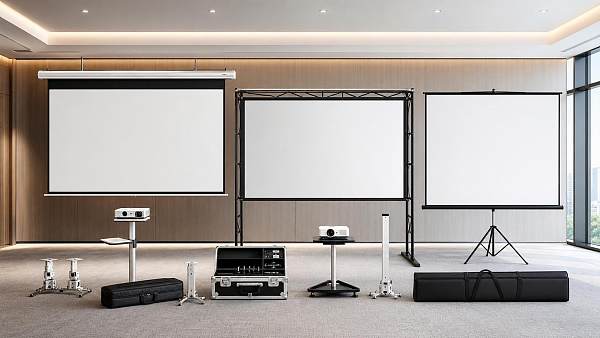
Fixed frame screens
Fixed frame models are ideal when the screen remains visible all the time. They keep the surface flat and usually deliver the most consistent presentation quality.
They work well in dedicated training rooms, private cinemas, and simulation environments. The limitation is obvious: they need permanent wall space.
Manual and motorized retractable screens
Retractable wholesale projector screens fit spaces with changing functions. The screen disappears when not in use, which helps preserve visual cleanliness.
Manual versions can be cost-effective in lighter-use rooms. Motorized options suit conference facilities, classrooms, and hospitality projects with frequent deployment.
Ceiling-recessed and portable options
Ceiling-recessed screens create a more integrated look. They are often selected for premium interiors where technology should remain discreet.
Portable wholesale projector screens are useful for temporary events, roadshows, and flexible training setups. Still, they are usually less stable for long-term daily use.
Best choices by space type
Classrooms and lecture spaces
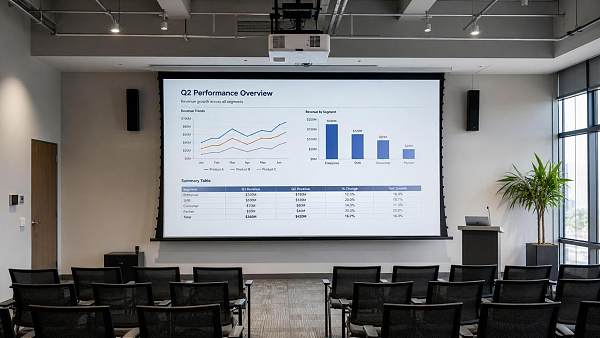
Classroom wholesale projector screens should prioritize readability, broad viewing angles, and durability. Moderate gain and retractable mounting often make sense.
If instructors use daylight and note-taking together, ambient light management becomes more important than chasing a very large format.
Conference rooms and boardrooms
In offices, wholesale projector screens should support charts, text, and video calls without distraction. Flatness, appropriate aspect ratio, and silent operation matter.
Motorized or fixed solutions are both common. The better option depends on whether the wall is shared with displays, branding, or writable surfaces.
Hotels, banquet halls, and event venues
Hospitality buyers usually need wholesale projector screens that scale for changing audience sizes. Motorized large-format screens are often the practical standard.
Here, gain decisions should reflect partial lighting, décor requirements, and fast setup cycles. Maintenance access also deserves early attention.
Entertainment and leisure settings
Leisure spaces often favor immersive visuals. Fixed frame wholesale projector screens can work well when light control is strong and the installation is permanent.
Where spaces serve multiple attractions, retractable systems may provide better flexibility without sacrificing too much image performance.
Common sourcing mistakes to avoid
When comparing wholesale projector screens, several mistakes appear again and again. Most come from evaluating specifications in isolation.
- Choosing size without confirming projector brightness and resolution.
- Selecting high gain for rooms with wide seating angles.
- Ignoring mounting depth, ceiling structure, or electrical access.
- Overlooking fabric flatness, edge quality, and long-term surface stability.
- Buying only on price, without checking warranty and replacement support.
This also explains why experienced buyers request application details from suppliers early. Better inputs lead to better recommendations and fewer post-installation issues.
A practical evaluation checklist
Before placing an order for wholesale projector screens, use a short checklist to keep the sourcing process focused and comparable.
- Confirm room dimensions and farthest viewing distance.
- Match aspect ratio to projector output and content type.
- Choose gain based on ambient light and audience spread.
- Select mounting by usage frequency and interior constraints.
- Review material quality, warranty terms, and supplier responsiveness.
The strongest wholesale projector screens are not simply the most expensive or the most advanced. They are the ones that fit the space with the fewest compromises.
If the specification sheet aligns with the room, the projector, and the daily workflow, the sourcing decision becomes far more confident and commercially sound.
Search News
Hot Articles
- Outdoor RidesWhat Drives Animatronic Dinosaur Manufacturer Prices for Theme Park Projects?Sep 18, 2026
- Stationery & UniformsHow to Source Wholesale Packing Tape Without Compromising Carton Seal StrengthSep 17, 2026
- Smart Campus TechHow to Source Educational Furniture Worldwide for Safe, Flexible Learning SpacesSep 16, 2026
Popular Tags
Need ExpertConsultation?
Connect with our specialized leisureengineering team for procurementstrategies.
Recommended News
 Sep 02, 2026How to Choose a Glass Acoustic Office Pod for Open-Plan Workplace PrivacyGlass acoustic pod office buying guide: compare privacy, ventilation, safety glass, power, site fit, and supplier support to choose a productive open-plan workspace solution.● Institutional Buyer
 Sep 01, 2026Is CE Marking Enough for Commercial Products Sold in the US?Is CE marking enough for commercial products sold in the US? Learn the key US safety, FCC, listing, and inspection requirements before you buy.● Institutional Buyer
 Sep 04, 2026B2B Office Supplies Procurement: Building a Cost-Controlled Replenishment ProgramB2B office supplies procurement made smarter: build a cost-controlled replenishment program that reduces spend, prevents stockouts, and improves supplier performance.● Institutional Buyer
 Aug 26, 2026How to Choose Automatic Office Coffee Machines for Team Size, Usage, and MaintenanceAutomatic office coffee machines: learn how to choose the right model for team size, daily demand, drink preferences, and maintenance needs to reduce downtime and improve workplace satisfaction.● Institutional Buyer
 Aug 13, 2026What to Look for When Choosing a Wood Executive Office Desk for Daily UseWood executive office desks should do more than look premium. Learn how to compare durability, ergonomics, cable management, and finish quality before you buy.● Institutional Buyer
 Jul 31, 2026How to Choose Institutional Storage Furniture for Schools, Offices, and Public FacilitiesInstitutional storage furniture buying guide for schools, offices, and public facilities—learn how to assess safety, durability, cleaning, locks, and lifecycle cost before you buy.● Institutional Buyer
 Jul 14, 2026Commercial Carpet Tile Price Guide: Cost Factors, Wear Ratings, and Installation ScopeCommercial carpet tile price explained: compare cost factors, wear ratings, and installation scope to choose durable, budget-smart flooring for offices, schools, hotels, and retail.● Institutional Buyer
 Jul 11, 2026How to Compare Motorized, Fixed Frame, and Portable Wholesale Projector ScreensWholesale projector screens compared: discover how motorized, fixed frame, and portable options differ in image quality, flexibility, and sourcing value for commercial projects.● Institutional Buyer
 Jul 10, 2026Desktop Hole Punches Wholesale: What Buyers Should Check Before Placing a Bulk OrderDesktop hole punches wholesale buyers should check quality, accuracy, compliance, total cost, and supplier reliability before placing a bulk order. Read the key checkpoints now.● Institutional Buyer
 Jul 09, 2026Library Bookshelves Wholesale Buying Guide: Materials, Load Capacity, and Layout CostsLibrary bookshelves wholesale guide covering materials, load capacity, and layout costs. Compare options, reduce procurement risk, and choose durable shelving for long-term value.● Institutional Buyer
 Jul 08, 2026Height Adjustable Desks Bulk: Key Specs to Compare for Office Fit-Out ProjectsHeight adjustable desks bulk: compare load, range, stability, noise, compliance, and rollout factors to choose reliable desks for office fit-out projects with less risk.● Institutional Buyer
 Jul 06, 2026FBX Drops 18% as Asia-Europe Furniture Rates FallFBX drops 18% as Asia-Europe furniture rates fall to $1,186/FEU, reshaping office furniture import margins, restocking timing, and shipping plans. See what buyers and exporters should do next.● Institutional Buyer
 Jul 06, 2026Training Chairs With Writing Tablet: What to Check for Classroom Layout and DurabilityTraining chairs with writing tablet: learn how to compare classroom layout, tablet size, frame durability, and maintenance needs to choose smarter, longer-lasting seating.● Institutional Buyer
 Jul 05, 2026Indonesia Tightens Wood Proof for Office Furniture ImportsIndonesia tightens wood proof for office furniture imports from July 3, 2026. Learn FLEGT, certification, customs risks, and how exporters can avoid delays and extra fees.● Institutional Buyer
 Jul 04, 2026How to Choose Educational Furniture for Schools by Age Group, Layout, and DurabilityEducational furniture for schools should match age groups, room layouts, and durability needs. Discover practical buying tips to improve safety, flexibility, and long-term value.● Institutional Buyer
 Jul 03, 2026Europe 40HQ Rates Climb to $6,920 for Large Furniture ShipmentsEurope 40HQ rates climb to $6,920, reshaping large furniture shipments with 9–12 week delays and higher consolidation costs. See what exporters and buyers should do now.● Institutional Buyer
 Jul 03, 2026Adjustable Library Shelves: Load Capacity, Material, and Layout Tips for Smarter Space PlanningAdjustable library shelves: learn how to compare load capacity, materials, and layout options to create safer, more flexible spaces with lower long-term costs.● Institutional Buyer
 Jul 02, 2026Vietnam Tightens Proof Rules for Wood Office FurnitureVietnam tightens proof rules for wood office furniture from July 1, 2026. Learn how FSC-CoC, VPA-FLEGT, and customs delays could impact exporters, sourcing, and delivery plans.● Institutional Buyer
 Jun 29, 2026Workspace Furniture for Offices: What to Compare Before Planning a Hybrid LayoutWorkspace furniture for offices should be compared by flexibility, comfort, space efficiency, and procurement value before planning a hybrid layout. Learn what to review for smarter office decisions.● Institutional Buyer
 Jun 28, 2026How to Evaluate an Institutional Furniture Manufacturer for Schools, Hospitals, and Public SpacesInstitutional furniture manufacturer evaluation guide for schools, hospitals, and public spaces. Learn how to compare compliance, durability, customization, and supply reliability.● Institutional Buyer
 Jun 23, 2026Educational Furniture for Universities: What to Compare Before Buying for Labs and Lecture RoomsEducational furniture for universities: compare lab and lecture room safety, durability, flexibility, and lifecycle cost before buying. Make smarter campus sourcing decisions.● Institutional Buyer
 Jun 22, 2026How to Choose Educational Furniture for Libraries by Age Group, Layout, and UseEducational furniture for libraries should match age groups, layout, and daily use. Discover practical tips to choose safer, flexible, durable solutions that improve learning spaces.● Institutional Buyer
 Jun 18, 2026Wholesale Projector Screens: How to Choose Size, Gain, and Mounting for Each SpaceWholesale projector screens guide: learn how to choose the right size, gain, and mounting for classrooms, boardrooms, hotels, and event spaces for clearer images and smarter sourcing.● Institutional Buyer
 Jun 17, 2026Mobile Pedestals Wholesale Buying Guide: Locking Systems, Sizes, and Bulk PricingMobile pedestals wholesale guide covering locking systems, size options, durability, and bulk pricing to help buyers compare suppliers, cut risk, and secure better-value orders.● Institutional Buyer