Library Bookshelves Wholesale Buying Guide: Materials, Load Capacity, and Layout Costs
Library Bookshelves Wholesale Buying Guide: Materials, Load Capacity, and Layout Costs
For procurement teams planning educational, municipal, or institutional projects, library bookshelves wholesale decisions affect durability, safety, space efficiency, and long-term budget control.
This guide explains how to compare materials, review load capacity, and estimate layout-related costs across modern library environments.
The goal is simple: source shelving systems that perform well, stay compliant, and still fit the budget.
Why library bookshelves wholesale decisions need a full-cost view
In practice, unit price is only one part of the decision.
Library bookshelves wholesale projects usually involve freight, installation, floor planning, compliance checks, and future reconfiguration costs.
A cheaper shelf can become expensive if it warps, tips, scratches easily, or limits aisle planning.
A better comparison starts with three variables: material, load capacity, and layout efficiency.
These factors directly influence lifespan, maintenance frequency, and the total cost per usable linear meter.
Material selection in library bookshelves wholesale projects
Material choice shapes durability, appearance, maintenance, and procurement risk.
In library bookshelves wholesale sourcing, the most common options are steel, wood, laminate-faced board, and mixed-material systems.
Steel shelving
Steel is often the safest choice for high-traffic public libraries and academic collections.
It supports heavier loads, resists impact, and usually offers better dimensional stability over time.
Powder-coated steel also performs well in areas where cleaning frequency is high.
The tradeoff is visual warmth. Some projects solve that with wood end panels or decorative top caps.
Solid wood and veneer finishes
Wood delivers a premium look that suits heritage libraries, private institutions, and reading rooms.
However, moisture movement, finish wear, and higher cost make specification more sensitive.
For library bookshelves wholesale orders, confirm core species, veneer thickness, edge protection, and fire-related certifications.
Wood is usually chosen for visual impact, not the lowest lifecycle cost.
Engineered board and laminate systems
Melamine-faced MDF or particleboard can lower initial spend in light-duty areas.
These systems work better for media corners, children’s sections, or short-span display shelving.
The risk is sagging under dense book loads, especially on long shelves without reinforcement.
When evaluating library bookshelves wholesale suppliers, ask for substrate density, edge sealing details, and formaldehyde compliance data.
Hybrid systems
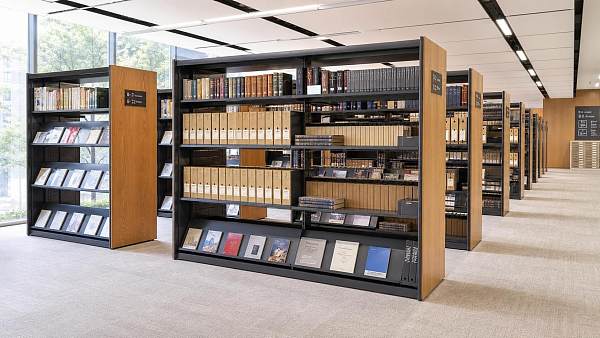
Hybrid shelving combines steel frames with wood or laminate-facing components.
This is increasingly common because it balances structural performance with a softer interior look.
For many library bookshelves wholesale tenders, hybrid systems offer the most practical middle ground.
How to evaluate load capacity without guesswork
Load capacity should never be treated as a vague brochure figure.
In library bookshelves wholesale buying, the real question is how much weight each shelf supports without visible deflection or structural stress.
Books are dense, and reference collections create much higher loads than casual display items.
Key load questions to ask suppliers
- What is the rated load per shelf, evenly distributed?
- What is the maximum bay load for the full unit?
- At what shelf span was the test completed?
- Was testing internal, third-party, or standard-based?
- What level of deflection is considered acceptable?
These details matter because shelf depth, reinforcement, and span length all affect performance.
A shelf rated at one size may fail expectations when resized for a custom library layout.
Typical application logic
This approach keeps library bookshelves wholesale decisions tied to actual usage, not generic catalog claims.
Layout costs that buyers often underestimate
Layout design has a direct cost impact from the first quotation onward.
In library bookshelves wholesale projects, layout choices influence how many bays fit, how people circulate, and how safely collections can expand.
Main layout cost drivers
- Aisle width requirements for accessibility and evacuation.
- Single-sided versus double-sided shelving ratios.
- Shelf height limits based on user safety and reach.
- End panels, signage, lighting, and integrated accessories.
- Column locations, wall conditions, and uneven flooring.
- Future expansion zones and reconfiguration needs.
A dense layout may reduce cost per stored book, but it can weaken user experience and staff efficiency.
A generous layout improves browsing and sightlines, yet often increases cost per square meter.
The strongest library bookshelves wholesale plans usually balance storage density with circulation quality.
Budgeting beyond shelving units
Many buyers budget for shelving but miss the related execution costs.
- On-site measurement and design adaptation.
- Freight for bulky or knock-down systems.
- Installation labor and anchoring.
- Protective packaging and damage replacement.
- Local compliance review and documentation.
That is why library bookshelves wholesale quotations should be reviewed as landed project cost, not factory price alone.
Compliance, safety, and quality control checkpoints
Safety and compliance issues can erase savings very quickly.
For library bookshelves wholesale procurement, ask suppliers to clarify relevant fire performance, emissions, anti-tip design, and finish safety requirements.
This is especially important for schools, public libraries, and government-funded projects.
Practical quality checklist
- Request material samples and finish chips before mass production.
- Review load test data for the exact configuration offered.
- Confirm anti-corrosion treatment for humid regions.
- Check edge treatment and corner safety for children’s areas.
- Approve packing method for export handling and site movement.
- Set inspection points before shipment and after installation.
These steps reduce failure risk and make library bookshelves wholesale sourcing more predictable across multiple project sites.
How to compare suppliers for long-term value
Price comparisons become more useful when evaluation criteria stay consistent.
A strong library bookshelves wholesale supplier should offer more than a low quote.
Look for stable manufacturing capacity, clear technical drawings, documented testing, and experience with institutional environments.
More importantly, assess whether the supplier can support custom dimensions, phased delivery, and replacement parts years later.
In real projects, after-sales support often matters more than a small unit-price gap.
Useful supplier comparison points
- Material traceability and testing evidence.
- Customization range for shelf depth, height, and finishes.
- Project references in education or public-sector settings.
- Lead time reliability during peak production seasons.
- Warranty terms and spare component availability.
This makes library bookshelves wholesale evaluation more strategic and less reactive.
A practical buying framework for library bookshelves wholesale
A simple framework helps turn technical details into a clear buying decision.
- Define collection type, user profile, and storage density targets.
- Match material options to wear level and design intent.
- Validate load capacity using real shelf sizes and spans.
- Model layout efficiency, accessibility, and circulation paths.
- Compare landed costs, not just ex-factory prices.
- Check compliance documents, samples, and inspection plans.
- Review long-term maintenance and replacement support.
This process keeps library bookshelves wholesale procurement aligned with budget discipline and operational reality.
The better signal is not the cheapest shelf.
It is the shelving system that fits the collection, supports the layout, meets safety needs, and stays reliable over time.
For teams reviewing library bookshelves wholesale options, careful specification up front usually delivers the best savings later.
That is where stronger procurement decisions begin: with measurable performance, realistic cost analysis, and suppliers that can support the project beyond delivery.
Search News
Hot Articles
- Fashion & Gem JewelryThermal Diamond Testers: How They Work and When They Can Misidentify StonesOct 07, 2026
- Commercial KitchenWhat Is Driving Demand for Commercial Hospitality Projects Across the GCC?Oct 06, 2026
- Hotel Room AmenitiesHow to Select Hotel Hair Dryers That Balance Guest Safety, Durability, and CostOct 05, 2026
Popular Tags
Need ExpertConsultation?
Connect with our specialized leisureengineering team for procurementstrategies.
Recommended News
 Sep 02, 2026How to Choose a Glass Acoustic Office Pod for Open-Plan Workplace PrivacyGlass acoustic pod office buying guide: compare privacy, ventilation, safety glass, power, site fit, and supplier support to choose a productive open-plan workspace solution.● Institutional Buyer
 Sep 01, 2026Is CE Marking Enough for Commercial Products Sold in the US?Is CE marking enough for commercial products sold in the US? Learn the key US safety, FCC, listing, and inspection requirements before you buy.● Institutional Buyer
 Sep 04, 2026B2B Office Supplies Procurement: Building a Cost-Controlled Replenishment ProgramB2B office supplies procurement made smarter: build a cost-controlled replenishment program that reduces spend, prevents stockouts, and improves supplier performance.● Institutional Buyer
 Aug 26, 2026How to Choose Automatic Office Coffee Machines for Team Size, Usage, and MaintenanceAutomatic office coffee machines: learn how to choose the right model for team size, daily demand, drink preferences, and maintenance needs to reduce downtime and improve workplace satisfaction.● Institutional Buyer
 Aug 13, 2026What to Look for When Choosing a Wood Executive Office Desk for Daily UseWood executive office desks should do more than look premium. Learn how to compare durability, ergonomics, cable management, and finish quality before you buy.● Institutional Buyer
 Jul 31, 2026How to Choose Institutional Storage Furniture for Schools, Offices, and Public FacilitiesInstitutional storage furniture buying guide for schools, offices, and public facilities—learn how to assess safety, durability, cleaning, locks, and lifecycle cost before you buy.● Institutional Buyer
 Jul 14, 2026Commercial Carpet Tile Price Guide: Cost Factors, Wear Ratings, and Installation ScopeCommercial carpet tile price explained: compare cost factors, wear ratings, and installation scope to choose durable, budget-smart flooring for offices, schools, hotels, and retail.● Institutional Buyer
 Jul 11, 2026How to Compare Motorized, Fixed Frame, and Portable Wholesale Projector ScreensWholesale projector screens compared: discover how motorized, fixed frame, and portable options differ in image quality, flexibility, and sourcing value for commercial projects.● Institutional Buyer
 Jul 10, 2026Desktop Hole Punches Wholesale: What Buyers Should Check Before Placing a Bulk OrderDesktop hole punches wholesale buyers should check quality, accuracy, compliance, total cost, and supplier reliability before placing a bulk order. Read the key checkpoints now.● Institutional Buyer
 Jul 09, 2026Library Bookshelves Wholesale Buying Guide: Materials, Load Capacity, and Layout CostsLibrary bookshelves wholesale guide covering materials, load capacity, and layout costs. Compare options, reduce procurement risk, and choose durable shelving for long-term value.● Institutional Buyer
 Jul 08, 2026Height Adjustable Desks Bulk: Key Specs to Compare for Office Fit-Out ProjectsHeight adjustable desks bulk: compare load, range, stability, noise, compliance, and rollout factors to choose reliable desks for office fit-out projects with less risk.● Institutional Buyer
 Jul 06, 2026FBX Drops 18% as Asia-Europe Furniture Rates FallFBX drops 18% as Asia-Europe furniture rates fall to $1,186/FEU, reshaping office furniture import margins, restocking timing, and shipping plans. See what buyers and exporters should do next.● Institutional Buyer
 Jul 06, 2026Training Chairs With Writing Tablet: What to Check for Classroom Layout and DurabilityTraining chairs with writing tablet: learn how to compare classroom layout, tablet size, frame durability, and maintenance needs to choose smarter, longer-lasting seating.● Institutional Buyer
 Jul 05, 2026Indonesia Tightens Wood Proof for Office Furniture ImportsIndonesia tightens wood proof for office furniture imports from July 3, 2026. Learn FLEGT, certification, customs risks, and how exporters can avoid delays and extra fees.● Institutional Buyer
 Jul 04, 2026How to Choose Educational Furniture for Schools by Age Group, Layout, and DurabilityEducational furniture for schools should match age groups, room layouts, and durability needs. Discover practical buying tips to improve safety, flexibility, and long-term value.● Institutional Buyer
 Jul 03, 2026Europe 40HQ Rates Climb to $6,920 for Large Furniture ShipmentsEurope 40HQ rates climb to $6,920, reshaping large furniture shipments with 9–12 week delays and higher consolidation costs. See what exporters and buyers should do now.● Institutional Buyer
 Jul 03, 2026Adjustable Library Shelves: Load Capacity, Material, and Layout Tips for Smarter Space PlanningAdjustable library shelves: learn how to compare load capacity, materials, and layout options to create safer, more flexible spaces with lower long-term costs.● Institutional Buyer
 Jul 02, 2026Vietnam Tightens Proof Rules for Wood Office FurnitureVietnam tightens proof rules for wood office furniture from July 1, 2026. Learn how FSC-CoC, VPA-FLEGT, and customs delays could impact exporters, sourcing, and delivery plans.● Institutional Buyer
 Jun 29, 2026Workspace Furniture for Offices: What to Compare Before Planning a Hybrid LayoutWorkspace furniture for offices should be compared by flexibility, comfort, space efficiency, and procurement value before planning a hybrid layout. Learn what to review for smarter office decisions.● Institutional Buyer
 Jun 28, 2026How to Evaluate an Institutional Furniture Manufacturer for Schools, Hospitals, and Public SpacesInstitutional furniture manufacturer evaluation guide for schools, hospitals, and public spaces. Learn how to compare compliance, durability, customization, and supply reliability.● Institutional Buyer
 Jun 23, 2026Educational Furniture for Universities: What to Compare Before Buying for Labs and Lecture RoomsEducational furniture for universities: compare lab and lecture room safety, durability, flexibility, and lifecycle cost before buying. Make smarter campus sourcing decisions.● Institutional Buyer
 Jun 22, 2026How to Choose Educational Furniture for Libraries by Age Group, Layout, and UseEducational furniture for libraries should match age groups, layout, and daily use. Discover practical tips to choose safer, flexible, durable solutions that improve learning spaces.● Institutional Buyer
 Jun 18, 2026Wholesale Projector Screens: How to Choose Size, Gain, and Mounting for Each SpaceWholesale projector screens guide: learn how to choose the right size, gain, and mounting for classrooms, boardrooms, hotels, and event spaces for clearer images and smarter sourcing.● Institutional Buyer
 Jun 17, 2026Mobile Pedestals Wholesale Buying Guide: Locking Systems, Sizes, and Bulk PricingMobile pedestals wholesale guide covering locking systems, size options, durability, and bulk pricing to help buyers compare suppliers, cut risk, and secure better-value orders.● Institutional Buyer