Height Adjustable Desks Bulk: Key Specs to Compare for Office Fit-Out Projects
Office fit-out decisions rarely fail because a desk looked good in a sample room. Problems usually appear later, when large orders reveal inconsistent quality, poor cable access, unstable lifting frames, or missing certifications. That is why evaluating height adjustable desks bulk requires a wider lens than unit price alone. For commercial interiors, the desk becomes part furniture, part ergonomic infrastructure, and part long-term asset.
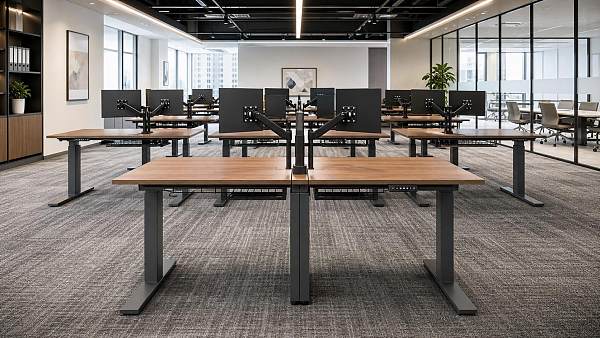
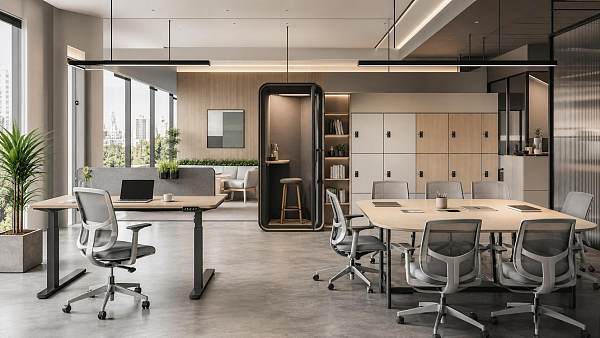
Across corporate offices, smart campuses, hospitality business centers, and shared work environments, adjustable workstations now support both employee wellbeing and flexible space planning. In that context, height adjustable desks bulk has become a procurement category tied to workplace performance, compliance, and project delivery risk. The most reliable comparisons come from understanding which specifications affect everyday use and which ones affect rollout at scale.
Why this category matters in fit-out planning
The move toward sit-stand workstations is no longer limited to premium headquarters. It now appears in education, administrative facilities, co-working projects, and executive hospitality spaces.
That broader adoption changes how buyers compare products. A single workstation may seem straightforward. A rollout of 200 or 2,000 desks is not.
Bulk procurement introduces questions about carton dimensions, assembly speed, spare parts, finish consistency, country-specific power requirements, and repeatability between batches. These factors directly affect installation schedules and post-handover maintenance.
For a platform such as Global Commercial Trade, where sourcing decisions intersect with design standards, compliance, and supplier reliability, height adjustable desks bulk fits a wider commercial pattern. Commercial buyers are no longer looking for furniture in isolation. They are sourcing systems that must perform under operational pressure.
The core specs that deserve early attention
Not every specification carries equal weight. Some affect user comfort. Others shape whether a project stays on budget and on schedule.
Load capacity and real working weight
Quoted load capacity often looks impressive, but it needs context. A desk supporting dual monitors, docking hardware, CPU mounts, privacy screens, and accessories may reach practical limits faster than expected.
The useful question is not the maximum tested load alone. It is whether the desk remains smooth, quiet, and stable under the actual equipment profile planned for the workstation.
Adjustment range
A wide height range supports more users and more use cases. This matters in shared desks, training rooms, flexible offices, and public-facing work areas.
The lower end matters as much as the upper end. If the minimum height is too high, seated ergonomics suffer for shorter users.
Speed, noise, and motor quality
Adjustment speed affects user experience, but noise is often the overlooked metric. In open-plan environments, repeated motor noise can quickly become an irritant.
Dual-motor systems usually offer stronger lifting performance and better balance, especially on larger tops. That does not automatically make them better, but it does matter in higher-demand commercial use.
Frame stability
Stability becomes more critical at standing height. Side-to-side wobble and front-to-back movement can make even a well-finished desk feel under-engineered.
Frame geometry, leg column design, foot depth, crossbeam structure, and top size all influence stability. Mock-up testing should always include full extension.
Comparing specifications in a commercial context
A specification sheet becomes more useful when tied to the intended project environment. The same desk may perform well in one fit-out and poorly in another.
For height adjustable desks bulk, this comparison method prevents overvaluing cosmetic upgrades while missing structural or operational weaknesses.
Control systems, power, and user-facing details
Control functions often decide whether an adjustable desk feels intuitive or frustrating. A basic up-down switch may work for low-frequency use. In shared or premium spaces, memory presets usually make more sense.
Anti-collision technology is also worth close review. The term appears widely, but sensitivity levels and real-world response differ by control box and software tuning.
Power configuration should match destination requirements from the start. Plug type, voltage, cable length, and certification for each market can delay shipments if addressed too late.
Then there are the details users notice immediately: edge finish, handset placement, under-desk clearance, and how neatly cables move during height changes. These points rarely dominate brochures, yet they strongly affect acceptance after installation.
Materials, finishes, and consistency across large orders
In office fit-out projects, consistency matters almost as much as specification. A desk approved from one sample must match production units across all batches.
Frame coating, desktop substrate, laminate durability, edge banding, and color tolerance should be reviewed with batch control in mind. Mixed sheen levels or slight shade shifts can be visible across open-plan floors.
This is especially relevant in mixed-use commercial environments, where office areas sit alongside reception, meeting suites, or hospitality functions. Visual coherence becomes part of the brand environment.
For height adjustable desks bulk, finish approval should include a production standard, not just a showroom sample. That distinction can prevent disputes late in the project.
Compliance and documentation are part of the product
Commercial procurement increasingly treats documentation as a core deliverable. Safety and performance claims need to be verifiable, current, and relevant to the shipment configuration.
For height adjustable desks bulk, that usually means checking test standards, electrical approvals, material declarations, and packaging documentation before purchase orders are finalized.
- Mechanical performance and durability testing
- Electrical safety and regional certification alignment
- Surface emissions or sustainability-related declarations where required
- Installation manuals and spare-part traceability
- Warranty terms tied to commercial rather than residential use
Strong sourcing platforms such as GCT emphasize this layer because procurement risk often hides in incomplete paperwork, not only in factory capability.
What changes when ordering in bulk
The technical desk specification is only one part of the decision. Height adjustable desks bulk must also be judged as a repeatable supply program.
Lead times should be broken down by frame, top, electronics, and packaging. That helps identify which component is most likely to disrupt delivery.
Assembly method matters too. Knock-down structures can reduce freight volume, but they may increase installation labor and site coordination. Pre-assembled units solve one problem while creating another.
Serviceability is equally important. If one control box fails after handover, the replacement path should be straightforward. Spare stock, part coding, and remote diagnostics can make a major difference.
Useful questions before final comparison
- Does the tested sample reflect the exact exported specification?
- Can the supplier hold finish consistency across phased deliveries?
- How are warranty claims handled across multiple locations?
- Which components are proprietary, and which are replaceable locally?
- What is the contingency if motor or controller lead times shift?
A practical way to move from samples to specification
A disciplined review process usually works better than chasing the lowest quote. Start with use cases, then map each one to measurable requirements.
An executive office may prioritize finish quality and quiet performance. A campus or shared office may care more about adjustment range, durability, and maintenance efficiency.
That is where height adjustable desks bulk becomes easier to compare. Once functional, regulatory, and supply criteria are defined together, weak options drop out quickly.
The next step is to build a comparison sheet that combines core specifications, installation assumptions, compliance documents, and post-installation support. That approach creates a clearer basis for supplier shortlisting and reduces surprises during rollout.
In commercial sourcing, the best desk is rarely the one with the most features on paper. It is the one that fits the project, performs consistently, and arrives with the documentation and support needed to complete the fit-out with confidence.
Search News
Hot Articles
- Commercial KitchenWhat Is Driving Demand for Commercial Hospitality Projects Across the GCC?Oct 06, 2026
- Hotel Room AmenitiesHow to Select Hotel Hair Dryers That Balance Guest Safety, Durability, and CostOct 05, 2026
- Restaurant FurnitureFast-Casual Restaurant Interiors: Design Choices That Improve Speed and Guest FlowOct 04, 2026
Popular Tags
Need ExpertConsultation?
Connect with our specialized leisureengineering team for procurementstrategies.
Recommended News
 Sep 02, 2026How to Choose a Glass Acoustic Office Pod for Open-Plan Workplace PrivacyGlass acoustic pod office buying guide: compare privacy, ventilation, safety glass, power, site fit, and supplier support to choose a productive open-plan workspace solution.● Institutional Buyer
 Sep 01, 2026Is CE Marking Enough for Commercial Products Sold in the US?Is CE marking enough for commercial products sold in the US? Learn the key US safety, FCC, listing, and inspection requirements before you buy.● Institutional Buyer
 Sep 04, 2026B2B Office Supplies Procurement: Building a Cost-Controlled Replenishment ProgramB2B office supplies procurement made smarter: build a cost-controlled replenishment program that reduces spend, prevents stockouts, and improves supplier performance.● Institutional Buyer
 Aug 26, 2026How to Choose Automatic Office Coffee Machines for Team Size, Usage, and MaintenanceAutomatic office coffee machines: learn how to choose the right model for team size, daily demand, drink preferences, and maintenance needs to reduce downtime and improve workplace satisfaction.● Institutional Buyer
 Aug 13, 2026What to Look for When Choosing a Wood Executive Office Desk for Daily UseWood executive office desks should do more than look premium. Learn how to compare durability, ergonomics, cable management, and finish quality before you buy.● Institutional Buyer
 Jul 31, 2026How to Choose Institutional Storage Furniture for Schools, Offices, and Public FacilitiesInstitutional storage furniture buying guide for schools, offices, and public facilities—learn how to assess safety, durability, cleaning, locks, and lifecycle cost before you buy.● Institutional Buyer
 Jul 14, 2026Commercial Carpet Tile Price Guide: Cost Factors, Wear Ratings, and Installation ScopeCommercial carpet tile price explained: compare cost factors, wear ratings, and installation scope to choose durable, budget-smart flooring for offices, schools, hotels, and retail.● Institutional Buyer
 Jul 11, 2026How to Compare Motorized, Fixed Frame, and Portable Wholesale Projector ScreensWholesale projector screens compared: discover how motorized, fixed frame, and portable options differ in image quality, flexibility, and sourcing value for commercial projects.● Institutional Buyer
 Jul 10, 2026Desktop Hole Punches Wholesale: What Buyers Should Check Before Placing a Bulk OrderDesktop hole punches wholesale buyers should check quality, accuracy, compliance, total cost, and supplier reliability before placing a bulk order. Read the key checkpoints now.● Institutional Buyer
 Jul 09, 2026Library Bookshelves Wholesale Buying Guide: Materials, Load Capacity, and Layout CostsLibrary bookshelves wholesale guide covering materials, load capacity, and layout costs. Compare options, reduce procurement risk, and choose durable shelving for long-term value.● Institutional Buyer
 Jul 08, 2026Height Adjustable Desks Bulk: Key Specs to Compare for Office Fit-Out ProjectsHeight adjustable desks bulk: compare load, range, stability, noise, compliance, and rollout factors to choose reliable desks for office fit-out projects with less risk.● Institutional Buyer
 Jul 06, 2026FBX Drops 18% as Asia-Europe Furniture Rates FallFBX drops 18% as Asia-Europe furniture rates fall to $1,186/FEU, reshaping office furniture import margins, restocking timing, and shipping plans. See what buyers and exporters should do next.● Institutional Buyer
 Jul 06, 2026Training Chairs With Writing Tablet: What to Check for Classroom Layout and DurabilityTraining chairs with writing tablet: learn how to compare classroom layout, tablet size, frame durability, and maintenance needs to choose smarter, longer-lasting seating.● Institutional Buyer
 Jul 05, 2026Indonesia Tightens Wood Proof for Office Furniture ImportsIndonesia tightens wood proof for office furniture imports from July 3, 2026. Learn FLEGT, certification, customs risks, and how exporters can avoid delays and extra fees.● Institutional Buyer
 Jul 04, 2026How to Choose Educational Furniture for Schools by Age Group, Layout, and DurabilityEducational furniture for schools should match age groups, room layouts, and durability needs. Discover practical buying tips to improve safety, flexibility, and long-term value.● Institutional Buyer
 Jul 03, 2026Europe 40HQ Rates Climb to $6,920 for Large Furniture ShipmentsEurope 40HQ rates climb to $6,920, reshaping large furniture shipments with 9–12 week delays and higher consolidation costs. See what exporters and buyers should do now.● Institutional Buyer
 Jul 03, 2026Adjustable Library Shelves: Load Capacity, Material, and Layout Tips for Smarter Space PlanningAdjustable library shelves: learn how to compare load capacity, materials, and layout options to create safer, more flexible spaces with lower long-term costs.● Institutional Buyer
 Jul 02, 2026Vietnam Tightens Proof Rules for Wood Office FurnitureVietnam tightens proof rules for wood office furniture from July 1, 2026. Learn how FSC-CoC, VPA-FLEGT, and customs delays could impact exporters, sourcing, and delivery plans.● Institutional Buyer
 Jun 29, 2026Workspace Furniture for Offices: What to Compare Before Planning a Hybrid LayoutWorkspace furniture for offices should be compared by flexibility, comfort, space efficiency, and procurement value before planning a hybrid layout. Learn what to review for smarter office decisions.● Institutional Buyer
 Jun 28, 2026How to Evaluate an Institutional Furniture Manufacturer for Schools, Hospitals, and Public SpacesInstitutional furniture manufacturer evaluation guide for schools, hospitals, and public spaces. Learn how to compare compliance, durability, customization, and supply reliability.● Institutional Buyer
 Jun 23, 2026Educational Furniture for Universities: What to Compare Before Buying for Labs and Lecture RoomsEducational furniture for universities: compare lab and lecture room safety, durability, flexibility, and lifecycle cost before buying. Make smarter campus sourcing decisions.● Institutional Buyer
 Jun 22, 2026How to Choose Educational Furniture for Libraries by Age Group, Layout, and UseEducational furniture for libraries should match age groups, layout, and daily use. Discover practical tips to choose safer, flexible, durable solutions that improve learning spaces.● Institutional Buyer
 Jun 18, 2026Wholesale Projector Screens: How to Choose Size, Gain, and Mounting for Each SpaceWholesale projector screens guide: learn how to choose the right size, gain, and mounting for classrooms, boardrooms, hotels, and event spaces for clearer images and smarter sourcing.● Institutional Buyer
 Jun 17, 2026Mobile Pedestals Wholesale Buying Guide: Locking Systems, Sizes, and Bulk PricingMobile pedestals wholesale guide covering locking systems, size options, durability, and bulk pricing to help buyers compare suppliers, cut risk, and secure better-value orders.● Institutional Buyer