Indonesia Tightens Wood Proof for Office Furniture Imports
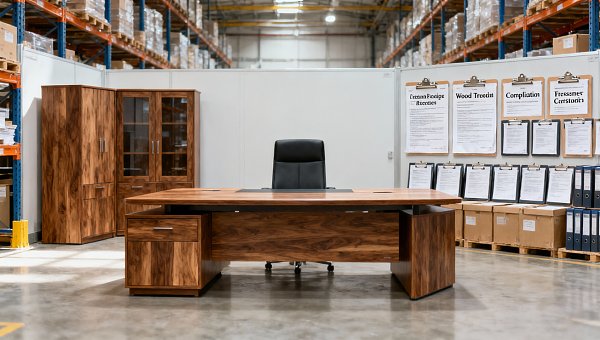
Effective July 3, 2026, Indonesia has introduced a stricter customs compliance requirement for imported office furniture containing solid wood, plywood, or bamboo. Under the new rule, import declarations must be supported by a FLEGT licence or an Indonesia-recognized equivalent sustainable timber certification. This matters directly to office furniture exporters, importers, sourcing teams, manufacturers, and customs-facing supply chain service providers because the requirement sits at the clearance stage and non-compliant shipments may face both release delays and added review costs.

What the New Customs Requirement Confirms
According to the information provided, Indonesia Ministry of Finance Regulation No. 102/PMK.04/2026 took effect on July 3, 2026. The rule applies to office furniture imports that contain solid wood, plywood, or bamboo components.
For customs declaration, covered goods must be accompanied by a FLEGT licence or an equivalent sustainable timber certification recognized by Indonesia. The provided summary cites a dual-standard certificate such as SVLK+CNAS from China as one example of an equivalent form of proof.
The confirmed enforcement consequence is also clear in the provided information: goods that do not meet the requirement will be suspended at customs clearance and will be subject to an additional 20% compliance review fee.
Where the Immediate Pressure Will Be Felt
Exporters shipping office furniture to Indonesia
From an industry perspective, exporters are likely to be affected first because the new rule is tied directly to import declaration documents. The practical pressure point is whether product files for office furniture with wood-based components already include the required proof in a form acceptable at Indonesian customs.
What deserves closer attention is product classification within office furniture lines. Even where the main product is not entirely wood, the presence of solid wood, plywood, or bamboo components can become a compliance trigger at the shipment level.
Manufacturers and sourcing teams managing material inputs
Manufacturing and procurement teams may be affected through bill-of-materials review, supplier qualification, and document matching. If a product contains wood-derived parts, the sourcing side will need to confirm whether upstream material evidence aligns with the certification or licensing documents required for customs filing.
Observably, the impact is not limited to finished goods export teams. It also reaches the stage where companies choose materials, approve suppliers, and assemble compliance files before shipment.
Importers and distributors handling customs release
Importers and channel operators in Indonesia may face direct operational risk if a shipment arrives without acceptable documents. The stated consequence of suspended clearance means inventory timing, delivery schedules, and customer commitments may all come under pressure when documentation is incomplete or disputed.
The additional 20% compliance review fee also makes this more than a paperwork issue. For import-side operators, the rule raises the cost of non-compliance at the point where goods are expected to move into distribution.
Logistics and customs service providers supporting transactions
Supply chain service providers, especially those involved in customs filing and document coordination, are likely to see higher checking requirements on covered shipments. Their exposure is operational rather than regulatory in origin: if the document set is incomplete, the shipment may still be stopped.
Analysis shows that these providers will need sharper screening at booking and pre-declaration stages, particularly for office furniture cargo that may contain mixed materials.
What Companies Should Watch in Practice
Check whether covered products are being identified correctly
The first practical issue is product scope. Companies should focus on whether office furniture models shipped to Indonesia include solid wood, plywood, or bamboo parts, because the rule is framed around material content rather than only around broad product naming.
Verify whether proof documents match Indonesia's acceptance standard
The rule does not merely call for general sustainability language. It specifically requires a FLEGT licence or an equivalent certification recognized by Indonesia. For companies using alternative proof, the key issue is whether that documentation is accepted in the relevant customs context, rather than whether it is sufficient in another market.
Prepare for customs-stage disruption, not only contract-stage review
What deserves closer attention is where the rule bites: customs declaration and clearance. That means the risk is not only commercial or reputational. It can affect shipment release timing directly. Businesses involved in procurement, shipping, and delivery planning should therefore review document readiness before cargo moves, not after arrival.
Align supplier files, shipment documents, and customer communication
Where office furniture programs involve multiple suppliers or mixed material components, companies should watch for inconsistencies between supplier certificates, shipment paperwork, and importer expectations. The practical challenge is less about broad policy interpretation and more about whether every covered shipment can be supported with a document set that holds up during customs review.
Why This Looks Like More Than a Short-Term Filing Issue
Analysis shows that this development is best read as a concrete compliance tightening rather than a purely symbolic policy statement. The reason is straightforward: the requirement has an effective date, applies at the customs declaration stage, and is tied to explicit enforcement consequences including suspended clearance and an added review fee.
At the same time, it is more appropriate to understand this as a rule that still requires continued observation in practice. The information provided confirms the requirement and the penalty mechanism, but market participants will still need to monitor how equivalence recognition, document interpretation, and shipment-level application are handled in actual transactions.
How to Read the Signal at This Stage
At this stage, the industry significance lies in the shift from general sustainability positioning to shipment-level proof at import clearance. For businesses trading office furniture into Indonesia, this is not simply a background policy update. It has immediate relevance for documentation discipline, supplier traceability, and delivery planning.
A neutral reading is that the rule should currently be treated as an actionable compliance change with longer-term signaling value. It does not by itself prove wider market outcomes, but it clearly raises the threshold for wood-related documentation in affected office furniture imports.
Basis of This Article and Ongoing Verification
This article is based on the user-provided news title, event date, and event summary concerning Indonesia's new customs requirement for office furniture containing wood-based components.
For developments of this kind, relevant source categories usually include official government notices, customs announcements, company disclosures, industry association updates, authoritative media coverage, and standards or certification documents. A specific official source link was not provided in the input, so the exact official publication path still requires ongoing verification.
For follow-up tracking, the main points to watch are any further official wording on acceptable equivalent certification, how the requirement is applied in customs practice, and whether additional clarification emerges for covered office furniture categories and supporting documents.
Search News
Hot Articles
- Restaurant FurnitureFast-Casual Restaurant Interiors: Design Choices That Improve Speed and Guest FlowOct 04, 2026
- Outdoor RidesHow to Select Leisure Park Equipment for Safe, High-Throughput Visitor AreasOct 03, 2026
- Fashion & Gem JewelryDiamond Tester Wholesale: How to Vet Accuracy, Calibration, and MOQ Before OrderingOct 02, 2026
Popular Tags
Need ExpertConsultation?
Connect with our specialized leisureengineering team for procurementstrategies.
Recommended News
 Sep 02, 2026How to Choose a Glass Acoustic Office Pod for Open-Plan Workplace PrivacyGlass acoustic pod office buying guide: compare privacy, ventilation, safety glass, power, site fit, and supplier support to choose a productive open-plan workspace solution.● Institutional Buyer
 Sep 01, 2026Is CE Marking Enough for Commercial Products Sold in the US?Is CE marking enough for commercial products sold in the US? Learn the key US safety, FCC, listing, and inspection requirements before you buy.● Institutional Buyer
 Sep 04, 2026B2B Office Supplies Procurement: Building a Cost-Controlled Replenishment ProgramB2B office supplies procurement made smarter: build a cost-controlled replenishment program that reduces spend, prevents stockouts, and improves supplier performance.● Institutional Buyer
 Aug 26, 2026How to Choose Automatic Office Coffee Machines for Team Size, Usage, and MaintenanceAutomatic office coffee machines: learn how to choose the right model for team size, daily demand, drink preferences, and maintenance needs to reduce downtime and improve workplace satisfaction.● Institutional Buyer
 Aug 13, 2026What to Look for When Choosing a Wood Executive Office Desk for Daily UseWood executive office desks should do more than look premium. Learn how to compare durability, ergonomics, cable management, and finish quality before you buy.● Institutional Buyer
 Jul 31, 2026How to Choose Institutional Storage Furniture for Schools, Offices, and Public FacilitiesInstitutional storage furniture buying guide for schools, offices, and public facilities—learn how to assess safety, durability, cleaning, locks, and lifecycle cost before you buy.● Institutional Buyer
 Jul 14, 2026Commercial Carpet Tile Price Guide: Cost Factors, Wear Ratings, and Installation ScopeCommercial carpet tile price explained: compare cost factors, wear ratings, and installation scope to choose durable, budget-smart flooring for offices, schools, hotels, and retail.● Institutional Buyer
 Jul 11, 2026How to Compare Motorized, Fixed Frame, and Portable Wholesale Projector ScreensWholesale projector screens compared: discover how motorized, fixed frame, and portable options differ in image quality, flexibility, and sourcing value for commercial projects.● Institutional Buyer
 Jul 10, 2026Desktop Hole Punches Wholesale: What Buyers Should Check Before Placing a Bulk OrderDesktop hole punches wholesale buyers should check quality, accuracy, compliance, total cost, and supplier reliability before placing a bulk order. Read the key checkpoints now.● Institutional Buyer
 Jul 09, 2026Library Bookshelves Wholesale Buying Guide: Materials, Load Capacity, and Layout CostsLibrary bookshelves wholesale guide covering materials, load capacity, and layout costs. Compare options, reduce procurement risk, and choose durable shelving for long-term value.● Institutional Buyer
 Jul 08, 2026Height Adjustable Desks Bulk: Key Specs to Compare for Office Fit-Out ProjectsHeight adjustable desks bulk: compare load, range, stability, noise, compliance, and rollout factors to choose reliable desks for office fit-out projects with less risk.● Institutional Buyer
 Jul 06, 2026FBX Drops 18% as Asia-Europe Furniture Rates FallFBX drops 18% as Asia-Europe furniture rates fall to $1,186/FEU, reshaping office furniture import margins, restocking timing, and shipping plans. See what buyers and exporters should do next.● Institutional Buyer
 Jul 06, 2026Training Chairs With Writing Tablet: What to Check for Classroom Layout and DurabilityTraining chairs with writing tablet: learn how to compare classroom layout, tablet size, frame durability, and maintenance needs to choose smarter, longer-lasting seating.● Institutional Buyer
 Jul 05, 2026Indonesia Tightens Wood Proof for Office Furniture ImportsIndonesia tightens wood proof for office furniture imports from July 3, 2026. Learn FLEGT, certification, customs risks, and how exporters can avoid delays and extra fees.● Institutional Buyer
 Jul 04, 2026How to Choose Educational Furniture for Schools by Age Group, Layout, and DurabilityEducational furniture for schools should match age groups, room layouts, and durability needs. Discover practical buying tips to improve safety, flexibility, and long-term value.● Institutional Buyer
 Jul 03, 2026Europe 40HQ Rates Climb to $6,920 for Large Furniture ShipmentsEurope 40HQ rates climb to $6,920, reshaping large furniture shipments with 9–12 week delays and higher consolidation costs. See what exporters and buyers should do now.● Institutional Buyer
 Jul 03, 2026Adjustable Library Shelves: Load Capacity, Material, and Layout Tips for Smarter Space PlanningAdjustable library shelves: learn how to compare load capacity, materials, and layout options to create safer, more flexible spaces with lower long-term costs.● Institutional Buyer
 Jul 02, 2026Vietnam Tightens Proof Rules for Wood Office FurnitureVietnam tightens proof rules for wood office furniture from July 1, 2026. Learn how FSC-CoC, VPA-FLEGT, and customs delays could impact exporters, sourcing, and delivery plans.● Institutional Buyer
 Jun 29, 2026Workspace Furniture for Offices: What to Compare Before Planning a Hybrid LayoutWorkspace furniture for offices should be compared by flexibility, comfort, space efficiency, and procurement value before planning a hybrid layout. Learn what to review for smarter office decisions.● Institutional Buyer
 Jun 28, 2026How to Evaluate an Institutional Furniture Manufacturer for Schools, Hospitals, and Public SpacesInstitutional furniture manufacturer evaluation guide for schools, hospitals, and public spaces. Learn how to compare compliance, durability, customization, and supply reliability.● Institutional Buyer
 Jun 23, 2026Educational Furniture for Universities: What to Compare Before Buying for Labs and Lecture RoomsEducational furniture for universities: compare lab and lecture room safety, durability, flexibility, and lifecycle cost before buying. Make smarter campus sourcing decisions.● Institutional Buyer
 Jun 22, 2026How to Choose Educational Furniture for Libraries by Age Group, Layout, and UseEducational furniture for libraries should match age groups, layout, and daily use. Discover practical tips to choose safer, flexible, durable solutions that improve learning spaces.● Institutional Buyer
 Jun 18, 2026Wholesale Projector Screens: How to Choose Size, Gain, and Mounting for Each SpaceWholesale projector screens guide: learn how to choose the right size, gain, and mounting for classrooms, boardrooms, hotels, and event spaces for clearer images and smarter sourcing.● Institutional Buyer
 Jun 17, 2026Mobile Pedestals Wholesale Buying Guide: Locking Systems, Sizes, and Bulk PricingMobile pedestals wholesale guide covering locking systems, size options, durability, and bulk pricing to help buyers compare suppliers, cut risk, and secure better-value orders.● Institutional Buyer