How to Choose Educational Furniture for Libraries by Age Group, Layout, and Use
Choosing educational furniture for libraries now involves far more than matching tables and chairs to a floor plan. It shapes how children read, how students collaborate, how adults study, and how public or campus spaces perform over time. In a market where learning environments are expected to be flexible, durable, and visually coherent, educational furniture for libraries has become a practical design decision with clear operational consequences.
That shift matters across the broader commercial interiors sector. Library projects increasingly sit beside smart campus upgrades, mixed-use education facilities, and civic renovation programs. In those settings, furniture must satisfy safety standards, support circulation, and remain useful under changing teaching models. Insights from sourcing platforms such as Global Commercial Trade reflect the same pattern: buyers are looking for solutions that combine compliance, design quality, and long-term supply reliability.
Why library furniture decisions have become more strategic
A library is rarely a single-purpose room anymore. It can serve as a quiet reading zone in the morning, a group work area in the afternoon, and a community event venue later in the day.
Because of that, educational furniture for libraries must support both stability and change. Fixed elements still matter, but flexible pieces often determine whether a space remains useful after curriculum, technology, or occupancy needs shift.
The commercial value is equally clear. Well-selected furniture reduces replacement cycles, lowers maintenance friction, and improves the daily experience of users. Poorly selected furniture creates bottlenecks, noise conflicts, and higher lifecycle cost.
Start with age group, not product category
One common mistake is starting with catalogs instead of users. Shelving, seating, tables, and mobile units should be evaluated after defining who will use them most often.
Early years and primary settings
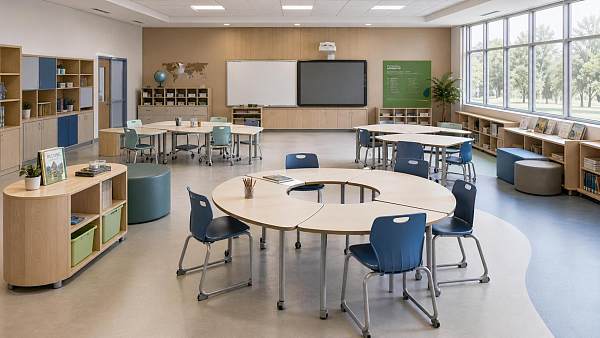
For younger children, reach, scale, and safety drive almost every furniture choice. Rounded edges, low shelving, soft seating, and stable lightweight tables usually work better than oversized institutional pieces.
Furniture should encourage exploration without creating hazards. Open display units help visibility, while color zoning can guide movement between storytelling, reading, and activity areas.
Middle school and secondary libraries
This group needs a stronger balance between individual focus and group interaction. Seating must be comfortable for longer sessions, yet durable enough for high turnover.
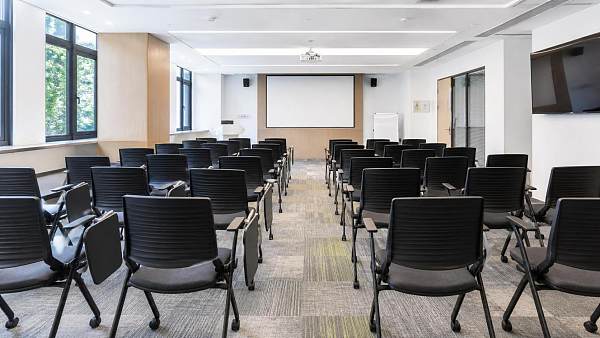
Educational furniture for libraries at this stage often benefits from mobile tables, stackable chairs, and booths or partitions that can manage noise without closing the space visually.
Higher education and adult users
Older users expect ergonomic support, power access, and a choice between quiet concentration and collaborative work. Furniture quality becomes more visible here because study sessions are longer and expectations are higher.
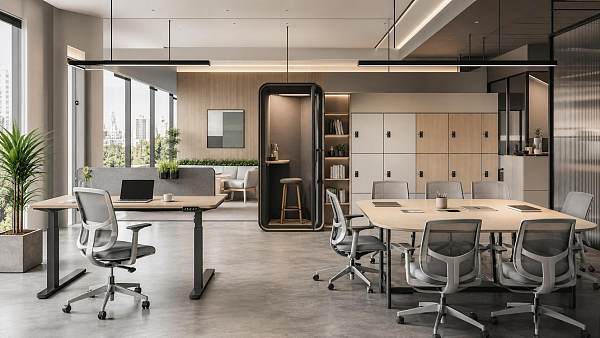
Chairs with proper back support, larger work surfaces, integrated cable management, and acoustic seating pods can all improve usability without overcomplicating the layout.
Layout planning changes what “good” furniture means
The same chair or table can perform well in one library and fail in another. Layout changes the standard. A compact urban library has different circulation pressures than a campus learning commons.
That is why educational furniture for libraries should be tested against zoning, access routes, sightlines, and occupancy density before final selection.
Quiet zones
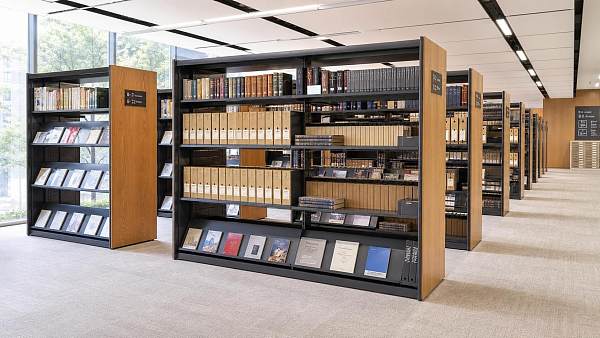
Quiet reading areas need visual calm and consistent spacing. Oversized lounge furniture may look inviting, but it can reduce seat count and disrupt supervision.
Here, stable desks, acoustic-backed seating, and task lighting compatibility matter more than novelty.
Collaborative zones
Group study areas should support movement, discussion, and device use. Tables on casters, writable surfaces, and modular seating help the room adapt without major resets.
However, mobility should not come at the expense of stability. Casters, locks, and frame strength need close review.
Transition and multifunction areas
Entry zones, media corners, and event spaces need furniture that clears quickly and stores efficiently. Foldable or nesting solutions often provide better value than fixed statement pieces.
In practical terms, layout planning is also a procurement issue. Dimensions, assembly methods, and replacement availability can affect installation speed and future reconfiguration.
Daily use should guide material and performance choices
A visually attractive product is not automatically suitable for a busy library. Performance depends on how often it is moved, cleaned, occupied, and exposed to bags, books, and devices.
For that reason, educational furniture for libraries should be reviewed through a daily-use lens, not only an initial design lens.
- Choose surfaces that resist scratches, ink marks, and frequent cleaning chemicals.
- Check edge banding, joints, and hardware on high-contact tables and shelving.
- Review load ratings for mobile units, especially where books and devices mix.
- Confirm upholstery performance if lounge seating is part of the specification.
- Assess whether replacement parts are locally available or easy to source globally.
Compliance remains central as well. Fire performance, material emissions, stability testing, and regional school or public furniture standards should be checked early, not after design approval.
This is where a data-backed sourcing approach becomes useful. In global supply environments, consistency across batches, documentation quality, and verified manufacturing capability often matter as much as unit price.
Balancing aesthetics, durability, and procurement reality
Library interiors are increasingly expected to align with broader campus or civic branding. Furniture therefore contributes to identity, not just function. Still, visual coherence should not lead to over-specification.
A balanced specification usually separates must-have performance criteria from preferred aesthetic features. That prevents decorative finishes from overriding durability or maintainability.
From a sourcing perspective, this also supports cleaner vendor comparison. When commercial buyers evaluate educational furniture for libraries, three questions tend to clarify the shortlist.
- Can the supplier prove compliance, testing, and finish consistency?
- Can the line scale across phases, sites, or future expansion?
- Can replacement, customization, or after-sales support be sustained?
That broader evaluation reflects the commercial logic seen across GCT’s sectors. Whether outfitting hospitality venues or education spaces, reliable sourcing depends on the intersection of design intent, operational demand, and supply chain confidence.
A practical framework for final selection
When options start to look similar, a simple framework can keep decisions grounded. It helps translate design discussions into measurable project criteria.
This approach keeps educational furniture for libraries tied to actual outcomes. It also creates a stronger basis for mock-up review, stakeholder alignment, and phased procurement planning.
Where to focus next
The most effective library furniture strategies usually begin with a short audit: user age mix, key activity types, noise expectations, storage needs, and reconfiguration frequency. From there, product evaluation becomes clearer and far less subjective.
If a project is moving into specification or vendor comparison, it helps to review educational furniture for libraries against a matrix of age group, layout zone, compliance needs, and lifecycle cost. That creates a practical decision path instead of a style-led shortlist.
The right selection is rarely the most elaborate one. It is the one that fits the users, respects the layout, performs every day, and remains dependable as the library evolves.
Search News
Hot Articles
- Stationery & UniformsHow Schools Can Cut Printing Costs When Buying Ink Cartridges in BulkSep 21, 2026
- Jewelry Packaging & DisplayHow to Evaluate a Luxury Retail Packaging Supplier for Premium Brand ConsistencySep 20, 2026
- Commercial KitchenHow to Select a Spiral Dough Mixer for Bakery Batch Size and Dough HydrationSep 19, 2026
Popular Tags
Need ExpertConsultation?
Connect with our specialized leisureengineering team for procurementstrategies.
Recommended News
 Sep 02, 2026How to Choose a Glass Acoustic Office Pod for Open-Plan Workplace PrivacyGlass acoustic pod office buying guide: compare privacy, ventilation, safety glass, power, site fit, and supplier support to choose a productive open-plan workspace solution.● Institutional Buyer
 Sep 01, 2026Is CE Marking Enough for Commercial Products Sold in the US?Is CE marking enough for commercial products sold in the US? Learn the key US safety, FCC, listing, and inspection requirements before you buy.● Institutional Buyer
 Sep 04, 2026B2B Office Supplies Procurement: Building a Cost-Controlled Replenishment ProgramB2B office supplies procurement made smarter: build a cost-controlled replenishment program that reduces spend, prevents stockouts, and improves supplier performance.● Institutional Buyer
 Aug 26, 2026How to Choose Automatic Office Coffee Machines for Team Size, Usage, and MaintenanceAutomatic office coffee machines: learn how to choose the right model for team size, daily demand, drink preferences, and maintenance needs to reduce downtime and improve workplace satisfaction.● Institutional Buyer
 Aug 13, 2026What to Look for When Choosing a Wood Executive Office Desk for Daily UseWood executive office desks should do more than look premium. Learn how to compare durability, ergonomics, cable management, and finish quality before you buy.● Institutional Buyer
 Jul 31, 2026How to Choose Institutional Storage Furniture for Schools, Offices, and Public FacilitiesInstitutional storage furniture buying guide for schools, offices, and public facilities—learn how to assess safety, durability, cleaning, locks, and lifecycle cost before you buy.● Institutional Buyer
 Jul 14, 2026Commercial Carpet Tile Price Guide: Cost Factors, Wear Ratings, and Installation ScopeCommercial carpet tile price explained: compare cost factors, wear ratings, and installation scope to choose durable, budget-smart flooring for offices, schools, hotels, and retail.● Institutional Buyer
 Jul 11, 2026How to Compare Motorized, Fixed Frame, and Portable Wholesale Projector ScreensWholesale projector screens compared: discover how motorized, fixed frame, and portable options differ in image quality, flexibility, and sourcing value for commercial projects.● Institutional Buyer
 Jul 10, 2026Desktop Hole Punches Wholesale: What Buyers Should Check Before Placing a Bulk OrderDesktop hole punches wholesale buyers should check quality, accuracy, compliance, total cost, and supplier reliability before placing a bulk order. Read the key checkpoints now.● Institutional Buyer
 Jul 09, 2026Library Bookshelves Wholesale Buying Guide: Materials, Load Capacity, and Layout CostsLibrary bookshelves wholesale guide covering materials, load capacity, and layout costs. Compare options, reduce procurement risk, and choose durable shelving for long-term value.● Institutional Buyer
 Jul 08, 2026Height Adjustable Desks Bulk: Key Specs to Compare for Office Fit-Out ProjectsHeight adjustable desks bulk: compare load, range, stability, noise, compliance, and rollout factors to choose reliable desks for office fit-out projects with less risk.● Institutional Buyer
 Jul 06, 2026FBX Drops 18% as Asia-Europe Furniture Rates FallFBX drops 18% as Asia-Europe furniture rates fall to $1,186/FEU, reshaping office furniture import margins, restocking timing, and shipping plans. See what buyers and exporters should do next.● Institutional Buyer
 Jul 06, 2026Training Chairs With Writing Tablet: What to Check for Classroom Layout and DurabilityTraining chairs with writing tablet: learn how to compare classroom layout, tablet size, frame durability, and maintenance needs to choose smarter, longer-lasting seating.● Institutional Buyer
 Jul 05, 2026Indonesia Tightens Wood Proof for Office Furniture ImportsIndonesia tightens wood proof for office furniture imports from July 3, 2026. Learn FLEGT, certification, customs risks, and how exporters can avoid delays and extra fees.● Institutional Buyer
 Jul 04, 2026How to Choose Educational Furniture for Schools by Age Group, Layout, and DurabilityEducational furniture for schools should match age groups, room layouts, and durability needs. Discover practical buying tips to improve safety, flexibility, and long-term value.● Institutional Buyer
 Jul 03, 2026Europe 40HQ Rates Climb to $6,920 for Large Furniture ShipmentsEurope 40HQ rates climb to $6,920, reshaping large furniture shipments with 9–12 week delays and higher consolidation costs. See what exporters and buyers should do now.● Institutional Buyer
 Jul 03, 2026Adjustable Library Shelves: Load Capacity, Material, and Layout Tips for Smarter Space PlanningAdjustable library shelves: learn how to compare load capacity, materials, and layout options to create safer, more flexible spaces with lower long-term costs.● Institutional Buyer
 Jul 02, 2026Vietnam Tightens Proof Rules for Wood Office FurnitureVietnam tightens proof rules for wood office furniture from July 1, 2026. Learn how FSC-CoC, VPA-FLEGT, and customs delays could impact exporters, sourcing, and delivery plans.● Institutional Buyer
 Jun 29, 2026Workspace Furniture for Offices: What to Compare Before Planning a Hybrid LayoutWorkspace furniture for offices should be compared by flexibility, comfort, space efficiency, and procurement value before planning a hybrid layout. Learn what to review for smarter office decisions.● Institutional Buyer
 Jun 28, 2026How to Evaluate an Institutional Furniture Manufacturer for Schools, Hospitals, and Public SpacesInstitutional furniture manufacturer evaluation guide for schools, hospitals, and public spaces. Learn how to compare compliance, durability, customization, and supply reliability.● Institutional Buyer
 Jun 23, 2026Educational Furniture for Universities: What to Compare Before Buying for Labs and Lecture RoomsEducational furniture for universities: compare lab and lecture room safety, durability, flexibility, and lifecycle cost before buying. Make smarter campus sourcing decisions.● Institutional Buyer
 Jun 22, 2026How to Choose Educational Furniture for Libraries by Age Group, Layout, and UseEducational furniture for libraries should match age groups, layout, and daily use. Discover practical tips to choose safer, flexible, durable solutions that improve learning spaces.● Institutional Buyer
 Jun 18, 2026Wholesale Projector Screens: How to Choose Size, Gain, and Mounting for Each SpaceWholesale projector screens guide: learn how to choose the right size, gain, and mounting for classrooms, boardrooms, hotels, and event spaces for clearer images and smarter sourcing.● Institutional Buyer
 Jun 17, 2026Mobile Pedestals Wholesale Buying Guide: Locking Systems, Sizes, and Bulk PricingMobile pedestals wholesale guide covering locking systems, size options, durability, and bulk pricing to help buyers compare suppliers, cut risk, and secure better-value orders.● Institutional Buyer