How to Choose Educational Furniture for Schools by Age Group, Layout, and Durability
Choosing educational furniture for schools is a strategic facilities decision, not a late-stage fit-out task. Age range, room layout, durability, and compliance all shape how furniture performs over time. In school projects, the right specification supports concentration, circulation, safety, maintenance control, and capital efficiency. That is why educational furniture for schools now sits closer to procurement planning, design coordination, and lifecycle value than to simple product selection.
Why the category deserves closer attention
School environments have changed. Classrooms are expected to support direct instruction, group work, device use, testing, and flexible scheduling within the same footprint.
That shift raises the standard for educational furniture for schools. A desk is no longer only a writing surface. A chair is no longer only a seat.
Furniture now influences acoustics, movement, storage discipline, and even how quickly a room can change from one teaching mode to another.
From a broader commercial sourcing perspective, this also connects with the way GCT approaches institutional buying. Smart campus projects require the same rigor seen in hospitality and premium commercial spaces: reliable supply, proven standards, and design that works in daily use.
Start with age group, not catalog style
The most common mistake is choosing a unified visual language before confirming ergonomic fit. Educational furniture for schools should first match the physical needs and behavior patterns of the students using it.
Early years and primary spaces
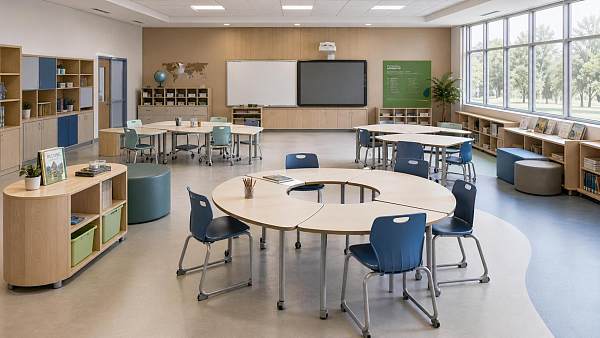
Younger students need lower heights, rounded edges, stable bases, and surfaces that tolerate frequent cleaning. Lightweight pieces help reconfigure activity zones without creating handling risk.
Color can support wayfinding and zone recognition, but durability matters more than decoration. Finishes should resist scratching, moisture, and staining from intensive daily use.
Middle school environments
This stage usually demands more adaptability. Students use notebooks, digital devices, and shared resources, so desks need enough usable surface without reducing circulation.
Seating should support longer sessions and varied postures. Stackability and mobility become more relevant where classrooms serve multiple subjects.
Secondary and advanced learning spaces
Older students usually require furniture closer to adult dimensions, but the specification still needs an academic lens. Long sessions, independent work, and technology integration increase ergonomic demands.
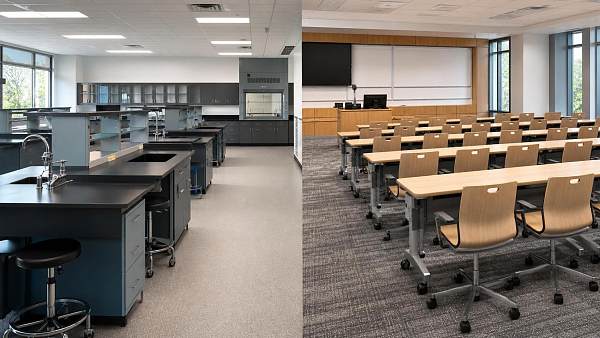
In labs, studios, libraries, and seminar rooms, educational furniture for schools should reflect task type. Uniformity across all rooms often reduces effectiveness rather than simplifying operations.
Layout determines whether furniture will really work
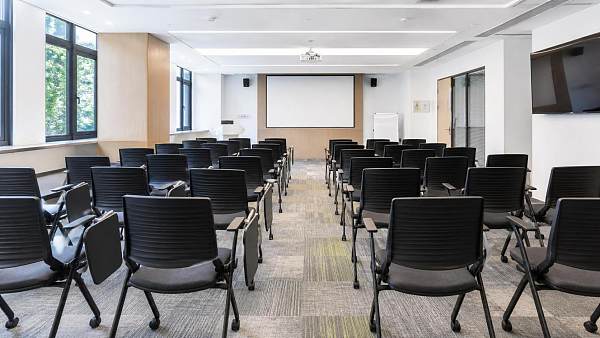
A strong product can still fail in a poor layout. Furniture selection should be tested against room dimensions, door swings, teaching walls, storage zones, and power access.
Educational furniture for schools performs best when layout planning happens before final quantities are locked. This is where many budget overruns and usability issues begin.
Typical layout questions to resolve
- Will the room prioritize lecture rows, clusters, or hybrid formats?
- How much aisle width is needed for safe movement and supervision?
- Do mobile pieces require locking casters or fixed glides?
- Can bags, devices, and teaching materials be stored without cluttering floors?
- Will cleaning teams have enough access around and under the furniture?
Simple layout checks often reveal whether a two-person desk, individual table, or trapezoid collaborative unit is the better long-term choice.
Specialized rooms need separate logic
Libraries, maker spaces, cafeterias, music rooms, and administrative learning hubs should not inherit the same furniture standard used in general classrooms.
Each space has its own traffic pattern, supervision needs, and wear profile. In practice, a better furniture schedule separates general use, specialist use, and high-abuse areas.
Durability is a cost issue, not just a material issue
Durability should be measured through lifecycle performance. The purchase price matters, but replacement frequency, maintenance labor, and downtime often matter more.
For educational furniture for schools, high durability usually comes from a combination of frame strength, joint quality, edge protection, finish resistance, and spare-part availability.
The more demanding the environment, the more important verification becomes. Testing data, warranty terms, and reference projects provide stronger evidence than a polished brochure.
Compliance, safety, and daily operation
Safety standards should be built into the selection process from the start. That includes stability, edge design, fire performance where relevant, and low-emission materials.
Educational furniture for schools also needs to support daily operational discipline. Furniture that is hard to clean, hard to move, or hard to repair creates hidden cost pressure.
In international sourcing, buyers often compare compliance documentation across regions. That fits the GCT model of data-backed evaluation, where procurement quality depends on both product evidence and supplier reliability.
Useful questions during evaluation
- Are relevant test reports current and traceable to the offered model?
- Can the supplier maintain finish consistency across phased deliveries?
- Are replacement parts available within the project region?
- Does packaging protect goods during international shipment and site handling?
- Can the product line scale if enrollment or room count changes later?
Balancing standardization with flexibility
Large education projects often benefit from standardization, but too much uniformity can create operational compromises. The better approach is controlled variation.
That means standardizing frames, finishes, or hardware where possible, while adjusting dimensions and functions by age group or room type.
This approach keeps procurement manageable and supports spare-part planning, yet still respects the real differences between kindergarten rooms, STEM labs, and collaborative secondary spaces.
For educational furniture for schools, flexibility works best when it is intentional. Random product mixing usually weakens maintenance control and visual coherence.
A practical decision framework
A strong furniture brief usually answers four questions before supplier comparison starts: who uses the space, how the room operates, what level of wear is expected, and what evidence proves long-term value.
That brief can then be translated into measurable criteria for educational furniture for schools, including dimension ranges, layout fit, materials, testing standards, warranty coverage, and logistics requirements.
Mock-up reviews are worth the time. Even a small pilot can expose issues with sightlines, bag storage, cleaning access, or chair comfort that drawings alone may miss.
The next step is rarely to choose the cheapest set. It is to compare options against a clear use profile, verify supporting data, and prioritize solutions that stay functional across years of heavy educational use.
When educational furniture for schools is evaluated through age fit, layout logic, and durability evidence, the result is usually a better learning environment and a more defensible project outcome.
Search News
Hot Articles
- Outdoor RidesHow to Select Leisure Park Equipment for Safe, High-Throughput Visitor AreasOct 03, 2026
- Fashion & Gem JewelryDiamond Tester Wholesale: How to Vet Accuracy, Calibration, and MOQ Before OrderingOct 02, 2026
- Hotel Room AmenitiesHow Hotels Can Choose Amenity Bottles That Balance Brand Image and Refill CostsOct 01, 2026
Popular Tags
Need ExpertConsultation?
Connect with our specialized leisureengineering team for procurementstrategies.
Recommended News
 Sep 02, 2026How to Choose a Glass Acoustic Office Pod for Open-Plan Workplace PrivacyGlass acoustic pod office buying guide: compare privacy, ventilation, safety glass, power, site fit, and supplier support to choose a productive open-plan workspace solution.● Institutional Buyer
 Sep 01, 2026Is CE Marking Enough for Commercial Products Sold in the US?Is CE marking enough for commercial products sold in the US? Learn the key US safety, FCC, listing, and inspection requirements before you buy.● Institutional Buyer
 Sep 04, 2026B2B Office Supplies Procurement: Building a Cost-Controlled Replenishment ProgramB2B office supplies procurement made smarter: build a cost-controlled replenishment program that reduces spend, prevents stockouts, and improves supplier performance.● Institutional Buyer
 Aug 26, 2026How to Choose Automatic Office Coffee Machines for Team Size, Usage, and MaintenanceAutomatic office coffee machines: learn how to choose the right model for team size, daily demand, drink preferences, and maintenance needs to reduce downtime and improve workplace satisfaction.● Institutional Buyer
 Aug 13, 2026What to Look for When Choosing a Wood Executive Office Desk for Daily UseWood executive office desks should do more than look premium. Learn how to compare durability, ergonomics, cable management, and finish quality before you buy.● Institutional Buyer
 Jul 31, 2026How to Choose Institutional Storage Furniture for Schools, Offices, and Public FacilitiesInstitutional storage furniture buying guide for schools, offices, and public facilities—learn how to assess safety, durability, cleaning, locks, and lifecycle cost before you buy.● Institutional Buyer
 Jul 14, 2026Commercial Carpet Tile Price Guide: Cost Factors, Wear Ratings, and Installation ScopeCommercial carpet tile price explained: compare cost factors, wear ratings, and installation scope to choose durable, budget-smart flooring for offices, schools, hotels, and retail.● Institutional Buyer
 Jul 11, 2026How to Compare Motorized, Fixed Frame, and Portable Wholesale Projector ScreensWholesale projector screens compared: discover how motorized, fixed frame, and portable options differ in image quality, flexibility, and sourcing value for commercial projects.● Institutional Buyer
 Jul 10, 2026Desktop Hole Punches Wholesale: What Buyers Should Check Before Placing a Bulk OrderDesktop hole punches wholesale buyers should check quality, accuracy, compliance, total cost, and supplier reliability before placing a bulk order. Read the key checkpoints now.● Institutional Buyer
 Jul 09, 2026Library Bookshelves Wholesale Buying Guide: Materials, Load Capacity, and Layout CostsLibrary bookshelves wholesale guide covering materials, load capacity, and layout costs. Compare options, reduce procurement risk, and choose durable shelving for long-term value.● Institutional Buyer
 Jul 08, 2026Height Adjustable Desks Bulk: Key Specs to Compare for Office Fit-Out ProjectsHeight adjustable desks bulk: compare load, range, stability, noise, compliance, and rollout factors to choose reliable desks for office fit-out projects with less risk.● Institutional Buyer
 Jul 06, 2026FBX Drops 18% as Asia-Europe Furniture Rates FallFBX drops 18% as Asia-Europe furniture rates fall to $1,186/FEU, reshaping office furniture import margins, restocking timing, and shipping plans. See what buyers and exporters should do next.● Institutional Buyer
 Jul 06, 2026Training Chairs With Writing Tablet: What to Check for Classroom Layout and DurabilityTraining chairs with writing tablet: learn how to compare classroom layout, tablet size, frame durability, and maintenance needs to choose smarter, longer-lasting seating.● Institutional Buyer
 Jul 05, 2026Indonesia Tightens Wood Proof for Office Furniture ImportsIndonesia tightens wood proof for office furniture imports from July 3, 2026. Learn FLEGT, certification, customs risks, and how exporters can avoid delays and extra fees.● Institutional Buyer
 Jul 04, 2026How to Choose Educational Furniture for Schools by Age Group, Layout, and DurabilityEducational furniture for schools should match age groups, room layouts, and durability needs. Discover practical buying tips to improve safety, flexibility, and long-term value.● Institutional Buyer
 Jul 03, 2026Europe 40HQ Rates Climb to $6,920 for Large Furniture ShipmentsEurope 40HQ rates climb to $6,920, reshaping large furniture shipments with 9–12 week delays and higher consolidation costs. See what exporters and buyers should do now.● Institutional Buyer
 Jul 03, 2026Adjustable Library Shelves: Load Capacity, Material, and Layout Tips for Smarter Space PlanningAdjustable library shelves: learn how to compare load capacity, materials, and layout options to create safer, more flexible spaces with lower long-term costs.● Institutional Buyer
 Jul 02, 2026Vietnam Tightens Proof Rules for Wood Office FurnitureVietnam tightens proof rules for wood office furniture from July 1, 2026. Learn how FSC-CoC, VPA-FLEGT, and customs delays could impact exporters, sourcing, and delivery plans.● Institutional Buyer
 Jun 29, 2026Workspace Furniture for Offices: What to Compare Before Planning a Hybrid LayoutWorkspace furniture for offices should be compared by flexibility, comfort, space efficiency, and procurement value before planning a hybrid layout. Learn what to review for smarter office decisions.● Institutional Buyer
 Jun 28, 2026How to Evaluate an Institutional Furniture Manufacturer for Schools, Hospitals, and Public SpacesInstitutional furniture manufacturer evaluation guide for schools, hospitals, and public spaces. Learn how to compare compliance, durability, customization, and supply reliability.● Institutional Buyer
 Jun 23, 2026Educational Furniture for Universities: What to Compare Before Buying for Labs and Lecture RoomsEducational furniture for universities: compare lab and lecture room safety, durability, flexibility, and lifecycle cost before buying. Make smarter campus sourcing decisions.● Institutional Buyer
 Jun 22, 2026How to Choose Educational Furniture for Libraries by Age Group, Layout, and UseEducational furniture for libraries should match age groups, layout, and daily use. Discover practical tips to choose safer, flexible, durable solutions that improve learning spaces.● Institutional Buyer
 Jun 18, 2026Wholesale Projector Screens: How to Choose Size, Gain, and Mounting for Each SpaceWholesale projector screens guide: learn how to choose the right size, gain, and mounting for classrooms, boardrooms, hotels, and event spaces for clearer images and smarter sourcing.● Institutional Buyer
 Jun 17, 2026Mobile Pedestals Wholesale Buying Guide: Locking Systems, Sizes, and Bulk PricingMobile pedestals wholesale guide covering locking systems, size options, durability, and bulk pricing to help buyers compare suppliers, cut risk, and secure better-value orders.● Institutional Buyer