What to Look for When Choosing a Wood Executive Office Desk for Daily Use
What to Look for When Choosing a Wood Executive Office Desk for Daily Use
Choosing wood executive office desks for daily use sounds simple until the desk has to survive real work: laptops and docking stations, constant cleaning, video calls, paperwork, visitors leaning on the front edge, and the quiet expectation that it should still look appropriate two or three years later. In procurement, this is rarely just a furniture decision. It sits at the intersection of durability, executive image, ergonomics, maintenance, and supply reliability.
That is why the best desk on a showroom floor is not always the best desk for an operational office. A polished wood surface may photograph well, but if it scratches too easily, shows heat marks, or cannot accommodate power access and cable routing, it becomes an expensive compromise. In commercial environments, especially those shaped by hospitality standards, smart campus planning, or premium client-facing offices, buyers usually need a desk that performs as hard as it presents.
A practical evaluation starts with one question: what will this desk actually be asked to do every day?
Start with use case, not finish color
Executive desks are often selected late in a fit-out process, after flooring, wall finishes, and brand aesthetics are already fixed. That can push the conversation toward appearance too early. Daily-use performance should come first. A desk for a private managing director’s office is not the same as one for a dean’s suite, a hotel administration office, or a luxury retail back-office that occasionally hosts suppliers.
If the user spends long hours at the desk, depth and leg clearance matter more than decorative bulk. If the office regularly receives visitors, front-panel modesty design and edge detailing become more important. If the desk will support multiple monitors, a CPU, chargers, and paper files, then integrated cable management and surface resilience are not optional. Buyers who skip this use-case mapping often end up choosing oversized desks that look substantial but work poorly in real rooms.
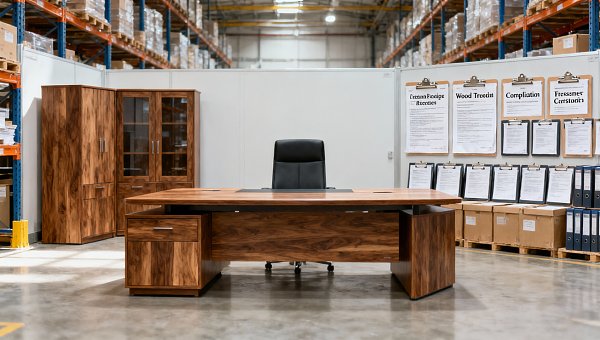
One common mistake is treating all wood desks as “premium” by default. They are not. Construction method, substrate, veneer quality, edge treatment, and coating system make a bigger difference than the broad label of wood.
Know what “wood” really means in commercial furniture
When suppliers describe wood executive office desks, they may be referring to solid wood, wood veneer over engineered core, or wood-look surfaces built around MDF, particleboard, or plywood. None of these is automatically right or wrong. The right choice depends on the environment, budget, expected lifespan, and finish requirements.
Solid wood can offer a strong tactile impression and long-term repairability, but it is also more sensitive to humidity shifts, material movement, and cost volatility. Veneered constructions are common in commercial applications because they provide a consistent appearance with better dimensional stability when properly built. Lower-cost board-based desks may suit light-duty use, though edge failure, hardware loosening, and surface wear tend to show earlier if the specification is weak.
This is where procurement teams should ask direct questions: What is the core material? What is the veneer thickness, if any? Are the edges solid lipping, PVC edge banding, or another treatment? What finish system is used on the top surface? A supplier that cannot answer these clearly is not giving you enough to make a dependable decision.
The desktop is the highest-risk surface
For daily use, the top panel deserves more scrutiny than any other part of the desk. It takes the most abuse and often determines whether the product still feels executive after a year of use. Look closely at scratch resistance, stain resistance, heat tolerance, and ease of cleaning. In practice, coffee cups, hand sanitizers, mouse movement, metal accessories, and aggressive cleaning cloths do more damage than most buyers expect.
A beautiful open-pore finish may be acceptable in low-touch residential settings, but in a commercial office it can trap dust, show oils, and age unevenly. High-gloss finishes create visual impact, yet they reveal fingerprints and micro-scratches quickly. Matte, sealed finishes are often a better operational choice because they balance appearance and maintenance. They may look slightly less dramatic on day one, but they usually age better in busy executive environments.
If samples are available, testing them with the cleaning products used by the facility team is worth the effort. That small step often reveals more than a product brochure.
Ergonomics should not be sacrificed for executive styling
Some executive desks still borrow proportions from older formal office styles: thick aprons, bulky pedestals, and large return sections that look authoritative but reduce usable legroom. For someone working daily at a screen, that becomes a problem fast. Standard desk height in many markets is typically around 730 to 760 mm, but the number alone is not enough. Knee space, reach distance, and monitor placement matter just as much.
A desk that is too shallow can push screens uncomfortably close. One that is too deep can force awkward reach for keyboard and writing tasks. If users alternate between digital work and meetings at the desk, shape also matters. Straight desks, L-shape configurations, and integrated credenza arrangements each support different workflows. There is no universal best option, but there is usually a best fit for the role.
In newer office planning, especially where commercial spaces are expected to blend prestige with practicality, a desk should support both seated work and technology access without making the room feel furniture-heavy. That balance is harder to achieve than many catalog images suggest.
Storage is useful, but integrated storage can create problems
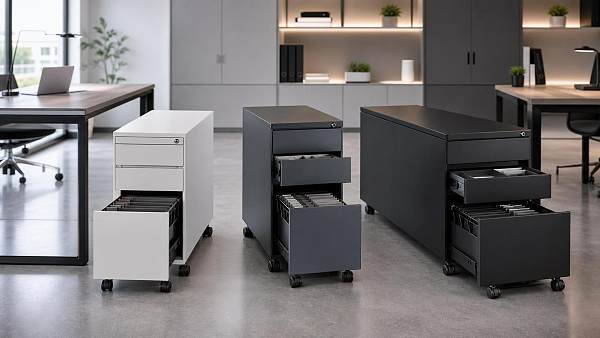
Drawers, pedestals, side returns, and credenzas look efficient on paper, yet too much built-in storage often reduces flexibility. If office layouts change, or if left-hand and right-hand configurations need to be mixed, fixed storage can become a constraint. It can also increase shipping volume, installation complexity, and replacement cost if one part is damaged.
The better approach is to decide what actually needs to stay at the desk. For many executives today, secure storage requirements are lighter than they were ten years ago because records are digital and personal devices carry much of the daily workload. In those cases, one lockable drawer and a clean auxiliary cabinet may be more practical than a massive pedestal base. For legal, finance, or education settings where paper files are still active, stronger integrated storage may still make sense.
This is one of those categories where “more” often looks premium but does not always function better.
Pay attention to joinery, hardware, and understructure
A desk can have an impressive veneer and still fail because of weak hardware or poor structural design. Procurement teams should inspect how the desk is assembled. Are the pedestals fully supporting the top, or is there a long unsupported span? Is the modesty panel structural or decorative? Are drawer runners commercial grade? Can handles, locks, and hinges be replaced without sourcing a completely new unit?
Flat-pack designs may reduce freight cost, but they need well-engineered connectors and stable tolerances. Otherwise, wobble, misalignment, and visible joint separation appear over time. Fully assembled desks reduce onsite risk, but they create access and delivery constraints, especially in urban buildings with tight elevators or narrow corridors. There is no single correct answer here; the right decision depends on the project’s logistics profile.
Experienced sourcing teams tend to request assembly drawings, hardware specifications, and packaging details early. That habit saves time later, particularly on international orders.
Compliance and environmental claims need verification
In commercial procurement, material safety and emissions can be just as important as appearance. If the desk uses engineered wood components, buyers may need to confirm formaldehyde emission requirements or other local compliance expectations, depending on destination market and project type. Surface coatings, fire performance expectations, and workplace safety standards may also need review in certain sectors.
This is especially relevant for institutional buyers and multinational projects, where local fit-out approvals or internal ESG policies can affect furniture acceptance. Sustainability claims should be treated carefully. “Eco-friendly wood” is not a specification. If a project requires certified timber sourcing, low-emission panels, or traceable materials, ask for the exact supporting documentation and confirm whether it applies to the finished desk, not just one component somewhere in the bill of materials.
In global sourcing environments, the gap between marketing language and project documentation is often wider than buyers expect.
Brand fit matters, but so does room context
An executive desk rarely stands alone. It has to work with flooring, wall finishes, task seating, storage, meeting chairs, and often lighting that is chosen to project a certain level of professionalism or prestige. A dark walnut desk may feel right in a law office or private board setting, but too heavy in a contemporary education campus. A light oak tone can feel clean and modern, yet may not support a luxury brand environment if the rest of the space leans formal.
This is where cross-sector sourcing intelligence becomes useful. Teams working across hospitality, office, education, and specialty retail have seen how finish decisions affect visitor perception, maintenance burden, and replacement cycles. That broader perspective is part of why commercial buyers increasingly rely on curated sourcing platforms such as Global Commercial Trade, where office furniture is viewed in relation to the wider experience of the space rather than as an isolated product category.
Do not ignore lead time, consistency, and after-sales realities
For one-off purchases, buyers can sometimes absorb finish variation or a delayed replacement panel. For multi-room projects or phased rollouts, consistency becomes critical. Wood tones can vary between production batches, and veneer selection can shift the appearance more than expected. If the project requires matched executive suites across sites or delivery stages, sample approval and batch control should be discussed before the order is placed.
After-sales support is just as important. Can the supplier provide replacement drawer fronts, tops, or hardware later? Will finish discontinuation be a problem if the client expands the office next year? These are not glamorous questions, but they are the ones that usually separate a smooth procurement outcome from a frustrating one.
A short evaluation framework that actually helps
If a desk performs well across those five areas, it is usually worth serious consideration. If it only performs in the showroom, it probably is not.
The better wood executive office desks are rarely the flashiest ones. They are the desks that still feel solid after daily use, fit the room without dominating it, support modern work habits, and come with enough technical clarity that procurement is not forced to guess. That is the real standard. Before approving a final selection, it is worth reviewing one physical sample, one detailed specification sheet, and one honest conversation about how the desk will be used. Those three steps catch most of the mistakes that polished catalogs do not.
Search News
Hot Articles
- Outdoor RidesHow to Select Leisure Park Equipment for Safe, High-Throughput Visitor AreasOct 03, 2026
- Fashion & Gem JewelryDiamond Tester Wholesale: How to Vet Accuracy, Calibration, and MOQ Before OrderingOct 02, 2026
- Hotel Room AmenitiesHow Hotels Can Choose Amenity Bottles That Balance Brand Image and Refill CostsOct 01, 2026
Popular Tags
Need ExpertConsultation?
Connect with our specialized leisureengineering team for procurementstrategies.
Recommended News
 Sep 02, 2026How to Choose a Glass Acoustic Office Pod for Open-Plan Workplace PrivacyGlass acoustic pod office buying guide: compare privacy, ventilation, safety glass, power, site fit, and supplier support to choose a productive open-plan workspace solution.● Institutional Buyer
 Sep 01, 2026Is CE Marking Enough for Commercial Products Sold in the US?Is CE marking enough for commercial products sold in the US? Learn the key US safety, FCC, listing, and inspection requirements before you buy.● Institutional Buyer
 Sep 04, 2026B2B Office Supplies Procurement: Building a Cost-Controlled Replenishment ProgramB2B office supplies procurement made smarter: build a cost-controlled replenishment program that reduces spend, prevents stockouts, and improves supplier performance.● Institutional Buyer
 Aug 26, 2026How to Choose Automatic Office Coffee Machines for Team Size, Usage, and MaintenanceAutomatic office coffee machines: learn how to choose the right model for team size, daily demand, drink preferences, and maintenance needs to reduce downtime and improve workplace satisfaction.● Institutional Buyer
 Aug 13, 2026What to Look for When Choosing a Wood Executive Office Desk for Daily UseWood executive office desks should do more than look premium. Learn how to compare durability, ergonomics, cable management, and finish quality before you buy.● Institutional Buyer
 Jul 31, 2026How to Choose Institutional Storage Furniture for Schools, Offices, and Public FacilitiesInstitutional storage furniture buying guide for schools, offices, and public facilities—learn how to assess safety, durability, cleaning, locks, and lifecycle cost before you buy.● Institutional Buyer
 Jul 14, 2026Commercial Carpet Tile Price Guide: Cost Factors, Wear Ratings, and Installation ScopeCommercial carpet tile price explained: compare cost factors, wear ratings, and installation scope to choose durable, budget-smart flooring for offices, schools, hotels, and retail.● Institutional Buyer
 Jul 11, 2026How to Compare Motorized, Fixed Frame, and Portable Wholesale Projector ScreensWholesale projector screens compared: discover how motorized, fixed frame, and portable options differ in image quality, flexibility, and sourcing value for commercial projects.● Institutional Buyer
 Jul 10, 2026Desktop Hole Punches Wholesale: What Buyers Should Check Before Placing a Bulk OrderDesktop hole punches wholesale buyers should check quality, accuracy, compliance, total cost, and supplier reliability before placing a bulk order. Read the key checkpoints now.● Institutional Buyer
 Jul 09, 2026Library Bookshelves Wholesale Buying Guide: Materials, Load Capacity, and Layout CostsLibrary bookshelves wholesale guide covering materials, load capacity, and layout costs. Compare options, reduce procurement risk, and choose durable shelving for long-term value.● Institutional Buyer
 Jul 08, 2026Height Adjustable Desks Bulk: Key Specs to Compare for Office Fit-Out ProjectsHeight adjustable desks bulk: compare load, range, stability, noise, compliance, and rollout factors to choose reliable desks for office fit-out projects with less risk.● Institutional Buyer
 Jul 06, 2026FBX Drops 18% as Asia-Europe Furniture Rates FallFBX drops 18% as Asia-Europe furniture rates fall to $1,186/FEU, reshaping office furniture import margins, restocking timing, and shipping plans. See what buyers and exporters should do next.● Institutional Buyer
 Jul 06, 2026Training Chairs With Writing Tablet: What to Check for Classroom Layout and DurabilityTraining chairs with writing tablet: learn how to compare classroom layout, tablet size, frame durability, and maintenance needs to choose smarter, longer-lasting seating.● Institutional Buyer
 Jul 05, 2026Indonesia Tightens Wood Proof for Office Furniture ImportsIndonesia tightens wood proof for office furniture imports from July 3, 2026. Learn FLEGT, certification, customs risks, and how exporters can avoid delays and extra fees.● Institutional Buyer
 Jul 04, 2026How to Choose Educational Furniture for Schools by Age Group, Layout, and DurabilityEducational furniture for schools should match age groups, room layouts, and durability needs. Discover practical buying tips to improve safety, flexibility, and long-term value.● Institutional Buyer
 Jul 03, 2026Europe 40HQ Rates Climb to $6,920 for Large Furniture ShipmentsEurope 40HQ rates climb to $6,920, reshaping large furniture shipments with 9–12 week delays and higher consolidation costs. See what exporters and buyers should do now.● Institutional Buyer
 Jul 03, 2026Adjustable Library Shelves: Load Capacity, Material, and Layout Tips for Smarter Space PlanningAdjustable library shelves: learn how to compare load capacity, materials, and layout options to create safer, more flexible spaces with lower long-term costs.● Institutional Buyer
 Jul 02, 2026Vietnam Tightens Proof Rules for Wood Office FurnitureVietnam tightens proof rules for wood office furniture from July 1, 2026. Learn how FSC-CoC, VPA-FLEGT, and customs delays could impact exporters, sourcing, and delivery plans.● Institutional Buyer
 Jun 29, 2026Workspace Furniture for Offices: What to Compare Before Planning a Hybrid LayoutWorkspace furniture for offices should be compared by flexibility, comfort, space efficiency, and procurement value before planning a hybrid layout. Learn what to review for smarter office decisions.● Institutional Buyer
 Jun 28, 2026How to Evaluate an Institutional Furniture Manufacturer for Schools, Hospitals, and Public SpacesInstitutional furniture manufacturer evaluation guide for schools, hospitals, and public spaces. Learn how to compare compliance, durability, customization, and supply reliability.● Institutional Buyer
 Jun 23, 2026Educational Furniture for Universities: What to Compare Before Buying for Labs and Lecture RoomsEducational furniture for universities: compare lab and lecture room safety, durability, flexibility, and lifecycle cost before buying. Make smarter campus sourcing decisions.● Institutional Buyer
 Jun 22, 2026How to Choose Educational Furniture for Libraries by Age Group, Layout, and UseEducational furniture for libraries should match age groups, layout, and daily use. Discover practical tips to choose safer, flexible, durable solutions that improve learning spaces.● Institutional Buyer
 Jun 18, 2026Wholesale Projector Screens: How to Choose Size, Gain, and Mounting for Each SpaceWholesale projector screens guide: learn how to choose the right size, gain, and mounting for classrooms, boardrooms, hotels, and event spaces for clearer images and smarter sourcing.● Institutional Buyer
 Jun 17, 2026Mobile Pedestals Wholesale Buying Guide: Locking Systems, Sizes, and Bulk PricingMobile pedestals wholesale guide covering locking systems, size options, durability, and bulk pricing to help buyers compare suppliers, cut risk, and secure better-value orders.● Institutional Buyer