How to Choose Automatic Office Coffee Machines for Team Size, Usage, and Maintenance
How to Choose Automatic Office Coffee Machines for Team Size, Usage, and Maintenance
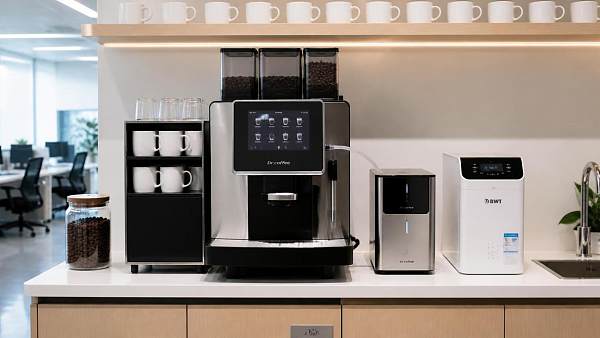
Choosing automatic office coffee machines is not just about serving coffee. In most workplaces, the machine quickly becomes a daily service point: part employee amenity, part hospitality tool, and sometimes even part brand image for visitors. A machine that is undersized, difficult to clean, or poorly matched to beverage preferences will create friction almost immediately. A machine that fits the office rhythm tends to disappear into the background—which is exactly what good procurement should achieve.
For procurement teams, the decision usually sits at the intersection of three variables: how many people will use it, how intensively they will use it, and how much maintenance the organization can realistically support. Price matters, of course, but total cost is rarely defined by acquisition alone. Downtime, cleaning labor, spare parts availability, water quality issues, and user complaints can outweigh an attractive initial quote.
That is why sourcing decisions in office and educational environments increasingly resemble broader commercial equipment buying: they require attention to reliability, compliance, design fit, and service infrastructure. This is also where market intelligence platforms such as Global Commercial Trade (GCT) become useful—not as a sales shortcut, but as a way to compare supplier maturity, manufacturing capability, and fit-for-purpose commercial solutions across different project contexts.
Start with demand, not machine features
One of the most common mistakes is starting with a feature list: touchscreen, milk foam, dual grinder, smart telemetry, self-cleaning program. Those functions matter, but they only make sense after demand has been mapped properly.
Headcount is the obvious first filter, yet it is not enough on its own. A 60-person office where half the team travels frequently may place lighter demand on the machine than a 25-person design studio with a strong coffee culture and regular client traffic. Procurement teams should look at four practical demand indicators:
- Total users and peak simultaneous users
- Expected cups per day, not just staff count
- Drink mix: espresso, americano, cappuccino, latte, hot water
- Visitor and meeting-room demand outside routine employee use
Peak demand often matters more than average daily output. If most drinks are made between 8:30 and 10:00 a.m., the machine needs enough boiler, grinder, and brewing capacity to avoid queues. A spec sheet may look sufficient on a daily-cup basis while still performing poorly during rush periods. That gap is where user frustration starts.
Matching machine class to team size
There is no universal threshold, and suppliers describe capacities differently, so this should always be verified against actual technical documentation. Still, automatic office coffee machines generally fall into a few practical categories.
For small teams or satellite offices, a compact bean-to-cup machine may be enough if beverage variety is limited and milk-based drinks are occasional. The attraction here is simplicity: smaller footprint, easier setup, lower entry cost. The risk is that these machines may be pushed beyond their intended duty cycle if they are installed in fast-growing offices or shared spaces.
Mid-sized offices usually need something more robust: larger bean hoppers, larger grounds containers, stronger internal components, and quicker recovery between drinks. If cappuccinos and lattes are popular, milk system performance becomes critical. A machine that handles black coffee well may still slow down significantly when multiple milk beverages are ordered in sequence.
For large offices, campus environments, or mixed employee-and-guest settings, the conversation changes. At that level, procurement should compare not only a single higher-capacity machine, but also whether two smaller units in separate locations provide better resilience and traffic flow. Redundancy is often undervalued. One machine with impressive capacity can still become a single point of failure.
Usage pattern changes the specification
A machine used steadily throughout the day behaves differently from one exposed to short, intense demand spikes. This affects what should be prioritized in sourcing.
This is also where beverage menu discipline helps. Many offices ask for “full café-style capability,” but if 80 to 90 percent of drinks are espresso-based black coffee, that changes what deserves budget. Conversely, in offices where milk drinks dominate, it is risky to treat the milk system as a minor accessory. It becomes one of the main wear-and-cleaning components.
Maintenance is not a side issue
Procurement teams often ask how automatic a machine really is. The honest answer: not fully. Even highly automated machines still need refilling, emptying, rinsing, descaling, milk-system sanitation, and periodic technical servicing. The right question is whether the maintenance model matches the office environment.
If nobody owns daily upkeep, a sophisticated machine can become a hygiene problem or a service-call generator. In a managed workplace with pantry staff or facilities support, a more advanced system may be practical. In a standard office with no dedicated operator, simpler workflows usually outperform feature-heavy machines.
Three areas deserve close attention during evaluation:
- Daily cleaning steps: How many actions are required, and how long do they take?
- Milk handling: Is the system automatic-rinse only, or does it require disassembly and manual cleaning?
- Service support: Are spare parts, technicians, and consumables available in the destination market?
Water quality should be discussed early, not after installation. Hard water can affect taste, scale buildup, maintenance frequency, and warranty conditions. In some projects, filtration is effectively part of the machine purchase even if it is quoted separately. That should be treated as part of the system, not an optional afterthought.
The hidden costs sit outside the base unit
A low machine price can look attractive until the operational picture is assembled. Total cost usually includes coffee beans or ingredient systems, water filtration, cleaning products, replacement parts, service labor, and the internal labor cost of routine upkeep. It may also include cabinetry integration, drainage, direct water connection, or electrical adjustments depending on the installation environment.
This is especially relevant in international sourcing. Buyers comparing suppliers across regions should not assume the same package scope. One quotation may include startup accessories, training, and maintenance kits; another may exclude them. Delivery terms, installation support, and after-sales commitments need to be aligned before price comparisons become meaningful.
GCT’s broader sourcing perspective is useful here because commercial buyers are rarely purchasing an isolated object. They are purchasing a service environment: equipment, support structure, documentation, and long-term usability. In practice, that means asking suppliers for a realistic ownership picture rather than a polished front-end specification.
What to verify before shortlisting suppliers
Once the office profile is clear, supplier evaluation becomes more disciplined. Not every brand or manufacturer is equally suited to every commercial project, and the procurement risk is often in the supply chain and support layer rather than the machine itself.
At shortlist stage, it is worth confirming:
- Whether the stated output matches office-duty use rather than ideal test conditions
- If the machine is intended for commercial office environments, not just light hospitality or premium home use
- What local electrical compatibility, safety requirements, and import compliance may apply
- How warranty support works in the destination country
- Lead times for replacement parts and consumables
- Whether operator training and maintenance instructions are clear enough for the actual site team
That last point gets overlooked. A machine may be technically excellent and still fail operationally if the site team cannot maintain it confidently. Clear manuals, intuitive prompts, and accessible maintenance procedures reduce dependence on service calls.
A few selection mistakes that are easy to avoid
Buying too small is the obvious error, but buying too complex is nearly as common. Offices often overestimate how much menu variety they need and underestimate how much cleaning they are willing to perform. Another recurring mistake is evaluating coffee quality in a showroom without testing workflow. A drink may taste good in a demonstration yet still be impractical if refill points are too small or maintenance alerts interrupt busy periods.
There is also a tendency to focus on machine features while ignoring placement. A well-chosen unit installed in a cramped corner without drainage access, ventilation clearance, or logical user flow can become a constant nuisance. In larger sites, location strategy can matter almost as much as machine specification.
Making the final decision
The best purchasing decisions usually come from narrowing the conversation to a few operational truths: how many drinks will be made, when they will be made, what mix of beverages matters, and who will keep the machine running day after day. From there, features become easier to judge. Some are essential; others are cosmetic.
For procurement professionals, automatic office coffee machines should be treated like any other commercial equipment category. Look beyond the front panel. Check the duty cycle, cleaning process, water requirements, service model, and supplier support structure. If the machine is being sourced across borders, confirm what is included, what standards apply locally, and how maintenance will be handled after installation.
If the shortlist still feels crowded, the next useful step is not another broad search. It is a tighter brief: team size by location, estimated cups per day, top three beverages, water condition, installation setup, and the level of on-site maintenance the office can realistically sustain. With that information, the right machine class usually becomes much clearer—and so do the suppliers worth taking seriously.
Search News
Hot Articles
- Musical InstrumentsA Practical Guide to Identifying Wooden Orchestral Instruments by Family and ToneOct 10, 2026
- Indoor PlaygroundHow to Choose Animatronic Haunted House Props for High-Throughput AttractionsOct 08, 2026
- Fashion & Gem JewelryThermal Diamond Testers: How They Work and When They Can Misidentify StonesOct 07, 2026
Popular Tags
Need ExpertConsultation?
Connect with our specialized leisureengineering team for procurementstrategies.
Recommended News
 Sep 02, 2026How to Choose a Glass Acoustic Office Pod for Open-Plan Workplace PrivacyGlass acoustic pod office buying guide: compare privacy, ventilation, safety glass, power, site fit, and supplier support to choose a productive open-plan workspace solution.● Institutional Buyer
 Sep 01, 2026Is CE Marking Enough for Commercial Products Sold in the US?Is CE marking enough for commercial products sold in the US? Learn the key US safety, FCC, listing, and inspection requirements before you buy.● Institutional Buyer
 Sep 04, 2026B2B Office Supplies Procurement: Building a Cost-Controlled Replenishment ProgramB2B office supplies procurement made smarter: build a cost-controlled replenishment program that reduces spend, prevents stockouts, and improves supplier performance.● Institutional Buyer
 Aug 26, 2026How to Choose Automatic Office Coffee Machines for Team Size, Usage, and MaintenanceAutomatic office coffee machines: learn how to choose the right model for team size, daily demand, drink preferences, and maintenance needs to reduce downtime and improve workplace satisfaction.● Institutional Buyer
 Aug 13, 2026What to Look for When Choosing a Wood Executive Office Desk for Daily UseWood executive office desks should do more than look premium. Learn how to compare durability, ergonomics, cable management, and finish quality before you buy.● Institutional Buyer
 Jul 31, 2026How to Choose Institutional Storage Furniture for Schools, Offices, and Public FacilitiesInstitutional storage furniture buying guide for schools, offices, and public facilities—learn how to assess safety, durability, cleaning, locks, and lifecycle cost before you buy.● Institutional Buyer
 Jul 14, 2026Commercial Carpet Tile Price Guide: Cost Factors, Wear Ratings, and Installation ScopeCommercial carpet tile price explained: compare cost factors, wear ratings, and installation scope to choose durable, budget-smart flooring for offices, schools, hotels, and retail.● Institutional Buyer
 Jul 11, 2026How to Compare Motorized, Fixed Frame, and Portable Wholesale Projector ScreensWholesale projector screens compared: discover how motorized, fixed frame, and portable options differ in image quality, flexibility, and sourcing value for commercial projects.● Institutional Buyer
 Jul 10, 2026Desktop Hole Punches Wholesale: What Buyers Should Check Before Placing a Bulk OrderDesktop hole punches wholesale buyers should check quality, accuracy, compliance, total cost, and supplier reliability before placing a bulk order. Read the key checkpoints now.● Institutional Buyer
 Jul 09, 2026Library Bookshelves Wholesale Buying Guide: Materials, Load Capacity, and Layout CostsLibrary bookshelves wholesale guide covering materials, load capacity, and layout costs. Compare options, reduce procurement risk, and choose durable shelving for long-term value.● Institutional Buyer
 Jul 08, 2026Height Adjustable Desks Bulk: Key Specs to Compare for Office Fit-Out ProjectsHeight adjustable desks bulk: compare load, range, stability, noise, compliance, and rollout factors to choose reliable desks for office fit-out projects with less risk.● Institutional Buyer
 Jul 06, 2026FBX Drops 18% as Asia-Europe Furniture Rates FallFBX drops 18% as Asia-Europe furniture rates fall to $1,186/FEU, reshaping office furniture import margins, restocking timing, and shipping plans. See what buyers and exporters should do next.● Institutional Buyer
 Jul 06, 2026Training Chairs With Writing Tablet: What to Check for Classroom Layout and DurabilityTraining chairs with writing tablet: learn how to compare classroom layout, tablet size, frame durability, and maintenance needs to choose smarter, longer-lasting seating.● Institutional Buyer
 Jul 05, 2026Indonesia Tightens Wood Proof for Office Furniture ImportsIndonesia tightens wood proof for office furniture imports from July 3, 2026. Learn FLEGT, certification, customs risks, and how exporters can avoid delays and extra fees.● Institutional Buyer
 Jul 04, 2026How to Choose Educational Furniture for Schools by Age Group, Layout, and DurabilityEducational furniture for schools should match age groups, room layouts, and durability needs. Discover practical buying tips to improve safety, flexibility, and long-term value.● Institutional Buyer
 Jul 03, 2026Europe 40HQ Rates Climb to $6,920 for Large Furniture ShipmentsEurope 40HQ rates climb to $6,920, reshaping large furniture shipments with 9–12 week delays and higher consolidation costs. See what exporters and buyers should do now.● Institutional Buyer
 Jul 03, 2026Adjustable Library Shelves: Load Capacity, Material, and Layout Tips for Smarter Space PlanningAdjustable library shelves: learn how to compare load capacity, materials, and layout options to create safer, more flexible spaces with lower long-term costs.● Institutional Buyer
 Jul 02, 2026Vietnam Tightens Proof Rules for Wood Office FurnitureVietnam tightens proof rules for wood office furniture from July 1, 2026. Learn how FSC-CoC, VPA-FLEGT, and customs delays could impact exporters, sourcing, and delivery plans.● Institutional Buyer
 Jun 29, 2026Workspace Furniture for Offices: What to Compare Before Planning a Hybrid LayoutWorkspace furniture for offices should be compared by flexibility, comfort, space efficiency, and procurement value before planning a hybrid layout. Learn what to review for smarter office decisions.● Institutional Buyer
 Jun 28, 2026How to Evaluate an Institutional Furniture Manufacturer for Schools, Hospitals, and Public SpacesInstitutional furniture manufacturer evaluation guide for schools, hospitals, and public spaces. Learn how to compare compliance, durability, customization, and supply reliability.● Institutional Buyer
 Jun 23, 2026Educational Furniture for Universities: What to Compare Before Buying for Labs and Lecture RoomsEducational furniture for universities: compare lab and lecture room safety, durability, flexibility, and lifecycle cost before buying. Make smarter campus sourcing decisions.● Institutional Buyer
 Jun 22, 2026How to Choose Educational Furniture for Libraries by Age Group, Layout, and UseEducational furniture for libraries should match age groups, layout, and daily use. Discover practical tips to choose safer, flexible, durable solutions that improve learning spaces.● Institutional Buyer
 Jun 18, 2026Wholesale Projector Screens: How to Choose Size, Gain, and Mounting for Each SpaceWholesale projector screens guide: learn how to choose the right size, gain, and mounting for classrooms, boardrooms, hotels, and event spaces for clearer images and smarter sourcing.● Institutional Buyer
 Jun 17, 2026Mobile Pedestals Wholesale Buying Guide: Locking Systems, Sizes, and Bulk PricingMobile pedestals wholesale guide covering locking systems, size options, durability, and bulk pricing to help buyers compare suppliers, cut risk, and secure better-value orders.● Institutional Buyer