Evaluating Luxury Retail Accessories Suppliers: Quality, Lead Times, and Brand Fit
Selecting a luxury retail accessories supplier is a strategic decision that affects product quality, launch schedules, margin protection, and long-term brand perception. In premium categories, a supplier is not merely converting a design into a physical item. It is interpreting brand codes through materials, tolerances, finishes, packaging, documentation, and delivery discipline.
That distinction matters because a supplier that performs well on a small development order may still be unsuitable for a multi-market retail rollout. Conversely, a factory with robust capacity may produce technically sound accessories that fail to meet the visual and tactile expectations of a luxury assortment. The most reliable sourcing decision comes from evaluating quality, lead times, cost structure, and brand fit as connected variables rather than separate checklist items.
Define what “quality” means for the specific accessory
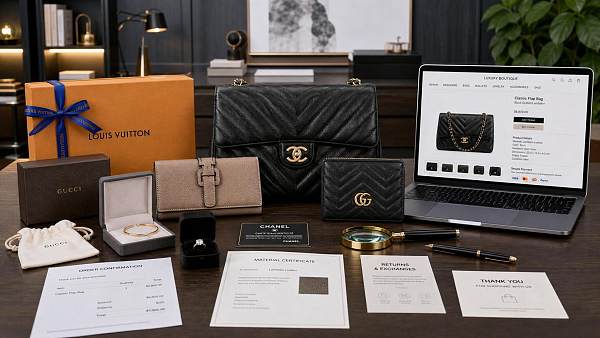
Luxury accessories cover a wide range of products: fashion jewelry, small leather goods, belts, scarves, hair accessories, sunglasses cases, watch straps, decorative hardware, gift items, and branded packaging components. Quality expectations differ sharply among these categories. A generic supplier scorecard can identify basic operational weaknesses, but it will not determine whether the finished product is appropriate for a premium retail environment.
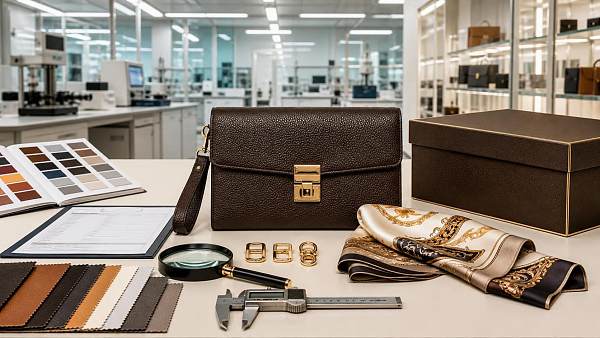
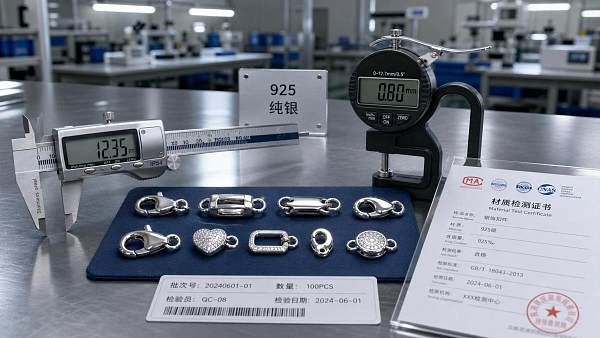
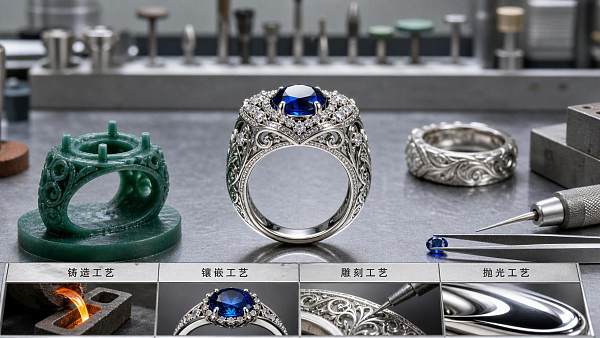
For fashion jewelry, the critical issues may include plating thickness, color consistency between production lots, stone setting security, solder cleanliness, clasp performance, and resistance to sweat, cosmetics, and abrasion. For leather accessories, the evaluation should extend to grain selection, edge paint durability, stitching density, skiving consistency, hardware attachment, odor, and color migration. In textile accessories, hand feel, dye consistency, shrinkage, pilling, pull resistance, and print registration may matter more than nominal fabric composition.
A useful starting point is to separate quality requirements into three layers:
- Critical functional requirements: safety, intended performance, durability, correct dimensions, secure components, and legal conformity.
- Visible workmanship requirements: alignment, color match, clean edges, plating finish, stitching, logo placement, surface defects, and packaging presentation.
- Brand-sensitive requirements: tactile feel, weight perception, visual restraint, unboxing experience, signature colors, proprietary motifs, and acceptable variation limits.
Many disputes arise because the third layer is discussed verbally but never translated into approved references. Terms such as “premium,” “high-end,” “polished,” or “luxurious” are not measurable production standards. A supplier needs a signed golden sample, controlled color standards, technical drawings, bill of materials, approved component samples, and an inspection protocol that states what is acceptable and what is not.
Assess craftsmanship through repeatability, not showroom samples
Sample-room capability and production-floor capability are often very different. A development team may spend several days refining one piece for a buyer presentation, while production workers must achieve the same result across thousands of units under time and labor constraints.
Evaluation should therefore move beyond an initial prototype. Ask for samples from more than one production batch where timing allows, and compare them against the approved standard. This is particularly important for plated metal, dyed leather, natural stones, acetate, printed textiles, and handmade components, where batch variation is common.
During a factory review or third-party audit, attention should be paid to the points where premium quality is usually lost:
- incoming inspection of leather, fabric, metal castings, stones, zippers, and logo components;
- segregation of approved and rejected materials;
- control of plating, polishing, gluing, curing, painting, and drying processes;
- calibration and maintenance records for measurement tools;
- in-process inspection rather than reliance on final inspection alone;
- rework rules, particularly for scratches, plating defects, color variation, and logo flaws;
- packing-line controls that prevent mixed SKUs, wrong labels, and damaged presentation boxes.
An AQL-based final inspection can be part of the quality plan, but it should not be treated as a complete luxury-quality system. AQL sampling is useful for detecting defect patterns; it does not replace process control. For highly visible branded accessories, certain defects should be classified as zero-tolerance regardless of sampling outcome. Examples include incorrect logos, sharp edges, loose stones, broken clasps, major color mismatch, unauthorized material substitution, or packaging that exposes the product to damage.
The supplier should also be able to explain its corrective-action process. When defects occur, a credible response identifies the root cause, isolates affected stock, states containment measures, and documents preventive action. “We will pay more attention next time” is not a corrective-action system.
Material traceability has become a commercial requirement
Luxury retail increasingly depends on material stories: responsibly sourced leather, recycled metals, certified fibers, traceable gemstones, or lower-impact packaging. These claims create value only when the supply chain can support them with evidence.
For leather goods, the supplier should identify the tannery, leather origin where available, tanning method, finish, and restrictions on substances used in production. For metal accessories, clarify the base metal, coating specification, plating process, recycled-content claim methodology, and whether components are purchased from approved subcontractors. For gemstones, pearls, exotic skins, wood, and other natural materials, provenance and trade restrictions require particular care.
CITES documentation may be required for products containing protected animal or plant species. It is not enough to assume that an exotic material is permissible because it is commonly sold in a local market. Import requirements depend on the species, origin, destination, and shipment documentation. This should be reviewed before design approval, not after inventory has been produced.
Material traceability is also a protection against unauthorized substitution. In lower-margin production environments, a supplier may replace a specified alloy, lining, adhesive, plating thickness, zipper, or packaging board with a visually similar alternative unless the contract and approval process are explicit. Such substitutions can affect durability, chemical compliance, customer safety, and perceived value.
Compliance should be mapped by destination market and product use
There is no single “luxury accessory certificate” that covers every product and market. Compliance depends on product type, age grading, materials, claims, and destination.
For accessories sold in the European Union, chemical restrictions under REACH are often relevant, especially for substances in metal, leather, textiles, coatings, adhesives, and plastic components. Nickel release requirements can be relevant for articles intended to come into direct and prolonged contact with skin, including some jewelry and watch-related items. The EU General Product Safety Regulation (GPSR) has applied since 13 December 2024 and strengthens obligations around product safety, traceability, responsible economic operators, and consumer information for relevant consumer products.
For the United States, California Proposition 65 warning obligations may become relevant depending on materials and exposure considerations. Children’s accessories may trigger additional requirements, including the Consumer Product Safety Improvement Act (CPSIA), where applicable. Products should not be positioned as suitable for children merely because they are small, decorative, or giftable unless the relevant legal and testing requirements have been assessed.
CE marking is frequently misunderstood. It is not a general mark of quality and is not automatically required for ordinary fashion accessories. It applies only where a product falls within the scope of specific EU harmonized legislation. A supplier that routinely promises CE certification for all accessories without identifying the applicable legal basis should be questioned.
Before placing an order, establish a market-specific compliance matrix covering:
- destination countries and sales channels;
- product categories and intended users;
- restricted substance and performance tests;
- labelling, warning, packaging, and traceability requirements;
- required test reports, declarations, and material records;
- responsibility for retesting after material or process changes.
Testing should be connected to actual production materials, not only pre-development samples. If a component supplier changes, the original report may no longer provide adequate assurance.
Lead time is a chain of decisions, not a factory promise
In luxury retail, delayed product can be more costly than expensive product. Missing a seasonal floor-set, campaign launch, holiday window, or store opening may eliminate the commercial value of an otherwise successful item.
Quoted lead times often refer only to final manufacturing. The real calendar begins earlier: design briefing, technical development, sample iterations, material approval, artwork confirmation, tooling, testing, production booking, bulk manufacturing, inspection, packing, export documentation, and transportation. For customized accessories, delays are often caused by unresolved details rather than machine capacity.
A supplier should be asked to provide a critical-path schedule rather than a single lead-time figure. The schedule should identify which tasks are sequential, which can run in parallel, who owns each approval, and how long materials remain valid once approved. If a plated logo plate requires a custom mold, for example, tooling approval, first article inspection, plating tests, and logo confirmation may all sit on the critical path.
Short lead times are attractive only when they are operationally credible. A factory that compresses production by skipping curing time, reducing inspection, or moving work to unapproved subcontractors can create downstream costs far greater than the savings from an earlier shipment.
Evaluate capacity in the context of complexity
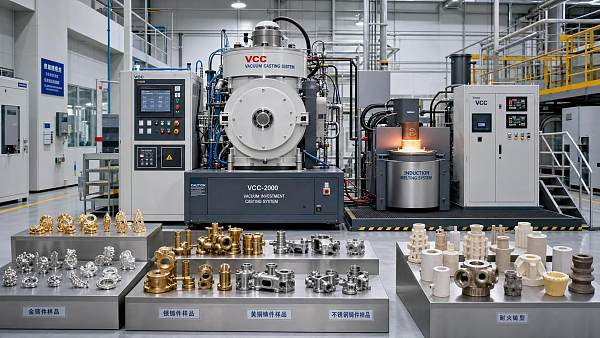
Annual output figures are rarely enough to judge whether a supplier can support growth. Capacity depends on the bottleneck process. A factory may have ample sewing capacity but limited access to an approved tannery. It may assemble large volumes of jewelry but struggle with consistent plating or intricate stone setting. It may produce standard packaging efficiently but lack the clean handling needed for high-gloss presentation boxes.
Ask what percentage of capacity is already committed, how many production lines are dedicated to similar products, and whether specialized processes are in-house or outsourced. Outsourcing is not inherently a problem. Many strong suppliers rely on specialist partners for plating, printing, weaving, embroidery, or testing. The risk arises when subcontracting is undisclosed, weakly controlled, or activated only after orders are placed.
Brand protection requires visibility into the extended production chain. Contracts should address approved subcontractors, confidentiality, ownership of molds and artwork, control of overrun goods, destruction of rejected branded components, and restrictions on selling excess inventory. These controls matter especially where logos, distinctive hardware, or limited-edition designs are involved.
Compare cost on a landed and lifecycle basis
The lowest ex-works quote is often a poor indicator of the lowest commercial cost. In luxury accessories, cost differences may reflect material grade, labor content, rejection allowance, testing scope, packaging quality, freight efficiency, payment terms, and supplier willingness to hold inventory.
A meaningful comparison should separate the quoted unit price into its main drivers: materials, hardware, labor, tooling amortization, packaging, testing, freight terms, duties where relevant, and expected defect or return exposure. This makes it easier to identify whether a lower quote reflects a genuine manufacturing advantage or an omitted requirement.
Price should also be tested against the cost of failure. A supplier that is 8% less expensive but has inconsistent delivery, high remake rates, or weak documentation can consume the apparent saving through expedited freight, retail markdowns, customer complaints, compliance remediation, and internal management time.
For new suppliers, staged commitment is usually more prudent than immediate consolidation. A controlled pilot order can test bulk consistency, communication under pressure, shipment accuracy, and after-sales responsiveness. The pilot should be commercially meaningful enough to reveal real production behavior, not merely a small sample run handled by the development team.
Brand fit is an operating capability, not an aesthetic opinion
A supplier may understand the visual language of premium retail, but brand fit is proven by how it works. Does it challenge an impractical design before tooling begins? Can it preserve the intended silhouette while recommending a more durable construction? Does it understand why a one-millimeter shift in logo placement, a slightly warmer gold tone, or a softer edge finish changes the product’s perceived value?
The best partners combine technical discipline with controlled flexibility. They document changes, protect confidential information, and communicate early when a specification may compromise quality, timing, or compliance. They do not conceal problems until the shipment date.
For a luxury retail accessories supplier, the decision should therefore rest on evidence gathered across development, compliance, production control, and commercial execution. The supplier that earns the business is not necessarily the one with the most impressive sample room or the lowest quotation. It is the one that can reproduce the intended brand experience at scale, document what it has made, and deliver it within a timeline the retail business can trust.
Search News
Hot Articles
- Musical InstrumentsA Practical Guide to Identifying Wooden Orchestral Instruments by Family and ToneOct 10, 2026
- Indoor PlaygroundHow to Choose Animatronic Haunted House Props for High-Throughput AttractionsOct 08, 2026
- Fashion & Gem JewelryThermal Diamond Testers: How They Work and When They Can Misidentify StonesOct 07, 2026
Popular Tags
Need ExpertConsultation?
Connect with our specialized leisureengineering team for procurementstrategies.
Recommended News
 Oct 07, 2026Thermal Diamond Testers: How They Work and When They Can Misidentify StonesThermal diamond tester guide: learn how it works, spot false positives from moissanite, and choose reliable verification methods for jewelry trade and retail.● Luxury Retail Analyst
 Oct 02, 2026Diamond Tester Wholesale: How to Vet Accuracy, Calibration, and MOQ Before OrderingDiamond tester wholesale guide: verify accuracy, calibration records, supplier quality controls, and MOQ terms before ordering. Source reliable testers with confidence.● Luxury Retail Analyst
 Sep 09, 2026Wholesale Coral Earrings: How Buyers Can Assess Quality, Treatments, and Supply RiskCoral jewelry earrings wholesale guide for buyers: assess quality, treatments, secure settings, documentation, and supply risks before ordering.● Luxury Retail Analyst
 Sep 01, 2026How to Choose a Jewelry Laser Engraving Machine Manufacturer for Custom ProductionChoose a jewelry laser engraving machine manufacturer with proven sample testing, precision fixtures, workflow-ready software, and reliable support for custom production.● Luxury Retail Analyst
 Aug 27, 2026Evaluating Luxury Retail Accessories Suppliers: Quality, Lead Times, and Brand FitLuxury retail accessories supplier selection made clearer: assess quality, lead times, compliance, costs, and brand fit to protect premium launches and margins.● Luxury Retail Analyst
 Jul 29, 2026Fine Jewelry Price Guide: What Affects Cost and How to Judge Real ValueFine jewelry price guide for buyers: learn what drives cost in metals, gemstones, craftsmanship, certification, and branding so you can judge real value, reduce sourcing risk, and buy with confidence.● Luxury Retail Analyst
 Jul 14, 2026What to Ask an Enamel Jewelry Manufacturer Before Sampling and Mass ProductionEnamel jewelry manufacturer selection starts with the right questions. Learn what to ask about materials, color matching, MOQ, QC, compliance, and lead times before sampling and mass production.● Luxury Retail Analyst
 Jul 12, 2026Surgical Steel Belly Rings vs Titanium: Material Differences, Safety, and CostSurgical steel belly rings vs titanium: compare safety, nickel exposure, comfort, durability, and cost to choose the best option for sensitive skin or budget-friendly style.● Luxury Retail Analyst
 Jul 12, 2026Natural Coral Jewelry Guide: How to Identify Real Coral, Treatments, and QualityNatural coral jewelry guide covering how to identify real coral, spot treatments, assess quality, and buy with confidence. Learn the key signs before you choose.● Luxury Retail Analyst
 Jul 11, 2026Braided Leather Bracelets OEM: Material, Clasp, and MOQ Factors Before SamplingBraided leather bracelets OEM guide covering material grades, clasp options, and MOQ factors before sampling. Learn how to reduce sourcing risk, control cost, and choose the right supplier.● Luxury Retail Analyst
 Jul 09, 2026Jewelry Craftsmanship Gemstone Setting Methods Explained: Prong, Bezel, Pave, and MoreJewelry craftsmanship gemstone setting explained clearly: compare prong, bezel, pavé, channel, and more to choose secure, beautiful, and commercially smart jewelry designs.● Luxury Retail Analyst
 Jul 06, 2026Photo Locket Necklace Manufacturer Selection Guide: Materials, MOQ, and Custom OptionsPhoto locket necklace manufacturer selection guide covering materials, MOQ, custom options, compliance, and quality checks to help buyers source smarter and build stronger jewelry lines.● Luxury Retail Analyst
 Jul 05, 2026What to Check When Comparing a Sterling Silver Clasp ManufacturerChoosing a sterling silver clasp manufacturer? Learn what to check first: 925 silver claims, finish quality, testing, compliance, lead times, and hidden sourcing costs.● Luxury Retail Analyst
 Jul 02, 2026Jewelry Craftsmanship Techniques Explained: Casting, Stone Setting, Engraving, and PolishingJewelry craftsmanship techniques explained: discover how casting, stone setting, engraving, and polishing shape quality, durability, and sourcing confidence.● Luxury Retail Analyst
 Jul 01, 2026Lost Wax Casting Machines Explained: Types, Capacity, and Metal CompatibilityLost wax casting machines explained: compare types, real capacity, and metal compatibility to choose the right system for precision casting, higher quality, and smarter sourcing.● Luxury Retail Analyst
 Jun 29, 2026How to Evaluate a Luxury Accessories Online Store Before You BuyLuxury accessories online store buying guide: learn how to verify authenticity, compare policies, check reviews, and avoid costly mistakes before you place an order.● Luxury Retail Analyst
 Jun 22, 2026Matching Couple Rings: Popular Materials, Fit Differences, and How to ChooseMatching couple rings guide: compare popular materials, fit differences, comfort, durability, and resizing options to choose a stylish pair that truly lasts.● Luxury Retail Analyst
 Jun 19, 2026How to Build a Fashion Accessories Catalog That Improves Product Discovery and SalesFashion accessories catalog strategies that improve product discovery, filtering, and conversions. Learn how to structure pages, categories, and data to drive more qualified sales.● Luxury Retail Analyst
 Jun 19, 2026How to Choose Luxury Accessories for Women by Material, Style, and Price PointLuxury accessories for women: learn how to choose the right pieces by material, style, and price point for better value, timeless appeal, and smarter buying decisions.● Luxury Retail Analyst
 Jun 18, 2026Stainless Steel Rings Bulk: 304 vs 316L, Finishes, and Custom Order FactorsStainless steel rings bulk guide: compare 304 vs 316L, explore finish options, and learn key custom order factors to reduce sourcing risk and improve product value.● Luxury Retail Analyst
 Jun 18, 2026Body Piercing Jewelry Bulk Buying Guide: Materials, Sizes, and MOQ QuestionsBody piercing jewelry bulk buying guide covering safe materials, size checks, MOQ strategy, supplier screening, and compliance tips to reduce risk and source with confidence.● Luxury Retail Analyst
 Jun 18, 2026How to Evaluate a Luxury Jewelry Exporter for Quality, Compliance, and DeliveryLuxury jewelry exporter evaluation starts with more than design. Learn how to verify quality, compliance, and delivery control to source premium jewelry with less risk.● Luxury Retail Analyst
 Jun 17, 2026Iced Out Watches Wholesale: How to Compare MOQ, Stone Quality, and MarginsIced out watches wholesale guide: compare MOQ, stone quality, and real margins to choose reliable suppliers, reduce risk, and grow resale profits with smarter sourcing.● Luxury Retail Analyst
 Jun 15, 2026How to Evaluate an Amber Jewelry Manufacturer: Quality Grades, OEM Options, and Lead TimesAmber jewelry manufacturer selection starts with quality grades, OEM capability, and realistic lead times. Learn how to compare suppliers, reduce sourcing risk, and choose with confidence.● Luxury Retail Analyst