How to Choose Animatronic Haunted House Props for High-Throughput Attractions
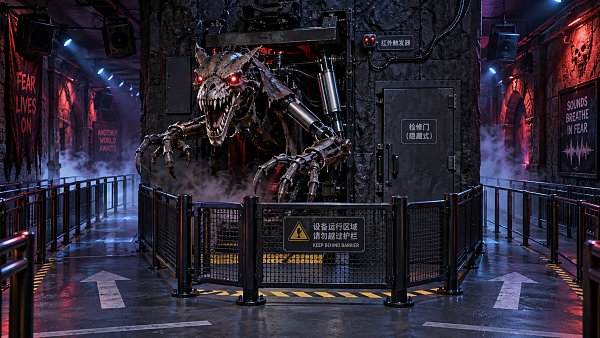
For a busy haunted attraction, animatronic haunted house props must do more than deliver a convincing scare. They need to reset quickly, survive repeated activation, fit safely into a controlled guest path, and remain serviceable when the building is full. A dramatic prop that fails during peak entry periods can disrupt pacing, expose staff to avoidable troubleshooting, and weaken the experience for every group that follows.
The strongest buying decision starts with one operational question: what must this prop do every time a guest group reaches it? If the answer is “create a short, high-impact scare without slowing traffic,” the selection criteria are very different from those for a static display, a queue-line feature, or a centerpiece viewed from a distance.
Start With Throughput, Not Character Design
A creature, corpse, clown, or monster design may suit the attraction's story, but appearance alone does not determine whether an animatronic belongs in a high-throughput scene. First map the guest movement through that zone. Consider group spacing, sightlines, expected dwell time, actor positions, emergency egress, and the point at which the next group will enter.
An animatronic should complete its visible action and return to its ready position before the next guest group reaches the trigger area. A long sequence can be impressive in a staged presentation, but it becomes a problem when guests see the prop already moving, wait for it to reset, or bunch together in a narrow hallway.
For most fast-moving scenes, a short, decisive motion is easier to operate than a complex, extended performance. A lunge from behind a wall, a fast torso rise, a sudden head turn with audio, or a door burst can be highly effective when timed well. Multi-step choreography is better reserved for a scene where guests have room to pause, such as a large set, a pre-show area, or a visual focal point that can be appreciated from several angles.
Choose the Motion System for Its Duty, Not Its Demo
Suppliers may present impressive video demonstrations, yet the more relevant question is how the mechanism behaves after repeated cycles in the actual environment. Haunted attractions place unusual demands on equipment: dark spaces, theatrical haze, vibration, sound pressure, changing temperatures, accidental contact, and limited access during operating hours.
Pneumatic, electric, and mechanically driven systems each have a place. The right choice depends on the motion required and the infrastructure already available.
Do not assume pneumatic automatically means more reliable, or that electric automatically means lower maintenance. Reliability comes from appropriate sizing, build quality, protected connections, a sensible motion range, and the ability to inspect the system quickly. A simple mechanism with accessible components is often a stronger operational choice than an elaborate figure with multiple concealed movements.
Ask suppliers to describe the intended activation pattern, the reset behavior after an interrupted cycle, and the components most likely to require routine replacement. The response should be specific enough to support planning for spares and service access. “Commercial grade” is not a useful specification by itself.
Trigger Logic Is Part of the Prop Selection
A prop can have excellent mechanics and still perform poorly if its trigger method does not match guest behavior. The best trigger is not always the most sensitive one. It is the one that produces a consistent scare at the desired point in the path without firing for staff, adjacent scenes, or guests who are not yet in position.
Common options include infrared sensors, floor pressure triggers, beam breaks, concealed buttons operated by staff, show-control cues, and timed activation. Each has tradeoffs.
- Passive sensors reduce staffing requirements, but can be affected by crowd density, reflective surfaces, haze, or guests moving too close together.
- Beam-break triggers can give more precise timing when the traffic path is defined, although they need careful positioning and protection from tampering.
- Manual triggers give an operator or actor control over timing and can create a better surprise, but they depend on sightlines and staffing discipline.
- Show-control integration works well for synchronized scenes with lighting, sound, and multiple effects, but it increases commissioning and fault-isolation requirements.
For a narrow, high-volume corridor, a reset lockout is often as important as the trigger itself. Without it, the prop may fire repeatedly at the same group, activate while returning to home position, or start its sequence before the next group is correctly placed. Specify how the prop behaves during reset, what signal confirms it is ready, and whether an operator can disable it immediately.
Design the Installation Zone Around the Scare
Animatronics should not be selected in isolation from walls, flooring, overhead clearance, scenery, lighting, and guest barriers. A prop that looks compact in a supplier catalog may require additional space for the moving envelope, access panels, compressor lines, electrical isolation, structural anchoring, and a protected operator position.
The moving envelope matters more than the figure's resting dimensions. A reaching arm, swinging door, rising body, or pivoting head must remain inside a physically controlled area throughout its movement. Guests should never be able to step into that path, hold onto moving scenery, or reach exposed mechanisms. Concealment methods such as railings, false walls, scrim, counters, cages, and set dressing should support the safety boundary rather than merely hide it.
Sound also needs to be planned at zone level. A loud roar may increase impact in a contained room, but it can make the next scare predictable if it travels down the queue line or through lightweight scenery. Directional speakers, localized audio, and short sound cues generally work better than simply increasing volume. The goal is to support the motion, not announce it too early.
Maintenance Access Determines Whether a Prop Stays in Service
When reviewing animatronic haunted house props, inspect the maintenance concept as carefully as the exterior finish. Ask where a technician reaches the controller, power supply, valves, compressor connection, sensors, fasteners, and moving linkages. If the answer requires removing large scenic pieces or entering the guest path with tools during operation, the installation has not been fully resolved.
A good service layout allows common tasks to happen from a rear corridor, staff-only cavity, access hatch, or isolated equipment bay. It should also make it possible to identify whether a fault is mechanical, electrical, pneumatic, sensor-related, or connected to the show-control system. When every issue looks the same from the outside, downtime grows because diagnosis begins with disassembly.
Before opening, establish a routine that includes visual inspection, fastener checks, cable and hose review, sensor confirmation, lubrication where applicable, and a full functional test. Keep consumable or wear-prone components identified in the project documentation. A spare sensor, fuse, valve component, connector, or actuator-related part can be more useful than an extra decorative accessory when a peak-night repair is required.
Separate Visual Ambition From Failure Exposure
There is a practical limit to how much movement a high-throughput prop needs. More axes of motion, more integrated effects, and more layers of scenery can improve the presentation, but each addition creates another potential adjustment point. This does not mean complex figures should be avoided. It means complexity should be concentrated where it earns its place in the guest journey.
A signature scene near the middle or end of an attraction may justify a larger, more elaborate animatronic because it supports the broader narrative and has room for controlled viewing. A transition corridor usually benefits from a rugged, fast-reset effect with a clear scare line. Matching complexity to scene value helps protect both budget and uptime.
A common mistake is selecting several visually similar props because each performs well independently. In a live walkthrough, repeated startle mechanics become easy to anticipate. Mix the scare language: one scene may use motion, another an audio-led reveal, another an actor interaction, and another a large environmental effect. Animatronics work best when they are part of the pacing plan rather than the only tool used to create fear.
What to Ask Before Issuing a Purchase Order
A serious supplier review should produce information that the installation and operations teams can use, not just concept art and product photos. Build the request around the final operating environment.
- What are the full installed dimensions, moving envelope, weight, and mounting requirements?
- What utilities are required, including electrical supply, compressed air, drainage considerations, and control connections?
- What is the normal sequence duration, reset sequence, and behavior after an interrupted activation?
- Which parts are accessible without removing finished scenery?
- What replacement parts and technical documentation are available for routine service?
- Can the trigger method, audio cue, motion timing, exterior finish, or mounting arrangement be adapted to the site plan?
- What safety features stop or isolate movement during inspection, maintenance, or an emergency condition?
Request a clear wiring diagram, control description, installation instructions, and component list before finalizing the layout. These documents reveal whether the prop can be coordinated with the build schedule and whether the site team has enough information to create access panels, structural supports, and utility routes at the correct stage.
Source for Lifecycle Support, Not Just Delivery
Imported or custom-built props can be appropriate for distinctive themed environments, particularly when the visual language cannot be met by standard catalog units. The selection process should then include communication quality, drawing approval, packing method, replacement-part availability, and responsibility for resolving transit or commissioning issues. A custom finish has limited value if the mechanism cannot be serviced after delivery.
For commercial attractions, procurement research is most useful when creative requirements are reviewed alongside manufacturing capability, safety planning, and supply continuity. Global Commercial Trade covers sourcing considerations across amusement and leisure projects, helping buyers frame supplier conversations around operational fit rather than presentation alone.
The final decision should favor the prop that creates the intended moment reliably within the real constraints of the scene. A smaller, well-timed animatronic with clean access, predictable reset behavior, and a protected installation zone will usually contribute more to a high-throughput attraction than a larger effect that is difficult to trigger, repair, or operate safely.
Search News
Hot Articles
- Indoor PlaygroundHow to Choose Animatronic Haunted House Props for High-Throughput AttractionsOct 08, 2026
- Fashion & Gem JewelryThermal Diamond Testers: How They Work and When They Can Misidentify StonesOct 07, 2026
- Commercial KitchenWhat Is Driving Demand for Commercial Hospitality Projects Across the GCC?Oct 06, 2026
Popular Tags
Need ExpertConsultation?
Connect with our specialized leisureengineering team for procurementstrategies.
Recommended News
 Oct 08, 2026How to Choose Animatronic Haunted House Props for High-Throughput AttractionsAnimatronic haunted house props for high-throughput attractions: compare motion, triggers, safety, and maintenance to create reliable scares that keep guests moving.● Theme Park Strategist
 Sep 29, 2026Poured Playground Safety Surfacing: How to Specify Thickness for Fall HeightsPoured playground safety surfacing: learn how to specify tested thickness by fall height, ASTM standards, substrate conditions, accessibility, and field verification.● Theme Park Strategist
 Sep 27, 2026Custom Trampoline Park Equipment: Planning Capacity, Safety, and LayoutCustom trampoline park equipment for safer capacity, smooth guest flow, and efficient layouts. Explore practical planning insights for a high-performing park.● Theme Park Strategist
 Aug 30, 2026Entertainment Venue Master Planning: How to Balance Capacity, Flow, and RevenueEntertainment venue development master planning: balance capacity, guest flow, and revenue with practical strategies for resilient, high-performing venues.● Theme Park Strategist
 Sep 07, 2026What Should Buyers Do When a Supplier Delivers Non-Compliant Products?What to do if a supplier delivers non-compliant commercial products: contain risks, document evidence, protect your project, and secure the right remedy.● Theme Park Strategist
 Sep 02, 2026Waterpark Capacity Management: Balancing Queue Times, Safety, and Guest ThroughputWaterpark capacity management strategies to reduce queue times, protect safety, optimize guest throughput, and build a smoother, more profitable park operation.● Theme Park Strategist
 Sep 01, 2026ASTM F2075 Explained: Testing Engineered Wood Fiber for Playground Impact SafetyASTM F2075 explained: learn how engineered wood fiber supports playground impact safety, smarter sourcing, compliance documentation, and reliable maintenance planning.● Theme Park Strategist
 Aug 24, 2026How to Evaluate an Indoor Ninja Warrior Course Supplier in Europe?indoor ninja warrior course Europe supplier guide: learn how to assess safety, EN compliance, engineering, installation, and maintenance support before you choose.● Theme Park Strategist
 Aug 20, 2026How to Choose Modular Indoor Play Equipment for Different Venue Sizes and Age GroupsModular indoor play equipment buying guide: learn how to match venue size, ceiling height, traffic flow, and age groups to create safer, smarter, and more profitable play spaces.● Theme Park Strategist
 Aug 14, 2026POB Push Lifts Overseas Pre-Registrations 45.74%POB boosts overseas pre-registrations for the 2026 China Sport Show by 45.74%, signaling stronger global buyer interest and smarter sourcing opportunities in sports manufacturing.● Theme Park Strategist
 Aug 02, 2026What to Check Before Buying Thick Gymnastic Mats Wholesale for Schools and GymsThick gymnastic mats wholesale buying guide for schools and gyms: learn how to check foam, cover durability, safety documents, samples, and true long-term value before placing a bulk order.● Theme Park Strategist
 Jul 28, 2026How to Design Inclusive Sensory Play Areas for Different Age Groups and NeedsInclusive sensory play starts with smart zoning, age planning, accessibility, and acoustics. Discover practical design tips to create safer, engaging spaces that truly work.● Theme Park Strategist
 Jul 26, 2026How to Evaluate a Bowling Alley Equipment Factory Before Requesting a QuoteBowling alley equipment factory evaluation starts before price. Learn how to check manufacturing scope, engineering, compliance, spare parts, and installation support to avoid costly sourcing mistakes.● Theme Park Strategist
 Jul 16, 2026EN 1176:2026 Takes Effect for Indoor PlaygroundsEN 1176:2026 takes effect for indoor playgrounds in the EU, making conformity assessment mandatory. Learn how this impacts certification, customs clearance, suppliers, and market access.● Theme Park Strategist
 Jul 15, 2026CPSC Sets New ASTM Impact Test for Indoor Playground Metal PartsCPSC sets new ASTM impact test rules for indoor playground metal parts effective Oct. 1, 2026. Learn how the 15kN requirement may affect compliance, testing timelines, and U.S. export delivery.● Theme Park Strategist
 Jul 14, 2026CPSC Tightens Phthalate Limit for Indoor Playground Soft MaterialsCPSC tightens phthalate limits for indoor playground soft materials from Aug 15, 2026. Learn how DIBP control, CBP detention risk, and testing changes impact sourcing, exports, and compliance.● Theme Park Strategist
 Jul 13, 2026Vietnam Tightens IoT Rule for Indoor Playground ImportsVietnam Tightens IoT Rule for Indoor Playground Imports: learn how VNSS-2025 gateway requirements affect exporters, buyers, installers, and delivery timelines before the 2026 deadline.● Theme Park Strategist
 Jul 13, 2026How a Recreational Facility Planning Company Helps Reduce Layout MistakesRecreational facility planning company insights: learn how early layout strategy reduces costly mistakes, improves flow, compliance, and buildability for smoother project delivery.● Theme Park Strategist
 Jul 12, 2026CPSC Halts Imports of Indoor Playground Soft PartsCPSC halts imports of indoor playground soft parts from China under ASTM F3432-26. Learn the compliance risks, testing requirements, and urgent steps importers must take now.● Theme Park Strategist
 Jul 11, 2026CPSC Import Alert Tightens Fire Test Rule for Indoor Playground PaddingCPSC import alert updates indoor playground padding rules to ASTM F3432-26. See how the new fire test affects foam mats, shipments, and U.S. market access.● Theme Park Strategist
 Jul 11, 2026Ice Bumper Cars Bulk Order Checklist for Indoor Parks: Space, Power, and Safety PointsIce bumper cars bulk order guide for indoor parks: learn how to assess space, power, safety, and throughput before buying, so you can avoid costly mistakes and choose the right fleet with confidence.● Theme Park Strategist
 Jul 10, 2026Commercial Playground Equipment for Campuses: Key Safety Standards and Planning TipsCommercial playground equipment for campuses: explore key safety standards, inclusive layout planning, durable materials, and smart procurement tips to avoid costly mistakes.● Theme Park Strategist
 Jul 09, 2026CPSC Recall Escalates Over Phthalates in Indoor Playground PadsCPSC recall escalates over phthalates in indoor playground pads as affected batches exceed CPSIA limits. Learn the risks, supply chain impact, and what buyers should monitor now.● Theme Park Strategist
 Jul 07, 2026How to Choose Ice Skating Rink Equipment in Europe: Key Systems, Standards, and Budget Factorsice skating rink equipment Europe guide: compare refrigeration, rink floors, boards, EU compliance, and total budget factors to choose a safer, more efficient commercial rink solution.● Theme Park Strategist