Indoor Playground Maintenance Checklist: Daily, Weekly, and Monthly Tasks
A loose fastener, split safety pad, or damp landing surface can turn a routine opening inspection into an equipment closure. In an indoor playground, these defects may develop between scheduled service visits, particularly around busy entrances, climbing routes, and slide exits. Effective playground maintenance therefore combines daily operational checks, weekly hands-on inspections, and monthly condition reviews, with immediate action whenever a hazard appears.
Use the schedule below as a working baseline, not a replacement for the equipment manufacturer’s instructions or applicable safety requirements. Assign an owner to each task, record defects by location, and keep affected equipment unavailable until repairs and reopening checks are complete. Higher usage, recurring damage, contamination, or an incident should trigger additional inspections rather than waiting for the next scheduled date.
Set up the inspection route before assigning tasks
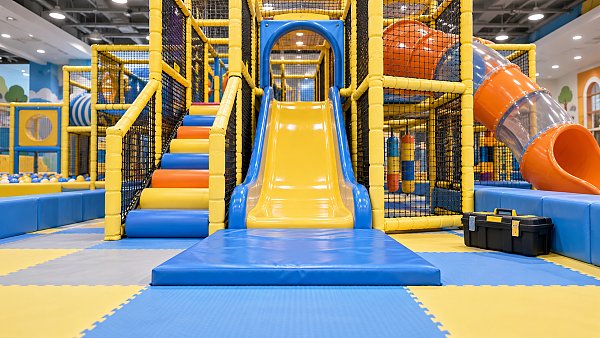
Divide the facility into identifiable zones: reception and gates, toddler areas, climbing structures, slides, ball pits, interactive equipment, and surrounding circulation routes. Give major components an asset ID so “damaged padding” becomes “split pad at climbing tower entrance, asset C-04.” Clear locations make repair instructions and repeat-defect tracking much more useful.
Keep current equipment manuals, layout drawings, approved cleaning instructions, service contacts, and previous inspection records accessible to the maintenance team. Identify which checks trained operating staff can perform and which require authorized technicians. Opening staff should not need to remove guards, climb outside designated access routes, or expose electrical components to complete their checks.
Daily tasks: inspect before opening and respond during use
Complete the opening inspection before admitting children. Follow the same route each day so concealed corners and secondary entrances are not missed. A checklist marked “passed” should mean each accessible item was examined, not that the area looked acceptable from the entrance.
Walk the play route and surrounding floor
- Entrances and exits: Check gates, latches, barriers, and emergency routes. Remove stored supplies, shoes, and movable furniture that obstruct access or visibility.
- Flooring and landing areas: Look for spills, lifted edges, separated seams, loose mats, and displaced impact-attenuating surfacing. Confirm that designated landing and exit spaces remain clear.
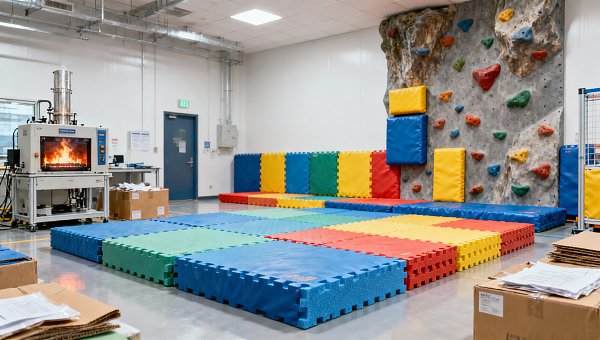
- Padding and covers: Inspect for splits, exposed foam, missing caps, loose wraps, and uncovered hard edges. A clean cover is not necessarily an intact protective component.
- Nets and barriers: Check for broken strands, loose attachments, sagging sections, and openings that differ from the intended configuration. Do not improvise repairs that change opening sizes or introduce protrusions.
- Slides, steps, and platforms: Check for debris, sharp edges, cracks, loose treads, and unusual movement. Keep slide exits clear of loose play items.
- Loose equipment: Remove broken balls, damaged foam pieces, and toys with detached parts. Check that movable items have not created unintended climbing access.
For powered or interactive features, perform only the manufacturer’s prescribed operator checks. Unusual noise, vibration, heat, damaged cables, or unreliable controls require the feature to be taken out of service. Keep children away from the affected area; guards and electrical enclosures must remain secured.
Clean according to material and contamination
Remove visible soil before applying a compatible disinfectant where required. Follow the product label for dilution, contact time, ventilation, and any rinsing requirements. Confirm compatibility with vinyl, foam covers, plastics, coatings, and adhesives; an unsuitable chemical can damage a surface without leaving an immediately obvious defect.
Give handholds, gates, railings, interactive controls, and other frequently touched surfaces particular attention. Avoid saturating seams or allowing liquid to collect beneath mats. Reopen cleaned areas only when surfaces are dry and any chemical-use restrictions have been met.
During operation, use scheduled walk-throughs and staff observations to catch spills, displaced mats, and new damage. Bodily-fluid contamination requires immediate isolation and the facility’s established cleanup procedure, not a quick wipe followed by continued play. Record contamination events that require component removal or extended closure.
Weekly tasks: examine connections and hidden wear
Schedule weekly inspections when the relevant zone can be closed. Cleanliness checks alone will not reveal a loosening connection or abrasion behind a protective sleeve. Use approved access methods and isolate powered equipment before maintenance, following the applicable energy-control procedure.
- Inspect accessible fixings and joints. Look for missing fasteners, movement marks, fretting, corrosion, displaced covers, and connections that have shifted. Tighten only where authorized, using the specified method and torque. Repeated loosening needs investigation; additional force is not a permanent repair.
- Examine net, rope, and webbing attachments. Check abrasion at contact points, damaged stitching, loose anchors, and changes in tension. Follow manufacturer replacement criteria rather than judging strength from appearance alone.
- Check padding beneath accessible covers. Where the design permits inspection, look for compressed, displaced, wet, or deteriorating foam. Refit covers correctly and verify that closures cannot become accessible hazards.
- Inspect slide joints and transitions. Examine entrances, sectional connections, sidewalls, and exit transitions for cracks, separation, and wear. Investigate newly reported snagging or changes in sliding behavior rather than applying an unapproved polish or lubricant.
- Review flooring interfaces. Inspect transitions at doorways, columns, equipment bases, and mat boundaries. Check for moisture, adhesive failure, and permanent compression. Surface appearance alone cannot verify impact performance.
- Clean less accessible areas. Remove debris beneath permitted removable components and around structure bases. Check for trapped moisture, pest evidence, and cleaning residue without dismantling structural assemblies outside staff authorization.
Ball pits need a documented cleaning method that addresses both the balls and the enclosure. Set the cleaning frequency according to usage, contamination risk, manufacturer guidance, and applicable hygiene requirements. Routine visual inspection cannot establish that concealed surfaces are clean; contamination may require emptying and treating the affected area before reopening.
Close each weekly inspection with a repair list showing the defect, interim control, responsible person, required parts, and target completion date. Separate safety-critical work from cosmetic work so a long list of minor repairs does not obscure an unavailable climbing barrier or damaged landing surface.
Monthly tasks: assess condition and plan interventions
The monthly review should establish whether equipment condition is stable, deteriorating, or demanding repeated corrective work. Compare observations with earlier photographs and records. A connection that repeatedly moves or a pad that repeatedly tears deserves a cause assessment, even when each individual repair appears straightforward.
Review structural and mechanical condition
Have a competent person inspect accessible structural members, supports, base connections, weld areas, and anchorage locations for movement, cracking, distortion, or corrosion. Do not conceal suspect damage with padding or attempt unapproved welding, drilling, or reinforcement. Suspected structural defects require isolation and assessment by the manufacturer or an appropriately qualified specialist.
For moving features, follow the prescribed service schedule for bearings, drives, restraints, guards, and safety controls. Monthly review does not mean every component needs lubrication or adjustment. Use only approved lubricants, locations, and quantities, and document any service that is due sooner than the next monthly review.
Check protective components and layout changes
- Compare padding, mats, nets, and barriers against documented replacement criteria and previous condition records.
- Check whether replacement parts match the specified dimensions, materials, and attachment arrangements.
- Review changes to furniture, partitions, or loose equipment that could reduce clearances, obstruct supervision, or create unintended access.
- Confirm that signs and equipment-use instructions remain legible and consistent with the installed configuration.
- Arrange specialist surfacing assessment or testing when required by the manufacturer, applicable requirements, or observed deterioration.
Also review inspection completion, overdue repairs, incident reports, and frequently consumed spare parts. Repeated damage in one location may indicate an underlying issue such as component contact, incorrect installation, cleaning incompatibility, or use outside the intended conditions. Investigate before simply increasing replacement stock.
Decide when to close a component or the whole zone
Remove equipment from use immediately when a defect could compromise structural stability, containment, fall protection, electrical safety, or safe movement through the play route. Examples include a loose platform, broken barrier attachment, exposed hard edge in an impact area, damaged electrical enclosure, or contamination that cannot be safely contained during operation.
Closing one component is appropriate only when access can be reliably prevented and the remaining play route stays safe. A sign or loose tape may not stop children entering through another opening. Close the larger zone when isolation would create a new hazard, block an exit, or leave the affected component reachable from adjoining equipment.
Cosmetic wear may be scheduled for repair when it does not affect safety, hygiene, or function. Record the reason for that decision and the review date. When staff cannot establish whether a defect is cosmetic or functional, keep the affected equipment unavailable pending a competent assessment.
Record repairs and verify reopening
A useful playground maintenance record links the original observation to the completed action. Include the asset ID, date, inspector, defect description, photographs where helpful, closure status, repair details, replacement-part identification, and the person authorizing return to service. Record “not inspected” separately from “passed,” with a reason and follow-up action.
Before reopening, confirm that the fault has been corrected, tools and debris have been removed, guards and covers are restored, and adjacent components were not disturbed. Perform the manufacturer-prescribed post-maintenance checks. Major repairs, structural changes, or safety-control work may require specialist verification before release.
Keep periodic independent or specialist inspections on a separate schedule wherever required; daily, weekly, and monthly staff checks do not replace them. Bring those inspections forward after significant alterations, suspected structural damage, or an incident suggesting equipment failure. The next inspection date should follow the equipment’s condition and service requirements, not merely the calendar.
Search News
Hot Articles
Popular Tags
Need ExpertConsultation?
Connect with our specialized leisureengineering team for procurementstrategies.
Recommended News
 Oct 26, 2026Indoor Playground Maintenance Checklist: Daily, Weekly, and Monthly TasksStreamline playground maintenance with daily, weekly, and monthly checklists. Learn how to spot hazards, prioritize repairs, and keep your indoor play area ready for safer fun.● Theme Park Strategist
 Oct 18, 2026Turnkey Playground Installation: What's Included and What Costs Extra?Turnkey playground installation: discover what's included, uncover extra costs, and compare quotes confidently. Learn how to avoid budget surprises before you sign.● Theme Park Strategist
 Oct 24, 2026What Are the Biggest Risks in Entertainment Venue Development?What are the biggest risks in entertainment venue development projects? Explore demand, budget, safety, and opening risks—and learn how to protect your investment before you commit.● Theme Park Strategist
 Oct 08, 2026How to Choose Animatronic Haunted House Props for High-Throughput AttractionsAnimatronic haunted house props for high-throughput attractions: compare motion, triggers, safety, and maintenance to create reliable scares that keep guests moving.● Theme Park Strategist
 Sep 29, 2026Poured Playground Safety Surfacing: How to Specify Thickness for Fall HeightsPoured playground safety surfacing: learn how to specify tested thickness by fall height, ASTM standards, substrate conditions, accessibility, and field verification.● Theme Park Strategist
 Sep 27, 2026Custom Trampoline Park Equipment: Planning Capacity, Safety, and LayoutCustom trampoline park equipment for safer capacity, smooth guest flow, and efficient layouts. Explore practical planning insights for a high-performing park.● Theme Park Strategist
 Aug 30, 2026Entertainment Venue Master Planning: How to Balance Capacity, Flow, and RevenueEntertainment venue development master planning: balance capacity, guest flow, and revenue with practical strategies for resilient, high-performing venues.● Theme Park Strategist
 Sep 07, 2026What Should Buyers Do When a Supplier Delivers Non-Compliant Products?What to do if a supplier delivers non-compliant commercial products: contain risks, document evidence, protect your project, and secure the right remedy.● Theme Park Strategist
 Sep 02, 2026Waterpark Capacity Management: Balancing Queue Times, Safety, and Guest ThroughputWaterpark capacity management strategies to reduce queue times, protect safety, optimize guest throughput, and build a smoother, more profitable park operation.● Theme Park Strategist
 Sep 01, 2026ASTM F2075 Explained: Testing Engineered Wood Fiber for Playground Impact SafetyASTM F2075 explained: learn how engineered wood fiber supports playground impact safety, smarter sourcing, compliance documentation, and reliable maintenance planning.● Theme Park Strategist
 Aug 24, 2026How to Evaluate an Indoor Ninja Warrior Course Supplier in Europe?indoor ninja warrior course Europe supplier guide: learn how to assess safety, EN compliance, engineering, installation, and maintenance support before you choose.● Theme Park Strategist
 Aug 20, 2026How to Choose Modular Indoor Play Equipment for Different Venue Sizes and Age GroupsModular indoor play equipment buying guide: learn how to match venue size, ceiling height, traffic flow, and age groups to create safer, smarter, and more profitable play spaces.● Theme Park Strategist
 Aug 14, 2026POB Push Lifts Overseas Pre-Registrations 45.74%POB boosts overseas pre-registrations for the 2026 China Sport Show by 45.74%, signaling stronger global buyer interest and smarter sourcing opportunities in sports manufacturing.● Theme Park Strategist
 Aug 02, 2026What to Check Before Buying Thick Gymnastic Mats Wholesale for Schools and GymsThick gymnastic mats wholesale buying guide for schools and gyms: learn how to check foam, cover durability, safety documents, samples, and true long-term value before placing a bulk order.● Theme Park Strategist
 Jul 28, 2026How to Design Inclusive Sensory Play Areas for Different Age Groups and NeedsInclusive sensory play starts with smart zoning, age planning, accessibility, and acoustics. Discover practical design tips to create safer, engaging spaces that truly work.● Theme Park Strategist
 Jul 26, 2026How to Evaluate a Bowling Alley Equipment Factory Before Requesting a QuoteBowling alley equipment factory evaluation starts before price. Learn how to check manufacturing scope, engineering, compliance, spare parts, and installation support to avoid costly sourcing mistakes.● Theme Park Strategist
 Jul 16, 2026EN 1176:2026 Takes Effect for Indoor PlaygroundsEN 1176:2026 takes effect for indoor playgrounds in the EU, making conformity assessment mandatory. Learn how this impacts certification, customs clearance, suppliers, and market access.● Theme Park Strategist
 Jul 15, 2026CPSC Sets New ASTM Impact Test for Indoor Playground Metal PartsCPSC sets new ASTM impact test rules for indoor playground metal parts effective Oct. 1, 2026. Learn how the 15kN requirement may affect compliance, testing timelines, and U.S. export delivery.● Theme Park Strategist
 Jul 14, 2026CPSC Tightens Phthalate Limit for Indoor Playground Soft MaterialsCPSC tightens phthalate limits for indoor playground soft materials from Aug 15, 2026. Learn how DIBP control, CBP detention risk, and testing changes impact sourcing, exports, and compliance.● Theme Park Strategist
 Jul 13, 2026Vietnam Tightens IoT Rule for Indoor Playground ImportsVietnam Tightens IoT Rule for Indoor Playground Imports: learn how VNSS-2025 gateway requirements affect exporters, buyers, installers, and delivery timelines before the 2026 deadline.● Theme Park Strategist
 Jul 13, 2026How a Recreational Facility Planning Company Helps Reduce Layout MistakesRecreational facility planning company insights: learn how early layout strategy reduces costly mistakes, improves flow, compliance, and buildability for smoother project delivery.● Theme Park Strategist
 Jul 12, 2026CPSC Halts Imports of Indoor Playground Soft PartsCPSC halts imports of indoor playground soft parts from China under ASTM F3432-26. Learn the compliance risks, testing requirements, and urgent steps importers must take now.● Theme Park Strategist
 Jul 11, 2026CPSC Import Alert Tightens Fire Test Rule for Indoor Playground PaddingCPSC import alert updates indoor playground padding rules to ASTM F3432-26. See how the new fire test affects foam mats, shipments, and U.S. market access.● Theme Park Strategist
 Jul 11, 2026Ice Bumper Cars Bulk Order Checklist for Indoor Parks: Space, Power, and Safety PointsIce bumper cars bulk order guide for indoor parks: learn how to assess space, power, safety, and throughput before buying, so you can avoid costly mistakes and choose the right fleet with confidence.● Theme Park Strategist