Turnkey Playground Installation: What's Included and What Costs Extra?
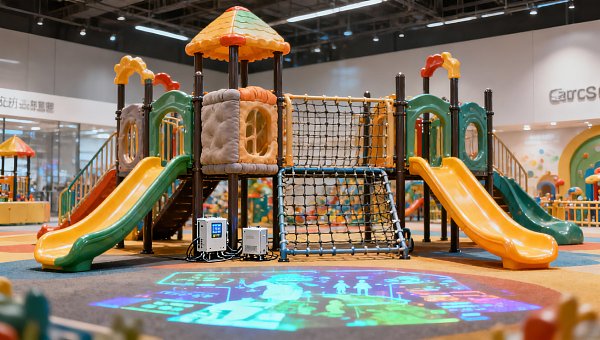
A turnkey playground installation should deliver a completed play space, but the word “turnkey” does not define a universal scope of work. One proposal may include equipment, foundations, safety surfacing, and site restoration; another may cover only equipment assembly on a site that someone else has already prepared. The decisive issue is not the package label, but where the supplier’s responsibility begins and ends.
A reliable budget therefore separates the contract price from the total cost of opening the playground. Groundworks, drainage, freight, permits, accessibility provisions, and acceptance inspections can sit outside the quoted amount. A lower equipment-and-installation price is not necessarily a lower completed-project cost.
What the base package actually buys
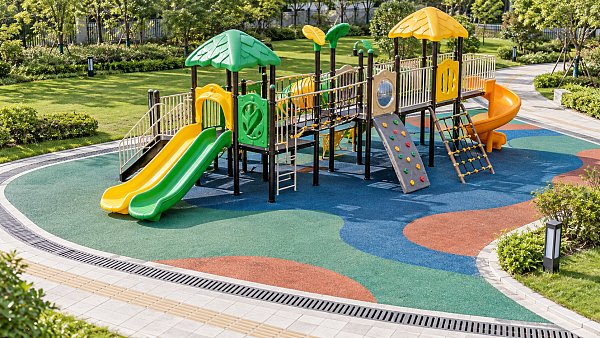
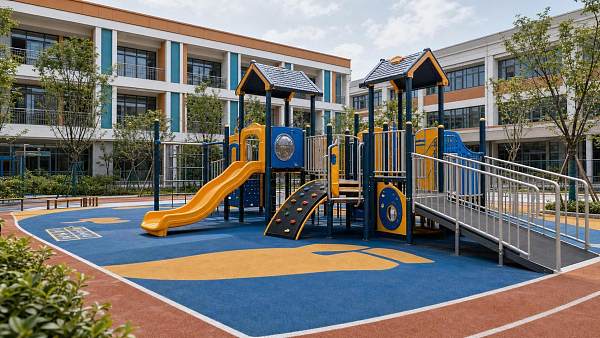
For an outdoor commercial playground, the core package can include layout development, equipment supply, assembly, anchoring, and impact-attenuating surfacing. However, each item needs a measurable definition. “Installation included” does not establish whether excavation, concrete foundations, unloading, or waste removal is included.
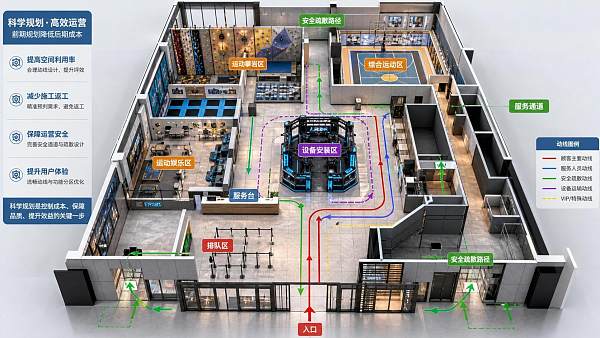
The agreed layout also matters. Equipment dimensions alone do not establish the required construction area. Use zones, circulation routes, surfacing boundaries, and maintenance access affect quantities and site works. A quote based on an early concept drawing should not be treated as a fixed price for a later, expanded design.
None of these items is automatically included or excluded. The table identifies boundaries that should be priced explicitly rather than left to assumptions.
Site preparation is the largest scope uncertainty
An installation price based on a level, accessible, construction-ready site transfers substantial work to the owner. That condition may require demolition, vegetation clearance, excavation, grading, soil disposal, and a prepared sub-base before the installer arrives.
Ground conditions can change both the method and cost of construction. Buried debris, shallow rock, weak soils, or undocumented utilities may prevent the foundations shown in the original proposal from being installed as planned. A fixed price offers limited protection if the contract excludes all subsurface conditions without defining the assumptions used to calculate it.
Request a site assessment proportionate to the project. Existing surveys, utility records, levels, and photographs can resolve some questions; uncertain ground conditions may justify further investigation. Where uncertainty remains, agree unit rates for additional excavation, disposal, and imported fill, together with a written authorization process.
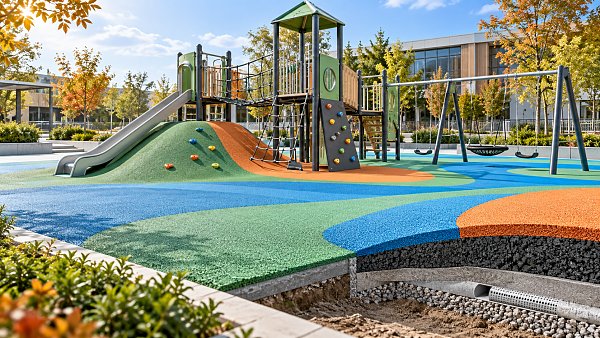
Drainage deserves its own line item. A permeable surface does not make the underlying ground capable of draining. Water must pass through the full construction system and discharge to an appropriate location. Drainage design, pipework, connections, and approvals may fall outside the playground installer’s scope.
Access restrictions also create direct costs. A fenced courtyard that cannot accommodate delivery vehicles may require smaller machinery, manual handling, temporary fence removal, or crane access. These conditions should be assessed before award, not discovered when the equipment reaches the site.
Safety surfacing needs more detail than a material name
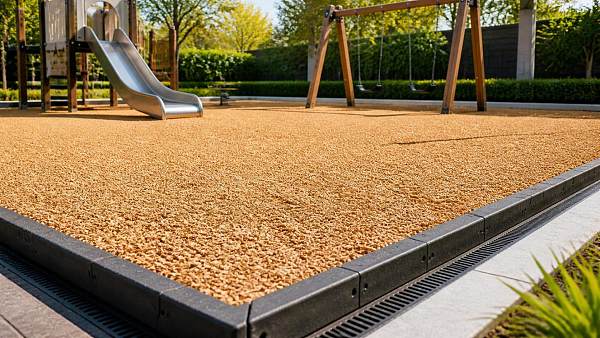
“Rubber surfacing included” is not a sufficiently defined specification. The quotation should identify the system, area, layer construction, installed thickness, substrate requirements, edge details, and impact performance appropriate to the equipment’s fall height under the applicable standard.
Two surfacing prices may differ because one includes excavation and a prepared base while the other covers only the finished surface. Decorative graphics, color combinations, and complex boundaries can also affect material use and labor. Comparing only the price per square meter conceals these differences.
Loose-fill surfacing requires equally clear assumptions. Specify the material, installation depth, settlement allowance, containment, and access transitions. Its initial supply price should be considered alongside replenishment, redistribution, and inspection requirements. Those future activities are not normally part of a one-time construction contract unless expressly included.
Accessible routes must be coordinated with surfacing and site levels. A playground can have accessible components while still being difficult to reach because the entrance, path, or surface transition has not been designed appropriately. Responsibility for paths, ramps, gates, and connections to existing facilities needs to be allocated.
Freight and import terms can leave a gap before installation starts
For cross-border supply, “delivery included” needs a named destination and a clear allocation of responsibilities. Delivery to a port, delivery to the site entrance, and delivery with unloading are different services.
If the contract uses Incoterms®, specify the rule, named place, and edition. These terms allocate defined delivery obligations, costs, and risks; they do not replace the installation agreement or determine every issue, such as payment terms and ownership.
Clarify responsibility for customs clearance, duties, applicable taxes, terminal charges, inland transport, unloading, and packaging disposal. Recoverable taxes should be distinguished from permanent project costs, while still allowing for their cash-flow effect.
Delivery timing must match site readiness. Equipment arriving before foundations or storage areas are ready can generate warehousing, container detention, extra handling, or a second mobilization. The contract should state who pays when delay results from the supplier, the owner, or an agreed external event.
Compliance documentation is not the same as permission to open
A supplier’s statement that its equipment meets a safety standard does not establish that the completed playground is compliant. Layout, anchoring, surfacing, clearances, and installation quality all affect the finished site.
Requirements depend on the jurisdiction and project. In the United States, relevant references may include ASTM F1487 for public-use playground equipment, ASTM F1292 for impact attenuation of playground surfacing, and the U.S. Consumer Product Safety Commission’s Public Playground Safety Handbook. Accessibility obligations may also apply. European projects commonly reference the EN 1176 series for playground equipment and surfacing and EN 1177 for impact-attenuating surfacing. The applicable editions and local requirements should be confirmed for the specific contract.
These references are not interchangeable certificates. A laboratory report for a surfacing system does not prove that every installed thickness or substrate will achieve the required result. Equipment documentation likewise needs to correspond to the supplied models and intended application.
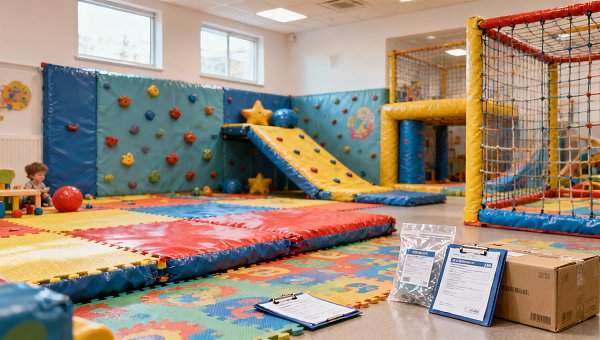
Distinguish between the installer’s completion checks, an independent post-installation inspection, any specified field testing, and authority approval. State which are required, who appoints and pays for them, and who funds corrective work. If inspection is scheduled only after all contractors have left, correction can also involve remobilization and reopening finished surfaces.
Compare the cost to opening, not just the quoted total
A practical comparison uses the same approved layout and scope for every bidder. Each cost should be identified as a fixed inclusion, a defined allowance, an owner-provided item, or an exclusion. An unpriced exclusion is unresolved exposure, not a zero-cost item.
Consider this illustrative budget comparison, not a market price benchmark:
The comparison only holds if equipment, surfacing, quantities, and performance requirements are equivalent. It also requires credible prices for the exclusions. An internal estimate for drainage should not be treated as equally certain as a contractor’s fixed quotation based on an agreed design.
Allowances need similar scrutiny. A low allowance for excavation or surfacing can make the initial total attractive while leaving the final cost variable. Require the assumed quantities, applicable rates, and adjustment mechanism. Ask whether contractor overhead and profit will be added to allowance overruns.
Keep contingency separate from supplier allowances. Contingency addresses retained uncertainty; it should not conceal known omissions. Its size should reflect unresolved site conditions, design maturity, and contractual risk allocation rather than an arbitrary percentage applied to every playground.
Put completion, changes, and warranty boundaries in writing
A defensible turnkey agreement links payment to observable deliverables. Equipment delivery, completed installation, finished surfacing, and accepted handover can be separate milestones. Any retention or final-payment condition should be expressly agreed and consistent with local law.
Define completion in operational terms. Depending on the project, this can require removal of temporary works and waste, correction of identified defects, delivery of maintenance instructions, and completion of specified inspections. Physical assembly alone should not trigger acceptance of work that still lacks essential surfacing or documentation.
The change-order procedure should require a description, price, schedule effect, and written approval before additional work proceeds, apart from clearly defined emergency circumstances. It should also distinguish a genuine scope change from correction of defective or nonconforming work.
Warranty wording requires particular care because equipment, surfacing, and workmanship may have different providers and coverage periods. Confirm whether a claim covers replacement parts only or also labor, freight, excavation, removal, and reinstatement. A replacement component supplied without installation can still leave a significant expense.
The handover package should include the final equipment schedule, relevant drawings, inspection and test records required by the contract, maintenance instructions, warranty terms, and service contacts. Where foundations or drainage become concealed, agree what records must be captured before covering them.
The strongest turnkey offer is not necessarily the one with the fewest exclusions. It is the one that makes the route from existing site to accepted, usable playground clear: defined quantities, credible site assumptions, assigned responsibilities, and an enforceable process for resolving what remains uncertain.
Search News
Hot Articles
- Indoor PlaygroundTurnkey Playground Installation: What's Included and What Costs Extra?Oct 18, 2026
- Musical InstrumentsProfessional String Instruments: How to Evaluate Tone, Response, and ProjectionOct 17, 2026
- Restaurant FurnitureBuying Hotel Lobby Furniture Wholesale: MOQs, Freight Costs, and Lead TimesOct 16, 2026
Popular Tags
Need ExpertConsultation?
Connect with our specialized leisureengineering team for procurementstrategies.
Recommended News
 Oct 18, 2026Turnkey Playground Installation: What's Included and What Costs Extra?Turnkey playground installation: discover what's included, uncover extra costs, and compare quotes confidently. Learn how to avoid budget surprises before you sign.● Theme Park Strategist
 Oct 08, 2026How to Choose Animatronic Haunted House Props for High-Throughput AttractionsAnimatronic haunted house props for high-throughput attractions: compare motion, triggers, safety, and maintenance to create reliable scares that keep guests moving.● Theme Park Strategist
 Sep 29, 2026Poured Playground Safety Surfacing: How to Specify Thickness for Fall HeightsPoured playground safety surfacing: learn how to specify tested thickness by fall height, ASTM standards, substrate conditions, accessibility, and field verification.● Theme Park Strategist
 Sep 27, 2026Custom Trampoline Park Equipment: Planning Capacity, Safety, and LayoutCustom trampoline park equipment for safer capacity, smooth guest flow, and efficient layouts. Explore practical planning insights for a high-performing park.● Theme Park Strategist
 Aug 30, 2026Entertainment Venue Master Planning: How to Balance Capacity, Flow, and RevenueEntertainment venue development master planning: balance capacity, guest flow, and revenue with practical strategies for resilient, high-performing venues.● Theme Park Strategist
 Sep 07, 2026What Should Buyers Do When a Supplier Delivers Non-Compliant Products?What to do if a supplier delivers non-compliant commercial products: contain risks, document evidence, protect your project, and secure the right remedy.● Theme Park Strategist
 Sep 02, 2026Waterpark Capacity Management: Balancing Queue Times, Safety, and Guest ThroughputWaterpark capacity management strategies to reduce queue times, protect safety, optimize guest throughput, and build a smoother, more profitable park operation.● Theme Park Strategist
 Sep 01, 2026ASTM F2075 Explained: Testing Engineered Wood Fiber for Playground Impact SafetyASTM F2075 explained: learn how engineered wood fiber supports playground impact safety, smarter sourcing, compliance documentation, and reliable maintenance planning.● Theme Park Strategist
 Aug 24, 2026How to Evaluate an Indoor Ninja Warrior Course Supplier in Europe?indoor ninja warrior course Europe supplier guide: learn how to assess safety, EN compliance, engineering, installation, and maintenance support before you choose.● Theme Park Strategist
 Aug 20, 2026How to Choose Modular Indoor Play Equipment for Different Venue Sizes and Age GroupsModular indoor play equipment buying guide: learn how to match venue size, ceiling height, traffic flow, and age groups to create safer, smarter, and more profitable play spaces.● Theme Park Strategist
 Aug 14, 2026POB Push Lifts Overseas Pre-Registrations 45.74%POB boosts overseas pre-registrations for the 2026 China Sport Show by 45.74%, signaling stronger global buyer interest and smarter sourcing opportunities in sports manufacturing.● Theme Park Strategist
 Aug 02, 2026What to Check Before Buying Thick Gymnastic Mats Wholesale for Schools and GymsThick gymnastic mats wholesale buying guide for schools and gyms: learn how to check foam, cover durability, safety documents, samples, and true long-term value before placing a bulk order.● Theme Park Strategist
 Jul 28, 2026How to Design Inclusive Sensory Play Areas for Different Age Groups and NeedsInclusive sensory play starts with smart zoning, age planning, accessibility, and acoustics. Discover practical design tips to create safer, engaging spaces that truly work.● Theme Park Strategist
 Jul 26, 2026How to Evaluate a Bowling Alley Equipment Factory Before Requesting a QuoteBowling alley equipment factory evaluation starts before price. Learn how to check manufacturing scope, engineering, compliance, spare parts, and installation support to avoid costly sourcing mistakes.● Theme Park Strategist
 Jul 16, 2026EN 1176:2026 Takes Effect for Indoor PlaygroundsEN 1176:2026 takes effect for indoor playgrounds in the EU, making conformity assessment mandatory. Learn how this impacts certification, customs clearance, suppliers, and market access.● Theme Park Strategist
 Jul 15, 2026CPSC Sets New ASTM Impact Test for Indoor Playground Metal PartsCPSC sets new ASTM impact test rules for indoor playground metal parts effective Oct. 1, 2026. Learn how the 15kN requirement may affect compliance, testing timelines, and U.S. export delivery.● Theme Park Strategist
 Jul 14, 2026CPSC Tightens Phthalate Limit for Indoor Playground Soft MaterialsCPSC tightens phthalate limits for indoor playground soft materials from Aug 15, 2026. Learn how DIBP control, CBP detention risk, and testing changes impact sourcing, exports, and compliance.● Theme Park Strategist
 Jul 13, 2026Vietnam Tightens IoT Rule for Indoor Playground ImportsVietnam Tightens IoT Rule for Indoor Playground Imports: learn how VNSS-2025 gateway requirements affect exporters, buyers, installers, and delivery timelines before the 2026 deadline.● Theme Park Strategist
 Jul 13, 2026How a Recreational Facility Planning Company Helps Reduce Layout MistakesRecreational facility planning company insights: learn how early layout strategy reduces costly mistakes, improves flow, compliance, and buildability for smoother project delivery.● Theme Park Strategist
 Jul 12, 2026CPSC Halts Imports of Indoor Playground Soft PartsCPSC halts imports of indoor playground soft parts from China under ASTM F3432-26. Learn the compliance risks, testing requirements, and urgent steps importers must take now.● Theme Park Strategist
 Jul 11, 2026CPSC Import Alert Tightens Fire Test Rule for Indoor Playground PaddingCPSC import alert updates indoor playground padding rules to ASTM F3432-26. See how the new fire test affects foam mats, shipments, and U.S. market access.● Theme Park Strategist
 Jul 11, 2026Ice Bumper Cars Bulk Order Checklist for Indoor Parks: Space, Power, and Safety PointsIce bumper cars bulk order guide for indoor parks: learn how to assess space, power, safety, and throughput before buying, so you can avoid costly mistakes and choose the right fleet with confidence.● Theme Park Strategist
 Jul 10, 2026Commercial Playground Equipment for Campuses: Key Safety Standards and Planning TipsCommercial playground equipment for campuses: explore key safety standards, inclusive layout planning, durable materials, and smart procurement tips to avoid costly mistakes.● Theme Park Strategist
 Jul 09, 2026CPSC Recall Escalates Over Phthalates in Indoor Playground PadsCPSC recall escalates over phthalates in indoor playground pads as affected batches exceed CPSIA limits. Learn the risks, supply chain impact, and what buyers should monitor now.● Theme Park Strategist