Buying Hotel Lobby Furniture Wholesale: MOQs, Freight Costs, and Lead Times
Buying Hotel Lobby Furniture Wholesale: MOQs, Freight Costs, and Lead Times
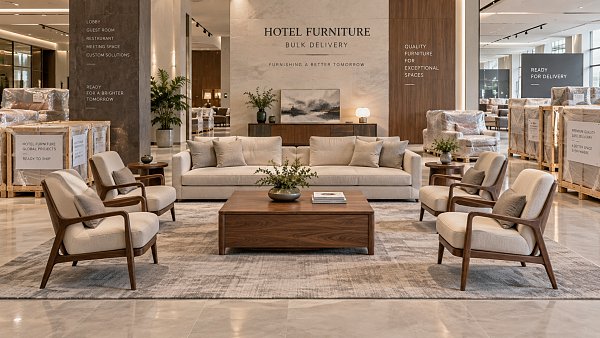
Buying hotel lobby furniture wholesale means balancing design expectations with minimum order quantities, freight costs, and production schedules. A low unit price tells only part of the story: upholstery specifications, packaging, shipping terms, and delivery coordination all influence what the hotel ultimately pays.
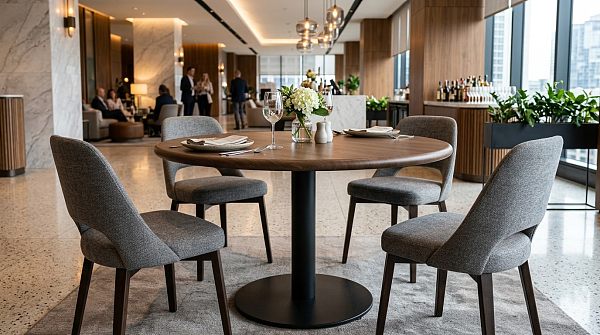
The awkward purchases are often not the largest. A lobby may need several matching lounge chairs, two oversized sofas, a custom communal table, and a few occasional tables. That is a coordinated interior, but not necessarily an efficient production order. The procurement challenge is to preserve the design intent without paying for unnecessary inventory or accepting a delivery plan that jeopardizes opening day.
Start with a quote suppliers can actually price
Before comparing suppliers, issue a furniture schedule with quantities by model, dimensions, finish references, upholstery requirements, and delivery location. Include drawings or reference images, but distinguish visual inspiration from mandatory construction details. “Similar to this photograph” leaves too much room for differences in frame materials, seat construction, and tailoring.
Lobby seating also needs operational specifications. Consider cleaning chemicals, removable cushion covers, replaceable glides, repair access, and whether housekeeping can move the furniture safely. A deep, low sofa may look convincing in a rendering while being unsuitable for guests who need firmer, higher seating.
Identify applicable fire-safety, accessibility, and performance requirements with the project designer and local compliance advisers. Requirements vary by jurisdiction and use. A fabric test report alone does not necessarily establish compliance for the complete upholstered item; ask what the documentation covers and whether it matches the proposed construction.
This is where a sourcing hub such as Global Commercial Trade (GCT) can support the research stage: connecting hospitality procurement questions with supplier capability information. The purchasing decision still needs project-specific quotations, current documentation, and a clear account of who is manufacturing the goods.
MOQs: find out what the minimum actually applies to
A supplier’s minimum order quantity may apply to one model, one upholstery color, one wood finish, or the entire purchase order. Those are very different commitments. An advertised low MOQ can become less useful when each fabric variation triggers a separate minimum.
Ask the supplier to separate the finished-furniture minimum from upstream material minimums. A factory may be willing to produce a small batch of chairs, while its textile mill requires a larger fabric order. Custom metal finishes, stone fabrication, and special veneers can create similar constraints.
The most productive negotiation is often about reducing variation rather than demanding a lower minimum. For example, lounge chairs and sofas might share an upholstery fabric even when their frames differ. Using a standard frame with a selected contract fabric may be more practical than commissioning a new silhouette for a small lobby.
- Ask whether different models can share a finish or material minimum.
- Request separate pricing for stock materials and custom alternatives.
- Clarify ownership, storage, and release arrangements for paid surplus fabric.
- Compare a small-order surcharge with the full cost of buying unwanted pieces.
- Confirm whether repeat orders carry the same minimum and setup charges.
Do not confuse a flexible MOQ with a good sourcing fit. A supplier accepting almost any quantity may be consolidating production across subcontractors. That can work, but finish consistency, inspection access, and responsibility for defects need to be explicit.
Compare landed and installed cost, not furniture price alone
For hotel lobby furniture wholesale purchases, the useful comparison is the cost of getting approved furniture into its final position, ready for use. Two quotations are not comparable if one ends at the factory gate and the other includes destination delivery.
Build a cost sheet covering furniture, customization, samples, export packaging, inspection, origin transport, international freight, cargo insurance, destination charges, customs clearance, duties, applicable taxes, local delivery, installation, and packaging removal. Keep recoverable taxes separate from permanent project costs, while still allowing for their cash-flow impact.
Ask for the Incoterms® rule, named location, and version in writing. “FOB price” without a named port is incomplete. EXW can leave substantial origin handling and export arrangements with the buyer. For containerized shipments handed over before vessel loading, discuss whether FCA better reflects the actual handover arrangement.
A DDP quotation also deserves scrutiny. Confirm who can legally act as importer, which duties and taxes are included, and what delivery service is promised. An Incoterms rule does not, by itself, settle installation, acceptance criteria, payment terms, or warranty obligations.
Freight starts with packed dimensions
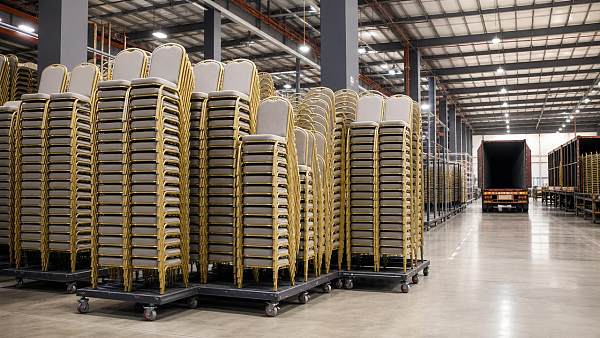
Sofas and lounge chairs consume space quickly. Obtain packed dimensions, gross weight, package count, stackability, and a loading plan before treating a freight allowance as reliable. Product dimensions are not shipping dimensions, especially when timber crates or protective frames are involved.
Less-than-container-load shipping can suit a smaller order, but shared handling and destination charges may offset the apparent saving. Full-container-load shipping can reduce some handling, yet paying for unused space is not automatically economical. Ask a forwarder to compare both options using the same cargo details and delivery scope.
Request a breakdown rather than a single freight figure. Establish quotation validity, excluded charges, available free time, and potential storage, demurrage, or detention exposure. These charges have different triggers; the forwarder should explain how each could arise on the proposed route.
Packaging is a poor place for indiscriminate savings. Specify protection for exposed legs, upholstery, corners, stone surfaces, and moisture-sensitive components. Where solid-wood packaging is used, confirm applicable destination requirements, including ISPM 15 treatment and marking where required.
A production lead time is not a delivery date
When a supplier quotes a production period, ask what starts the clock. It might be deposit receipt, approved shop drawings, approved samples, or arrival of customer-supplied fabric. Unless the trigger is defined, the buyer and factory can believe they are working to different schedules.
There is no dependable universal lead time for lobby furniture. Stocked products, modified standard models, and fully custom pieces follow different paths. Material availability, factory workload, holidays, and subcontracted processes also matter. Request a dated milestone schedule tied to the actual specification rather than relying on a catalog estimate.
Work backward from the date furniture must be installed—not merely delivered. The schedule needs room for design approval, sample review, material purchasing, manufacturing, inspection, corrective work, freight booking, transit, customs clearance, and final delivery. Some stages can overlap; others cannot.
A pre-shipment inspection is only useful if there is time to act on its findings. Inspecting immediately before a fixed vessel departure can turn a quality decision into a deadline negotiation. Define inspection criteria early and reserve a correction window before the planned dispatch.
If the opening date is immovable, simplify the order before compressing the schedule. Standard fabrics, existing frames, and fewer finish variations may remove more risk than paying for expedited transport. Air freight may rescue selected components, but bulky upholstered seating can make that fallback expensive.
Plan the last stretch before placing the order
Consider an oversized sofa that fits the lobby perfectly but cannot pass through the service entrance or turn into the goods lift. The solution may require sectional construction, removable legs, or a different delivery route. Discovering that after production creates avoidable rework.
Check door openings, lift dimensions and capacity, corridor turns, loading access, delivery-hour restrictions, and temporary storage. Confirm whether the carrier provides curbside delivery, unloading, inside placement, or installation. None of those services should be assumed from the phrase “delivery included.”
For an occupied-hotel renovation, phased deliveries can reduce disruption but add handling and transport costs. For a new opening, early arrival can create storage exposure if construction slips. Agree who can authorize dispatch and what happens if the site is not ready.
Also establish a receiving procedure: count packages, record visible damage, photograph unpacking where appropriate, and follow contractual and insurance notification deadlines. Keep packaging until the relevant claim or return requirements are clear.
Choose the supplier whose assumptions you can verify
Before award, reconcile the quotation against the approved schedule. Record substitutions, exclusions, sample approvals, packaging requirements, payment milestones, and the agreed dispatch trigger. Confirm how defects will be resolved, who pays replacement freight, and whether replacement upholstery or components can be supplied later.
The lowest-priced offer may still be the right one. But it should win because its scope is clear and its costs remain attractive after freight, installation, and risk are considered—not because important expenses are missing. Before releasing a deposit, ask one final question: what unresolved assumption could still change the price or delivery date? Resolve that assumption in writing.
Search News
Hot Articles
- Restaurant FurnitureBuying Hotel Lobby Furniture Wholesale: MOQs, Freight Costs, and Lead TimesOct 16, 2026
- Pro Stage AudioDesigning Theater Sound Systems for Clear Dialogue and Even Audience CoverageOct 15, 2026
- Musical InstrumentsHow Do You Choose Music Education Equipment for a New Campus?Oct 15, 2026
Popular Tags
Need ExpertConsultation?
Connect with our specialized leisureengineering team for procurementstrategies.
Recommended News
 Oct 16, 2026Buying Hotel Lobby Furniture Wholesale: MOQs, Freight Costs, and Lead TimesBuying hotel lobby furniture wholesale? Compare MOQs, freight costs, and lead times to avoid hidden fees, protect your opening date, and source smarter with this practical guide.● Hospitality Sourcing Dir
 Oct 04, 2026Fast-Casual Restaurant Interiors: Design Choices That Improve Speed and Guest FlowRestaurant interiors for fast casual brands: discover design choices that improve guest flow, speed service, streamline pickup, and elevate every visit.● Hospitality Sourcing Dir
 Aug 31, 2026Do Supplier Product Specifications Always Match Design Drawings?Do product specs from suppliers always match design drawings? Discover how to prevent costly mismatches with revision control, shop drawings, samples, tolerances, and inspections.● Hospitality Sourcing Dir
 Jul 25, 2026How to Plan Restaurant Commercial Space Design for Better Workflow and Guest ExperienceRestaurant commercial space design starts with workflow, not style. Learn how to improve kitchen flow, guest comfort, and service efficiency with smarter restaurant planning.● Hospitality Sourcing Dir
 Jul 14, 2026Low Maintenance Hotel Outdoor Furniture: Best Materials for Poolsides, Patios, and RooftopsLow maintenance hotel outdoor furniture guide: discover the best materials for poolsides, patios, and rooftops to cut upkeep, improve durability, and elevate guest appeal.● Hospitality Sourcing Dir
 Jul 13, 2026FDA Rule Tightens Coating Tests for Restaurant FurnitureFDA Rule Tightens Coating Tests for Restaurant Furniture: learn how the 2026 FDA migration testing update may impact exports, compliance timelines, suppliers, and U.S.-bound orders.● Hospitality Sourcing Dir
 Jun 13, 2026How to Choose Hotel Outdoor Furniture for Pools, Patios, and Resort TerracesHotel outdoor furniture buying guide for pools, patios, and resort terraces. Learn how to balance durability, comfort, safety, and style for smarter hospitality sourcing.● Hospitality Sourcing Dir
 Jun 01, 2026How to choose folding event tables that last?Folding event tables buying guide: compare materials, load ratings, storage, safety, and supplier checks to choose durable tables for venues, schools, catering, and events.● Hospitality Sourcing Dir
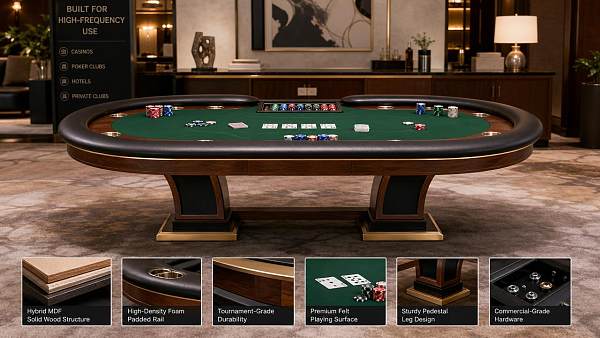
 May 08, 2026Poker Tables Wholesale: MDF or Solid Wood for Heavy Use?Poker tables wholesale guide: compare MDF vs solid wood for heavy-use casinos, hotels, and events. Learn which build delivers durability, lower maintenance, and better ROI.● Hospitality Sourcing Dir
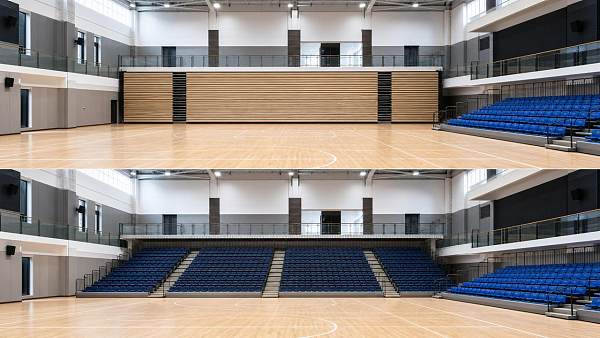
 May 06, 2026Indoor bleachers seating: fixed or retractable for tighter spaces?Indoor bleachers seating for tight spaces: compare fixed vs. retractable options for schools and multipurpose venues, with insights on safety, flexibility, lifecycle value, and smarter project planning.● Hospitality Sourcing Dir
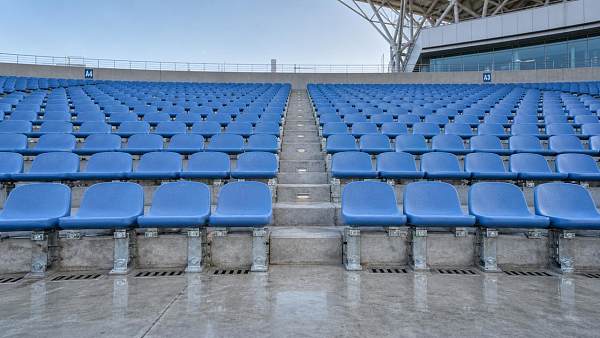
 May 06, 2026Outdoor stadium seating mistakes that raise maintenance costsOutdoor stadium seating mistakes can quietly raise maintenance costs. Learn how better material, drainage, fixing, and service planning cuts repairs and protects long-term venue value.● Hospitality Sourcing Dir
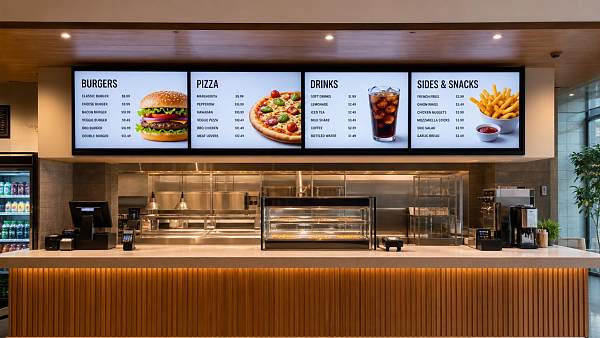
 May 04, 2026Wholesale LED Menu Boards: Brightness Is Not the Only MetricWholesale LED menu boards are about more than brightness. Discover how color consistency, viewing angle, power efficiency, and reliability impact long-term performance and smarter sourcing.● Hospitality Sourcing Dir
 May 04, 2026Digital Signage for Restaurants: What Drives Real Menu Sales?Digital signage for restaurants drives real menu sales through smarter content, screen placement, timing, and optimization. Learn what truly boosts upsells, AOV, and menu performance.● Hospitality Sourcing Dir
 May 03, 2026Hotel pool lounge chairs: materials that survive sun and chlorineHotel pool lounge chairs buying guide: compare aluminum, resin, sling, and hardware materials that resist sun, chlorine, and heavy use for longer life and lower maintenance.● Hospitality Sourcing Dir
 May 03, 2026Outdoor rattan dining sets: which weave lasts in commercial useOutdoor rattan dining sets: discover which commercial weave lasts longest. Compare flat vs half-round options for durability, cleaning efficiency, and lower lifecycle cost.● Hospitality Sourcing Dir
 May 03, 2026Commercial patio umbrellas need more than UV fabric outdoorsCommercial patio umbrellas need more than UV fabric. Discover how wind stability, corrosion resistance, frame strength, and maintenance impact safer, longer-lasting outdoor projects.● Hospitality Sourcing Dir
 May 02, 2026Folding event tables that stay stable on uneven banquet floorsFolding event tables that stay stable on uneven banquet floors help reduce wobble, speed setup, and improve guest experience. Discover key features buyers should compare.● Hospitality Sourcing Dir
 May 02, 2026Banquet chairs wholesale: stacking height can change storage costsBanquet chairs wholesale decisions should consider stacking height, because smarter storage, faster handling, and lower transport costs can significantly improve long-term venue profitability.● Hospitality Sourcing Dir
 May 02, 2026When wholesale melamine plates look premium and when they do notWholesale melamine plates can look refined or cheap. Learn how finish, weight, design, and supplier quality affect premium appeal before you source for hospitality or retail.● Hospitality Sourcing Dir
 May 01, 2026Restaurant Booth Seating That Saves Space Without Feeling TightRestaurant booth seating that saves space without feeling cramped—discover smart dimensions, durable specs, and layout tips to boost comfort, traffic flow, and revenue.● Hospitality Sourcing Dir
 May 01, 2026How to Choose Commercial Bar Stools for High-Traffic VenuesCommercial bar stools for high-traffic venues: learn how to compare durability, safety, comfort, maintenance, and supplier reliability to choose seating that lasts and performs.● Hospitality Sourcing Dir
 Apr 28, 2026Why Hotel Tables Often Fail at Edges, Bases, and Surface FinishHotel tables often fail at edges, bases, and surface finish. Compare hotel furniture, custom furniture, luxury furniture, hotel chairs, hotel beds, and hotel equipment before you buy.● Hospitality Sourcing Dir
 Apr 28, 2026Hotel Tables With Stone Tops or Wood Tops: Which Performs Better?Hotel tables with stone tops or wood tops? Compare ROI, durability, and style across hotel furniture, custom furniture, hotel chairs, and hotel beds to choose smarter.● Hospitality Sourcing Dir
 Apr 28, 2026The Best Hotel Chairs Balance Comfort, Stackability, and DurabilityHotel chairs that balance comfort, stackability, and durability. Explore hotel furniture, custom furniture, hotel tables, hotel beds, and luxury furniture solutions for hospitality buyers.● Hospitality Sourcing Dir