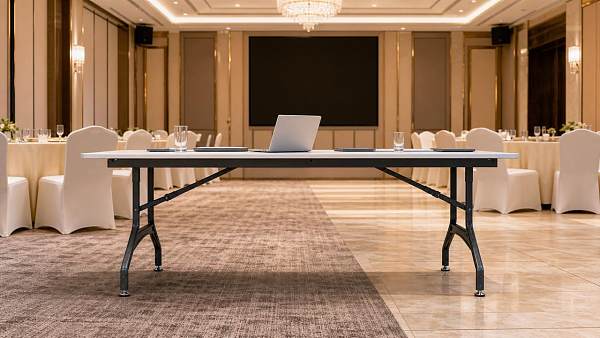
How to choose folding event tables that last?
Choosing folding event tables is not just about finding a portable surface—it is a procurement decision that affects safety, setup efficiency, guest experience, and long-term operating costs. For hotels, venues, schools, caterers, and commercial event operators, the right tables must withstand frequent transport, repeated assembly, heavy use, and changing space requirements. This guide explains what buyers should evaluate before sourcing, from frame materials and load capacity to storage design, compliance, and supplier reliability.
What makes folding event tables a strategic procurement item?
For procurement teams, folding event tables sit at the intersection of operations, facility management, guest presentation, and lifecycle budgeting. A low-priced table can become expensive if it fails early.
Commercial buyers use these tables across banquets, training rooms, pop-up retail, exhibitions, school halls, and outdoor hospitality functions. Each setting creates different stress points.
Core procurement value drivers
- Durability reduces replacement cycles, especially where teams set up and fold tables several times per week.
- Safe locking systems reduce collapse risks during service, education sessions, product displays, or catered events.
- Compact storage improves back-of-house efficiency and protects finishes from transport damage.
- Consistent appearance supports brand perception in hotels, conference venues, universities, and corporate facilities.
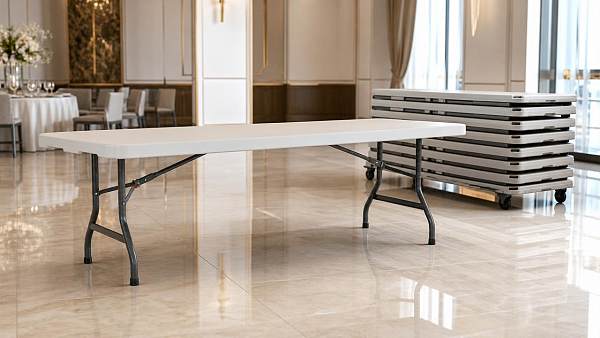
The best folding event tables are not always the heaviest or most expensive. They are the models that match real usage patterns, labor capacity, and storage conditions.
Which applications should define your table specification?
Before comparing prices, buyers should map how folding event tables will be used. Application data prevents overbuying, under-specifying, or mixing incompatible product types.
The following table summarizes typical commercial scenarios and the performance priorities that should influence selection, quotations, and sample evaluation.
This scenario-first approach helps procurement officers define measurable requirements. It also gives suppliers clearer evidence for recommending suitable folding event tables, not generic alternatives.
Which materials and structures last longer in commercial use?
Material choice affects weight, stability, appearance, cleaning, and repair options. Buyers should evaluate the whole structure, not only the tabletop material.
Common options include high-density polyethylene, laminated plywood, particleboard with laminate, aluminum frames, and powder-coated steel frames. Each suits different budgets and environments.
Tabletop and frame comparison
Use this comparison when shortlisting folding event tables for commercial tenders, especially when balancing price against long-term service life.
A durable table usually combines a suitable surface, reinforced underside, reliable hinges, stable leg geometry, and protective feet. Weak hardware can undermine excellent tabletop material.
What technical parameters should procurement teams request?
Specifications must be precise enough for quotation comparison. Vague terms such as heavy duty or commercial grade create confusion during supplier evaluation.
When sourcing folding event tables, request technical sheets, packaging details, sample photos, assembly videos, and recommended maintenance instructions from shortlisted suppliers.
Key parameters to confirm
- Load capacity should state evenly distributed load and, where relevant, concentrated load conditions for displays or buffet equipment.
- Folded dimensions should match storage rooms, elevators, service corridors, transport carts, and delivery vehicles.
- Leg locking design should be tested for accidental release, pinch risks, and ease of use by temporary staff.
- Surface finish should match cleaning routines, stain exposure, linen usage, and visual expectations in guest-facing spaces.
- Packaging should protect edges and corners during international shipping, warehouse handling, and project-site transfer.
The table below provides a practical parameter framework for folding event tables used in hospitality, education, office training, and leisure environments.
A sample inspection is often more revealing than a catalogue. Ask staff to fold, carry, stack, wipe, and reposition the table repeatedly.
How should cost, lifecycle value, and alternatives be compared?
Procurement teams often face pressure to reduce unit cost. However, folding event tables with weak frames, poor hinges, or fragile edges increase hidden expenses.
Lifecycle value includes purchase price, shipping efficiency, storage cost, labor time, maintenance effort, replacement frequency, and the operational risk of table failure.
Cost factors beyond unit price
- Calculate the expected number of uses per year, especially for hotels, campuses, and event rental operators.
- Estimate labor time for setup, teardown, cleaning, and movement between storage and service areas.
- Assess damage rates from previous purchases, including cracked corners, loose screws, bent frames, and unstable legs.
- Review freight and packaging because bulky tables can shift project budgets significantly in international procurement.
Fixed tables may suit permanent dining or classroom layouts, but they reduce flexibility. Rental tables help short events, yet availability and condition vary.
For multi-use facilities, folding event tables usually deliver better space utilization. The key is selecting products that can survive repeated operational handling.
Which compliance and safety details should not be ignored?
Commercial furniture procurement should consider safety, chemical restrictions, fire behavior where relevant, and accessibility of documentation. Requirements vary by destination market and use case.
Buyers should request applicable declarations, test reports, material descriptions, and maintenance guidance rather than relying only on verbal supplier claims.
Compliance review checklist
The following checklist helps procurement teams align folding event tables with institutional purchasing rules and international project documentation expectations.
Compliance is not only about certificates. It is also about traceable documents, consistent production, accurate labeling, and supplier responsiveness during project audits.
How can buyers evaluate suppliers before placing bulk orders?
A reliable supplier should understand commercial use, not just provide dimensions and a quotation. Ask how their folding event tables perform after repeated handling.
For global procurement, supplier evaluation should include production capacity, sample turnaround, packaging design, export experience, quality control process, and after-sales communication.
Suggested supplier qualification questions
- Can the supplier provide drawings, material specifications, and photos of key components such as hinges, locks, feet, and underside reinforcement?
- Can samples be tested using the buyer’s real setup process, cleaning products, storage carts, and event layouts?
- Does the quotation separate product cost, packaging, spare parts, customization, freight terms, and payment milestones?
- Can production inspections be arranged before shipment, especially for large hotel, school, or venue projects?
- Is the supplier able to support repeat orders with stable specifications, colors, packaging, and component availability?
GCT helps commercial buyers interpret such supplier information across hospitality, education, leisure, office, and specialty retail projects. This reduces sourcing uncertainty.
Common mistakes when buying folding event tables
Many procurement problems appear after delivery, when operations teams discover that tables are hard to carry, unstable, or difficult to store.
Mistakes to avoid
- Buying only by tabletop size without checking folded height, cart compatibility, and storage room capacity.
- Assuming higher weight always means better durability, even when staff must move dozens of tables quickly.
- Ignoring edge construction, although edge damage is common during event teardown and warehouse stacking.
- Skipping sample testing and discovering too late that locks are stiff, noisy, or vulnerable to accidental release.
- Accepting unclear load ratings without understanding whether the figures reflect realistic commercial use.
These mistakes can be avoided by involving operations, safety, housekeeping, storage, and finance teams before confirming folding event tables for bulk purchase.
FAQ for commercial buyers of folding event tables
How many folding event tables should a venue purchase?
Start with maximum seating layout, buffet requirements, backup stock, and event turnover frequency. Venues with multiple rooms should standardize sizes where possible.
Are round or rectangular tables better for events?
Round tables suit banquets and social dining, while rectangular tables work well for training, registration, displays, and classroom formats. Mixed inventories improve flexibility.
What is the most important feature for long-term use?
Frame integrity is critical. Durable folding event tables need stable legs, secure locks, reinforced tops, protective feet, and hardware that tolerates repeated folding.
Should buyers request customized folding event tables?
Customization is useful for branded venues, special storage systems, unique heights, or coordinated interiors. Confirm minimum order quantity, sampling cost, and lead time.
Why choose GCT for folding event tables sourcing support?
GCT supports procurement teams that need more than a product list. We help buyers compare specifications, supplier capabilities, commercial scenarios, and documentation requirements.
Our sourcing perspective covers hotel and catering equipment, office and educational supplies, amusement and leisure facilities, and experience-driven commercial spaces.
What you can consult with GCT
- Parameter confirmation for size, load rating, material, folded dimensions, packaging, and storage planning.
- Product selection guidance for hotels, schools, event venues, catering teams, exhibitions, and outdoor leisure operators.
- Supplier comparison support, including sample evaluation, production consistency, export readiness, and communication quality.
- Customization review for finishes, edge designs, project labeling, packaging requirements, and repeat-order planning.
- Quotation discussion covering lead time, shipment terms, sample support, documentation, and practical lifecycle value.
If your team is preparing a tender or supplier shortlist for folding event tables, GCT can help clarify requirements before pricing conversations begin.
Contact GCT to discuss application scenarios, technical parameters, compliance expectations, sample review, delivery schedule, and sourcing strategy for commercial-grade folding event tables.
Search News
Hot Articles
- Arcade & VR MachinesChoosing a Racing Simulator Cockpit for an FEC: Durability and Guest FitOct 14, 2026
- Office Furniture & EquipChoosing Commercial Air Conditioners for Offices: Capacity, Zoning, and NoiseOct 13, 2026
- Fashion & Gem JewelryHow to Choose Designer Eyewear That Fits Your Store’s Customer ProfileOct 12, 2026
Popular Tags
Need ExpertConsultation?
Connect with our specialized leisureengineering team for procurementstrategies.
Recommended News
 Oct 04, 2026Fast-Casual Restaurant Interiors: Design Choices That Improve Speed and Guest FlowRestaurant interiors for fast casual brands: discover design choices that improve guest flow, speed service, streamline pickup, and elevate every visit.● Hospitality Sourcing Dir
 Aug 31, 2026Do Supplier Product Specifications Always Match Design Drawings?Do product specs from suppliers always match design drawings? Discover how to prevent costly mismatches with revision control, shop drawings, samples, tolerances, and inspections.● Hospitality Sourcing Dir
 Jul 25, 2026How to Plan Restaurant Commercial Space Design for Better Workflow and Guest ExperienceRestaurant commercial space design starts with workflow, not style. Learn how to improve kitchen flow, guest comfort, and service efficiency with smarter restaurant planning.● Hospitality Sourcing Dir
 Jul 14, 2026Low Maintenance Hotel Outdoor Furniture: Best Materials for Poolsides, Patios, and RooftopsLow maintenance hotel outdoor furniture guide: discover the best materials for poolsides, patios, and rooftops to cut upkeep, improve durability, and elevate guest appeal.● Hospitality Sourcing Dir
 Jul 13, 2026FDA Rule Tightens Coating Tests for Restaurant FurnitureFDA Rule Tightens Coating Tests for Restaurant Furniture: learn how the 2026 FDA migration testing update may impact exports, compliance timelines, suppliers, and U.S.-bound orders.● Hospitality Sourcing Dir
 Jun 13, 2026How to Choose Hotel Outdoor Furniture for Pools, Patios, and Resort TerracesHotel outdoor furniture buying guide for pools, patios, and resort terraces. Learn how to balance durability, comfort, safety, and style for smarter hospitality sourcing.● Hospitality Sourcing Dir
 Jun 01, 2026How to choose folding event tables that last?Folding event tables buying guide: compare materials, load ratings, storage, safety, and supplier checks to choose durable tables for venues, schools, catering, and events.● Hospitality Sourcing Dir
 May 08, 2026Poker Tables Wholesale: MDF or Solid Wood for Heavy Use?Poker tables wholesale guide: compare MDF vs solid wood for heavy-use casinos, hotels, and events. Learn which build delivers durability, lower maintenance, and better ROI.● Hospitality Sourcing Dir
 May 06, 2026Indoor bleachers seating: fixed or retractable for tighter spaces?Indoor bleachers seating for tight spaces: compare fixed vs. retractable options for schools and multipurpose venues, with insights on safety, flexibility, lifecycle value, and smarter project planning.● Hospitality Sourcing Dir
 May 06, 2026Outdoor stadium seating mistakes that raise maintenance costsOutdoor stadium seating mistakes can quietly raise maintenance costs. Learn how better material, drainage, fixing, and service planning cuts repairs and protects long-term venue value.● Hospitality Sourcing Dir
 May 04, 2026Wholesale LED Menu Boards: Brightness Is Not the Only MetricWholesale LED menu boards are about more than brightness. Discover how color consistency, viewing angle, power efficiency, and reliability impact long-term performance and smarter sourcing.● Hospitality Sourcing Dir
 May 04, 2026Digital Signage for Restaurants: What Drives Real Menu Sales?Digital signage for restaurants drives real menu sales through smarter content, screen placement, timing, and optimization. Learn what truly boosts upsells, AOV, and menu performance.● Hospitality Sourcing Dir
 May 03, 2026Hotel pool lounge chairs: materials that survive sun and chlorineHotel pool lounge chairs buying guide: compare aluminum, resin, sling, and hardware materials that resist sun, chlorine, and heavy use for longer life and lower maintenance.● Hospitality Sourcing Dir
 May 03, 2026Outdoor rattan dining sets: which weave lasts in commercial useOutdoor rattan dining sets: discover which commercial weave lasts longest. Compare flat vs half-round options for durability, cleaning efficiency, and lower lifecycle cost.● Hospitality Sourcing Dir
 May 03, 2026Commercial patio umbrellas need more than UV fabric outdoorsCommercial patio umbrellas need more than UV fabric. Discover how wind stability, corrosion resistance, frame strength, and maintenance impact safer, longer-lasting outdoor projects.● Hospitality Sourcing Dir
 May 02, 2026Folding event tables that stay stable on uneven banquet floorsFolding event tables that stay stable on uneven banquet floors help reduce wobble, speed setup, and improve guest experience. Discover key features buyers should compare.● Hospitality Sourcing Dir
 May 02, 2026Banquet chairs wholesale: stacking height can change storage costsBanquet chairs wholesale decisions should consider stacking height, because smarter storage, faster handling, and lower transport costs can significantly improve long-term venue profitability.● Hospitality Sourcing Dir
 May 02, 2026When wholesale melamine plates look premium and when they do notWholesale melamine plates can look refined or cheap. Learn how finish, weight, design, and supplier quality affect premium appeal before you source for hospitality or retail.● Hospitality Sourcing Dir
 May 01, 2026Restaurant Booth Seating That Saves Space Without Feeling TightRestaurant booth seating that saves space without feeling cramped—discover smart dimensions, durable specs, and layout tips to boost comfort, traffic flow, and revenue.● Hospitality Sourcing Dir
 May 01, 2026How to Choose Commercial Bar Stools for High-Traffic VenuesCommercial bar stools for high-traffic venues: learn how to compare durability, safety, comfort, maintenance, and supplier reliability to choose seating that lasts and performs.● Hospitality Sourcing Dir
 Apr 28, 2026Why Hotel Tables Often Fail at Edges, Bases, and Surface FinishHotel tables often fail at edges, bases, and surface finish. Compare hotel furniture, custom furniture, luxury furniture, hotel chairs, hotel beds, and hotel equipment before you buy.● Hospitality Sourcing Dir
 Apr 28, 2026Hotel Tables With Stone Tops or Wood Tops: Which Performs Better?Hotel tables with stone tops or wood tops? Compare ROI, durability, and style across hotel furniture, custom furniture, hotel chairs, and hotel beds to choose smarter.● Hospitality Sourcing Dir
 Apr 28, 2026The Best Hotel Chairs Balance Comfort, Stackability, and DurabilityHotel chairs that balance comfort, stackability, and durability. Explore hotel furniture, custom furniture, hotel tables, hotel beds, and luxury furniture solutions for hospitality buyers.● Hospitality Sourcing Dir
 Apr 28, 2026Hotel Chairs: What Causes Wobbling, Cracks, and Early Wear?Hotel chairs buying guide: learn what causes wobbling, cracks, and early wear, and how to compare hotel furniture, custom furniture, hotel tables, hotel beds, and luxury furniture for lasting value.● Hospitality Sourcing Dir