Low Maintenance Hotel Outdoor Furniture: Best Materials for Poolsides, Patios, and Rooftops
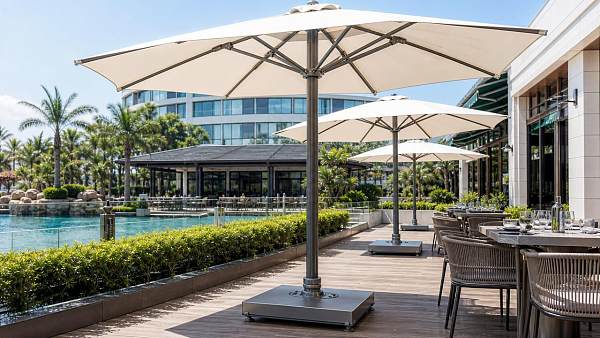
Choosing low maintenance hotel outdoor furniture is no longer a simple styling decision. It sits at the intersection of guest experience, operating efficiency, brand standards, and long-term capital planning. For poolsides, patios, and rooftops, materials must resist sun, moisture, staining, and heavy turnover while still supporting a premium hospitality atmosphere. In practice, the best selections are rarely the cheapest at purchase. They are the ones that reduce cleaning time, limit replacements, and hold their appearance across demanding commercial cycles.
Why material choice matters more in hospitality outdoor settings
Outdoor furniture in hotels works harder than residential products. It faces frequent use, changing weather, food and beverage spills, pool chemicals, and constant exposure to UV radiation.
That creates a different procurement logic. A chair that looks refined on installation day may become expensive if it fades, rusts, loosens, or traps moisture within one or two seasons.
Low maintenance hotel outdoor furniture addresses that risk directly. The goal is not only visual durability. It is predictable lifecycle performance with manageable upkeep across multiple property zones.
This is also why the category has gained more attention in global sourcing. Hospitality groups increasingly evaluate FF&E through total cost of ownership, not unit price alone.
From a broader commercial sourcing perspective, this aligns with the way Global Commercial Trade (GCT) frames procurement intelligence. Reliable performance, compliance, design consistency, and supply chain confidence now carry equal weight.
What low maintenance really means in outdoor hotel furniture
The phrase often gets reduced to easy cleaning, but that is only one layer. In hospitality use, low maintenance means fewer labor hours, fewer service interruptions, and less finish deterioration over time.
It also means the furniture can tolerate repeated movement, stacking, guest misuse, and routine sanitation without losing structure or comfort.
A useful evaluation standard includes four questions:
- Does the material resist corrosion, fading, warping, and mildew?
- Can staff clean it quickly with standard commercial products?
- Will replacement parts or matching collections remain available?
- Does it maintain a high-end look after repeated guest use?
If one of those answers is weak, the furniture may still be attractive, but it is unlikely to qualify as low maintenance hotel outdoor furniture in a serious operating environment.
Best materials for long-term outdoor performance
Powder-coated aluminum
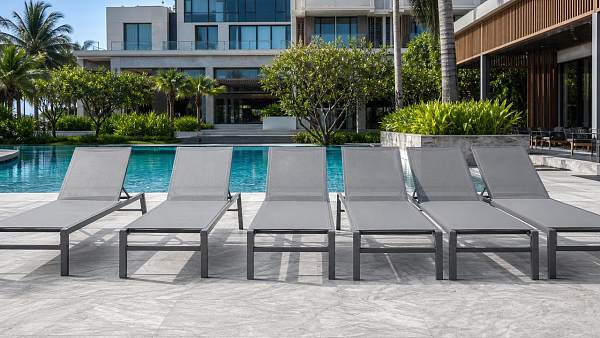
Powder-coated aluminum remains one of the strongest all-around options. It is lightweight, rust-resistant, and easier to reposition than steel or cast iron.
For hotels, that matters during event resets, seasonal reconfiguration, and deep cleaning. Quality powder coating also improves resistance to scratches and coastal moisture.
The key is specification discipline. Thin tubing and poor welds undermine performance quickly, especially on windy rooftops or busy terrace dining areas.
High-density polyethylene and performance resin
Commercial-grade HDPE and engineered resin have moved far beyond budget outdoor furniture. Better formulations now deliver strong UV stability, moisture resistance, and low cleaning demands.
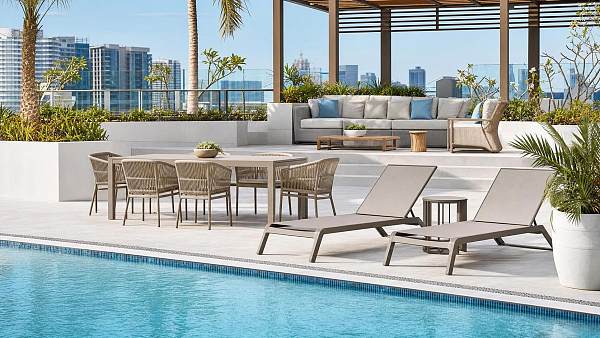
These materials work especially well around pools, where splash, chlorine, and sunscreen create constant wear. They are also less likely to chip or peel than painted alternatives.
Not every resin product is equal. Lower-grade versions can become brittle, discolor, or look overly domestic, which weakens premium positioning.
Synthetic wicker over aluminum frames
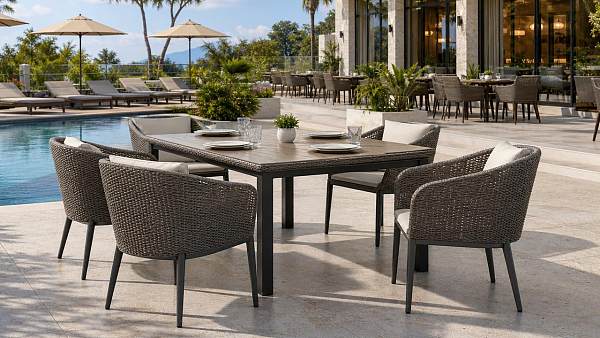
Synthetic wicker still has value in hospitality when the visual language calls for warmth and leisure. The best versions use UV-stabilized fibers over rust-resistant aluminum frames.
This combination offers a softer resort aesthetic without the maintenance burden of natural rattan. It performs well on patios, lounge zones, and covered outdoor bars.
The risk sits in fiber quality and weave tension. Cheap synthetic wicker can crack, sag, or hold dirt in ways that increase labor over time.
Teak and modified wood
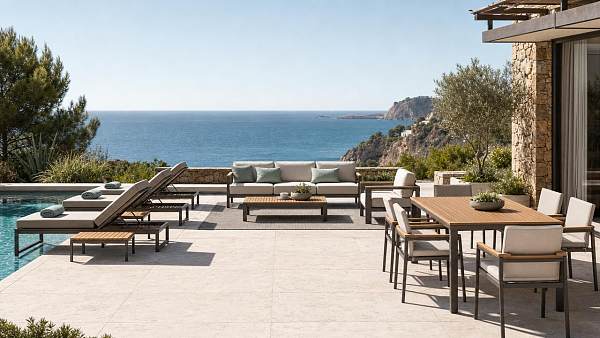
Wood remains desirable for luxury properties, especially where architecture emphasizes natural materials. Teak is the benchmark because of its oils, density, and weather tolerance.
Modified wood can also perform well when treated for dimensional stability and exterior exposure. Both can support sophisticated design narratives that metals and resin sometimes cannot.
Still, wood is not automatically low maintenance. If the brief requires color consistency rather than a natural silver patina, maintenance needs rise through regular oiling or refinishing.
Marine-grade stainless steel
For harsh coastal environments or rooftops with severe exposure, marine-grade stainless steel can be an excellent structural material. It offers high strength and a clean architectural appearance.
Its maintenance profile depends on grade and finish. In salt-heavy air, lower specifications may still show tea staining, so material verification is essential.
Matching the material to poolsides, patios, and rooftops
The right answer changes by setting. A strong sourcing decision comes from reading the environment first, then choosing the material that reduces operational friction.
This is where low maintenance hotel outdoor furniture becomes a planning tool, not just a product category. The same collection may not be appropriate across every exterior zone.
Details that often decide maintenance costs
Material selection is central, but design details often determine whether the furniture stays easy to manage. Cushions, hardware, drainage, and finish quality all affect service burden.
Cushions and fabric systems
Quick-dry foam, removable covers, and solution-dyed acrylic fabrics help prevent mildew and color loss. Poor cushion construction can turn otherwise durable furniture into a maintenance problem.
Stackability and storage logic
Furniture that stacks cleanly reduces labor during storms, event turnovers, and seasonal closures. On rooftops especially, efficient storage can be as valuable as aesthetic refinement.
Replaceable components
Glides, slings, cushion covers, and tabletops should be replaceable without discarding the full unit. That keeps low maintenance hotel outdoor furniture aligned with lifecycle budgeting.
Compliance and safety
Commercial outdoor use demands attention to fire standards, load stability, anti-corrosion testing, and finish safety. A sourcing shortcut here usually creates operational exposure later.
How to evaluate suppliers and sourcing proposals
In global procurement, the material story must be verified. Hospitality buyers increasingly want more than a catalog image and a basic specification sheet.
A stronger review process usually includes:
- UV, salt spray, and finish testing data
- Frame construction details and alloy information
- Fabric performance ratings and cushion drainage design
- OEM or ODM capability for project-specific dimensions
- Spare parts policy and replacement lead times
- References from comparable hospitality installations
This is where GCT’s market-led perspective becomes relevant. In commercial projects, sourcing quality depends on evidence, supplier credibility, and the ability to compare manufacturing claims against real project requirements.
That approach is especially useful when balancing aesthetics with resilience. A rooftop lounge may need bespoke styling, but the specification still has to perform under intense UV and operational wear.
A practical way to move from concept to specification
The most effective path is usually comparative rather than absolute. Instead of asking for the single best material, define the exposure level, cleaning routine, expected lifespan, and design intent for each zone.
Then narrow the field to a short list of low maintenance hotel outdoor furniture options that match those conditions. Review samples in real light, check finishing consistency, and test cleaning response before final approval.
Where the project spans multiple properties, standardizing a few reliable material platforms can simplify replenishment and protect brand coherence. That often delivers more value than chasing too many bespoke outdoor collections.
For the next step, build a decision matrix around exposure, maintenance labor, replacement cycles, and supplier support. That framework makes it easier to compare poolsides, patios, and rooftops on equal terms and specify furniture that remains attractive long after installation.
Search News
Hot Articles
- Fashion & Gem JewelryHow to Choose Designer Eyewear That Fits Your Store’s Customer ProfileOct 12, 2026
- Musical InstrumentsA Practical Guide to Identifying Wooden Orchestral Instruments by Family and ToneOct 10, 2026
- Indoor PlaygroundHow to Choose Animatronic Haunted House Props for High-Throughput AttractionsOct 08, 2026
Popular Tags
Need ExpertConsultation?
Connect with our specialized leisureengineering team for procurementstrategies.
Recommended News
 Oct 04, 2026Fast-Casual Restaurant Interiors: Design Choices That Improve Speed and Guest FlowRestaurant interiors for fast casual brands: discover design choices that improve guest flow, speed service, streamline pickup, and elevate every visit.● Hospitality Sourcing Dir
 Aug 31, 2026Do Supplier Product Specifications Always Match Design Drawings?Do product specs from suppliers always match design drawings? Discover how to prevent costly mismatches with revision control, shop drawings, samples, tolerances, and inspections.● Hospitality Sourcing Dir
 Jul 25, 2026How to Plan Restaurant Commercial Space Design for Better Workflow and Guest ExperienceRestaurant commercial space design starts with workflow, not style. Learn how to improve kitchen flow, guest comfort, and service efficiency with smarter restaurant planning.● Hospitality Sourcing Dir
 Jul 14, 2026Low Maintenance Hotel Outdoor Furniture: Best Materials for Poolsides, Patios, and RooftopsLow maintenance hotel outdoor furniture guide: discover the best materials for poolsides, patios, and rooftops to cut upkeep, improve durability, and elevate guest appeal.● Hospitality Sourcing Dir
 Jul 13, 2026FDA Rule Tightens Coating Tests for Restaurant FurnitureFDA Rule Tightens Coating Tests for Restaurant Furniture: learn how the 2026 FDA migration testing update may impact exports, compliance timelines, suppliers, and U.S.-bound orders.● Hospitality Sourcing Dir
 Jun 13, 2026How to Choose Hotel Outdoor Furniture for Pools, Patios, and Resort TerracesHotel outdoor furniture buying guide for pools, patios, and resort terraces. Learn how to balance durability, comfort, safety, and style for smarter hospitality sourcing.● Hospitality Sourcing Dir
 Jun 01, 2026How to choose folding event tables that last?Folding event tables buying guide: compare materials, load ratings, storage, safety, and supplier checks to choose durable tables for venues, schools, catering, and events.● Hospitality Sourcing Dir
 May 08, 2026Poker Tables Wholesale: MDF or Solid Wood for Heavy Use?Poker tables wholesale guide: compare MDF vs solid wood for heavy-use casinos, hotels, and events. Learn which build delivers durability, lower maintenance, and better ROI.● Hospitality Sourcing Dir
 May 06, 2026Indoor bleachers seating: fixed or retractable for tighter spaces?Indoor bleachers seating for tight spaces: compare fixed vs. retractable options for schools and multipurpose venues, with insights on safety, flexibility, lifecycle value, and smarter project planning.● Hospitality Sourcing Dir
 May 06, 2026Outdoor stadium seating mistakes that raise maintenance costsOutdoor stadium seating mistakes can quietly raise maintenance costs. Learn how better material, drainage, fixing, and service planning cuts repairs and protects long-term venue value.● Hospitality Sourcing Dir
 May 04, 2026Wholesale LED Menu Boards: Brightness Is Not the Only MetricWholesale LED menu boards are about more than brightness. Discover how color consistency, viewing angle, power efficiency, and reliability impact long-term performance and smarter sourcing.● Hospitality Sourcing Dir
 May 04, 2026Digital Signage for Restaurants: What Drives Real Menu Sales?Digital signage for restaurants drives real menu sales through smarter content, screen placement, timing, and optimization. Learn what truly boosts upsells, AOV, and menu performance.● Hospitality Sourcing Dir
 May 03, 2026Hotel pool lounge chairs: materials that survive sun and chlorineHotel pool lounge chairs buying guide: compare aluminum, resin, sling, and hardware materials that resist sun, chlorine, and heavy use for longer life and lower maintenance.● Hospitality Sourcing Dir
 May 03, 2026Outdoor rattan dining sets: which weave lasts in commercial useOutdoor rattan dining sets: discover which commercial weave lasts longest. Compare flat vs half-round options for durability, cleaning efficiency, and lower lifecycle cost.● Hospitality Sourcing Dir
 May 03, 2026Commercial patio umbrellas need more than UV fabric outdoorsCommercial patio umbrellas need more than UV fabric. Discover how wind stability, corrosion resistance, frame strength, and maintenance impact safer, longer-lasting outdoor projects.● Hospitality Sourcing Dir
 May 02, 2026Folding event tables that stay stable on uneven banquet floorsFolding event tables that stay stable on uneven banquet floors help reduce wobble, speed setup, and improve guest experience. Discover key features buyers should compare.● Hospitality Sourcing Dir
 May 02, 2026Banquet chairs wholesale: stacking height can change storage costsBanquet chairs wholesale decisions should consider stacking height, because smarter storage, faster handling, and lower transport costs can significantly improve long-term venue profitability.● Hospitality Sourcing Dir
 May 02, 2026When wholesale melamine plates look premium and when they do notWholesale melamine plates can look refined or cheap. Learn how finish, weight, design, and supplier quality affect premium appeal before you source for hospitality or retail.● Hospitality Sourcing Dir
 May 01, 2026Restaurant Booth Seating That Saves Space Without Feeling TightRestaurant booth seating that saves space without feeling cramped—discover smart dimensions, durable specs, and layout tips to boost comfort, traffic flow, and revenue.● Hospitality Sourcing Dir
 May 01, 2026How to Choose Commercial Bar Stools for High-Traffic VenuesCommercial bar stools for high-traffic venues: learn how to compare durability, safety, comfort, maintenance, and supplier reliability to choose seating that lasts and performs.● Hospitality Sourcing Dir
 Apr 28, 2026Why Hotel Tables Often Fail at Edges, Bases, and Surface FinishHotel tables often fail at edges, bases, and surface finish. Compare hotel furniture, custom furniture, luxury furniture, hotel chairs, hotel beds, and hotel equipment before you buy.● Hospitality Sourcing Dir
 Apr 28, 2026Hotel Tables With Stone Tops or Wood Tops: Which Performs Better?Hotel tables with stone tops or wood tops? Compare ROI, durability, and style across hotel furniture, custom furniture, hotel chairs, and hotel beds to choose smarter.● Hospitality Sourcing Dir
 Apr 28, 2026The Best Hotel Chairs Balance Comfort, Stackability, and DurabilityHotel chairs that balance comfort, stackability, and durability. Explore hotel furniture, custom furniture, hotel tables, hotel beds, and luxury furniture solutions for hospitality buyers.● Hospitality Sourcing Dir
 Apr 28, 2026Hotel Chairs: What Causes Wobbling, Cracks, and Early Wear?Hotel chairs buying guide: learn what causes wobbling, cracks, and early wear, and how to compare hotel furniture, custom furniture, hotel tables, hotel beds, and luxury furniture for lasting value.● Hospitality Sourcing Dir