Waterpark Capacity Management: Balancing Queue Times, Safety, and Guest Throughput
Waterpark capacity management is often treated as an operations problem that begins after opening day. That is too late. For a new build, expansion, or major attraction retrofit, the ability to balance queue times, safety, and guest throughput is largely determined by decisions made during concept design, hydraulic engineering, site planning, controls integration, and commissioning.
The central challenge is not simply admitting more guests. A park can have high headline attendance while delivering a poor day if guests spend disproportionate time in static queues, circulation routes become congested, changing areas reach uncomfortable density, or ride teams are forced to accelerate dispatch decisions beyond a sustainable safety margin. Conversely, overly conservative capacity controls can suppress food, retail, cabana, and repeat-visit revenue while leaving expensive assets underused.
Effective waterpark capacity management therefore treats capacity as a system: each attraction, queue, deck, locker area, food outlet, first-aid point, circulation path, and evacuation route affects the others. The practical objective is to maintain a safe, predictable operating envelope while preserving the sense of choice and freedom guests expect from a leisure venue.
Start with the difference between theoretical and usable capacity
Attraction suppliers commonly provide a theoretical hourly ride capacity based on assumed loading patterns, dispatch intervals, rider mix, raft availability, and operating conditions. This figure is necessary for planning, but it should not be used as the park’s operating forecast without adjustment.
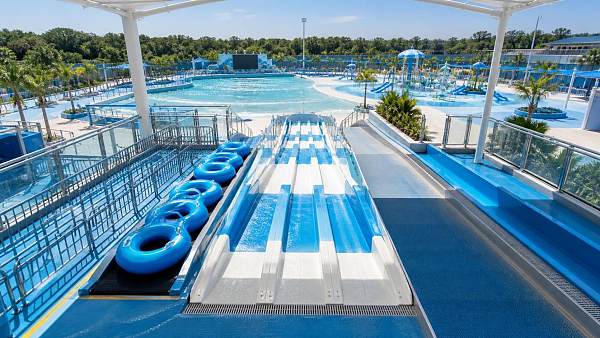
A four-person raft slide, for example, may achieve its stated capacity only when group sizes match raft configuration, rafts return consistently, attendants can load without interruption, and riders meet the relevant height, weight, and health restrictions. In actual operation, uneven party sizes, orientation needs, guest hesitation, temporary cleaning, weather interruptions, and the return path for rafts all reduce effective throughput. The same issue applies to body slides, surf simulators, wave pools, children’s areas, and water coasters, although the constraints differ.
The planning model should distinguish at least three numbers:
- Theoretical attraction capacity: the maximum output under controlled assumptions.
- Planned operating capacity: the output expected during normal peak-day conditions with realistic staffing and guest behavior.
- Safe degraded capacity: the output that can be maintained when one element of the system is constrained, such as a reduced raft fleet, a lane closure, a staffing gap, or a temporary weather response.
That third number is frequently overlooked. Yet it is the number that determines whether the park remains orderly during the disruptions that occur in live operations. A resilient project does not require every attraction to run perfectly every hour; it must remain manageable when perfection is unavailable.
Build the attendance model around guest distribution, not the gate count
Daily admission is not a reliable measure of crowding. Guests do not enter all zones evenly, do not remain for identical durations, and do not use attractions in a balanced sequence. Families with younger children may occupy splash zones and shallow-water areas for long periods. Teen groups may repeatedly concentrate around high-thrill slides. Guests who have reserved premium seating may enter later, stay longer in one area, and move toward food service at similar times. Weather can shift all of these patterns within minutes.
A sound design brief should test how guests distribute themselves at different points in the day. Rather than relying on one peak attendance assumption, model several operating scenarios:
- a typical weekend peak;
- a school holiday or group-booking day;
- a hot-weather surge with high early arrival;
- a mixed-weather day when indoor spaces become disproportionately loaded;
- a reduced-attraction scenario during maintenance or an unplanned closure;
- an emergency egress condition.
For each scenario, estimate not only total persons on site but also persons in water, in queues, on tower stairs, on decks, in changing facilities, and at food and beverage points. This approach exposes bottlenecks that are invisible in a simple “guests per day” calculation.
It is especially important in hybrid indoor-outdoor parks. The indoor hall may be designed for a fixed comfort and evacuation load, while outdoor grounds can absorb substantial seasonal attendance. When rain, cold, lightning protocols, or a temporary outdoor attraction closure pushes guests indoors, the nominal outdoor capacity offers little operational protection. The project must define how admissions, re-entry, guest communications, and zone access will be controlled in that event.
Queue time is a safety and experience variable, not merely a service metric
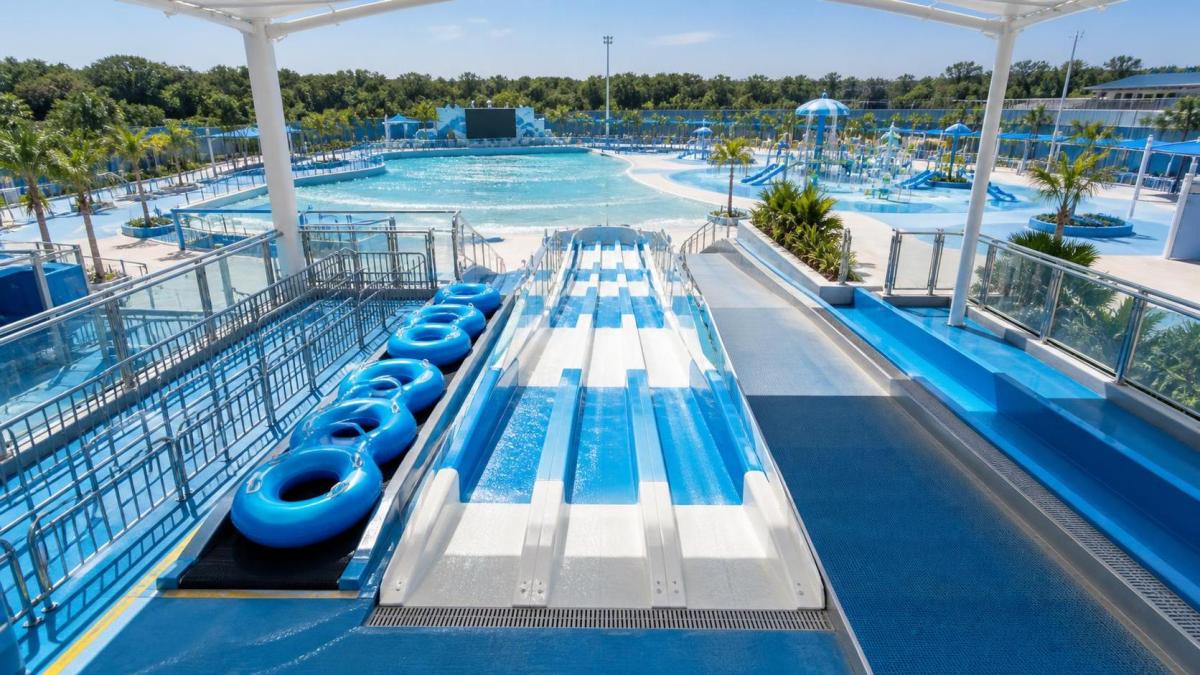
Long queues create more than dissatisfaction. They can increase heat stress on exposed towers, encourage queue jumping, complicate supervision of children, obstruct circulation, and create pressure on attendants to shorten safety checks. A queue line that spills into a main route can also interfere with emergency access and reduce visibility around a pool or landing area.
The appropriate queue target depends on attraction type and guest expectation. A signature ride may retain demand despite a longer wait, while a low-capacity family attraction can become a source of complaints quickly because its intended users have limited tolerance for prolonged standing. The question is not whether every queue can be short at all times. It is whether guests can understand the wait, make an informed choice, and access alternatives without causing congestion elsewhere.
Physical queue design should be considered early, before the architecture is fixed. Key details include shade, drainage, handrail arrangement, stair widths, turning radii for rafts, visibility for attendants, accessible routes, parent-child separation risks, emergency exit points, and the location of entry restriction signage. Digital wait-time displays can help guests redistribute themselves, but inaccurate information damages trust. If real-time estimates cannot be maintained reliably, clear zone-based messaging is preferable to false precision.
Virtual queues, timed ride reservations, and paid priority systems can be useful, but they are not universal solutions. They shift demand rather than create ride capacity. If a virtual queue releases too many guests into a narrow return window, the loading platform can become more crowded than a conventional line. If priority access is not calibrated against standby demand, the general queue becomes predictably slow and can create reputational risk. Any reservation system should be tested against actual dispatch data, not just sales assumptions.
Design for the real constraint: loading, unloading, and recovery
In many water attractions, the slide flume itself is not the limiting factor. Throughput is lost at loading stations, raft handover points, conveyor interfaces, landing pools, and exit routes. A ride may appear technically capable of carrying more guests, yet perform below expectation because attendants lack sufficient space to position rafts, explain riding posture, verify rider eligibility, and dispatch safely.
For this reason, detailed operational review is essential during design development. It should examine:
- the number, type, and circulation path of rafts or mats;
- the distance and elevation between unloading and reloading points;
- whether guest exits conflict with incoming guests or raft returns;
- the practical time required for safety instructions and rider positioning;
- the recovery process after a missed dispatch, guest refusal, or minor stoppage;
- visibility and communication between tower, launch, landing, and control positions;
- space for inspections, cleaning, and maintenance access without blocking operations.
Small geometric decisions can have major capacity consequences. A narrow landing exit, an insufficiently separated raft return path, or a loading platform that leaves no room for a waiting group may reduce actual throughput every day for the life of the attraction. Correcting such issues after construction is costly and disruptive.
Water quality and hydraulic performance must also be considered. A wave pool, activity pool, or children’s water-play structure may have a guest occupancy limit linked to supervision, water treatment capacity, bather load assumptions, or local health requirements. Increasing attendance without confirming the treatment plant’s design basis can create compliance and operational problems. Capacity decisions should involve the aquatic designer, water-treatment specialist, attraction supplier, and local authority requirements rather than being set by commercial targets alone.
Use technology to improve visibility, not to replace operational judgment
Modern parks can combine turnstile data, ticketing records, RFID wristbands, point-of-sale activity, locker usage, CCTV analytics, ride control logs, and weather data to understand movement patterns. The value lies in connecting these data sources to decisions: when to open a secondary queue, redeploy attendants, pause admissions to a zone, release timed-entry guests, or adjust food-service staffing.
RFID systems can provide a useful view of attraction demand and dwell time where guests opt into the relevant service model. Camera-based people counting can support zone occupancy management, especially at entrances to high-density areas. Ride controls can record cycle times, stoppages, and dispatch intervals. None of these sources is perfect on its own. Wristband data may miss non-scanned movement; video analytics can be affected by glare, swimwear patterns, or crowd overlap; ticket data says little about where guests are at a given moment.
The practical approach is to establish a single operational dashboard with a limited set of actionable indicators. These may include current park attendance, occupancy by controlled zone, queue length or estimated wait, dispatch rate against plan, active attraction status, weather alerts, and staffing coverage. A dashboard that presents dozens of unranked metrics can delay action rather than improve it.
Data governance also matters. Where systems process identifiable guest data, the operator must account for applicable privacy laws, retention periods, access controls, vendor responsibilities, and notice requirements. Technology procurement should include these requirements from the outset, particularly where ticketing, payment, photo, and access-control systems are integrated.
Staffing levels must follow risk and complexity, not only attendance
A common mistake is to schedule staffing based on total guests in the park. Staffing need is shaped by the number of active attractions, the complexity of each operating position, the age profile of guests, weather conditions, group visits, and the likelihood of intervention. A children’s aquatic play area, for instance, can require intensive observation despite generating lower ticket revenue than a headline slide.
Each attraction should have an operating plan that defines required positions, relief arrangements, inspection intervals, communication protocols, restrictions, and shutdown authority. Cross-training can provide flexibility, but it should not dilute competence. The ability to cover a break is not the same as the ability to operate a complex attraction safely under pressure.
Live dispatch targets should never become a reason to bypass manufacturer instructions, operating procedures, or required checks. Internationally, parks may work with standards and guidance relevant to their jurisdiction, including ASTM standards used widely in the United States and EN 1069 for water slides in European contexts, alongside local building, health, workplace safety, and inspection requirements. The applicable legal and technical framework varies by location; the final operating envelope must be validated with the authority having jurisdiction, the attraction manufacturer, and qualified inspectors.
Plan crowd controls before they are needed
The most useful crowd-control measures are pre-agreed, visible, and scalable. They should not depend on improvisation during a busy afternoon. A capacity response plan can define thresholds for adding queue attendants, activating one-way circulation, closing a zone temporarily, redirecting guests to lower-demand attractions, suspending timed-entry releases, or limiting new admissions.
These interventions work only when communications are credible. Frontline teams need simple language explaining why access is temporarily controlled and where guests can go instead. Digital signage, app notifications, public-address messages, and staff briefings should use the same operational status. Conflicting information is a frequent source of confrontation.
Emergency planning requires a separate lens. Normal guest flow assumptions do not apply during evacuation, severe weather sheltering, medical incidents, or a lost-child response. Routes that seem adequate during normal circulation may become unusable if queue barriers, loose furniture, rental equipment, or retail displays narrow the path. Drills should test actual conditions, including peak-period layouts, not an empty park configuration.
Commissioning should test the operating day, not just the equipment
Mechanical completion is not operational readiness. Before opening, the project should run scenario-based trials that test guest flow across the full site. Invite a representative mix of users where possible, including families, groups, and participants with accessibility needs. Observe not only ride performance but also arrival peaks, locker use, changing-room congestion, queue comprehension, food-service surges, lifeguard sightlines, and exit behavior.
Record actual cycle times and compare them with planning assumptions. Where capacity falls short, identify whether the issue is mechanical, spatial, procedural, staffing-related, or caused by guest behavior. The corrective action may be as simple as clearer pre-queue signage or as substantial as revising a raft-return process. What matters is resolving the root constraint rather than merely increasing pressure on operating staff.
After opening, capacity should be reviewed as a living operational model. Compare planned and observed throughput by attraction, day type, weather condition, and guest mix. Review incidents, near misses, complaints, downtime, and abandoned queues alongside revenue data. A high-revenue attraction with recurring unsafe crowding is not performing well; it is accumulating risk.
The strongest waterpark capacity management programs do not chase the highest possible guest count. They create a controlled balance in which attractions operate within verified limits, guests can move through the park with reasonable predictability, teams retain the time and authority to operate safely, and the asset can absorb disruption without losing control. That balance is designed into the project long before the first queue forms.
Search News
Hot Articles
- Musical InstrumentsProfessional String Instruments: How to Evaluate Tone, Response, and ProjectionOct 17, 2026
- Restaurant FurnitureBuying Hotel Lobby Furniture Wholesale: MOQs, Freight Costs, and Lead TimesOct 16, 2026
- Pro Stage AudioDesigning Theater Sound Systems for Clear Dialogue and Even Audience CoverageOct 15, 2026
Popular Tags
Need ExpertConsultation?
Connect with our specialized leisureengineering team for procurementstrategies.
Recommended News
 Oct 08, 2026How to Choose Animatronic Haunted House Props for High-Throughput AttractionsAnimatronic haunted house props for high-throughput attractions: compare motion, triggers, safety, and maintenance to create reliable scares that keep guests moving.● Theme Park Strategist
 Sep 29, 2026Poured Playground Safety Surfacing: How to Specify Thickness for Fall HeightsPoured playground safety surfacing: learn how to specify tested thickness by fall height, ASTM standards, substrate conditions, accessibility, and field verification.● Theme Park Strategist
 Sep 27, 2026Custom Trampoline Park Equipment: Planning Capacity, Safety, and LayoutCustom trampoline park equipment for safer capacity, smooth guest flow, and efficient layouts. Explore practical planning insights for a high-performing park.● Theme Park Strategist
 Aug 30, 2026Entertainment Venue Master Planning: How to Balance Capacity, Flow, and RevenueEntertainment venue development master planning: balance capacity, guest flow, and revenue with practical strategies for resilient, high-performing venues.● Theme Park Strategist
 Sep 07, 2026What Should Buyers Do When a Supplier Delivers Non-Compliant Products?What to do if a supplier delivers non-compliant commercial products: contain risks, document evidence, protect your project, and secure the right remedy.● Theme Park Strategist
 Sep 02, 2026Waterpark Capacity Management: Balancing Queue Times, Safety, and Guest ThroughputWaterpark capacity management strategies to reduce queue times, protect safety, optimize guest throughput, and build a smoother, more profitable park operation.● Theme Park Strategist
 Sep 01, 2026ASTM F2075 Explained: Testing Engineered Wood Fiber for Playground Impact SafetyASTM F2075 explained: learn how engineered wood fiber supports playground impact safety, smarter sourcing, compliance documentation, and reliable maintenance planning.● Theme Park Strategist
 Aug 24, 2026How to Evaluate an Indoor Ninja Warrior Course Supplier in Europe?indoor ninja warrior course Europe supplier guide: learn how to assess safety, EN compliance, engineering, installation, and maintenance support before you choose.● Theme Park Strategist
 Aug 20, 2026How to Choose Modular Indoor Play Equipment for Different Venue Sizes and Age GroupsModular indoor play equipment buying guide: learn how to match venue size, ceiling height, traffic flow, and age groups to create safer, smarter, and more profitable play spaces.● Theme Park Strategist
 Aug 14, 2026POB Push Lifts Overseas Pre-Registrations 45.74%POB boosts overseas pre-registrations for the 2026 China Sport Show by 45.74%, signaling stronger global buyer interest and smarter sourcing opportunities in sports manufacturing.● Theme Park Strategist
 Aug 02, 2026What to Check Before Buying Thick Gymnastic Mats Wholesale for Schools and GymsThick gymnastic mats wholesale buying guide for schools and gyms: learn how to check foam, cover durability, safety documents, samples, and true long-term value before placing a bulk order.● Theme Park Strategist
 Jul 28, 2026How to Design Inclusive Sensory Play Areas for Different Age Groups and NeedsInclusive sensory play starts with smart zoning, age planning, accessibility, and acoustics. Discover practical design tips to create safer, engaging spaces that truly work.● Theme Park Strategist
 Jul 26, 2026How to Evaluate a Bowling Alley Equipment Factory Before Requesting a QuoteBowling alley equipment factory evaluation starts before price. Learn how to check manufacturing scope, engineering, compliance, spare parts, and installation support to avoid costly sourcing mistakes.● Theme Park Strategist
 Jul 16, 2026EN 1176:2026 Takes Effect for Indoor PlaygroundsEN 1176:2026 takes effect for indoor playgrounds in the EU, making conformity assessment mandatory. Learn how this impacts certification, customs clearance, suppliers, and market access.● Theme Park Strategist
 Jul 15, 2026CPSC Sets New ASTM Impact Test for Indoor Playground Metal PartsCPSC sets new ASTM impact test rules for indoor playground metal parts effective Oct. 1, 2026. Learn how the 15kN requirement may affect compliance, testing timelines, and U.S. export delivery.● Theme Park Strategist
 Jul 14, 2026CPSC Tightens Phthalate Limit for Indoor Playground Soft MaterialsCPSC tightens phthalate limits for indoor playground soft materials from Aug 15, 2026. Learn how DIBP control, CBP detention risk, and testing changes impact sourcing, exports, and compliance.● Theme Park Strategist
 Jul 13, 2026Vietnam Tightens IoT Rule for Indoor Playground ImportsVietnam Tightens IoT Rule for Indoor Playground Imports: learn how VNSS-2025 gateway requirements affect exporters, buyers, installers, and delivery timelines before the 2026 deadline.● Theme Park Strategist
 Jul 13, 2026How a Recreational Facility Planning Company Helps Reduce Layout MistakesRecreational facility planning company insights: learn how early layout strategy reduces costly mistakes, improves flow, compliance, and buildability for smoother project delivery.● Theme Park Strategist
 Jul 12, 2026CPSC Halts Imports of Indoor Playground Soft PartsCPSC halts imports of indoor playground soft parts from China under ASTM F3432-26. Learn the compliance risks, testing requirements, and urgent steps importers must take now.● Theme Park Strategist
 Jul 11, 2026CPSC Import Alert Tightens Fire Test Rule for Indoor Playground PaddingCPSC import alert updates indoor playground padding rules to ASTM F3432-26. See how the new fire test affects foam mats, shipments, and U.S. market access.● Theme Park Strategist
 Jul 11, 2026Ice Bumper Cars Bulk Order Checklist for Indoor Parks: Space, Power, and Safety PointsIce bumper cars bulk order guide for indoor parks: learn how to assess space, power, safety, and throughput before buying, so you can avoid costly mistakes and choose the right fleet with confidence.● Theme Park Strategist
 Jul 10, 2026Commercial Playground Equipment for Campuses: Key Safety Standards and Planning TipsCommercial playground equipment for campuses: explore key safety standards, inclusive layout planning, durable materials, and smart procurement tips to avoid costly mistakes.● Theme Park Strategist
 Jul 09, 2026CPSC Recall Escalates Over Phthalates in Indoor Playground PadsCPSC recall escalates over phthalates in indoor playground pads as affected batches exceed CPSIA limits. Learn the risks, supply chain impact, and what buyers should monitor now.● Theme Park Strategist
 Jul 07, 2026How to Choose Ice Skating Rink Equipment in Europe: Key Systems, Standards, and Budget Factorsice skating rink equipment Europe guide: compare refrigeration, rink floors, boards, EU compliance, and total budget factors to choose a safer, more efficient commercial rink solution.● Theme Park Strategist