Designing Adventure Park Safety Systems for Zip Lines, Ropes Courses, and Daily Inspections
Adventure attractions create a difficult operating balance: guests expect speed, height, exposure, and a sense of managed risk, while operators must make every connection, anchor, platform, harness, and decision repeatable under real-world conditions. For quality-control and safety managers, that balance cannot be achieved by purchasing certified hardware alone. It depends on an integrated system that links design intent, equipment selection, installation quality, staff competence, inspection discipline, maintenance records, and escalation procedures.
That is why adventure park safety systems deserve attention well before an incident, an insurer review, or a major refurbishment forces the issue. A zip line can be built with reputable components and still operate unsafely if braking conditions change with weather, trolley wear is not tracked, guest weights are poorly managed, or operators are unclear about stop-work authority. A ropes course can meet its original design specification yet become unreliable when routine inspections are treated as a checklist exercise rather than a control process.
The practical question is not whether a park has “safety equipment.” It is whether the park can demonstrate that foreseeable risks are identified, controls remain effective in daily use, and deviations are discovered before they become guest-facing failures.
Start with the operating reality, not the equipment catalogue
Adventure park safety systems should be designed around the attraction’s actual operating conditions. This sounds obvious, but many projects still begin with a product list: harnesses, lanyards, pulleys, helmets, nets, braking units, anchor devices, and signage. Those items matter, yet none can be evaluated properly without understanding how the attraction will be used.
For a zip line, relevant conditions include line length, gradient, expected speed range, rider mass range, environmental exposure, wind patterns, seasonal temperature variation, braking method, retrieval arrangements, loading-platform layout, and the likely volume of simultaneous users. For a high ropes course, managers need to consider element height, participant flow, connection-system type, supervision model, rescue access, tower loading, emergency descent paths, and whether the course is used by children, school groups, corporate teams, or mixed public audiences.
These variables determine whether a nominally compliant component is appropriate for the installation. A component’s certification may confirm that it was tested for a defined purpose. It does not automatically prove that the assembled attraction, its operating procedures, and its maintenance regime are suitable for a particular site.
A useful early exercise is to map the full guest journey:
- Arrival, registration, health screening, and waiver handling;
- Equipment issue, fitting, and pre-activity briefing;
- Access to elevated platforms or course entry points;
- Movement through the attraction, including pauses, queues, and overtaking restrictions;
- Exit, equipment return, and post-use inspection;
- Response to weather interruption, guest distress, equipment malfunction, or rescue events.
Each transition is a possible control failure. Guests often make mistakes when they are distracted, hurried, uncomfortable with height, or trying to follow a group. Staff are more likely to miss a defect during peak periods, shift handovers, poor weather, or when procedures are too complex to perform consistently. A system should reduce dependence on perfect human behavior rather than assume it.
Separate design compliance from operational control
One of the most persistent misunderstandings in this sector is the idea that a completed inspection or third-party certification closes the safety question. It does not. Design review, commissioning inspection, routine maintenance, and daily operating checks serve different purposes. Treating them as interchangeable creates blind spots.
Applicable requirements vary by jurisdiction, attraction type, client location, and insurance arrangements. In many markets, relevant references may include local amusement-device rules, building and structural requirements, electrical standards, occupational safety obligations, manufacturer instructions, and recognized standards for ropes courses or zip-line installations. Standards such as EN 15567 may be relevant in some contexts, but their applicability and the edition in force should be verified for the specific project and jurisdiction【待核实】.
Quality managers should therefore maintain a compliance matrix rather than a folder of certificates. The matrix should identify each requirement, the equipment or activity it affects, the accountable party, the evidence required, and the review frequency. This makes it easier to spot where responsibility has fallen between the designer, installer, equipment supplier, operator, and independent inspector.
The value of this approach is not paperwork for its own sake. It gives management a traceable basis for deciding whether an attraction should open, operate with restrictions, receive maintenance, or remain closed until a defect is resolved.
Design for predictable misuse and changing conditions
Good safety design does not assume every guest will follow instructions precisely. It anticipates common errors and makes their consequences less severe. On ropes courses, continuous belay systems, properly designed transfer points, clearly separated routes, and physical barriers can reduce the chance of inadvertent disconnection or entry into an unsuitable element. On zip lines, loading controls, landing-zone protection, reliable communications, and speed-management measures should account for riders who freeze, hold the wrong body position, or arrive faster or slower than expected.
Weather deserves particular attention because it changes both equipment performance and human performance. Rain can affect walking surfaces and braking behavior. Wind can alter rider trajectory and create collision risks. Heat and ultraviolet exposure can accelerate degradation of certain textile, polymer, and signage materials. Lightning protocols need to be explicit, practical, and tied to observable triggers or approved weather-monitoring methods rather than relying on informal judgment.
Environmental conditions should be reflected in the design basis and then translated into operational thresholds. “Operate only in safe weather” is not an actionable instruction. Managers need defined authority, escalation routes, and criteria for suspension, inspection after severe weather, and return to service.
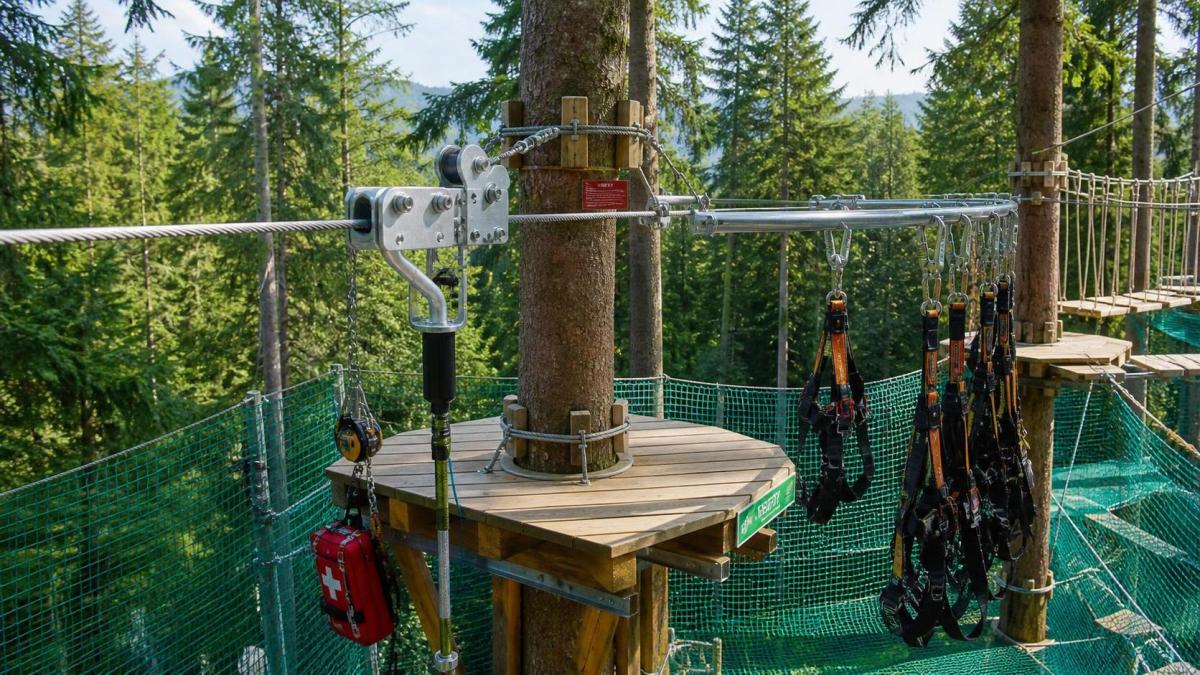
Another often-overlooked issue is rescue accessibility. A course can be visually impressive yet operationally weak if a stranded participant can only be reached through an improvised, high-exposure intervention. Rescue systems should be designed alongside the attraction, including access points, rated rescue equipment, communication methods, staff numbers, and realistic transfer or lowering routes. A rescue procedure that works only with the most experienced instructor on duty is not a dependable operational control.
Build daily inspections around critical failure modes
Daily inspections are where an adventure park’s safety culture becomes visible. They should not repeat a manufacturer manual word for word or ask staff to confirm dozens of vague statements. A strong opening inspection focuses attention on defects that could materially affect safe operation that day.
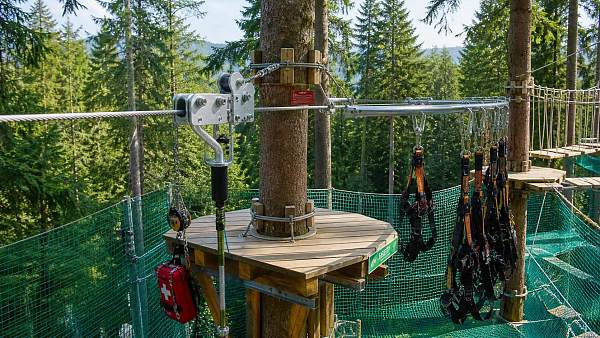
For zip lines, typical attention points may include cable condition, terminations, tension indicators where applicable, trolley and pulley wear, braking system condition, platform gates, landing-zone clearance, communication devices, retrieval equipment, and weather conditions. For ropes courses, teams commonly inspect anchor points, belay interfaces, lanyards, harnesses, connectors, platforms, nets, handlines, walking surfaces, structural members, barriers, and guest-routing signs.
The exact list must be site-specific. What matters is that the inspection converts known failure modes into observable checks. “Inspect cable” is weak. “Check accessible cable sections and terminations for broken wires, abrasion, corrosion, deformation, unauthorized clamps, or unusual movement; remove from service and escalate according to defect criteria” is more useful because it tells the inspector what to look for and what happens next.
Daily checks should also include operational readiness, not only physical condition. Are staffing levels sufficient for the forecast visitor load? Are trained rescue personnel available? Is the communication system charged and tested? Have overnight weather events, construction work, wildlife activity, vandalism, or nearby utility work affected the area? Has an unresolved defect from the prior shift been formally reviewed?
Digital inspection tools can improve traceability, photographs, time stamps, and trend analysis. However, replacing a paper form with a mobile form does not improve risk control if the underlying questions are weak or staff can simply tap “pass” without meaningful inspection. The better use of digital systems is to link defects to assets, assign owners, trigger escalation, track closure evidence, and reveal recurring faults by attraction, component type, supplier batch, or operating period.
Define defect severity before the morning rush
Operators should not force frontline staff to make high-consequence decisions from instinct. A defect-classification process gives staff a defensible method for deciding whether to continue operation, restrict use, isolate equipment, or close the attraction.
A practical framework may distinguish between minor defects that do not affect safety performance, conditions requiring prompt planned correction, and critical defects requiring immediate removal from service. The categories should be supported by examples specific to the park. A faded non-critical sign may warrant a maintenance ticket. Damage to a primary connector, an abnormal brake response, a compromised anchor, or a missing barrier at an elevated fall exposure should trigger immediate action.
Equally important, the process must prohibit informal workarounds. Temporary repairs can be justified only when they are engineered, documented, authorized, and consistent with manufacturer instructions and applicable requirements. Tape, improvised knots, substitute connectors, or undocumented component swaps may restore apparent functionality while invalidating the original safety assumptions.
Quality managers should periodically audit defect closure. The question is not merely whether the ticket was marked complete. It is whether the root cause was understood, the repair was verified by an appropriate person, and related components or locations were checked for the same issue.
Supplier accountability extends beyond delivery
Adventure attractions frequently combine structures, cables, hardware, textile equipment, electrical systems, themed finishes, access controls, and software from multiple vendors. That creates an interface risk. Individual suppliers may provide acceptable products, while the final integrated system still contains unclear responsibilities, incompatible parts, missing documentation, or gaps in maintenance support.
Procurement teams should evaluate suppliers on more than price, lead time, and product certificates. Useful questions include:
- Can the supplier provide complete technical documentation, traceability information, inspection criteria, and maintenance instructions?
- Are component ratings, compatibility limitations, and replacement intervals clearly stated?
- What installation supervision, commissioning support, and operator training are included?
- How are spare parts identified, stocked, and protected against unauthorized substitution?
- Can the supplier support incident investigation, engineering review, or major modification after handover?
- Who owns the final integration risk when several systems meet at a platform, brake zone, or guest transfer point?
For imported systems, documentation quality can be as important as the physical product. Manuals should be understandable to local operators, reflect the delivered configuration, and specify inspection intervals and retirement criteria. Where language, climate, operating intensity, or regulatory expectations differ from the original market, the buyer should confirm whether the documentation and maintenance plan remain suitable rather than assume that a foreign certificate resolves local obligations.
Training must test decisions, not just attendance
Staff training is often documented through induction records, but attendance does not demonstrate competence. Operators need to show that they can fit equipment correctly, identify unacceptable wear, enforce participation rules, manage queues, communicate with guests, stop operations, and perform their assigned role during an emergency.
Scenario-based assessment is particularly valuable. Ask an operator what they would do if a guest arrives outside the permitted weight range, a participant refuses to proceed from an elevated element, a trolley makes an unusual sound, a storm approaches during a group session, or a connector is found with suspected damage. The answers reveal whether staff understand the system’s controls or only remember briefing language.
Training also needs refreshers after layout changes, new equipment, incidents, near misses, seasonal reopening, or changes in rescue procedures. High staff turnover can quietly erode safety performance, especially at seasonal parks where experienced personnel may not return. A structured competence matrix helps managers see which shifts lack an authorized opener, rescue-capable supervisor, equipment inspector, or person qualified to release an attraction after maintenance.
Use incidents and near misses as design feedback
A near miss is not proof that the system worked perfectly. It is evidence that a control was tested by real conditions. Repeated guest confusion at one transfer point, frequent equipment-fitting corrections, recurring brake adjustments, or a pattern of weather-related closures can reveal weaknesses in design, instructions, staffing, or supplier support.
Incident reviews should avoid stopping at “operator error” or “guest non-compliance.” Those labels may describe an immediate action, but they do not explain why the system allowed the action to produce a dangerous outcome. Reviewers should examine signage visibility, briefing design, supervision ratios, equipment usability, layout, scheduling pressure, maintenance history, and whether previous warnings were normalized.
The most mature adventure park safety systems make these findings usable. They update checklists, revise operating limits, improve training scenarios, change component specifications, and feed verified field data back into future procurement decisions. Safety is not a static file prepared at commissioning. It is an operating capability that must remain credible through peak seasons, changing weather, staff turnover, equipment aging, and commercial pressure.
For safety and quality managers, the next decision is usually not to buy more equipment. It is to identify where the current control chain is weakest: unclear design assumptions, incomplete supplier handover, inconsistent daily inspections, undefined defect authority, or rescue plans that have not been tested under realistic conditions. That is where a safer and more resilient operation starts.
Search News
Hot Articles
- Indoor PlaygroundTurnkey Playground Installation: What's Included and What Costs Extra?Oct 18, 2026
- Musical InstrumentsProfessional String Instruments: How to Evaluate Tone, Response, and ProjectionOct 17, 2026
- Restaurant FurnitureBuying Hotel Lobby Furniture Wholesale: MOQs, Freight Costs, and Lead TimesOct 16, 2026
Popular Tags
Need ExpertConsultation?
Connect with our specialized leisureengineering team for procurementstrategies.
Recommended News
 Oct 03, 2026How to Select Leisure Park Equipment for Safe, High-Throughput Visitor AreasLeisure park equipment selection guide for safe, high-throughput venues—explore capacity, supervision, durability, accessibility, and supplier criteria.● Theme Park Strategist
 Sep 18, 2026What Drives Animatronic Dinosaur Manufacturer Prices for Theme Park Projects?Animatronic dinosaurs manufacturer price guide: compare motion, materials, controls, installation, and lifecycle costs to plan a durable theme park attraction.● Theme Park Strategist
 Sep 06, 2026Do Amusement Ride Safety Compliance Requirements Change Every Year?Do amusement safety compliance requirements change annually? Learn what really changes, from standards and inspections to permits, upgrades, and local approvals.● Theme Park Strategist
 Sep 02, 2026How Long Does It Take to Receive Full Safety Documents From an OEM?How long does it take to get full safety documentation from OEM partners? Discover realistic timelines, common delays, and practical steps to secure compliant files faster.● Theme Park Strategist
 Sep 03, 2026Designing Adventure Park Safety Systems for Zip Lines, Ropes Courses, and Daily InspectionsAdventure park safety systems: learn how to design safer zip lines and ropes courses with daily inspections, defect controls, rescue readiness, and staff training.● Theme Park Strategist
 Aug 22, 2026What to Look for When Choosing Three Seat Jet Skis for Rental or Resort UseThree seat jet skis for rental or resort use should balance stability, safety, maintenance, and guest comfort. Learn how to choose models that boost uptime and guest satisfaction.● Theme Park Strategist
 Aug 17, 2026What Parts Matter Most in a Roller Coaster and How Do They Affect Ride Safety?Roller coaster parts determine ride safety more than most riders realize. Explore how tracks, restraints, brakes, wheels, and control systems work together to protect every ride.● Theme Park Strategist
 Aug 15, 20262026 China Sports Expo Sees 45.74% More Overseas Pre-registered Buyers as POB Expands Procurement Matching2026 China Sports Expo boosts overseas pre-registered buyers by 45.74% as POB expands procurement matching for fitness, outdoor, and venue suppliers.● Theme Park Strategist
 Aug 14, 2026What Should Buyers Check Before Choosing a Flying Chair Ride Exporter?Flying chair ride exporter buyers should check safety, structure, export support, and spare parts before purchase to reduce risk and choose a reliable supplier.● Theme Park Strategist
 Aug 04, 2026EU Issues EN 1176-1:2026 for Playground SafetyEU Issues EN 1176-1:2026 for Playground Safety: learn how the new standard impacts Outdoor Rides, CE certification, inventory checks, and EU compliance before March 2027.● Theme Park Strategist
 Aug 03, 2026CPSC Adopts ASTM F1487-26 for Imported Outdoor RidesOutdoor Rides face a major U.S. compliance shift as CPSC adopts ASTM F1487-26. Learn the new certification, testing, and customs risks before November 1, 2026.● Theme Park Strategist
 Jul 26, 2026Revised EN 1176:2026 Triggers Re-Certification for Outdoor RidesOutdoor Rides face immediate EN 1176:2026 re-certification for new CE applications. Learn how testing, documentation, and EU market access rules now affect exports and delivery plans.● Theme Park Strategist
 Jul 21, 2026CPSC Recall Flags Structural Risk in Outdoor RidesCPSC recall flags structural risk in outdoor rides: learn how ASTM F1487-23 failures affect importers, distributors, and compliance teams across the U.S., Canada, and Australia.● Theme Park Strategist
 Jul 19, 2026How to Choose Outdoor Fitness Equipment for Parks Based on Users, Space, and BudgetOutdoor fitness equipment for parks: learn how to choose the right mix based on users, space, and budget to improve safety, usage, and long-term value.● Theme Park Strategist
 Jul 15, 2026Ocean Freight Spike Pressures Outdoor Rides ExportsOcean Freight Spike Pressures Outdoor Rides Exports as Shanghai-Rotterdam rates surge 42%. See how rising freight costs, delays, and rerouting risks could reshape Europe-bound delivery plans.● Theme Park Strategist
 Jul 14, 2026EN 1176 Revision Takes Effect for Outdoor Ride Weld TestingEN 1176 revision takes effect for outdoor ride weld testing from Sept 1, 2026. Learn ISO 5817 level B, third-party NDT report rules, and key EU compliance steps.● Theme Park Strategist
 Jul 12, 2026Vietnam Requires AI Anti-Collision Systems for Imported Outdoor RidesVietnam Requires AI Anti-Collision Systems for Imported Outdoor Rides from Sept. 15, 2026. Learn compliance rules, VAST certification needs, and how importers can avoid delays.● Theme Park Strategist
 Jul 11, 2026Vietnam Tightens Rules for Imported Outdoor RidesVietnam Tightens Rules for Imported Outdoor Rides: learn how Vietnam’s 2026 compliance update adds AI anti-collision, Vietnamese logs, and local maintenance duties for importers and manufacturers.● Theme Park Strategist
 Jul 09, 2026How to Evaluate a Lazy River Equipment Supplier for Safety, Flow Design, and MaintenanceLazy river equipment supplier selection affects safety, flow design, and maintenance costs. Learn what to compare, what to ask, and how to choose a reliable partner.● Theme Park Strategist
 Jul 08, 2026RCEP Update Cuts ASEAN Tariffs to Zero for Outdoor RidesRCEP update cuts ASEAN tariffs to zero for outdoor rides from China. Learn how FSC-CoC, PEFC traceability, and e-CO compliance affect exports, sourcing, and buyer decisions.● Theme Park Strategist
 Jul 07, 2026RCEP Guide Adds Dual Wood Traceability for Outdoor RidesOutdoor Rides exporters face a new RCEP traceability rule: dual FSC-CoC and PEFC-STS 2023 codes for wood components. See what changes before Oct. 1, 2026.● Theme Park Strategist
 Jul 06, 2026Vietnam Tightens RCEP Rules for Wooden Ride PartsVietnam Tightens RCEP Rules for Wooden Ride Parts: learn how FSC Chain-of-Custody and QR code requirements now affect outdoor rides, RCEP imports, and shipment compliance.● Theme Park Strategist
 Jul 06, 2026How to Evaluate a Bumper Cars on Ice Manufacturer for Safety, Capacity, and ROIBumper cars on ice manufacturer selection starts with safety, capacity, and ROI. Learn how to compare suppliers, reduce risk, and choose a partner built for long-term commercial success.● Theme Park Strategist
 Jul 04, 2026Electric Drift Bumper Cars vs Traditional Bumper Cars: Which Fits Your Venue Better?Electric drift bumper cars or traditional bumper cars? Compare installation, safety, maintenance, guest appeal, and ROI to choose the best fit for your venue.● Theme Park Strategist