What to Look for When Choosing Three Seat Jet Skis for Rental or Resort Use
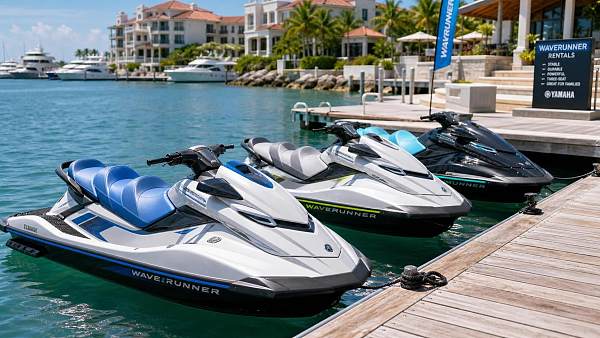
Choosing three seat jet skis for a resort, beach club, or rental fleet sounds straightforward until the real operating questions show up. The issue is not simply whether a craft can carry three people. It is whether that extra capacity actually works in your water conditions, with your staffing model, your maintenance resources, your insurance requirements, and the kind of guest experience your property sells.
In commercial leisure environments, procurement decisions tend to fail for very predictable reasons: a model looks attractive on paper, but it is too performance-oriented for novice riders; service intervals are manageable for a private owner but punishing for a high-turn rental fleet; seating is technically for three, yet the hull becomes uncomfortable or unstable when carrying an instructor plus two adults in choppy water. That gap between brochure logic and operational reality is where most of the cost sits.
For hospitality and recreation buyers working in experience-led sectors, this is exactly the kind of sourcing question that deserves a broader commercial lens. It is not just about marine equipment. It is about guest flow, liability exposure, uptime, and how well a product performs under repeated public use.
Start with the operating profile, not the product sheet
Before comparing brands or engine sizes, define how the craft will actually be used. A resort in calm coastal water with guided excursions has very different needs from an open-beach rental operator dealing with short rides, frequent launches, and mixed rider skill levels. The same three seat jet skis can feel durable and profitable in one setup, and completely wrong in another.
A useful internal checklist usually includes:
- Will the unit be used for free riding, guided tours, rescue support, or mixed use?
- Are most riders first-timers, families, or experienced water sports guests?
- How many ride cycles per day are realistic in peak season?
- Who handles fueling, rinsing, inspection, and minor repair on site?
- Is the local operating environment saltwater, freshwater, lagoon, surf zone, or marina-based?
Those answers narrow the field quickly. Some models are better suited to repetitive commercial use because they are easier to reboard, more forgiving at low speed, and simpler for staff to inspect between rentals. Others may offer more excitement but generate more wear, more claims, or more customer coaching time than a resort operation really wants.
Stability matters more than headline performance
For commercial use, top speed is rarely the smartest buying metric. In fact, it can be a distraction. What usually matters more is hull stability at idle and mid-range speeds, especially when guests are boarding from a dock, floating in shallow water, or shifting weight unexpectedly.
Three-passenger capacity sounds ideal for resort activity programming, but capacity on paper does not guarantee comfort or control in practice. If a craft is carrying two adults and a guide, or one adult with two older children, the platform needs to stay predictable. Wider, more stable hull designs often make more commercial sense than aggressive sport profiles, even if they are less exciting in a showroom conversation.
This is one of those areas where a sea trial, or at least a detailed demo in conditions close to your site, is worth pushing for. A procurement team should not evaluate a rental craft only from specifications. Reboarding ease, low-speed maneuvering, and stability under load are easier to feel than to infer.
Engine output should match rider profile and risk tolerance
There is a common assumption that more power equals a better guest experience. Sometimes it does, especially in premium guided-tour programs where guests expect a stronger ride. But in many rental operations, excess power creates more management problems than revenue upside.
If your typical user is inexperienced, a moderate-output engine paired with predictable throttle response can be the safer and more profitable choice. The craft still needs enough power to plane smoothly with two or three riders, but not so much that brief throttle mistakes turn into accidents, panic, or damage claims.
Some operators also prioritize models with selectable ride modes or speed-management options, where allowed and available. Those features can help align the same fleet with different guest segments, though the exact usefulness depends on your staff discipline and local rules. If mode settings are easy to bypass or difficult to monitor, the feature may look better in procurement discussions than it performs on the beach.
Commercial durability is about service rhythm, not just build quality
Resort and rental fleets expose equipment to a kind of wear that private ownership does not. Frequent starts and stops, repeated boarding, novice handling, dock contact, salt exposure, rushed cleaning routines, and compressed turnaround times all add up. So when assessing three seat jet skis, durability should be discussed as an operating rhythm.
Ask practical questions:
- How accessible are common inspection points?
- How long does daily rinsing and post-use checking take per unit?
- Are wear parts and filters straightforward to source in your region?
- Can your local technician support the brand, or will every issue become a waiting game?
- How resistant are the seat materials, step surfaces, and exterior finishes to sunscreen, salt, and repeated guest use?
This is where supply chain reliability starts to matter as much as the craft itself. A slightly cheaper unit can become expensive if parts lead times are long during peak season. Buyers sourcing across global leisure markets often evaluate not just the OEM but also the service ecosystem around it: dealer network, parts distribution, training support, documentation quality, and whether the supplier understands commercial duty cycles rather than only consumer sales.
That broader sourcing perspective is increasingly important in experience-driven sectors, which is why intelligence-led platforms such as GCT tend to look beyond the product catalog. In practice, a marine asset in a resort environment lives or dies by support structure, compliance readiness, and lifecycle predictability.
Do not treat safety compliance as a paperwork item
Commercial watercraft procurement often crosses jurisdictions, and that can complicate approvals. Requirements may involve local registration, operational licensing, emissions considerations, noise restrictions, life-saving equipment rules, or insurance-specific conditions. The exact framework varies too much by market to generalize with confidence, which means verification has to happen early, not after the purchase order is placed.
What matters here is documentation discipline. Buyers should confirm available technical files, owner and service manuals, warranty terms for commercial use, and any conformity documents required by the destination market. It is also worth checking whether optional safety accessories are treated as genuinely operational items or just upsell extras. Boarding steps, tow hooks, kill-switch systems, mirrors, storage for emergency gear, and clear control layouts are not minor details when staff are turning units around all day.
Insurance teams tend to focus on questions procurement teams sometimes underestimate: who can ride, in what conditions, with what supervision, and on what maintenance record. A jet ski that is technically suitable but poorly documented can become a problem long before it reaches the water.
Fuel use and range should be looked at operationally
Fuel efficiency is often discussed too narrowly. The relevant question is not only how much fuel a unit consumes, but how that consumption affects scheduling, refueling labor, safety handling, and guest downtime. For guided tours, range confidence matters. For short-ride beach rentals, tank size and refill workflow may matter more than absolute efficiency.
Heavier three-seat models can be very attractive for comfort and stability, but they may also change fuel behavior under repeated commercial load. Procurement teams should review manufacturer specifications carefully, then pressure-test them against likely use patterns. Published figures rarely capture the exact reality of frequent acceleration, multiple riders, idling near docks, or rough-water operations.
Guest experience is not just about comfort
Resort buyers sometimes reduce guest experience to seat comfort and ride smoothness. Those matter, but they are only part of it. In a hospitality setting, the better question is: does this craft make the activity easy to understand, easy to board, and easy to enjoy without creating friction for staff?
A good rental or resort unit usually has intuitive controls, a stable feel for hesitant riders, enough storage for basic operational items, and a layout that does not make guests feel clumsy while getting on and off. If the activity attracts couples or families, the rear seating position and handhold placement deserve more attention than buyers often give them.
Brand perception also sits here. A luxury property may not want the most aggressive-looking craft if the design reads as high-risk rather than premium recreation. In experiential sectors, aesthetics, noise profile, and visual upkeep all influence how equipment fits the overall guest environment.
A simple comparison framework helps avoid expensive bias
One last mistake to avoid: buying for peak excitement instead of peak season
The right commercial jet ski is usually not the one that feels most thrilling in a single demo session. It is the one that can survive your busiest month with minimal drama. That means fewer preventable maintenance issues, fewer nervous guests, fewer insurance conversations, and fewer periods where a unit sits idle waiting for a part or technician.
If you are comparing three seat jet skis for rental or resort use, focus on the craft’s behavior under ordinary pressure: mixed riders, repetitive turnover, water exposure, staff handoffs, and the expectations of a paying guest who may never have ridden before. In most commercial settings, that is where the real return is won or lost.
A careful shortlist should end with more than a price comparison. It should include local compliance checks, support verification, and a realistic view of how the craft fits your operation. If that homework feels time-consuming, it usually means you are asking the right questions.
Search News
Hot Articles
- Commercial KitchenWhat Is Driving Demand for Commercial Hospitality Projects Across the GCC?Oct 06, 2026
- Hotel Room AmenitiesHow to Select Hotel Hair Dryers That Balance Guest Safety, Durability, and CostOct 05, 2026
- Restaurant FurnitureFast-Casual Restaurant Interiors: Design Choices That Improve Speed and Guest FlowOct 04, 2026
Popular Tags
Need ExpertConsultation?
Connect with our specialized leisureengineering team for procurementstrategies.
Recommended News
 Oct 03, 2026How to Select Leisure Park Equipment for Safe, High-Throughput Visitor AreasLeisure park equipment selection guide for safe, high-throughput venues—explore capacity, supervision, durability, accessibility, and supplier criteria.● Theme Park Strategist
 Sep 18, 2026What Drives Animatronic Dinosaur Manufacturer Prices for Theme Park Projects?Animatronic dinosaurs manufacturer price guide: compare motion, materials, controls, installation, and lifecycle costs to plan a durable theme park attraction.● Theme Park Strategist
 Sep 06, 2026Do Amusement Ride Safety Compliance Requirements Change Every Year?Do amusement safety compliance requirements change annually? Learn what really changes, from standards and inspections to permits, upgrades, and local approvals.● Theme Park Strategist
 Sep 02, 2026How Long Does It Take to Receive Full Safety Documents From an OEM?How long does it take to get full safety documentation from OEM partners? Discover realistic timelines, common delays, and practical steps to secure compliant files faster.● Theme Park Strategist
 Sep 03, 2026Designing Adventure Park Safety Systems for Zip Lines, Ropes Courses, and Daily InspectionsAdventure park safety systems: learn how to design safer zip lines and ropes courses with daily inspections, defect controls, rescue readiness, and staff training.● Theme Park Strategist
 Aug 22, 2026What to Look for When Choosing Three Seat Jet Skis for Rental or Resort UseThree seat jet skis for rental or resort use should balance stability, safety, maintenance, and guest comfort. Learn how to choose models that boost uptime and guest satisfaction.● Theme Park Strategist
 Aug 17, 2026What Parts Matter Most in a Roller Coaster and How Do They Affect Ride Safety?Roller coaster parts determine ride safety more than most riders realize. Explore how tracks, restraints, brakes, wheels, and control systems work together to protect every ride.● Theme Park Strategist
 Aug 15, 20262026 China Sports Expo Sees 45.74% More Overseas Pre-registered Buyers as POB Expands Procurement Matching2026 China Sports Expo boosts overseas pre-registered buyers by 45.74% as POB expands procurement matching for fitness, outdoor, and venue suppliers.● Theme Park Strategist
 Aug 14, 2026What Should Buyers Check Before Choosing a Flying Chair Ride Exporter?Flying chair ride exporter buyers should check safety, structure, export support, and spare parts before purchase to reduce risk and choose a reliable supplier.● Theme Park Strategist
 Aug 04, 2026EU Issues EN 1176-1:2026 for Playground SafetyEU Issues EN 1176-1:2026 for Playground Safety: learn how the new standard impacts Outdoor Rides, CE certification, inventory checks, and EU compliance before March 2027.● Theme Park Strategist
 Aug 03, 2026CPSC Adopts ASTM F1487-26 for Imported Outdoor RidesOutdoor Rides face a major U.S. compliance shift as CPSC adopts ASTM F1487-26. Learn the new certification, testing, and customs risks before November 1, 2026.● Theme Park Strategist
 Jul 26, 2026Revised EN 1176:2026 Triggers Re-Certification for Outdoor RidesOutdoor Rides face immediate EN 1176:2026 re-certification for new CE applications. Learn how testing, documentation, and EU market access rules now affect exports and delivery plans.● Theme Park Strategist
 Jul 21, 2026CPSC Recall Flags Structural Risk in Outdoor RidesCPSC recall flags structural risk in outdoor rides: learn how ASTM F1487-23 failures affect importers, distributors, and compliance teams across the U.S., Canada, and Australia.● Theme Park Strategist
 Jul 19, 2026How to Choose Outdoor Fitness Equipment for Parks Based on Users, Space, and BudgetOutdoor fitness equipment for parks: learn how to choose the right mix based on users, space, and budget to improve safety, usage, and long-term value.● Theme Park Strategist
 Jul 15, 2026Ocean Freight Spike Pressures Outdoor Rides ExportsOcean Freight Spike Pressures Outdoor Rides Exports as Shanghai-Rotterdam rates surge 42%. See how rising freight costs, delays, and rerouting risks could reshape Europe-bound delivery plans.● Theme Park Strategist
 Jul 14, 2026EN 1176 Revision Takes Effect for Outdoor Ride Weld TestingEN 1176 revision takes effect for outdoor ride weld testing from Sept 1, 2026. Learn ISO 5817 level B, third-party NDT report rules, and key EU compliance steps.● Theme Park Strategist
 Jul 12, 2026Vietnam Requires AI Anti-Collision Systems for Imported Outdoor RidesVietnam Requires AI Anti-Collision Systems for Imported Outdoor Rides from Sept. 15, 2026. Learn compliance rules, VAST certification needs, and how importers can avoid delays.● Theme Park Strategist
 Jul 11, 2026Vietnam Tightens Rules for Imported Outdoor RidesVietnam Tightens Rules for Imported Outdoor Rides: learn how Vietnam’s 2026 compliance update adds AI anti-collision, Vietnamese logs, and local maintenance duties for importers and manufacturers.● Theme Park Strategist
 Jul 09, 2026How to Evaluate a Lazy River Equipment Supplier for Safety, Flow Design, and MaintenanceLazy river equipment supplier selection affects safety, flow design, and maintenance costs. Learn what to compare, what to ask, and how to choose a reliable partner.● Theme Park Strategist
 Jul 08, 2026RCEP Update Cuts ASEAN Tariffs to Zero for Outdoor RidesRCEP update cuts ASEAN tariffs to zero for outdoor rides from China. Learn how FSC-CoC, PEFC traceability, and e-CO compliance affect exports, sourcing, and buyer decisions.● Theme Park Strategist
 Jul 07, 2026RCEP Guide Adds Dual Wood Traceability for Outdoor RidesOutdoor Rides exporters face a new RCEP traceability rule: dual FSC-CoC and PEFC-STS 2023 codes for wood components. See what changes before Oct. 1, 2026.● Theme Park Strategist
 Jul 06, 2026Vietnam Tightens RCEP Rules for Wooden Ride PartsVietnam Tightens RCEP Rules for Wooden Ride Parts: learn how FSC Chain-of-Custody and QR code requirements now affect outdoor rides, RCEP imports, and shipment compliance.● Theme Park Strategist
 Jul 06, 2026How to Evaluate a Bumper Cars on Ice Manufacturer for Safety, Capacity, and ROIBumper cars on ice manufacturer selection starts with safety, capacity, and ROI. Learn how to compare suppliers, reduce risk, and choose a partner built for long-term commercial success.● Theme Park Strategist
 Jul 04, 2026Electric Drift Bumper Cars vs Traditional Bumper Cars: Which Fits Your Venue Better?Electric drift bumper cars or traditional bumper cars? Compare installation, safety, maintenance, guest appeal, and ROI to choose the best fit for your venue.● Theme Park Strategist