What Parts Matter Most in a Roller Coaster and How Do They Affect Ride Safety?
Ask ten people what makes a roller coaster safe, and many will point to the big visible features: the towering track, the speed, the loop, the restraint that locks over the rider’s shoulders. They are not wrong, but they are only seeing part of the picture. In reality, roller coaster safety depends on a system of parts working together with very little room for error. If one element is well designed but another is poorly maintained, the ride experience can change from thrilling to risky.
That is why understanding the most important roller coaster parts matters for anyone researching amusement equipment, whether you are a buyer, operator, project planner, student, or simply trying to understand how modern rides are engineered. The track, trains, wheels, restraints, brakes, sensors, control systems, and support structure each carry a different safety responsibility. Some parts are obvious to riders. Others stay hidden behind panels, under chassis frames, or inside control rooms, even though they may be just as critical.
In the amusement and leisure parks sector, safety is never the result of a single component. It comes from design quality, material choice, manufacturing precision, inspection discipline, and the way every part performs under repeated stress. Looking at the main components one by one makes it easier to understand how that larger safety chain works.
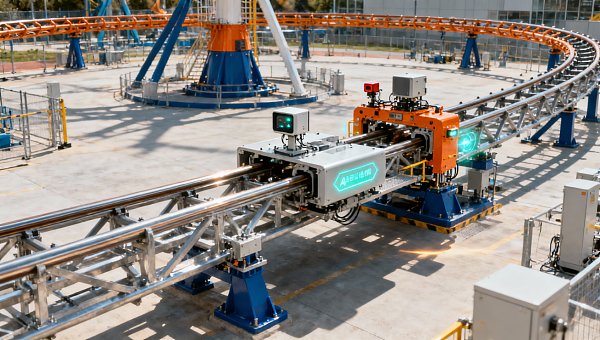
The Track: The Path That Defines Everything
If people search for the most important roller coaster parts, the track usually comes to mind first. That makes sense. The track determines the route of the train, the forces riders feel, and the physical limits within which the entire ride operates.
A coaster track must do more than hold shape. It has to maintain precise alignment through curves, drops, banking transitions, and high-load sections where the train applies intense dynamic forces. Even a small deviation in geometry can affect wheel contact, rider comfort, and long-term wear. For steel coasters, weld quality, corrosion resistance, joint accuracy, and structural tolerances all matter. For wooden coasters, the integrity of laminated timber, fasteners, and running surfaces becomes especially important.
From a safety standpoint, the track’s job is consistency. Riders may experience speed and chaos, but the train itself must follow a controlled path every time. This is why track inspection is such a central part of ride operations. Operators monitor for cracks, deformation, loose hardware, fatigue, wear, and environmental damage. A coaster can only be as safe as the path its train travels.
Supports and Foundations: The Hidden Stability Behind the Ride
Tracks get attention, but supports and foundations deserve just as much respect. The visible columns, cross-bracing, and anchor points transfer forces from moving trains into the ground. If the support system is underdesigned, poorly fabricated, or not properly monitored, the entire ride structure is compromised.
Wind loads, vibration, temperature expansion, repeated train cycles, and local site conditions all place demands on structural supports. A support column is not just a piece of steel standing still; it is part of a constantly stressed framework. Foundations matter too, especially for large outdoor amusement installations where soil conditions, drainage, and seasonal movement can influence long-term structural behavior.
For procurement teams and park developers, this is one reason due diligence goes beyond the ride’s appearance or headline features. Structural engineering documentation, fabrication quality, and installation practices are all part of responsible sourcing.
Trains: Where Mechanical Design Meets the Rider Experience
The train is where safety becomes personal. It is the component that carries people through every twist, acceleration, and brake run. A roller coaster train includes the chassis, car bodies, articulation systems, wheel assemblies, restraint interfaces, and undercarriage components that keep it connected to the track.
Good train design balances two goals that can sometimes feel in tension: freedom and control. Riders want the sensation of speed and exposure, but the train must maintain stable motion and absorb forces predictably. Weight distribution, center of gravity, articulation between cars, and frame strength all affect how the train behaves during operation.
Poorly maintained trains can introduce vibration, noise, roughness, and premature wear in other parts of the ride. That is why operators pay close attention to bogies, axles, bearings, and attachment points. The train is not just a vehicle; it is the moving heart of the system.
Wheel Assemblies: Small Parts with Outsized Importance
Among all roller coaster parts, wheels are often underestimated by casual observers. Yet they are essential to both safety and ride quality. Most coaster trains use a combination of road wheels, side friction wheels, and up-stop wheels. Together, these keep the train aligned, supported, and secured to the track.
Road wheels carry the train’s weight. Side wheels control lateral movement. Up-stop wheels prevent the train from lifting away from the track during airtime moments or forceful transitions. If any of these are worn, damaged, improperly aligned, or made from unsuitable materials, the consequences can spread quickly: rough running, abnormal stress, reduced control, and increased component fatigue.
Wheel material also affects heat, noise, and wear rate. Since wheels experience constant friction and repeated load cycles, they require regular inspection and replacement schedules. In practical terms, a smooth and safe ride depends heavily on these relatively small contact points.
Restraint Systems: The Most Visible Safety Component
If riders judge safety by what they can touch, restraint systems rank at the top. Lap bars, over-the-shoulder restraints, seat belts, secondary locking mechanisms, and seat design all work together to keep passengers securely positioned throughout the ride cycle.
But a restraint system is not simply about “holding someone in.” It must be matched to the ride’s force profile, seating layout, passenger range, and evacuation needs. A high-thrill inverted coaster may require different restraint logic from a family launch coaster or a wooden airtime-focused ride. Comfort also matters, because restraints that create excessive pressure, head movement, or awkward fit can affect rider posture and perceived safety.
Modern restraint systems often include redundant locking features and sensor confirmation so operators can verify that each seat is properly secured before dispatch. Even so, human procedures remain crucial. Staff training, rider screening, height checks, and clear loading instructions are part of the safety equation. A restraint is only effective when it is properly designed, properly checked, and appropriate for the rider.
Braking Systems: The Parts That Control More Than Stopping
When people think about coaster brakes, they often imagine the final slowdown before the station. In reality, braking systems shape the entire ride’s operational safety. Brake fins, magnetic brakes, friction brakes, trim brakes, and block brake sections help manage train speed, spacing, and stopping distance.
Brakes do not just end motion. They control it. On many coasters, the track is divided into block sections so that one train cannot enter a section still occupied by another. This block system is a cornerstone of modern ride safety, and braking hardware is what makes it work in real time.
Magnetic braking is widely valued because it can provide reliable deceleration with fewer wear issues than purely friction-based systems, though both types may be used depending on the ride. What matters most is predictability. A braking system must behave consistently under different train loads, weather conditions, and operating speeds. For operators, this means regular calibration, testing, and maintenance are non-negotiable.
Lift, Launch, and Drive Systems
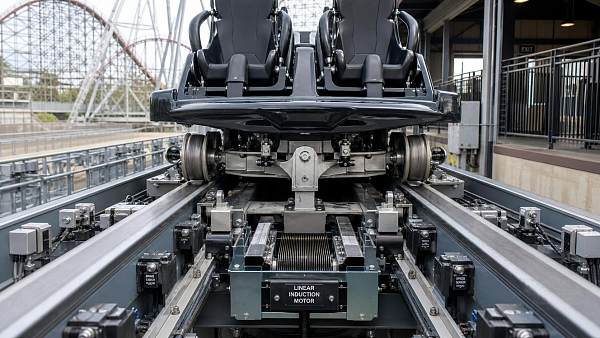
The parts that move a train at the start of the ride are just as important as the parts that stop it later. Depending on coaster type, this may involve a chain lift, cable lift, tire drive, linear induction motor, or linear synchronous motor launch system.
These systems are responsible for controlled propulsion. A chain lift, for example, depends on anti-rollback devices, chain integrity, motor performance, and synchronized mechanical engagement. Launch coasters require even tighter control of timing, acceleration profiles, and power delivery. If propulsion is uneven or mechanical wear goes unnoticed, performance and safety margins can be affected.
Because these systems combine mechanical and electrical elements, they also illustrate a broader truth: coaster safety is rarely about one discipline alone. Structural engineering, control logic, materials science, and operations all meet here.
Sensors, Control Systems, and Interlocks
Some of the most important roller coaster parts are the ones riders never notice. Sensors, programmable control systems, communication networks, and interlocks help determine whether the ride is even allowed to start. They monitor train position, restraint status, brake condition, station readiness, and other operational variables.
In a modern coaster, safety depends heavily on the control system’s ability to detect abnormal conditions and prevent unsafe dispatches. If a restraint is not confirmed, if a block section is occupied, or if a brake fails to return the proper status, the system should stop the operating sequence. This is one reason amusement buyers increasingly evaluate not only the ride hardware itself, but also the intelligence architecture behind it.
Control technology, however, is not a substitute for maintenance culture. Sensors can fail. Wiring can degrade. Software logic must be validated. Redundancy and routine testing are essential, especially in high-throughput parks where rides cycle continuously for long hours.
Not All Safety Risks Come from “Big” Failures
One common misunderstanding is that coaster safety only depends on catastrophic failure prevention. That is certainly the highest priority, but smaller issues matter too. Excessive vibration, uneven wheel wear, delayed brake response, loose trim components, water intrusion, corrosion, and misalignment can all become early warning signs.
These problems may not immediately create a dangerous event, but they can reduce reliability and place additional strain on other systems. In other words, ride safety is built through attention to details long before a dramatic failure ever enters the picture. This is why experienced operators emphasize preventive maintenance rather than reactive repair.
Inspection and Maintenance: The Real Link Between Parts and Safety
Even the best-designed roller coaster parts cannot remain safe without disciplined upkeep. Daily checks, periodic inspections, non-destructive testing, lubrication programs, wheel replacement schedules, restraint verification, and structural reviews all help ensure that each component continues to perform as intended.
For information researchers, this is an important takeaway: asking which parts matter most is useful, but the better question may be how those parts are inspected, documented, and managed across the ride’s lifecycle. A coaster built from quality components can still become unsafe if maintenance standards slip. On the other hand, a well-run park treats every part—large or small—as part of a traceable safety system.
In global sourcing and commercial procurement, this lifecycle view matters even more. Buyers in the amusement and leisure parks space are not only evaluating design flair or ride capacity. They are also looking at spare parts availability, service support, engineering transparency, compliance readiness, and the manufacturer’s ability to support long-term operation.
Which Parts Matter Most? The Honest Answer
If you are hoping for a single answer, there really is not one. The track, supports, trains, wheel assemblies, restraints, brakes, drive systems, and control technology are all critical in different ways. Remove or weaken any one of them, and the system becomes less safe.
That said, the parts with the greatest direct impact on passenger protection usually fall into three layers. First is structural integrity: track, supports, and train chassis. Second is rider containment: seats, restraints, locking systems. Third is operational control: brakes, sensors, and automated safety logic. These layers overlap, and that overlap is exactly what makes modern coasters safer than a simple machine with only one line of defense.
For researchers, that is the clearest way to think about roller coaster parts. Safety is not attached to one dramatic feature. It is distributed across a carefully engineered network of components, procedures, and inspections. The ride may last only a few minutes, but the trust behind it is built part by part, check by check, cycle after cycle.
Search News
Hot Articles
- Restaurant FurnitureFast-Casual Restaurant Interiors: Design Choices That Improve Speed and Guest FlowOct 04, 2026
- Outdoor RidesHow to Select Leisure Park Equipment for Safe, High-Throughput Visitor AreasOct 03, 2026
- Fashion & Gem JewelryDiamond Tester Wholesale: How to Vet Accuracy, Calibration, and MOQ Before OrderingOct 02, 2026
Popular Tags
Need ExpertConsultation?
Connect with our specialized leisureengineering team for procurementstrategies.
Recommended News
 Oct 03, 2026How to Select Leisure Park Equipment for Safe, High-Throughput Visitor AreasLeisure park equipment selection guide for safe, high-throughput venues—explore capacity, supervision, durability, accessibility, and supplier criteria.● Theme Park Strategist
 Sep 18, 2026What Drives Animatronic Dinosaur Manufacturer Prices for Theme Park Projects?Animatronic dinosaurs manufacturer price guide: compare motion, materials, controls, installation, and lifecycle costs to plan a durable theme park attraction.● Theme Park Strategist
 Sep 06, 2026Do Amusement Ride Safety Compliance Requirements Change Every Year?Do amusement safety compliance requirements change annually? Learn what really changes, from standards and inspections to permits, upgrades, and local approvals.● Theme Park Strategist
 Sep 02, 2026How Long Does It Take to Receive Full Safety Documents From an OEM?How long does it take to get full safety documentation from OEM partners? Discover realistic timelines, common delays, and practical steps to secure compliant files faster.● Theme Park Strategist
 Sep 03, 2026Designing Adventure Park Safety Systems for Zip Lines, Ropes Courses, and Daily InspectionsAdventure park safety systems: learn how to design safer zip lines and ropes courses with daily inspections, defect controls, rescue readiness, and staff training.● Theme Park Strategist
 Aug 22, 2026What to Look for When Choosing Three Seat Jet Skis for Rental or Resort UseThree seat jet skis for rental or resort use should balance stability, safety, maintenance, and guest comfort. Learn how to choose models that boost uptime and guest satisfaction.● Theme Park Strategist
 Aug 17, 2026What Parts Matter Most in a Roller Coaster and How Do They Affect Ride Safety?Roller coaster parts determine ride safety more than most riders realize. Explore how tracks, restraints, brakes, wheels, and control systems work together to protect every ride.● Theme Park Strategist
 Aug 15, 20262026 China Sports Expo Sees 45.74% More Overseas Pre-registered Buyers as POB Expands Procurement Matching2026 China Sports Expo boosts overseas pre-registered buyers by 45.74% as POB expands procurement matching for fitness, outdoor, and venue suppliers.● Theme Park Strategist
 Aug 14, 2026What Should Buyers Check Before Choosing a Flying Chair Ride Exporter?Flying chair ride exporter buyers should check safety, structure, export support, and spare parts before purchase to reduce risk and choose a reliable supplier.● Theme Park Strategist
 Aug 04, 2026EU Issues EN 1176-1:2026 for Playground SafetyEU Issues EN 1176-1:2026 for Playground Safety: learn how the new standard impacts Outdoor Rides, CE certification, inventory checks, and EU compliance before March 2027.● Theme Park Strategist
 Aug 03, 2026CPSC Adopts ASTM F1487-26 for Imported Outdoor RidesOutdoor Rides face a major U.S. compliance shift as CPSC adopts ASTM F1487-26. Learn the new certification, testing, and customs risks before November 1, 2026.● Theme Park Strategist
 Jul 26, 2026Revised EN 1176:2026 Triggers Re-Certification for Outdoor RidesOutdoor Rides face immediate EN 1176:2026 re-certification for new CE applications. Learn how testing, documentation, and EU market access rules now affect exports and delivery plans.● Theme Park Strategist
 Jul 21, 2026CPSC Recall Flags Structural Risk in Outdoor RidesCPSC recall flags structural risk in outdoor rides: learn how ASTM F1487-23 failures affect importers, distributors, and compliance teams across the U.S., Canada, and Australia.● Theme Park Strategist
 Jul 19, 2026How to Choose Outdoor Fitness Equipment for Parks Based on Users, Space, and BudgetOutdoor fitness equipment for parks: learn how to choose the right mix based on users, space, and budget to improve safety, usage, and long-term value.● Theme Park Strategist
 Jul 15, 2026Ocean Freight Spike Pressures Outdoor Rides ExportsOcean Freight Spike Pressures Outdoor Rides Exports as Shanghai-Rotterdam rates surge 42%. See how rising freight costs, delays, and rerouting risks could reshape Europe-bound delivery plans.● Theme Park Strategist
 Jul 14, 2026EN 1176 Revision Takes Effect for Outdoor Ride Weld TestingEN 1176 revision takes effect for outdoor ride weld testing from Sept 1, 2026. Learn ISO 5817 level B, third-party NDT report rules, and key EU compliance steps.● Theme Park Strategist
 Jul 12, 2026Vietnam Requires AI Anti-Collision Systems for Imported Outdoor RidesVietnam Requires AI Anti-Collision Systems for Imported Outdoor Rides from Sept. 15, 2026. Learn compliance rules, VAST certification needs, and how importers can avoid delays.● Theme Park Strategist
 Jul 11, 2026Vietnam Tightens Rules for Imported Outdoor RidesVietnam Tightens Rules for Imported Outdoor Rides: learn how Vietnam’s 2026 compliance update adds AI anti-collision, Vietnamese logs, and local maintenance duties for importers and manufacturers.● Theme Park Strategist
 Jul 09, 2026How to Evaluate a Lazy River Equipment Supplier for Safety, Flow Design, and MaintenanceLazy river equipment supplier selection affects safety, flow design, and maintenance costs. Learn what to compare, what to ask, and how to choose a reliable partner.● Theme Park Strategist
 Jul 08, 2026RCEP Update Cuts ASEAN Tariffs to Zero for Outdoor RidesRCEP update cuts ASEAN tariffs to zero for outdoor rides from China. Learn how FSC-CoC, PEFC traceability, and e-CO compliance affect exports, sourcing, and buyer decisions.● Theme Park Strategist
 Jul 07, 2026RCEP Guide Adds Dual Wood Traceability for Outdoor RidesOutdoor Rides exporters face a new RCEP traceability rule: dual FSC-CoC and PEFC-STS 2023 codes for wood components. See what changes before Oct. 1, 2026.● Theme Park Strategist
 Jul 06, 2026Vietnam Tightens RCEP Rules for Wooden Ride PartsVietnam Tightens RCEP Rules for Wooden Ride Parts: learn how FSC Chain-of-Custody and QR code requirements now affect outdoor rides, RCEP imports, and shipment compliance.● Theme Park Strategist
 Jul 06, 2026How to Evaluate a Bumper Cars on Ice Manufacturer for Safety, Capacity, and ROIBumper cars on ice manufacturer selection starts with safety, capacity, and ROI. Learn how to compare suppliers, reduce risk, and choose a partner built for long-term commercial success.● Theme Park Strategist
 Jul 04, 2026Electric Drift Bumper Cars vs Traditional Bumper Cars: Which Fits Your Venue Better?Electric drift bumper cars or traditional bumper cars? Compare installation, safety, maintenance, guest appeal, and ROI to choose the best fit for your venue.● Theme Park Strategist