What Should Buyers Check Before Choosing a Flying Chair Ride Exporter?
Choosing a flying chair ride exporter is mainly about reducing risk before the first payment is made. Buyers should focus on safety compliance, structural quality, export experience, installation support, and spare parts service, because these factors affect project delivery, operating stability, and long-term cost.
For procurement teams, the best exporter is not simply the one offering the lowest quote. It is the supplier that can prove engineering competence, provide clear documentation, support international shipping, and stand behind the ride after commissioning. That is the real basis for a reliable purchase decision.
What Buyers Are Really Trying To Confirm
When buyers search for a flying chair ride exporter, they are usually trying to answer one question: who can deliver a safe, compliant ride that works in a real commercial park? Price matters, but project failure matters more.
The decision is often tied to safety exposure, venue reputation, and downtime risk. A ride that looks attractive in a brochure but lacks documentation, manufacturing discipline, or service support can become expensive very quickly after installation.
That is why the evaluation should go beyond product appearance. Procurement teams need evidence that the exporter can meet technical, regulatory, and operational expectations in the destination market.
Check Safety Certifications And Test Records
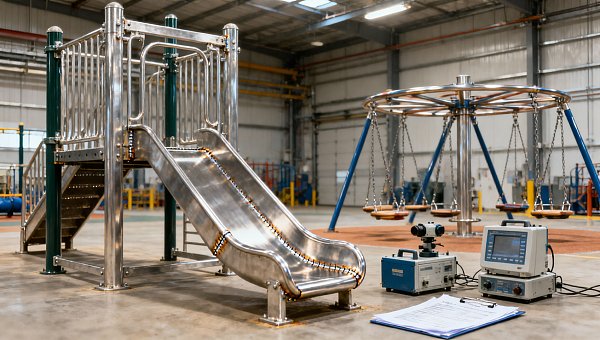
Safety certification is the first filter. A serious exporter should provide valid quality management documents, structural testing records, welding inspection reports, and any required amusement equipment compliance certificates for the target country.
Buyers should also ask how the ride is designed for load, fatigue, wind exposure, and emergency stop conditions. A flying chair ride exporter that understands these requirements will be able to explain them without vague marketing language.
Do not accept a simple declaration that the ride is “safe.” Ask for drawings, material specifications, test procedures, and third-party inspection support. Strong documentation is one of the clearest signs of a mature manufacturing process.
Evaluate The Ride Structure, Not Just The Exterior
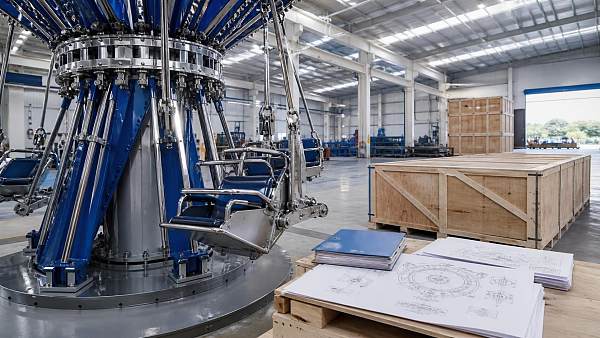
The visible finish can be attractive while the internal structure remains weak. Procurement teams should examine the main support frame, rotating system, seat connection points, anti-corrosion treatment, and electrical components used in the ride.
For outdoor amusement use, steel grade, welding quality, coating thickness, and bearing performance directly affect service life. These are not minor technical details; they determine whether the ride can operate reliably through heavy seasonal use.
Ask the exporter for a bill of materials and structural design notes. If the supplier cannot explain key load-bearing parts clearly, that is a warning sign. Reliable exporters usually present technical information in a structured, professional way.
Assess Customization Capability For Your Site
Different parks need different capacities, themes, heights, colors, and footprints. A good exporter should be able to adapt the flying chair ride to the site layout, audience profile, and brand style without compromising safety or performance.
Customization should include more than paint color. Buyers may need seat quantity adjustments, decorative elements, lighting integration, controller upgrades, or platform changes to fit a specific location and visitor flow.
Before purchase, confirm whether the exporter provides engineering drawings, 3D previews, and site adaptation advice. This helps procurement teams avoid costly redesigns after production has already started.
Review Export Experience And Trade Documentation
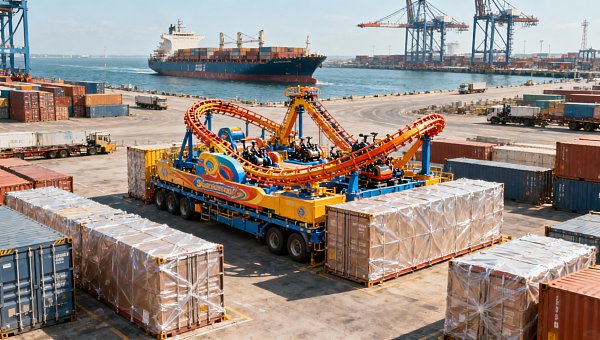
Export experience is critical because amusement rides are bulky, technical, and often subject to strict customs and shipping handling rules. A strong exporter should have a proven record with overseas projects and complete export paperwork.
Ask which countries the supplier has served, what shipping methods they used, and how they managed customs documents, packing, and container loading. Buyers should also confirm whether the exporter can support certificates of origin, packing lists, manuals, and installation files.
If the supplier has little cross-border experience, delays are more likely. In this category, weak documentation or poor logistics planning can hold up a project even when the ride itself is well built.
Compare Installation Support And Training
Installation is often where project risk becomes visible. Buyers should check whether the exporter sends engineers, provides video guidance, or offers a full commissioning service after arrival at the site.
The best flying chair ride exporter will also train local operators on daily checks, emergency procedures, and routine maintenance. Without that support, even a well-manufactured ride may perform poorly in operation.
Procurement teams should clarify who is responsible for foundation requirements, power connection, test runs, and handover acceptance. These details affect schedule certainty and should be agreed before the contract is signed.
Look Closely At After-Sales Service And Spare Parts
After-sales support is not a secondary issue. For amusement equipment, downtime can quickly reduce revenue and create visitor dissatisfaction. Buyers need to know how quickly the exporter can respond when parts or technical help are needed.
Ask which spare parts are included, which items are recommended for local inventory, and whether the exporter can supply consumables and replacement components for years after delivery. This is especially important for motors, bearings, controllers, and safety-related wear parts.
It is also wise to confirm communication channels and response time commitments. A responsive exporter should be able to support troubleshooting with clear instructions and practical remote assistance.
Use Project References To Judge Real Performance
Past projects are one of the strongest indicators of future reliability. Buyers should request case studies, site photos, customer references, and project examples similar to their own operating environment.
Look for evidence of similar capacity, climate conditions, venue type, and regulatory market. A supplier with strong references in comparable projects is much more likely to handle your order with confidence.
When possible, ask how long the ride has been operating, whether maintenance has been manageable, and whether the exporter met delivery promises. These answers reveal more than polished product pages ever will.
Compare Total Value, Not Only Purchase Price
Low price can be misleading if it hides weak materials, poor service, or redesign costs later. Buyers should compare the total value of ownership, including installation, shipping, certification support, maintenance, and expected service life.
A higher initial quote may still be better if it reduces downtime, simplifies approvals, and lowers repair frequency. Procurement teams should evaluate the ride as a long-term asset, not a one-time shipment.
The right flying chair ride exporter should help the buyer protect revenue, manage risk, and extend operating life. That is a stronger commercial case than the cheapest offer on paper.
A Practical Shortlist Method For Buyers
To narrow suppliers efficiently, buyers can use a simple checklist: certification, structural quality, customization, export documentation, installation support, spare parts, and project references. Any exporter failing in one critical area should be treated carefully.
It also helps to compare how quickly each supplier answers technical questions. Fast, precise responses usually indicate stronger internal organization and better project control than vague or delayed replies.
For procurement teams, the goal is not to find the most impressive sales pitch. The goal is to identify an exporter that can deliver a compliant ride, support the launch, and remain dependable after handover.
In summary, choosing a flying chair ride exporter requires a disciplined review of safety, engineering, logistics, and service capability. Buyers who verify these areas early reduce project risk and improve the odds of a stable, profitable operation.
Search News
Hot Articles
- Outdoor RidesHow to Select Leisure Park Equipment for Safe, High-Throughput Visitor AreasOct 03, 2026
- Fashion & Gem JewelryDiamond Tester Wholesale: How to Vet Accuracy, Calibration, and MOQ Before OrderingOct 02, 2026
- Hotel Room AmenitiesHow Hotels Can Choose Amenity Bottles That Balance Brand Image and Refill CostsOct 01, 2026
Popular Tags
Need ExpertConsultation?
Connect with our specialized leisureengineering team for procurementstrategies.
Recommended News
 Oct 03, 2026How to Select Leisure Park Equipment for Safe, High-Throughput Visitor AreasLeisure park equipment selection guide for safe, high-throughput venues—explore capacity, supervision, durability, accessibility, and supplier criteria.● Theme Park Strategist
 Sep 18, 2026What Drives Animatronic Dinosaur Manufacturer Prices for Theme Park Projects?Animatronic dinosaurs manufacturer price guide: compare motion, materials, controls, installation, and lifecycle costs to plan a durable theme park attraction.● Theme Park Strategist
 Sep 06, 2026Do Amusement Ride Safety Compliance Requirements Change Every Year?Do amusement safety compliance requirements change annually? Learn what really changes, from standards and inspections to permits, upgrades, and local approvals.● Theme Park Strategist
 Sep 02, 2026How Long Does It Take to Receive Full Safety Documents From an OEM?How long does it take to get full safety documentation from OEM partners? Discover realistic timelines, common delays, and practical steps to secure compliant files faster.● Theme Park Strategist
 Sep 03, 2026Designing Adventure Park Safety Systems for Zip Lines, Ropes Courses, and Daily InspectionsAdventure park safety systems: learn how to design safer zip lines and ropes courses with daily inspections, defect controls, rescue readiness, and staff training.● Theme Park Strategist
 Aug 22, 2026What to Look for When Choosing Three Seat Jet Skis for Rental or Resort UseThree seat jet skis for rental or resort use should balance stability, safety, maintenance, and guest comfort. Learn how to choose models that boost uptime and guest satisfaction.● Theme Park Strategist
 Aug 17, 2026What Parts Matter Most in a Roller Coaster and How Do They Affect Ride Safety?Roller coaster parts determine ride safety more than most riders realize. Explore how tracks, restraints, brakes, wheels, and control systems work together to protect every ride.● Theme Park Strategist
 Aug 15, 20262026 China Sports Expo Sees 45.74% More Overseas Pre-registered Buyers as POB Expands Procurement Matching2026 China Sports Expo boosts overseas pre-registered buyers by 45.74% as POB expands procurement matching for fitness, outdoor, and venue suppliers.● Theme Park Strategist
 Aug 14, 2026What Should Buyers Check Before Choosing a Flying Chair Ride Exporter?Flying chair ride exporter buyers should check safety, structure, export support, and spare parts before purchase to reduce risk and choose a reliable supplier.● Theme Park Strategist
 Aug 04, 2026EU Issues EN 1176-1:2026 for Playground SafetyEU Issues EN 1176-1:2026 for Playground Safety: learn how the new standard impacts Outdoor Rides, CE certification, inventory checks, and EU compliance before March 2027.● Theme Park Strategist
 Aug 03, 2026CPSC Adopts ASTM F1487-26 for Imported Outdoor RidesOutdoor Rides face a major U.S. compliance shift as CPSC adopts ASTM F1487-26. Learn the new certification, testing, and customs risks before November 1, 2026.● Theme Park Strategist
 Jul 26, 2026Revised EN 1176:2026 Triggers Re-Certification for Outdoor RidesOutdoor Rides face immediate EN 1176:2026 re-certification for new CE applications. Learn how testing, documentation, and EU market access rules now affect exports and delivery plans.● Theme Park Strategist
 Jul 21, 2026CPSC Recall Flags Structural Risk in Outdoor RidesCPSC recall flags structural risk in outdoor rides: learn how ASTM F1487-23 failures affect importers, distributors, and compliance teams across the U.S., Canada, and Australia.● Theme Park Strategist
 Jul 19, 2026How to Choose Outdoor Fitness Equipment for Parks Based on Users, Space, and BudgetOutdoor fitness equipment for parks: learn how to choose the right mix based on users, space, and budget to improve safety, usage, and long-term value.● Theme Park Strategist
 Jul 15, 2026Ocean Freight Spike Pressures Outdoor Rides ExportsOcean Freight Spike Pressures Outdoor Rides Exports as Shanghai-Rotterdam rates surge 42%. See how rising freight costs, delays, and rerouting risks could reshape Europe-bound delivery plans.● Theme Park Strategist
 Jul 14, 2026EN 1176 Revision Takes Effect for Outdoor Ride Weld TestingEN 1176 revision takes effect for outdoor ride weld testing from Sept 1, 2026. Learn ISO 5817 level B, third-party NDT report rules, and key EU compliance steps.● Theme Park Strategist
 Jul 12, 2026Vietnam Requires AI Anti-Collision Systems for Imported Outdoor RidesVietnam Requires AI Anti-Collision Systems for Imported Outdoor Rides from Sept. 15, 2026. Learn compliance rules, VAST certification needs, and how importers can avoid delays.● Theme Park Strategist
 Jul 11, 2026Vietnam Tightens Rules for Imported Outdoor RidesVietnam Tightens Rules for Imported Outdoor Rides: learn how Vietnam’s 2026 compliance update adds AI anti-collision, Vietnamese logs, and local maintenance duties for importers and manufacturers.● Theme Park Strategist
 Jul 09, 2026How to Evaluate a Lazy River Equipment Supplier for Safety, Flow Design, and MaintenanceLazy river equipment supplier selection affects safety, flow design, and maintenance costs. Learn what to compare, what to ask, and how to choose a reliable partner.● Theme Park Strategist
 Jul 08, 2026RCEP Update Cuts ASEAN Tariffs to Zero for Outdoor RidesRCEP update cuts ASEAN tariffs to zero for outdoor rides from China. Learn how FSC-CoC, PEFC traceability, and e-CO compliance affect exports, sourcing, and buyer decisions.● Theme Park Strategist
 Jul 07, 2026RCEP Guide Adds Dual Wood Traceability for Outdoor RidesOutdoor Rides exporters face a new RCEP traceability rule: dual FSC-CoC and PEFC-STS 2023 codes for wood components. See what changes before Oct. 1, 2026.● Theme Park Strategist
 Jul 06, 2026Vietnam Tightens RCEP Rules for Wooden Ride PartsVietnam Tightens RCEP Rules for Wooden Ride Parts: learn how FSC Chain-of-Custody and QR code requirements now affect outdoor rides, RCEP imports, and shipment compliance.● Theme Park Strategist
 Jul 06, 2026How to Evaluate a Bumper Cars on Ice Manufacturer for Safety, Capacity, and ROIBumper cars on ice manufacturer selection starts with safety, capacity, and ROI. Learn how to compare suppliers, reduce risk, and choose a partner built for long-term commercial success.● Theme Park Strategist
 Jul 04, 2026Electric Drift Bumper Cars vs Traditional Bumper Cars: Which Fits Your Venue Better?Electric drift bumper cars or traditional bumper cars? Compare installation, safety, maintenance, guest appeal, and ROI to choose the best fit for your venue.● Theme Park Strategist