Do Amusement Ride Safety Compliance Requirements Change Every Year?
Do amusement safety compliance requirements change annually? Not always—but the compliance environment can change often enough that treating last year’s documentation as a permanent answer is a costly mistake. New laws are relatively infrequent. More commonly, the practical requirements change through revised standards, regulator guidance, inspection interpretations, permit conditions, maintenance expectations, or the introduction of new ride technology.
For amusement ride projects, the important question is not whether a rulebook is reissued every January. It is whether the equipment, documentation, operating procedures, and inspection program remain acceptable to the authority that controls approval and operation in the specific location. A ride that was properly designed for one market may still require redesign, additional testing, translated records, or changes to its safety systems before it can be commissioned elsewhere.
The answer to do amusement safety compliance requirements change annually is therefore: not as a universal legal cycle, but compliance must be reviewed continuously and formally checked before every new project, modification, installation, and operating season.
Why “annual changes” is the wrong way to think about compliance
Amusement ride safety is governed by several overlapping layers. Their update cycles are different, and a change in any one layer can affect a project.
- Legislation and local regulations establish who must register, inspect, approve, or operate a ride. These may remain stable for years, but can change after major policy reviews or incidents.
- Technical standards define expectations for design, manufacture, testing, operation, maintenance, and inspection. They are revised periodically rather than annually.
- Authority interpretation and permit conditions can shift much faster. Inspectors may focus more closely on restraint verification, evacuation planning, maintenance records, corrosion, control-system changes, or operator training after local findings or industry events.
- Manufacturer instructions can be updated when a supplier identifies a component issue, releases a retrofit, modifies operating limits, or changes a maintenance interval.
- Site conditions can create new obligations even where the ride itself has not changed. Climate, wind exposure, seismic requirements, electrical rules, crowd management plans, and public-liability requirements all vary by location.
This is why a ride cannot be judged compliant simply because it carries a document issued several years earlier. Documentation has a date, a scope, and a jurisdiction. It must also correspond to the actual machine delivered—not only to a similar model in a supplier’s catalogue.
Standards are updated periodically; inspections often happen every year
A major source of confusion is the difference between an annual inspection obligation and an annual change in design requirements. Many jurisdictions require periodic inspection, registration renewal, operating-permit renewal, or insurance evidence. Seasonal parks may also conduct pre-opening checks and recurring daily or weekly operational inspections. These are recurring compliance activities, not proof that the technical standard itself changes every year.
In the United States, amusement ride oversight is largely handled at state and local level. The ASTM F24 committee develops widely used standards covering subjects such as ride design and manufacture, operation, maintenance, quality assurance, inspection, and terminology. A state may incorporate an edition of an ASTM standard into its rules, reference it with amendments, or establish separate requirements. The edition adopted by the state—not simply the newest edition available from ASTM—is what matters for a regulated installation.
In Europe, the EN 13814 series is an important reference point for the safety of amusement rides and amusement devices, addressing design and manufacture, operation, maintenance and use, and inspection. However, EN standards do not replace the need to determine which legal framework applies in the destination country and to the specific equipment. Depending on the product, installation, and market, obligations may involve machinery rules, electrical requirements, structural and building controls, pressure-equipment rules, radio equipment requirements, or national fairground and workplace-safety provisions.
Elsewhere, national, provincial, state, or municipal authorities may impose their own approval route. A factory acceptance test that is sufficient for one location may be only one part of a larger submission elsewhere. The recurring operational inspection schedule may also differ between permanently installed rides, mobile fairground equipment, water attractions, inflatable devices, and coin-operated or family entertainment equipment.
A practical way to identify what has actually changed
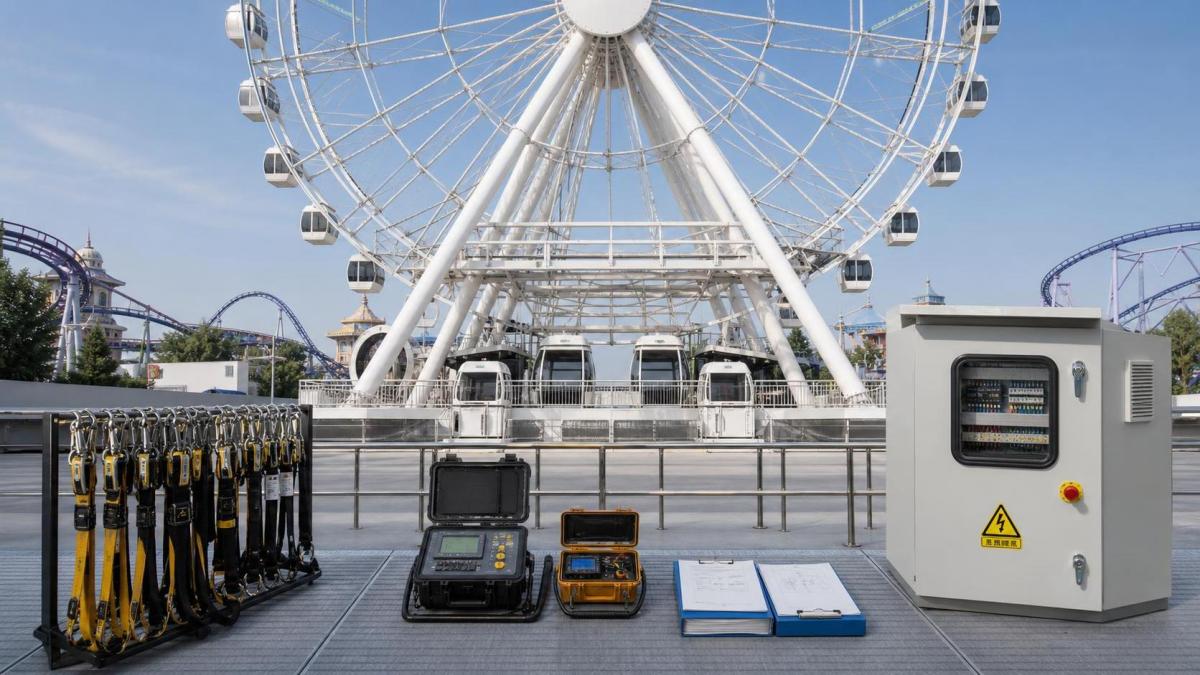
The most reliable approach is to create a compliance baseline for each ride and compare it against the requirements applicable at the time of installation and operation. This should happen before production is finalized, not after the equipment reaches site.
1. Define the equipment and its intended use precisely
“Amusement ride” is too broad for regulatory work. A track ride, Ferris wheel, water slide, inflatable attraction, indoor electric go-kart, rope course, mechanical bull, children’s ride, and observation attraction may be regulated differently. Classification affects which standard, authority, test procedure, and inspector competence requirements apply.
The intended operating model matters just as much. Is the equipment permanent or traveling? Indoor or outdoor? Staff-operated or unattended? Designed for adults, children, or mixed riders? Installed in a hotel, shopping centre, family entertainment centre, theme park, public event, or temporary festival? These details influence evacuation methods, anchoring, electrical design, weather restrictions, accessibility planning, staffing, and crowd control.
2. Identify the jurisdiction before approving the specification
Compliance cannot be reliably sourced from a generic “international certificate” request. The project team should identify the country, region, city, and approving authority, then confirm which requirements apply to the equipment category and installation type.
Questions worth resolving early include:
- Is a pre-installation design review required?
- Must the ride be registered before it is operated?
- Who may perform inspection: a government inspector, an authorized inspection body, an engineer, or a competent person recognized by the local authority?
- Which standard edition is legally referenced or normally expected?
- Are independent load tests, non-destructive testing, electrical tests, or commissioning witnesses required?
- Are manuals, labels, risk assessments, and maintenance logs required in the local language?
- Does the site need separate building, fire, electrical, planning, or occupancy approvals?
These questions should be documented in a jurisdictional compliance matrix. It is a simple but valuable control: one column for the obligation, one for the responsible party, one for the evidence required, and one for its status. Without this, responsibility often falls between the manufacturer, installer, operator, and local contractor.
3. Compare editions and identify transition provisions
When a standard is revised, existing rides are not automatically required to meet every new provision. Whether an update applies depends on local law, adoption language, the nature of the change, and whether the ride is new, relocated, substantially modified, or already operating.
For a new project, authorities may expect the current adopted edition. For an existing ride, a change may be required only after a major alteration, replacement of a critical subsystem, incident investigation, renewal application, or specific enforcement notice. A new restraint system, programmable logic controller, braking arrangement, lifting component, vehicle, structural member, or change in passenger capacity may trigger a more detailed review than routine replacement of a like-for-like approved component.
The key distinction is between maintenance and modification. Replacing a worn part in accordance with the manufacturer’s approved procedure is not necessarily a redesign. Installing a different component because it is cheaper, more available, or “equivalent” can alter the safety case. If the part affects containment, restraint, braking, speed control, load path, electrical protection, or emergency stopping, the change should be reviewed by the manufacturer and, where required, by the relevant authority or qualified inspector.
Technology is creating faster compliance change than legislation
The parts of ride compliance most likely to evolve quickly are increasingly digital. Modern attractions use programmable safety controls, variable-frequency drives, sensors, access-control systems, remote diagnostics, automated dispatch functions, RFID wristbands, camera systems, and networked maintenance platforms. These technologies can improve safety and operating efficiency, but they also expand the risk profile.
A control-system upgrade should not be treated as a basic software refresh when it changes how safety functions are performed. The project should assess fail-safe behavior, fault detection, emergency-stop performance, sensor plausibility checks, access control, manual override arrangements, software version control, cybersecurity exposure, and the ability to retrieve event logs after an incident.
Remote monitoring deserves particular caution. It may help identify abnormal vibration, repeated drive faults, or operating conditions outside expected limits. It does not replace physical inspection, competent maintenance, or an operator’s responsibility to stop a ride when conditions are unsafe. Data is useful only when alarm thresholds, response responsibilities, and record-retention rules are defined.
New materials also require disciplined review. Composite vehicles, additive-manufactured components, new restraint materials, and alternative surface coatings may offer design advantages, but the inspection method, fatigue behavior, ultraviolet resistance, chemical compatibility, repair process, and traceability must be understood. A material that performs well in a controlled factory environment may behave differently under salt air, extreme heat, high humidity, chlorine exposure, or intensive daily use.
Where suppliers and project teams commonly make mistakes
The first mistake is accepting a certificate without checking its issuer, scope, standard edition, model number, and relationship to the delivered configuration. Test reports can be valid evidence, but they are not automatically an operating permit. A conformity document for an electrical component does not certify the entire ride. Nor does a factory inspection report eliminate local commissioning requirements.
The second is assuming that CE marking, where applicable, is a global passport. It is not. CE marking relates to European Union requirements within its legal scope and must be supported by appropriate conformity assessment documentation. It does not by itself satisfy U.S. state requirements, Canadian provincial requirements, Gulf-region approvals, or other local operating rules. Conversely, an ASTM-based design package may not be sufficient for an installation requiring European documentation and local declarations.
The third is leaving translation until the end. Operation manuals, maintenance instructions, warning labels, electrical diagrams, rescue procedures, and training materials may need to be understandable to the people who will use them. Poor translation is not a cosmetic issue: it can undermine emergency response, maintenance quality, and insurer confidence.
The fourth is treating commissioning as an installation formality. A proper commissioning process verifies that the delivered equipment matches the approved drawings and bill of materials, foundations and anchors conform to the design, safety devices function correctly, operating envelopes are clear, evacuation procedures work in realistic conditions, and operators have been trained on the actual installed system.
Build a compliance review rhythm that matches the ride’s life cycle
A good compliance program is neither a one-time certification exercise nor an unnecessary annual redesign review. It follows the equipment through its life cycle.
Before contract award: establish the destination jurisdiction, applicable standards, authority submission route, supplier documentation obligations, inspection responsibilities, and realistic approval lead times. Make compliance deliverables contractual, including revision-controlled drawings, calculations where required, material traceability, electrical documentation, manuals, spare-parts lists, training, test records, and support for local inspection.
Before shipment: verify that the final configuration matches the approved technical file. Confirm serial numbers, safety-critical component records, labels, manuals, packing lists, and installation drawings. If a substitute part has been used because of supply constraints, determine whether it affects the approved design.
At installation and commissioning: manage foundation checks, assembly records, torque controls, electrical testing, functional testing, ride envelope clearance, evacuation access, operator training, and independent inspection requirements. Do not schedule public opening solely around the delivery date; approval timing can be affected by inspector availability and incomplete records.
During operation: maintain the inspection and maintenance schedule required by the manufacturer and the local authority. Record defects, corrective actions, shutdowns, near misses, and changes to operating conditions. A recurring pattern of minor faults can be as significant as a single major defect because it may reveal an underlying issue with components, environment, procedures, or training.
Before any significant change: use a formal management-of-change process. Ask whether the alteration changes loads, speed, passenger behavior, safety functions, evacuation, structural integrity, electrical protection, or the intended use. If the answer may be yes, seek written technical review before proceeding.
What should be monitored each year
Even if the governing regulation has not changed, an annual review remains sensible. It should cover newly adopted local rules and guidance, revised standards cited by authorities, manufacturer safety bulletins, recall notices, inspection findings, incident trends, staff competence, emergency drills, and equipment modifications made during the year.
This review should also examine whether the operating reality still matches the original design assumptions. A ride may now run longer hours, carry different passenger demographics, operate in harsher weather, use different cleaning chemicals, or be managed by a new contractor. These operational changes can introduce safety gaps without any visible change to the machine.
The durable lesson is that compliance is not static paperwork. Major statutory changes may be occasional, but the evidence supporting safe operation must remain current. Teams that monitor regulatory adoption, preserve accurate technical records, and control modifications early are far less likely to face delayed openings, rejected inspections, unplanned retrofits, or disputes after an incident.
Search News
Hot Articles
- Outdoor RidesIAAPA Launches Insurance Solution for North American Attractions IndustryOct 21, 2026
- Watch OEM & SmartwatchesWatch Movement Parts: How to Check Compatibility With a Specific CaliberOct 21, 2026
- Outdoor RidesEnergylandia Announces Rokan, Set to Be Europe’s Tallest and Longest B&M Wing CoasterOct 20, 2026
Popular Tags
Need ExpertConsultation?
Connect with our specialized leisureengineering team for procurementstrategies.
Recommended News
 Oct 21, 2026IAAPA Launches Insurance Solution for North American Attractions IndustryExplore IAAPA Insurance Solution, a dedicated insurance and risk management offering for North American attractions operators, and discover what it could mean for your business.● Theme Park Strategist
 Oct 20, 2026Energylandia Announces Rokan, Set to Be Europe’s Tallest and Longest B&M Wing CoasterDiscover Energylandia’s Rokan, set to become Europe’s tallest and longest B&M wing coaster. Explore the 62-metre thrill ride planned for spring 2027 in the new Volana themed area.● Theme Park Strategist
 Oct 03, 2026How to Select Leisure Park Equipment for Safe, High-Throughput Visitor AreasLeisure park equipment selection guide for safe, high-throughput venues—explore capacity, supervision, durability, accessibility, and supplier criteria.● Theme Park Strategist
 Sep 18, 2026What Drives Animatronic Dinosaur Manufacturer Prices for Theme Park Projects?Animatronic dinosaurs manufacturer price guide: compare motion, materials, controls, installation, and lifecycle costs to plan a durable theme park attraction.● Theme Park Strategist
 Sep 06, 2026Do Amusement Ride Safety Compliance Requirements Change Every Year?Do amusement safety compliance requirements change annually? Learn what really changes, from standards and inspections to permits, upgrades, and local approvals.● Theme Park Strategist
 Sep 02, 2026How Long Does It Take to Receive Full Safety Documents From an OEM?How long does it take to get full safety documentation from OEM partners? Discover realistic timelines, common delays, and practical steps to secure compliant files faster.● Theme Park Strategist
 Sep 03, 2026Designing Adventure Park Safety Systems for Zip Lines, Ropes Courses, and Daily InspectionsAdventure park safety systems: learn how to design safer zip lines and ropes courses with daily inspections, defect controls, rescue readiness, and staff training.● Theme Park Strategist
 Aug 22, 2026What to Look for When Choosing Three Seat Jet Skis for Rental or Resort UseThree seat jet skis for rental or resort use should balance stability, safety, maintenance, and guest comfort. Learn how to choose models that boost uptime and guest satisfaction.● Theme Park Strategist
 Aug 17, 2026What Parts Matter Most in a Roller Coaster and How Do They Affect Ride Safety?Roller coaster parts determine ride safety more than most riders realize. Explore how tracks, restraints, brakes, wheels, and control systems work together to protect every ride.● Theme Park Strategist
 Aug 15, 20262026 China Sports Expo Sees 45.74% More Overseas Pre-registered Buyers as POB Expands Procurement Matching2026 China Sports Expo boosts overseas pre-registered buyers by 45.74% as POB expands procurement matching for fitness, outdoor, and venue suppliers.● Theme Park Strategist
 Aug 14, 2026What Should Buyers Check Before Choosing a Flying Chair Ride Exporter?Flying chair ride exporter buyers should check safety, structure, export support, and spare parts before purchase to reduce risk and choose a reliable supplier.● Theme Park Strategist
 Aug 04, 2026EU Issues EN 1176-1:2026 for Playground SafetyEU Issues EN 1176-1:2026 for Playground Safety: learn how the new standard impacts Outdoor Rides, CE certification, inventory checks, and EU compliance before March 2027.● Theme Park Strategist
 Aug 03, 2026CPSC Adopts ASTM F1487-26 for Imported Outdoor RidesOutdoor Rides face a major U.S. compliance shift as CPSC adopts ASTM F1487-26. Learn the new certification, testing, and customs risks before November 1, 2026.● Theme Park Strategist
 Jul 26, 2026Revised EN 1176:2026 Triggers Re-Certification for Outdoor RidesOutdoor Rides face immediate EN 1176:2026 re-certification for new CE applications. Learn how testing, documentation, and EU market access rules now affect exports and delivery plans.● Theme Park Strategist
 Jul 21, 2026CPSC Recall Flags Structural Risk in Outdoor RidesCPSC recall flags structural risk in outdoor rides: learn how ASTM F1487-23 failures affect importers, distributors, and compliance teams across the U.S., Canada, and Australia.● Theme Park Strategist
 Jul 19, 2026How to Choose Outdoor Fitness Equipment for Parks Based on Users, Space, and BudgetOutdoor fitness equipment for parks: learn how to choose the right mix based on users, space, and budget to improve safety, usage, and long-term value.● Theme Park Strategist
 Jul 15, 2026Ocean Freight Spike Pressures Outdoor Rides ExportsOcean Freight Spike Pressures Outdoor Rides Exports as Shanghai-Rotterdam rates surge 42%. See how rising freight costs, delays, and rerouting risks could reshape Europe-bound delivery plans.● Theme Park Strategist
 Jul 14, 2026EN 1176 Revision Takes Effect for Outdoor Ride Weld TestingEN 1176 revision takes effect for outdoor ride weld testing from Sept 1, 2026. Learn ISO 5817 level B, third-party NDT report rules, and key EU compliance steps.● Theme Park Strategist
 Jul 12, 2026Vietnam Requires AI Anti-Collision Systems for Imported Outdoor RidesVietnam Requires AI Anti-Collision Systems for Imported Outdoor Rides from Sept. 15, 2026. Learn compliance rules, VAST certification needs, and how importers can avoid delays.● Theme Park Strategist
 Jul 11, 2026Vietnam Tightens Rules for Imported Outdoor RidesVietnam Tightens Rules for Imported Outdoor Rides: learn how Vietnam’s 2026 compliance update adds AI anti-collision, Vietnamese logs, and local maintenance duties for importers and manufacturers.● Theme Park Strategist
 Jul 09, 2026How to Evaluate a Lazy River Equipment Supplier for Safety, Flow Design, and MaintenanceLazy river equipment supplier selection affects safety, flow design, and maintenance costs. Learn what to compare, what to ask, and how to choose a reliable partner.● Theme Park Strategist
 Jul 08, 2026RCEP Update Cuts ASEAN Tariffs to Zero for Outdoor RidesRCEP update cuts ASEAN tariffs to zero for outdoor rides from China. Learn how FSC-CoC, PEFC traceability, and e-CO compliance affect exports, sourcing, and buyer decisions.● Theme Park Strategist
 Jul 07, 2026RCEP Guide Adds Dual Wood Traceability for Outdoor RidesOutdoor Rides exporters face a new RCEP traceability rule: dual FSC-CoC and PEFC-STS 2023 codes for wood components. See what changes before Oct. 1, 2026.● Theme Park Strategist
 Jul 06, 2026Vietnam Tightens RCEP Rules for Wooden Ride PartsVietnam Tightens RCEP Rules for Wooden Ride Parts: learn how FSC Chain-of-Custody and QR code requirements now affect outdoor rides, RCEP imports, and shipment compliance.● Theme Park Strategist