What Drives Animatronic Dinosaur Manufacturer Prices for Theme Park Projects?
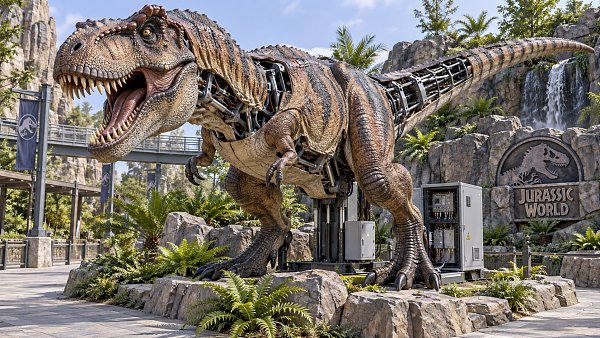
Animatronic dinosaur pricing is set by the performance brief behind the figure, not by its silhouette alone. Two dinosaurs with a similar length and species label can carry very different project costs when one only turns its head indoors and the other must run a synchronized outdoor show through heat, rain, frequent cycles, and close public viewing. A useful quotation separates the visible body from the structural, electrical, control, logistics, and service work required to keep that body convincing after installation.
When reviewing an animatronic dinosaurs manufacturer price, start by asking what is included in the operating condition. “Moving dinosaur” is not a complete specification. The number of controlled motions, duty cycle, environmental exposure, sound and lighting integration, access constraints, and handover scope determine whether a quoted unit is a display prop or a durable attraction asset.
Motion Design Changes Both Hardware and Fabrication Cost
Motion count is often treated as a simple feature list, yet the commercial impact comes from the way movements are coordinated. A head turn, jaw opening, and tail sweep can be driven by a relatively direct system. Adding neck articulation, eye movement, torso breathing, forelimb action, variable-speed behavior, and responsive triggers requires more actuators, mounting points, cable routing, control outputs, and calibration time. The cost is also affected by where movement occurs. A heavy head moving far from the body frame places different loads on the mechanism than a small eyelid movement.
Specifications should identify each motion, its range, speed, load direction, and whether it operates independently or as part of a programmed sequence. “Ten movements” has little comparison value if one quotation counts subtle facial effects while another counts primary structural axes. The travel range matters as well. Restrained movement can look natural when tuned carefully; a wide mechanical sweep may demand larger linkages, more clearance, and stronger stopping control.
Actuator selection follows the intended behavior. Pneumatic systems may suit installations with an available, maintained air supply and an accepted level of operating noise. Electric linear actuators and geared motors can simplify site utilities, but their protection level, heat management, feedback method, and service access need to match the setting. Hydraulic systems may be considered for heavy loads, although they introduce a different maintenance and containment burden. A low initial figure can conceal a system choice that is poorly matched to the venue's available technical support.
Duty cycle must be stated in plain terms. A dinosaur activated occasionally by a guest trigger experiences a different workload from one performing continuously throughout operating hours. Repeated starts, stops, vibration, and peak loads affect actuator sizing, gearbox selection, bearings, fasteners, and controller thermal design. Pricing that assumes light intermittent use should not be compared directly with pricing built for prolonged repetitive operation.
The Internal Frame Is Where Durability Is Priced
The steel or aluminum skeleton is mostly hidden after finishing, but it carries the weight, motion loads, transport stresses, and visitor-facing safety margin. Frame cost rises with span, cantilevered body parts, elevated installation, removable modules, and dynamic loads. A large dinosaur does not need an overbuilt structure merely because it is large, but a long neck, raised tail, or moving body section must be engineered around actual leverage rather than visual scale.
Connection details deserve close attention. Shop-welded assemblies can be robust and economical for a fixed route and simple lift plan. A project entering through narrow doors, moving between seasonal venues, or traveling internationally may need bolted joints, locating pins, concealed access panels, and segmented cladding. Those features increase fabrication and assembly effort, while reducing the chance that a finished figure must be dismantled destructively at the site.
Frame material and corrosion protection should reflect the destination rather than a generic “outdoor” label. Covered installations exposed mainly to humidity call for a different approach from coastal zones, splash-prone water-ride areas, or attractions subject to winter freeze-thaw cycles. Coating quality is not only a paint decision. Drainage paths, unsealed hollow sections, dissimilar-metal contact, and inaccessible joints can create premature corrosion regardless of the advertised finish.
Skin, Surface Detail, and Visual Distance
Silicone, fiberglass-reinforced shells, foam systems, textile elements, molded elastomers, and composite skins each change the material bill and labor profile. Flexible skin around moving areas must stretch, recover, adhere to the substrate, and preserve texture without splitting at stress points. Rigid shells can provide crisp scale patterns and durable geometry, but transitions around joints require careful treatment to avoid visibly mechanical gaps.
Realism is also a viewing-distance decision. A large outdoor creature viewed from a path several meters away may benefit more from a strong profile, readable coloration, shadowed eye sockets, and believable motion than from extremely fine skin texturing across every surface. A queue-line or indoor museum piece viewed at close range demands tighter seam control, more convincing eyes and teeth, refined paint layering, and cleaner concealment of service openings. Quoting the same finish level for both conditions wastes budget in one case and disappoints in the other.
Customization has several distinct cost levels. Changing paint colors or adding a site-specific plaque is relatively limited work. Altering pose, scale, species anatomy, head shape, motion sequence, or mounting arrangement affects design drawings, frame geometry, molds or sculpting, control programming, and testing. A request for “custom” should therefore be broken into visible styling changes and structural changes. This avoids a late-stage disagreement when a sketch revision turns out to alter the entire production method.
Controls, Audio, and Integration Scope
A dinosaur with self-contained looping behavior has a different cost structure from a figure tied to show control, sensors, timed lighting, synchronized audio, or a central attraction system. The quotation should state whether the controller is local, networked, or supplied only with basic inputs and outputs. It should also identify the interface type, emergency-stop logic, power requirements, cabinet location, cable lengths, and who supplies the final connection between trades.
Sensor-triggered behavior is often underestimated. A trigger point may need detection hardware, mounting hardware, weather protection, logic to prevent repeated activation, and a defined behavior when multiple guests approach. Audio requires speaker location, amplifier capacity, access for replacement, volume limits appropriate to the venue, and protection from vibration. These items are less visible than sculpting, but they often generate site changes when left outside the original scope.
Control programming should be discussed as a deliverable rather than an invisible included service. Clarify whether the programmed sequence is fixed, whether parameters such as speed and delay can be adjusted on site, and whether source files, backups, diagrams, and operating instructions are included. A proprietary control setup may be appropriate, but a project should not reach handover with no clear route to diagnose a failed input or replace a controller.
Safety and Environmental Requirements Belong in the Same Comparison
Public-facing animated equipment needs a coherent safety concept. Depending on location and installation, that may include pinch-point guards, guarded access to mechanisms, stable foundations, emergency stopping, electrical protection, fire behavior of exposed materials, accessibility around the exhibit, and controlled separation from moving elements. The relevant obligations vary by jurisdiction and venue, so a quote should describe the designed safety features and list any site-specific compliance work that remains outside the supply scope.
Outdoor use adds another layer. Water ingress protection, UV exposure, wind loading, drainage, temperature range, and lightning or surge protection affect materials and enclosure design. An outdoor-rated electrical cabinet without a credible arrangement for cable entries, condensation, and service access is not a complete environmental solution. Similarly, a life-size body may resist rain while its exposed joint covers, speakers, sensors, or base connections remain vulnerable.
Freight and Installation Can Reverse an Apparent Price Advantage
Freight cost depends on more than destination distance. The packed dimensions, total volume, crate design, lifting points, route limits, container loading plan, and degree of factory pre-assembly all matter. A fully assembled creature may reduce site assembly time but create difficult oversize transport and handling requirements. A highly modular unit can fit more efficiently into transport, yet adds joints, packing labor, reassembly steps, and alignment work at the venue.
Installation scope should distinguish delivery to site from completed commissioning. The latter may involve unloading, crane or forklift operations, anchor placement, electrical connection, mechanical assembly, skin finishing at joints, motion tuning, programming, test cycles, and staff instruction. Foundation information is particularly important. A supplier may provide load reactions and anchor layouts while civil works, reinforcing, drainage, and utility trenches remain locally arranged. Treating these as included merely because the dinosaur is described as “installed” causes budget gaps.
International projects also need a practical documentation package: packing lists, component identification, assembly drawings, wiring diagrams, maintenance instructions, and a spare-parts schedule. These documents influence installation speed and later service quality. They should be reviewed before shipment, when corrections are still much easier than after crates arrive on site.
Lifecycle Cost Is Usually Determined at Access Points
Maintenance is not a separate concern from purchase price. Skin areas surrounding actuators, gearboxes, valves, sensors, and control cabinets need a sensible path for inspection and replacement. A clean exterior with no planned service access can force extensive cosmetic removal for a small fault. That increases downtime and risks visible repair marks.
Ask for the expected maintenance tasks by component, not a generic statement that the unit is easy to maintain. Useful detail includes lubrication points, wear parts, inspection intervals, cable and connector access, skin repair materials, recommended cleaning methods, storage requirements, and the process for obtaining a replacement actuator or controller. Critical components should be identifiable by part number or an equivalent technical description, especially where the installation is remote from the original fabrication facility.
Spare strategy should match the impact of failure. Consumables and cosmetic touch-up materials are different from parts whose failure stops a show sequence. A small set of critical electrical, motion, and sensor components held locally can reduce downtime, while stocking every part can tie up unnecessary capital. The correct selection follows the control architecture, replacement lead time, and whether trained local maintenance staff can perform the work without specialized tools.
Reading Quotes on a Like-for-Like Basis
The most reliable comparison method is to convert each proposal into one common technical schedule before judging the final total. Place the drawings, movement list, materials, finish level, controller scope, environmental assumptions, transport packaging, installation boundary, commissioning, documents, warranty, and spares side by side. Any blank field is not automatically an exclusion, but it is an unresolved commercial assumption.
Pay particular attention to exclusions written broadly, such as “site work,” “electrical work,” “integration,” or “final finishing.” These terms can be reasonable when responsibilities are clear. They become costly when neither party has defined who supplies cables, foundations, lifts, permits, weather protection, network connections, or after-hours testing access.
A lower quotation can be the right choice when the project truly needs a simpler display, limited operating hours, standard appearance, and local installation support. It becomes a poor comparison when it omits the motion performance, environmental construction, access design, or commissioning needed by the intended attraction. The most useful price is therefore the one tied to a precise operating brief and a complete delivery boundary, leaving fewer assumptions to be discovered after fabrication has started.
Search News
Hot Articles
- Outdoor RidesWhat Drives Animatronic Dinosaur Manufacturer Prices for Theme Park Projects?Sep 18, 2026
- Stationery & UniformsHow to Source Wholesale Packing Tape Without Compromising Carton Seal StrengthSep 17, 2026
- Smart Campus TechHow to Source Educational Furniture Worldwide for Safe, Flexible Learning SpacesSep 16, 2026
Popular Tags
Need ExpertConsultation?
Connect with our specialized leisureengineering team for procurementstrategies.
Recommended News
 Sep 18, 2026What Drives Animatronic Dinosaur Manufacturer Prices for Theme Park Projects?Animatronic dinosaurs manufacturer price guide: compare motion, materials, controls, installation, and lifecycle costs to plan a durable theme park attraction.● Theme Park Strategist
 Sep 06, 2026Do Amusement Ride Safety Compliance Requirements Change Every Year?Do amusement safety compliance requirements change annually? Learn what really changes, from standards and inspections to permits, upgrades, and local approvals.● Theme Park Strategist
 Sep 02, 2026How Long Does It Take to Receive Full Safety Documents From an OEM?How long does it take to get full safety documentation from OEM partners? Discover realistic timelines, common delays, and practical steps to secure compliant files faster.● Theme Park Strategist
 Sep 03, 2026Designing Adventure Park Safety Systems for Zip Lines, Ropes Courses, and Daily InspectionsAdventure park safety systems: learn how to design safer zip lines and ropes courses with daily inspections, defect controls, rescue readiness, and staff training.● Theme Park Strategist
 Aug 22, 2026What to Look for When Choosing Three Seat Jet Skis for Rental or Resort UseThree seat jet skis for rental or resort use should balance stability, safety, maintenance, and guest comfort. Learn how to choose models that boost uptime and guest satisfaction.● Theme Park Strategist
 Aug 17, 2026What Parts Matter Most in a Roller Coaster and How Do They Affect Ride Safety?Roller coaster parts determine ride safety more than most riders realize. Explore how tracks, restraints, brakes, wheels, and control systems work together to protect every ride.● Theme Park Strategist
 Aug 15, 20262026 China Sports Expo Sees 45.74% More Overseas Pre-registered Buyers as POB Expands Procurement Matching2026 China Sports Expo boosts overseas pre-registered buyers by 45.74% as POB expands procurement matching for fitness, outdoor, and venue suppliers.● Theme Park Strategist
 Aug 14, 2026What Should Buyers Check Before Choosing a Flying Chair Ride Exporter?Flying chair ride exporter buyers should check safety, structure, export support, and spare parts before purchase to reduce risk and choose a reliable supplier.● Theme Park Strategist
 Aug 04, 2026EU Issues EN 1176-1:2026 for Playground SafetyEU Issues EN 1176-1:2026 for Playground Safety: learn how the new standard impacts Outdoor Rides, CE certification, inventory checks, and EU compliance before March 2027.● Theme Park Strategist
 Aug 03, 2026CPSC Adopts ASTM F1487-26 for Imported Outdoor RidesOutdoor Rides face a major U.S. compliance shift as CPSC adopts ASTM F1487-26. Learn the new certification, testing, and customs risks before November 1, 2026.● Theme Park Strategist
 Jul 26, 2026Revised EN 1176:2026 Triggers Re-Certification for Outdoor RidesOutdoor Rides face immediate EN 1176:2026 re-certification for new CE applications. Learn how testing, documentation, and EU market access rules now affect exports and delivery plans.● Theme Park Strategist
 Jul 21, 2026CPSC Recall Flags Structural Risk in Outdoor RidesCPSC recall flags structural risk in outdoor rides: learn how ASTM F1487-23 failures affect importers, distributors, and compliance teams across the U.S., Canada, and Australia.● Theme Park Strategist
 Jul 19, 2026How to Choose Outdoor Fitness Equipment for Parks Based on Users, Space, and BudgetOutdoor fitness equipment for parks: learn how to choose the right mix based on users, space, and budget to improve safety, usage, and long-term value.● Theme Park Strategist
 Jul 15, 2026Ocean Freight Spike Pressures Outdoor Rides ExportsOcean Freight Spike Pressures Outdoor Rides Exports as Shanghai-Rotterdam rates surge 42%. See how rising freight costs, delays, and rerouting risks could reshape Europe-bound delivery plans.● Theme Park Strategist
 Jul 14, 2026EN 1176 Revision Takes Effect for Outdoor Ride Weld TestingEN 1176 revision takes effect for outdoor ride weld testing from Sept 1, 2026. Learn ISO 5817 level B, third-party NDT report rules, and key EU compliance steps.● Theme Park Strategist
 Jul 12, 2026Vietnam Requires AI Anti-Collision Systems for Imported Outdoor RidesVietnam Requires AI Anti-Collision Systems for Imported Outdoor Rides from Sept. 15, 2026. Learn compliance rules, VAST certification needs, and how importers can avoid delays.● Theme Park Strategist
 Jul 11, 2026Vietnam Tightens Rules for Imported Outdoor RidesVietnam Tightens Rules for Imported Outdoor Rides: learn how Vietnam’s 2026 compliance update adds AI anti-collision, Vietnamese logs, and local maintenance duties for importers and manufacturers.● Theme Park Strategist
 Jul 09, 2026How to Evaluate a Lazy River Equipment Supplier for Safety, Flow Design, and MaintenanceLazy river equipment supplier selection affects safety, flow design, and maintenance costs. Learn what to compare, what to ask, and how to choose a reliable partner.● Theme Park Strategist
 Jul 08, 2026RCEP Update Cuts ASEAN Tariffs to Zero for Outdoor RidesRCEP update cuts ASEAN tariffs to zero for outdoor rides from China. Learn how FSC-CoC, PEFC traceability, and e-CO compliance affect exports, sourcing, and buyer decisions.● Theme Park Strategist
 Jul 07, 2026RCEP Guide Adds Dual Wood Traceability for Outdoor RidesOutdoor Rides exporters face a new RCEP traceability rule: dual FSC-CoC and PEFC-STS 2023 codes for wood components. See what changes before Oct. 1, 2026.● Theme Park Strategist
 Jul 06, 2026Vietnam Tightens RCEP Rules for Wooden Ride PartsVietnam Tightens RCEP Rules for Wooden Ride Parts: learn how FSC Chain-of-Custody and QR code requirements now affect outdoor rides, RCEP imports, and shipment compliance.● Theme Park Strategist
 Jul 06, 2026How to Evaluate a Bumper Cars on Ice Manufacturer for Safety, Capacity, and ROIBumper cars on ice manufacturer selection starts with safety, capacity, and ROI. Learn how to compare suppliers, reduce risk, and choose a partner built for long-term commercial success.● Theme Park Strategist
 Jul 04, 2026Electric Drift Bumper Cars vs Traditional Bumper Cars: Which Fits Your Venue Better?Electric drift bumper cars or traditional bumper cars? Compare installation, safety, maintenance, guest appeal, and ROI to choose the best fit for your venue.● Theme Park Strategist
 Jul 03, 2026EN 15330-2:2026 Takes Effect for Outdoor RidesEN 15330-2:2026 takes effect for Outdoor Rides in the EU on July 1, 2026. Learn how CE certification and ISO 13849-1 PLd impact market access, customs clearance, and export compliance.● Theme Park Strategist