Choosing a Glockenspiel Supplier: Tuning, Quality and After-Sales Support
Choosing a glockenspiel supplier involves more than comparing prices. An instrument that looks right on a quotation can still disappoint if its tuning varies across batches, its bars are easily damaged, or replacement parts are difficult to obtain. For a school purchasing several classroom instruments, a distributor planning repeat orders, or a venue equipping a performance space, those details affect both the initial budget and the years that follow.
The most useful supplier conversations begin with a clear description of how the instruments will be played, stored, transported, and maintained. From there, procurement teams can compare tuning, construction, production controls, delivery terms, and after-sales support on a consistent basis.
Define the instrument before requesting a quote
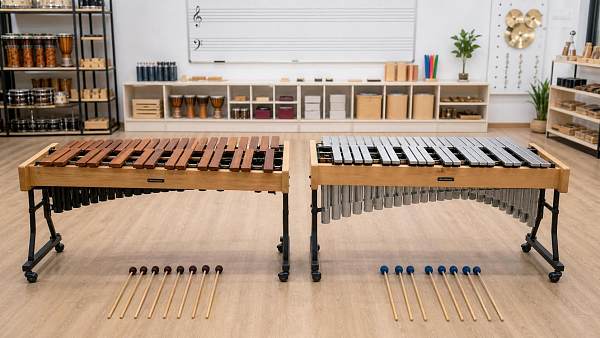
“Glockenspiel” can cover products intended for different users and settings. A compact educational instrument may prioritize portability and straightforward handling, while an orchestral model may need a wider range, more precise note response, and a suitable stand. Marching instruments face different demands again, including weight, carrying arrangements, and resistance to movement during transport.
Before contacting suppliers, document the intended application and the features that matter to the player. A practical request for quotation should specify:
- Playing range: The required lowest and highest notes, rather than octave count alone.
- Pitch reference: The concert pitch expected by the buyer, such as A4 = 440 Hz, and any required tuning tolerance.
- Physical configuration: Bar layout, frame type, stand or table requirements, and preferred overall dimensions.
- Accessories: Mallets, cases, stands, or replacement components to be included in the quoted price.
- Order profile: Initial quantity, possible repeat orders, delivery destination, and required arrival date.
If the end users are musicians or educators, involve them early. Their assessment of sound and playability can prevent a procurement team from approving an instrument that meets the written specification but feels unsuitable in use.
How to evaluate glockenspiel tuning and sound
Tuning is not simply a question of whether an instrument sounds pleasant when played briefly. Buyers need confidence that individual notes are accurate, that the instrument is consistent across its range, and that subsequent units will match the approved sample closely enough for their intended use.
Agree on a measurable tuning specification
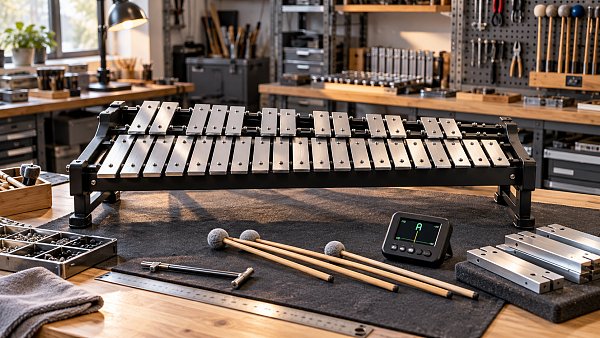
Ask the supplier to state its pitch reference, tuning tolerance in cents, and inspection method. A cent is a unit used to express small differences in pitch. The acceptable tolerance should reflect the application: an ensemble instrument may require a tighter specification than a basic classroom model. Do not assume every supplier measures in the same way or includes every bar in its inspection.
It is also worth asking when tuning is checked. A bar may behave differently when mounted than when tested separately, because the mounting system can affect vibration. Confirm whether the supplier checks the assembled instrument and whether the stated tolerance applies under the agreed inspection conditions.
Listen beyond the pitch reading
A tuner can support an objective inspection, but it cannot capture the entire playing experience. Compare samples using suitable mallets and, where possible, the same player and room. Listen for uneven volume, unexpectedly short or excessively long sustain, unwanted buzzing, and notes that sound markedly different from their neighbors.
Strike position and mallet hardness influence the result, so record the conditions used for evaluation. If the instruments will be used alongside other pitched instruments, test them in that context. A sound that seems acceptable on a desk may feel less balanced in a classroom ensemble or performance setting.
Construction details that affect service life
A glockenspiel’s bars, mounting points, and frame work together. A strong-looking exterior is not enough if bars shift during transport or contact the frame in ways that restrict vibration.
Ask for the bar material and finish, along with drawings or photographs showing how the bars are supported and secured. Metal bars should be checked for consistent finishing, sharp edges, and visible damage. Mounting components should hold the bars reliably without creating unnecessary rattles or choking their sound. On instruments intended for frequent movement, examine how easily parts can loosen and whether they can be replaced individually.
The frame deserves attention too. Check its stability on the intended surface, the security of fasteners, and whether corners and edges are suitable for the user group. For instruments supplied with stands, review height adjustment, locking mechanisms, and compatibility. A case or protective cover may add cost, but it can be worthwhile when instruments move between rooms or travel to rehearsals.
Buyer’s tip: Treat the approved sample as a reference, not a complete guarantee. Record its specification and agree how production units will be checked against it, especially if appearance, sound, or component design is important to the purchase.
Compare suppliers on more than the unit price
The lowest quoted price may be attractive when budgets are tight, but it can obscure important differences in scope. One supplier may include mallets and protective packaging; another may quote only the instrument. Delivery terms can shift freight, insurance, customs, and local handling responsibilities between buyer and seller.
Build a comparison using the same quantities and delivery assumptions for each offer. For repeat purchasing, also ask how long the quotation remains valid and what might trigger a price review. A low opening quote provides limited certainty if key accessories or foreseeable logistics costs remain unpriced.
Questions to ask a glockenspiel supplier before approval
A useful supplier assessment looks at the systems behind the sample. The following questions help distinguish a well-documented offer from one that leaves important decisions until after payment:
- Which processes do you control directly? Identify whether the supplier manufactures, assembles, or sources the bars and frames from other parties. This helps establish who can investigate a defect and authorize a change.
- How do you maintain consistency between batches? Ask about component specifications, tuning checks, inspection records, and the procedure for notifying buyers of material or design changes.
- Can you support the required order schedule? Request a production timeline that includes sample approval, manufacturing, inspection, packing, and dispatch—not just a stated factory lead time.
- How are instruments packed? Review individual and outer packaging, protection for bars and accessories, and any instructions for stacking or handling.
- What documentation is available? Depending on the destination and use, this may include product specifications, material information, test reports, and shipping documents. Verify that any claimed compliance applies to the specific product and market.
- What happens if the production order differs from the sample? Agree on acceptance criteria, reporting procedures, and remedies before placing the order.
For custom or private-label orders, add questions about artwork approval, minimum quantities, tooling or setup charges, and ownership of any custom design. Confirm whether replacement parts will remain compatible if the supplier changes a component later.
Turn after-sales support into written terms
After-sales support often becomes important at the least convenient moment: a bar is damaged shortly before a school term, or a distributor receives a customer complaint after the shipment has arrived. A reassuring conversation is helpful, but a written agreement makes responsibilities clearer.
Review the warranty period and its start date, along with exclusions for wear, misuse, transport damage, or unauthorized repairs. Ask whether a defective bar can be replaced on its own and how a replacement will be matched to the instrument’s model and tuning specification. If a replacement part is not practical, establish whether the remedy is repair, replacement of the instrument, credit, or another agreed solution.
Specify the contact channel, information needed to open a claim, expected response process, and who pays shipping costs. For international purchases, consider whether parts can be supplied locally or must cross a border. Even a modest component can become costly or slow to obtain when freight and import procedures are overlooked.
A practical path from sample to purchase order
Start with a shortlist based on the written specification and total quoted scope. Obtain comparable samples where feasible, then have both procurement and intended users inspect them. Document pitch checks, listening observations, finish, stability, accessory fit, and packaging condition. If the order is substantial, agree on an inspection plan for production units before dispatch, including sample selection, acceptance criteria, and how nonconformities will be handled.
Finally, make sure the purchase order reflects the decisions already made: product range, pitch reference, tuning tolerance, approved components, quantities, packing, delivery terms, inspection rights, and after-sales remedies. Attach or reference the approved specification and sample record so that neither side has to rely on memory.
The right choice is not necessarily the instrument with the most features or the cheapest quotation. It is the supplier whose product meets the players’ needs, whose production can be assessed, and whose support terms make the purchase manageable after delivery. For procurement professionals comparing international options, Global Commercial Trade offers sourcing-oriented industry content that can help frame those questions before supplier discussions begin.
Search News
Hot Articles
- Fashion & Gem JewelryShanwei Jewelry Conference Opens as Canton Fair Buyers Begin Sourcing TourNov 02, 2026
- Musical InstrumentsChoosing a Glockenspiel Supplier: Tuning, Quality and After-Sales SupportNov 02, 2026
- Fashion & Gem JewelryUS Tariffs on Indian Goods Reach 50%, Raising Jewelry Export ConcernsNov 01, 2026
Popular Tags
Need ExpertConsultation?
Connect with our specialized leisureengineering team for procurementstrategies.
Recommended News
 Nov 02, 2026Choosing a Glockenspiel Supplier: Tuning, Quality and After-Sales SupportChoosing a glockenspiel supplier? Learn how to compare tuning, build quality, pricing and after-sales support to make a confident purchasing decision.● Pro Audio Engineer
 Oct 31, 2026Buying Tenor Ukuleles Wholesale: How to Evaluate Suppliers and MOQsBuying tenor ukuleles wholesale? Learn how to evaluate suppliers, negotiate MOQs, compare landed costs, and secure consistent quality with less inventory risk.● Pro Audio Engineer
 Oct 28, 2026Music China 2026 Opens Tomorrow, With 800-Plus Events Connecting TradeMusic China 2026 runs October 28–31 in Shanghai with 800-plus events. Explore industry forums, business matchmaking and sourcing insights for musical instrument buyers and suppliers.● Pro Audio Engineer
 Oct 20, 2026Choosing a Classical Guitar Manufacturer in China: Quality Checks Before OrderingSearching for “classical guitars manufacturer China”? Discover essential checks for materials, playability, and factory quality control to reduce costly returns and order with confidence.● Pro Audio Engineer
 Oct 17, 2026Professional String Instruments: How to Evaluate Tone, Response, and ProjectionCompare professional string instruments with expert tips on tone, response, and projection. Learn practical tests to choose the right instrument for your performance needs.● Pro Audio Engineer
 Oct 21, 2026How Do You Assess a Musical Instrument Manufacturer’s Export Capability?Learn how to assess a musical instrument manufacturer export capability. Discover six key checks for quality, compliance, shipping, and support to reduce risks and source confidently.● Pro Audio Engineer
 Oct 15, 2026How Do You Choose Music Education Equipment for a New Campus?Learn how to choose music education equipment for a new campus with practical tips on curriculum fit, acoustics, suppliers, and ownership costs. Equip classrooms confidently and avoid costly mistakes.● Pro Audio Engineer
 Oct 10, 2026A Practical Guide to Identifying Wooden Orchestral Instruments by Family and ToneWooden orchestral instruments made simple: identify strings, flutes, clarinets, oboes, and bassoons by sound source, design, and tone.● Pro Audio Engineer
 Sep 11, 2026How to Choose Touring Instrument Cases for Flights, Trucks, and Daily Load-InsInstrument cases for touring: learn how to balance flight protection, truck durability, weight, fit, and serviceable hardware for safer, faster load-ins.● Pro Audio Engineer
 Sep 07, 2026How to Choose Wood Frame Tambourines for Sound Quality and Long-Term UseWood frame tambourines: learn how to compare frame construction, jingle tone, head options, durability, and supplier quality for reliable long-term performance.● Pro Audio Engineer
 Sep 05, 2026How Often Should Music Education Equipment Be Serviced?How often should music education equipment be serviced? Explore practical schedules, maintenance tips, and lifecycle planning to keep instruments and audio systems reliable.● Pro Audio Engineer
 Aug 21, 2026How to Choose Marching Band Drums for Sound Projection, Weight, and DurabilityMarching band drums buying guide: learn how to balance sound projection, weight, and durability for better field performance, easier carrying, and longer-lasting value.● Pro Audio Engineer
 Aug 09, 2026How to Evaluate a MIDI Cable Manufacturer for Audio Quality and OEM ReliabilityMIDI cable manufacturer evaluation guide: learn how to assess signal stability, connector quality, OEM process control, and batch consistency to reduce failures and source with confidence.● Pro Audio Engineer
 Aug 08, 2026How to Evaluate a Trumpets OEM Manufacturer for Quality, MOQ, and Custom DesignTrumpets OEM manufacturer selection starts with quality, MOQ, and custom design control. Learn how to compare suppliers, reduce sourcing risk, and choose a reliable long-term factory partner.● Pro Audio Engineer
 Jul 27, 2026How to Source Conga Drums in Bulk for Schools, Bands, and Event ProgramsConga drums bulk sourcing for schools, bands, and event programs made easier. Learn how to compare quality, durability, compliance, and total cost before you place a large order.● Pro Audio Engineer
 Jul 24, 2026How to Choose Low Dust Violin Rosin for Cleaner Practice and Better Bow ControlLow dust violin rosin buying guide: learn how to compare formula, climate fit, grip, and string compatibility for cleaner practice, better bow control, and smarter purchase decisions.● Pro Audio Engineer
 Jul 15, 2026Plastic Tambourines Bulk Buying Guide: Sizes, Materials, and MOQ QuestionsPlastic tambourines bulk buying guide covering sizes, ABS vs PP materials, sound consistency, customization, and MOQ questions to help buyers cut risk and choose the right supplier.● Pro Audio Engineer
 Jul 13, 2026Acoustic Guitars Wholesale China: How to Evaluate Build Quality and OEM OptionsAcoustic guitars wholesale China guide: learn how to assess build quality, factory consistency, and OEM options to choose reliable suppliers and reduce sourcing risk.● Pro Audio Engineer
 Jul 12, 2026Mini Effect Pedals Wholesale: MOQ, OEM Options, Testing, and Supplier ComparisonMini effect pedals wholesale guide covering MOQ, OEM options, testing standards, and supplier comparison to help buyers reduce risk, improve margins, and choose reliable partners.● Pro Audio Engineer
 Jul 11, 2026DJ Turntables OEM Guide: Key Torque, Drive, and Build Specs to CompareDJ turntables OEM guide covering torque, drive type, speed stability, platter build, and manufacturing consistency. Compare the specs that impact performance, reliability, and sourcing confidence.● Pro Audio Engineer
 Jul 08, 2026Guitar Capos Wholesale: What Materials, Clamp Types, and MOQ Terms Should You Compare?Guitar capos wholesale buying starts with more than price. Compare materials, clamp types, quality checks, and MOQ terms to reduce returns, protect margins, and choose a supplier with confidence.● Pro Audio Engineer
 Jul 07, 2026Birch Drum Kits Manufacturer Comparison: Shell Construction, Hardware Quality, and OEM OptionsBirch drum kits manufacturer comparison covering shell construction, hardware quality, and OEM options to help buyers reduce sourcing risk and choose reliable suppliers.● Pro Audio Engineer
 Jul 06, 2026Spruce Top Acoustic Guitars Explained: Tone, Wood Grades, and Who They Suit BestSpruce top acoustic guitars explained: compare tone, wood grades, and build quality to find the best fit for players, retailers, and commercial buyers.● Pro Audio Engineer
 Jun 30, 2026Xylophones and Glockenspiels: Key Differences in Range, Tone, and Classroom UseXylophones and glockenspiels compared: discover key differences in range, tone, durability, and classroom use to choose the right instrument for teaching, buying, or school programs.● Pro Audio Engineer