Spruce Top Acoustic Guitars Explained: Tone, Wood Grades, and Who They Suit Best
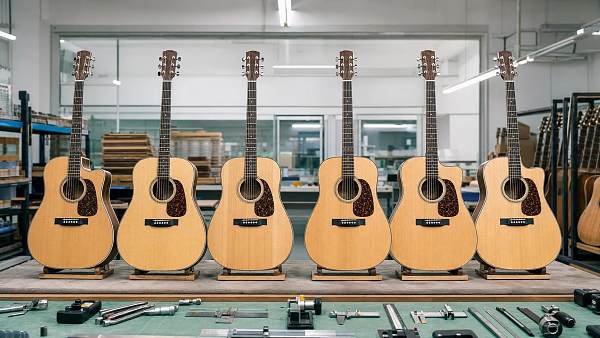
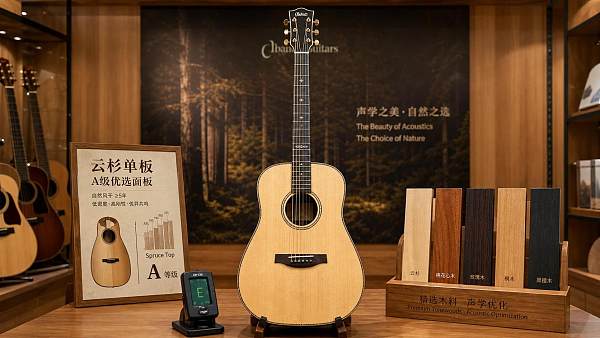
Spruce top acoustic guitars sit at the center of the acoustic market for a reason. They offer the clarity, projection, and range that suit solo practice, stage use, studio recording, and retail display. Yet the phrase covers a wide spread of instruments. Species, cut, grading, and factory execution all shape the result, which makes careful reading essential for anyone comparing options across consumer and commercial channels.
That matters even more in a sourcing environment shaped by premiumization. In music retail, hospitality venues, leisure spaces, and branded commercial experiences, the guitar is not only a product. It is also part of sound design, visual merchandising, and long-term asset quality. This is where spruce top acoustic guitars deserve a closer look beyond the usual shorthand of “bright” or “versatile.”
Why spruce remains the reference top wood
The top, or soundboard, does most of the acoustic work in a guitar. It converts string energy into audible movement. Spruce has long been favored because it balances stiffness and lightness unusually well.
In practical terms, that balance creates fast response, strong note separation, and healthy headroom. A player can pick softly and still hear detail, then dig in harder without the sound collapsing too quickly.
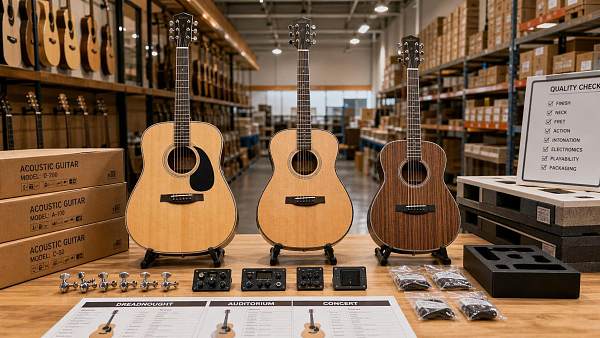
For this reason, spruce top acoustic guitars appear across many body sizes and price tiers. They work well in dreadnoughts for strumming, OM shapes for fingerstyle, and stage-friendly cutaways for amplified use.
Tone is not one sound
A common mistake is treating spruce as a single tone profile. In reality, different spruce species react differently, and the final voice also depends on bracing, body design, finish thickness, and the back-and-side woods.
Sitka spruce
Sitka is the most widely used option. It usually delivers a balanced mix of brightness, warmth, and dynamic range. Many all-purpose spruce top acoustic guitars use Sitka because it performs reliably across playing styles.
Engelmann spruce
Engelmann often feels slightly more open and responsive under a lighter touch. It is frequently associated with a softer attack and more immediate nuance, which appeals to fingerstyle-focused designs.
Adirondack spruce
Adirondack, or red spruce, is known for high headroom and strong projection. It can sound tighter when new, then develop into a very powerful top. This makes it popular in higher-end bluegrass, flatpicking, and heritage builds.
European spruce
European spruce is often found in more traditional or boutique instruments. It tends to be described as refined, articulate, and harmonically rich, especially in lightly built guitars.
Simple labels still help, but they should stay provisional. Two spruce top acoustic guitars made from the same species can sound notably different if one is heavily finished, overbuilt, or poorly braced.
What wood grades actually tell you
Wood grading creates confusion because it mixes visual standards with performance assumptions. In most cases, grade is not a universal industry certification. It is a supplier or manufacturer classification.
Higher grades usually indicate cleaner visual appearance. That may include straighter grain, tighter consistency, fewer visible defects, and better color matching on bookmatched tops. Those traits matter, but they are not the whole story.
A visually perfect top is not automatically the best sounding top. Tap response, stiffness, cut orientation, moisture control, and build quality often influence tone more than cosmetic rank alone.
In business terms, grade should be read together with consistency controls. A dependable production run matters more than one attractive sample. This is especially relevant in the broader sourcing framework used by Global Commercial Trade, where commercial buyers evaluate durability, finish repeatability, and specification honesty alongside appearance.
How build quality changes the outcome
Spruce is revealing. It responds quickly, which is a strength, but it also exposes weak construction. A thin, responsive top can sound excellent when bracing is tuned well. It can also sound harsh or lifeless if the build is careless.
Several details deserve attention when evaluating spruce top acoustic guitars:
- Top thickness and brace shaping, which affect volume and sensitivity.
- Finish application, since heavy coatings can damp vibration.
- Humidity control during manufacturing and storage.
- Bridge fit, neck angle, and saddle work, which influence transfer and playability.
- Pickup integration on stage models, where acoustic tone and amplified tone must both remain credible.
This is why broad sourcing decisions should not stop at wood species. In pro audio and musical instrument channels, specification sheets are useful, but sample evaluation and production consistency remain decisive.
Who spruce top acoustic guitars suit best
Spruce works for many users, but not always for the same reason. Matching the guitar to the real use case is more helpful than chasing a generic premium label.
For developing players
Sitka-based spruce top acoustic guitars often make sense here. They are versatile, widely available, and usually easier to compare across price bands. Their clear response also helps reveal technique changes.
For live performance
Projection and articulation matter on stage. Spruce tends to cut through well, especially when paired with stable electronics. In hospitality or leisure venues, that balance supports both intimate sets and busier environments.
For recording and arrangement work
The fast attack of spruce records cleanly. It can leave room in a mix, especially for strummed parts and layered acoustics. Engineers often value the note definition that spruce top acoustic guitars bring to dense arrangements.
For collectors and premium retail displays
Higher-grade Adirondack, European, or visually matched Sitka tops appeal here. The value comes from a combination of tone potential, craftsmanship, finish detail, and provenance rather than species name alone.
Commercial relevance beyond the individual player
In a general industry context, acoustic guitars now appear in more places than music stores. Boutique hotels, premium lounges, education spaces, themed leisure venues, and branded event environments increasingly integrate instruments into the guest experience.
That shift explains why sourcing discussions have expanded. A spruce top guitar may need to satisfy musical standards, visual standards, and operational standards at the same time. Reliability, serviceability, and finish durability become part of the value equation.
For a platform such as GCT, this wider lens is important. The instrument category is no longer isolated from commercial design or procurement intelligence. It belongs inside the same decision framework used for other experience-driven assets: verify quality, confirm compliance, assess consistency, and compare long-term use conditions.
A practical way to compare options
When comparing spruce top acoustic guitars, it helps to move from labels to evidence. A clear shortlist usually comes from disciplined comparison rather than brand mythology.
- Check the spruce species, but also the body shape and bracing pattern.
- Ask whether the top is solid spruce or laminate, since that changes performance and value.
- Review grade claims carefully and separate cosmetic language from acoustic evidence.
- Listen for headroom, sustain, note separation, and balance across registers.
- Inspect finish thickness, fretwork, setup accuracy, and humidity-related stability.
- For multi-unit sourcing, confirm production consistency, packaging quality, and after-sales support.
That last point often gets missed. One excellent sample does not guarantee a dependable batch. For commercial deployment, repeatability matters as much as first impression tone.
Where to focus next
Spruce top acoustic guitars remain a strong reference choice because they cover an unusually wide range of needs without losing musical credibility. Still, the best result comes from reading the full build, not the headline wood alone.
The most useful next step is to define the actual context: casual use, stage work, recording, premium retail, or commercial installation. From there, compare spruce species, top construction, grade language, and manufacturing consistency against that purpose. That approach turns a familiar category into a much more reliable decision.
Search News
Hot Articles
- Restaurant FurnitureFast-Casual Restaurant Interiors: Design Choices That Improve Speed and Guest FlowOct 04, 2026
- Outdoor RidesHow to Select Leisure Park Equipment for Safe, High-Throughput Visitor AreasOct 03, 2026
- Fashion & Gem JewelryDiamond Tester Wholesale: How to Vet Accuracy, Calibration, and MOQ Before OrderingOct 02, 2026
Popular Tags
Need ExpertConsultation?
Connect with our specialized leisureengineering team for procurementstrategies.
Recommended News
 Sep 11, 2026How to Choose Touring Instrument Cases for Flights, Trucks, and Daily Load-InsInstrument cases for touring: learn how to balance flight protection, truck durability, weight, fit, and serviceable hardware for safer, faster load-ins.● Pro Audio Engineer
 Sep 07, 2026How to Choose Wood Frame Tambourines for Sound Quality and Long-Term UseWood frame tambourines: learn how to compare frame construction, jingle tone, head options, durability, and supplier quality for reliable long-term performance.● Pro Audio Engineer
 Sep 05, 2026How Often Should Music Education Equipment Be Serviced?How often should music education equipment be serviced? Explore practical schedules, maintenance tips, and lifecycle planning to keep instruments and audio systems reliable.● Pro Audio Engineer
 Aug 21, 2026How to Choose Marching Band Drums for Sound Projection, Weight, and DurabilityMarching band drums buying guide: learn how to balance sound projection, weight, and durability for better field performance, easier carrying, and longer-lasting value.● Pro Audio Engineer
 Aug 09, 2026How to Evaluate a MIDI Cable Manufacturer for Audio Quality and OEM ReliabilityMIDI cable manufacturer evaluation guide: learn how to assess signal stability, connector quality, OEM process control, and batch consistency to reduce failures and source with confidence.● Pro Audio Engineer
 Aug 08, 2026How to Evaluate a Trumpets OEM Manufacturer for Quality, MOQ, and Custom DesignTrumpets OEM manufacturer selection starts with quality, MOQ, and custom design control. Learn how to compare suppliers, reduce sourcing risk, and choose a reliable long-term factory partner.● Pro Audio Engineer
 Jul 27, 2026How to Source Conga Drums in Bulk for Schools, Bands, and Event ProgramsConga drums bulk sourcing for schools, bands, and event programs made easier. Learn how to compare quality, durability, compliance, and total cost before you place a large order.● Pro Audio Engineer
 Jul 24, 2026How to Choose Low Dust Violin Rosin for Cleaner Practice and Better Bow ControlLow dust violin rosin buying guide: learn how to compare formula, climate fit, grip, and string compatibility for cleaner practice, better bow control, and smarter purchase decisions.● Pro Audio Engineer
 Jul 15, 2026Plastic Tambourines Bulk Buying Guide: Sizes, Materials, and MOQ QuestionsPlastic tambourines bulk buying guide covering sizes, ABS vs PP materials, sound consistency, customization, and MOQ questions to help buyers cut risk and choose the right supplier.● Pro Audio Engineer
 Jul 13, 2026Acoustic Guitars Wholesale China: How to Evaluate Build Quality and OEM OptionsAcoustic guitars wholesale China guide: learn how to assess build quality, factory consistency, and OEM options to choose reliable suppliers and reduce sourcing risk.● Pro Audio Engineer
 Jul 12, 2026Mini Effect Pedals Wholesale: MOQ, OEM Options, Testing, and Supplier ComparisonMini effect pedals wholesale guide covering MOQ, OEM options, testing standards, and supplier comparison to help buyers reduce risk, improve margins, and choose reliable partners.● Pro Audio Engineer
 Jul 11, 2026DJ Turntables OEM Guide: Key Torque, Drive, and Build Specs to CompareDJ turntables OEM guide covering torque, drive type, speed stability, platter build, and manufacturing consistency. Compare the specs that impact performance, reliability, and sourcing confidence.● Pro Audio Engineer
 Jul 08, 2026Guitar Capos Wholesale: What Materials, Clamp Types, and MOQ Terms Should You Compare?Guitar capos wholesale buying starts with more than price. Compare materials, clamp types, quality checks, and MOQ terms to reduce returns, protect margins, and choose a supplier with confidence.● Pro Audio Engineer
 Jul 07, 2026Birch Drum Kits Manufacturer Comparison: Shell Construction, Hardware Quality, and OEM OptionsBirch drum kits manufacturer comparison covering shell construction, hardware quality, and OEM options to help buyers reduce sourcing risk and choose reliable suppliers.● Pro Audio Engineer
 Jul 06, 2026Spruce Top Acoustic Guitars Explained: Tone, Wood Grades, and Who They Suit BestSpruce top acoustic guitars explained: compare tone, wood grades, and build quality to find the best fit for players, retailers, and commercial buyers.● Pro Audio Engineer
 Jun 30, 2026Xylophones and Glockenspiels: Key Differences in Range, Tone, and Classroom UseXylophones and glockenspiels compared: discover key differences in range, tone, durability, and classroom use to choose the right instrument for teaching, buying, or school programs.● Pro Audio Engineer
 Jun 25, 2026Musical Instrument Industry Report: Key Market Segments, Demand Drivers, and Price TrendsMusical instrument industry report covering key market segments, demand drivers, and price trends. Explore sourcing risks, premium growth, and where buyer demand is shifting next.● Pro Audio Engineer
 Jun 23, 2026Metronomes and Tuners Explained: Types, Key Features, and Who Needs BothMetronomes and tuners explained: compare types, key features, and who needs both. Learn how to choose the right tool for better timing, pitch, and practical daily use.● Pro Audio Engineer
 Jun 22, 2026How the Musical Instrument Industry Supply Chain Affects Lead Times, Cost, and QualityMusical instrument industry supply chain trends now shape lead times, cost, and quality. Discover how smarter sourcing and supplier transparency reduce risk and improve buying outcomes.● Pro Audio Engineer
 Jun 20, 2026DJ Headphones Wholesale Buying Guide: OEM Options, MOQ, and Audio Specs to CompareDJ headphones wholesale guide covering OEM options, MOQ strategy, and key audio specs. Compare build quality, compliance, and total cost to source smarter and reduce returns.● Pro Audio Engineer
 Jun 19, 2026Acoustic Guitars Wholesale: 7 Specs Buyers Should Compare Before Placing an OrderAcoustic guitars wholesale buyers can compare 7 key specs before ordering, from tonewoods and playability to OEM, packaging, and QC, to reduce risk and protect margins.● Pro Audio Engineer
 Jun 15, 2026Tambourines Bulk Buying Guide: Materials, Sound Quality, and Pack Size DifferencesTambourines bulk buying guide covering material choices, sound consistency, and pack size differences. Compare suppliers smarter, reduce risk, and choose the best fit for schools, retail, and events.● Pro Audio Engineer
 Jun 14, 2026Professional Musical Instruments Explained: Types, Skill Levels, and Buying CriteriaProfessional musical instruments explained: discover key types, ideal skill levels, and practical buying criteria to choose reliable, high-performance instruments with confidence.● Pro Audio Engineer
 Jun 10, 2026Drum Kits Manufacturer Comparison: What to Check Before OEM or Bulk OrdersDrum kits manufacturer comparison guide for OEM and bulk buyers: check quality, compliance, lead times, packaging, and true cost before placing large orders.● Pro Audio Engineer