Vietnam Tightens Import Filing for Musical Instruments
Vietnam’s Ministry of Industry and Trade (MOIT) has set a new compliance requirement for musical instrument imports, with effect from July 1, 2026. Under the new rule, import declarations must be accompanied by a full electronic bill of materials and a scannable origin-traceability QR code linked to Vietnam’s national traceability platform. This is worth close attention for importers, manufacturers supplying the Vietnam market, customs-facing service providers, and procurement teams because the immediate consequence of incomplete filings is not abstract: shipments may be moved into 100% manual inspection, adding an estimated 5–7 working days to customs clearance.
What the new filing rule requires
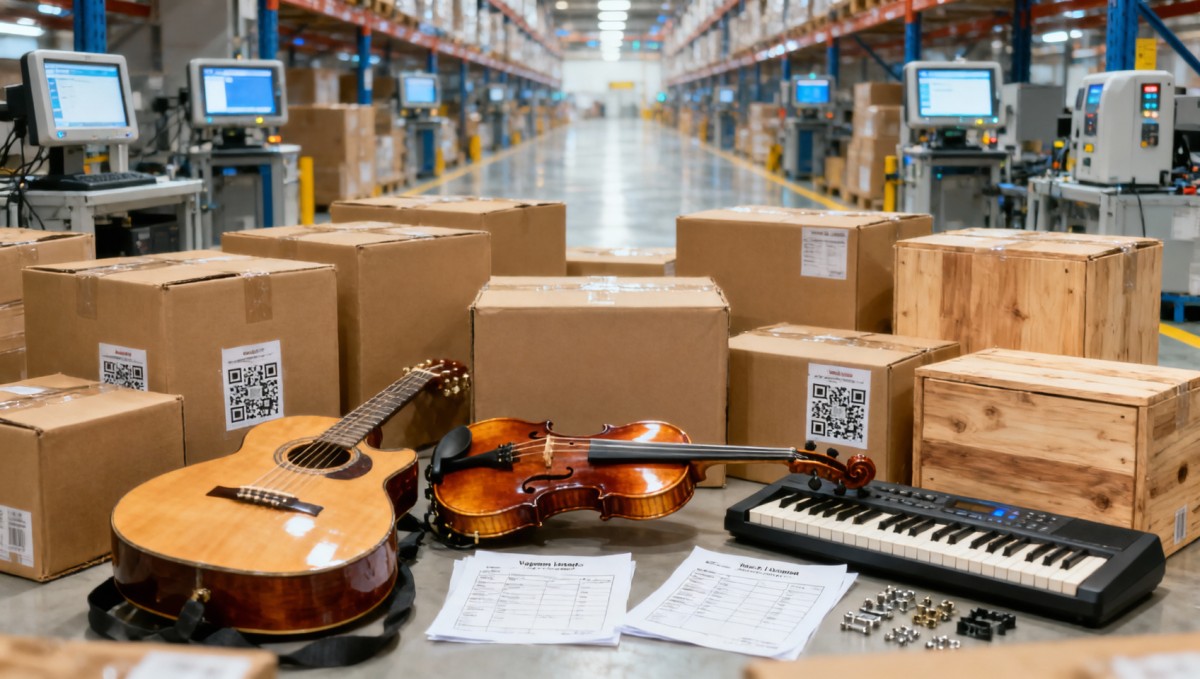
According to the provided information, MOIT issued Circular No. 18/2026/TT-BCT on June 5, 2026. The circular requires that, from July 1, 2026, all customs declarations for imported musical instruments must include an electronic BOM listing all components, together with each component’s HS code, country of origin, and weight share.
The same filing must also include a scannable QR code for traceability, and that code must be linked to Vietnam’s national traceability platform. The provided information also states that documents failing to meet the requirement will trigger 100% manual inspection, extending customs clearance time by 5–7 working days.
Where the pressure is likely to appear first
Importers and trading companies face a documentation bottleneck
From an industry perspective, the most direct impact is on importers handling customs declarations for musical instruments. Their exposure is immediate because the rule applies at the filing stage, and incomplete supporting documents can directly slow release timing. What deserves closer attention is whether existing product files are detailed enough to support a complete component-level BOM rather than a simplified commercial description.
Upstream manufacturers may need deeper data disclosure
Analysis shows that overseas manufacturers supplying Vietnam could also be affected, even when they are not the party filing the declaration. If importers now need full component HS codes, origin data, and weight proportions, suppliers may face new requests for structured product data that goes beyond ordinary packing or invoice documentation. The pressure point is not only data availability, but also whether that data can be delivered in a format that supports electronic customs filing and traceability linkage.
Customs brokers and supply chain service providers will need tighter execution
For customs brokers, freight coordinators, and related service providers, the operational risk centers on document completeness and pre-clearance review. Observably, any gap between supplier data, importer declarations, and traceability code preparation could translate into manual inspection exposure. The issue is less about broad policy interpretation and more about whether filing workflows can reliably capture all required fields before goods arrive or are declared.
Procurement and delivery teams may need to revisit lead-time assumptions
Buyers and commercial teams involved in deliveries into Vietnam may also need to reassess timing assumptions. The provided information makes clear that non-compliant documents can extend clearance by 5–7 working days. Analysis shows that this matters most for orders with tight delivery windows, launch schedules, or contract milestones tied closely to import clearance dates.
What companies should watch now
Check whether product data can support a full BOM submission
A practical priority is to confirm whether current internal records can produce a BOM that covers all components, their HS codes, country of origin, and weight share. For some businesses, the main issue may not be the existence of this information, but whether it is centrally maintained, current, and aligned across procurement, compliance, and logistics teams.
Clarify readiness for traceability QR code linkage
Companies should also pay close attention to the traceability side of the requirement. The rule, as provided, links the QR code to Vietnam’s national traceability platform, so businesses involved in filing or document preparation will need to distinguish between having a generic product QR code and having a code that satisfies the stated platform-linkage requirement.
Separate legal text from day-to-day execution risk
What deserves closer attention is the difference between a rule being formally issued and a company being operationally ready to comply. Even when the obligation is clear, the practical challenge often lies in collecting component-level data from suppliers, validating origin details, and making sure filing teams are working from the same version of the product record.
Prepare customer and shipment contingency plans
Analysis shows that the stated 5–7 working day delay for non-compliant documents makes contingency planning a near-term issue. Importers and supply chain teams may need to identify shipments most exposed to timing sensitivity and prepare communications with customers or downstream partners where clearance delays would affect delivery commitments.
Why this matters beyond a single filing change
Observably, this update is not just about adding one more customs document. It points to a tighter connection between import compliance, component-level transparency, and digital traceability in the musical instruments segment entering Vietnam. That said, based on the provided information alone, it is more appropriate to understand this as an immediate compliance change with broader policy implications still requiring observation, rather than as a fully developed long-term market conclusion.
Analysis also suggests that the most important near-term signal is enforcement design: incomplete filings do not simply remain deficient on paper, but may be redirected into full manual inspection. For industry participants, that shifts the discussion from regulatory awareness to document readiness and process discipline.
How the market may need to read this update
At this stage, the update is best understood as a concrete operational rule change with direct consequences for customs timing in musical instrument imports into Vietnam. The confirmed facts already justify action by importers, suppliers, and customs-facing service providers, especially where shipment schedules depend on predictable clearance.
At the same time, a neutral reading is still important. The provided information confirms the filing requirements and the consequence of non-compliance, but it does not by itself establish how broadly business practices across the sector will change over the longer term. For that reason, this remains both a short-term compliance development and a policy signal worth continued monitoring.
Basis of this article and points for follow-up
This article is generated based on the user-provided news title, event date, and event summary concerning Vietnam’s new import filing rule for musical instruments. Information of this type is commonly cross-checked against official notices, company disclosures, industry association updates, authoritative media coverage, and standard-setting or regulatory documents.
No specific official source link was provided in the input, so the exact official publication link still needs ongoing verification. For follow-up observation, the most relevant areas are any further official clarification on filing practice, implementation details for traceability linkage, and any subsequent guidance affecting customs execution for musical instrument imports.
Search News
Hot Articles
- Outdoor RidesEnergylandia Announces Rokan, Set to Be Europe’s Tallest and Longest B&M Wing CoasterOct 20, 2026
- Musical InstrumentsChoosing a Classical Guitar Manufacturer in China: Quality Checks Before OrderingOct 20, 2026
- Stationery & UniformsChoosing a Wholesale Chef Coat Supplier: MOQs, Samples, and Lead TimesOct 19, 2026
Popular Tags
Need ExpertConsultation?
Connect with our specialized leisureengineering team for procurementstrategies.
Recommended News
 Oct 20, 2026Choosing a Classical Guitar Manufacturer in China: Quality Checks Before OrderingSearching for “classical guitars manufacturer China”? Discover essential checks for materials, playability, and factory quality control to reduce costly returns and order with confidence.● Pro Audio Engineer
 Oct 17, 2026Professional String Instruments: How to Evaluate Tone, Response, and ProjectionCompare professional string instruments with expert tips on tone, response, and projection. Learn practical tests to choose the right instrument for your performance needs.● Pro Audio Engineer
 Oct 15, 2026How Do You Choose Music Education Equipment for a New Campus?Learn how to choose music education equipment for a new campus with practical tips on curriculum fit, acoustics, suppliers, and ownership costs. Equip classrooms confidently and avoid costly mistakes.● Pro Audio Engineer
 Oct 10, 2026A Practical Guide to Identifying Wooden Orchestral Instruments by Family and ToneWooden orchestral instruments made simple: identify strings, flutes, clarinets, oboes, and bassoons by sound source, design, and tone.● Pro Audio Engineer
 Sep 11, 2026How to Choose Touring Instrument Cases for Flights, Trucks, and Daily Load-InsInstrument cases for touring: learn how to balance flight protection, truck durability, weight, fit, and serviceable hardware for safer, faster load-ins.● Pro Audio Engineer
 Sep 07, 2026How to Choose Wood Frame Tambourines for Sound Quality and Long-Term UseWood frame tambourines: learn how to compare frame construction, jingle tone, head options, durability, and supplier quality for reliable long-term performance.● Pro Audio Engineer
 Sep 05, 2026How Often Should Music Education Equipment Be Serviced?How often should music education equipment be serviced? Explore practical schedules, maintenance tips, and lifecycle planning to keep instruments and audio systems reliable.● Pro Audio Engineer
 Aug 21, 2026How to Choose Marching Band Drums for Sound Projection, Weight, and DurabilityMarching band drums buying guide: learn how to balance sound projection, weight, and durability for better field performance, easier carrying, and longer-lasting value.● Pro Audio Engineer
 Aug 09, 2026How to Evaluate a MIDI Cable Manufacturer for Audio Quality and OEM ReliabilityMIDI cable manufacturer evaluation guide: learn how to assess signal stability, connector quality, OEM process control, and batch consistency to reduce failures and source with confidence.● Pro Audio Engineer
 Aug 08, 2026How to Evaluate a Trumpets OEM Manufacturer for Quality, MOQ, and Custom DesignTrumpets OEM manufacturer selection starts with quality, MOQ, and custom design control. Learn how to compare suppliers, reduce sourcing risk, and choose a reliable long-term factory partner.● Pro Audio Engineer
 Jul 27, 2026How to Source Conga Drums in Bulk for Schools, Bands, and Event ProgramsConga drums bulk sourcing for schools, bands, and event programs made easier. Learn how to compare quality, durability, compliance, and total cost before you place a large order.● Pro Audio Engineer
 Jul 24, 2026How to Choose Low Dust Violin Rosin for Cleaner Practice and Better Bow ControlLow dust violin rosin buying guide: learn how to compare formula, climate fit, grip, and string compatibility for cleaner practice, better bow control, and smarter purchase decisions.● Pro Audio Engineer
 Jul 15, 2026Plastic Tambourines Bulk Buying Guide: Sizes, Materials, and MOQ QuestionsPlastic tambourines bulk buying guide covering sizes, ABS vs PP materials, sound consistency, customization, and MOQ questions to help buyers cut risk and choose the right supplier.● Pro Audio Engineer
 Jul 13, 2026Acoustic Guitars Wholesale China: How to Evaluate Build Quality and OEM OptionsAcoustic guitars wholesale China guide: learn how to assess build quality, factory consistency, and OEM options to choose reliable suppliers and reduce sourcing risk.● Pro Audio Engineer
 Jul 12, 2026Mini Effect Pedals Wholesale: MOQ, OEM Options, Testing, and Supplier ComparisonMini effect pedals wholesale guide covering MOQ, OEM options, testing standards, and supplier comparison to help buyers reduce risk, improve margins, and choose reliable partners.● Pro Audio Engineer
 Jul 11, 2026DJ Turntables OEM Guide: Key Torque, Drive, and Build Specs to CompareDJ turntables OEM guide covering torque, drive type, speed stability, platter build, and manufacturing consistency. Compare the specs that impact performance, reliability, and sourcing confidence.● Pro Audio Engineer
 Jul 08, 2026Guitar Capos Wholesale: What Materials, Clamp Types, and MOQ Terms Should You Compare?Guitar capos wholesale buying starts with more than price. Compare materials, clamp types, quality checks, and MOQ terms to reduce returns, protect margins, and choose a supplier with confidence.● Pro Audio Engineer
 Jul 07, 2026Birch Drum Kits Manufacturer Comparison: Shell Construction, Hardware Quality, and OEM OptionsBirch drum kits manufacturer comparison covering shell construction, hardware quality, and OEM options to help buyers reduce sourcing risk and choose reliable suppliers.● Pro Audio Engineer
 Jul 06, 2026Spruce Top Acoustic Guitars Explained: Tone, Wood Grades, and Who They Suit BestSpruce top acoustic guitars explained: compare tone, wood grades, and build quality to find the best fit for players, retailers, and commercial buyers.● Pro Audio Engineer
 Jun 30, 2026Xylophones and Glockenspiels: Key Differences in Range, Tone, and Classroom UseXylophones and glockenspiels compared: discover key differences in range, tone, durability, and classroom use to choose the right instrument for teaching, buying, or school programs.● Pro Audio Engineer
 Jun 25, 2026Musical Instrument Industry Report: Key Market Segments, Demand Drivers, and Price TrendsMusical instrument industry report covering key market segments, demand drivers, and price trends. Explore sourcing risks, premium growth, and where buyer demand is shifting next.● Pro Audio Engineer
 Jun 23, 2026Metronomes and Tuners Explained: Types, Key Features, and Who Needs BothMetronomes and tuners explained: compare types, key features, and who needs both. Learn how to choose the right tool for better timing, pitch, and practical daily use.● Pro Audio Engineer
 Jun 22, 2026How the Musical Instrument Industry Supply Chain Affects Lead Times, Cost, and QualityMusical instrument industry supply chain trends now shape lead times, cost, and quality. Discover how smarter sourcing and supplier transparency reduce risk and improve buying outcomes.● Pro Audio Engineer
 Jun 20, 2026DJ Headphones Wholesale Buying Guide: OEM Options, MOQ, and Audio Specs to CompareDJ headphones wholesale guide covering OEM options, MOQ strategy, and key audio specs. Compare build quality, compliance, and total cost to source smarter and reduce returns.● Pro Audio Engineer