Guitar Capos Wholesale: What Materials, Clamp Types, and MOQ Terms Should You Compare?
What matters most when comparing guitar capos wholesale offers?
A low quoted price rarely tells the full story in guitar capos wholesale decisions. The real comparison starts with durability, clamp consistency, finish quality, packaging control, and reorder stability.
In practical sourcing, a capo is a small accessory with visible quality signals. Players notice spring tension, rubber fit, paint defects, and tuning stability almost immediately.
That is why bulk buying should focus on total commercial performance, not just ex-factory cost. A cheaper unit can create higher return rates, weak reviews, and more difficult inventory turnover.
Within the pro audio and musical instruments segment, product selection usually sits between retail presentation and real playing function. GCT-style sourcing analysis often treats this category as both a merchandising item and a use-sensitive tool.
A useful starting question is simple: will this capo hold tuning, survive repeated use, and arrive with consistent cosmetic quality across batches? If the answer is uncertain, the quoted MOQ becomes less attractive.
Which materials actually affect capo quality, and which ones are mostly marketing?
Most guitar capos wholesale listings mention zinc alloy, aluminum alloy, stainless steel parts, silicone, and rubber. Not all of these terms carry equal decision value.
For the frame, aluminum alloy usually supports lighter weight and cleaner retail appeal. Zinc alloy often feels more substantial, but weight alone does not guarantee better performance.
What matters more is casting accuracy, hinge construction, and surface finishing. A poorly made zinc capo can perform worse than a well-machined aluminum one.
The contact pad deserves closer attention than many buyers expect. Silicone and rubber compounds affect grip, fretboard protection, and long-term compression resistance.
If the pad hardens too quickly, the capo may buzz or apply uneven pressure. If it is too soft, tuning can drift because the string force becomes inconsistent.
Spring material also matters. Many products mention steel springs, but buyers should confirm fatigue testing rather than accept a generic specification line.
A helpful material comparison looks like this:
So, in guitar capos wholesale evaluation, materials should be judged by functional outcome, not by spec-sheet language alone.
Spring, screw, or trigger clamp: which capo type fits the order better?
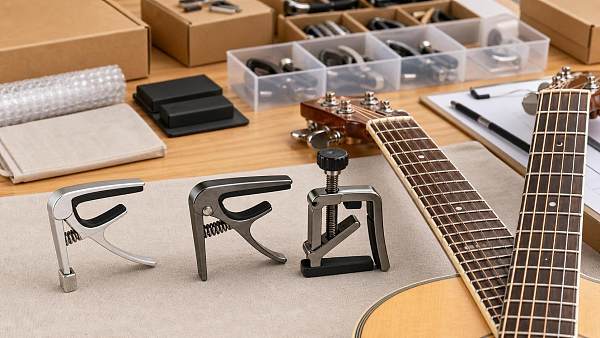
Clamp style changes both user experience and commercial positioning. This is one of the most important comparisons in guitar capos wholesale sourcing.
Spring capos are the most common for broad retail programs. They are fast to use, easy to explain, and usually work well for impulse or entry-level accessory sales.
Their weakness is consistency. If spring force is too high, tuning shifts become more likely. If too low, the strings may not press evenly across the fretboard.
Screw-adjustable models allow more precise pressure control. These often fit players who care about intonation and want compatibility across different neck profiles.
The tradeoff is convenience. They take longer to position and may be less appealing in fast-moving retail environments.
Trigger-style or quick-release hybrids sit in the middle. They can look more premium, but hinge quality becomes critical. Any looseness in the mechanism is quickly noticed.
- Choose spring types for volume programs, simple packaging, and broad price-point coverage.
- Choose screw-adjustable models for specialty channels and better tuning control.
- Choose premium trigger designs when visual finish and brand presentation matter as much as function.
A common sourcing mistake is treating all clamp styles as interchangeable. They are not. The right choice depends on end-market expectations and acceptable return risk.
How should MOQ terms be read beyond the headline number?
MOQ is often presented as a simple quantity, but guitar capos wholesale terms usually hide several layers. The headline MOQ may only apply to a standard finish and blank packaging.
Once color options, logo engraving, barcode labels, gift boxes, or mixed models are added, the effective MOQ can rise quickly. This changes landed cost and inventory planning.
Another point worth checking is whether MOQ is per model, per color, per logo, or per shipment. These are very different commercial conditions.
In actual negotiations, it helps to separate three questions: what is the MOQ for production, what is the MOQ for customization, and what is the MOQ for repeat orders?
Suppliers with flexible reorder terms may be more valuable than those offering a low first-order price. Replenishment efficiency often shapes margin more than the opening quote.
Use this checklist when comparing MOQ terms:
- Standard MOQ versus OEM or ODM MOQ
- Mixed-color allowance within one order
- Packaging MOQ for printed boxes or inserts
- Tooling or sample charges for logo work
- Lower MOQ availability for repeat production
- Lead time difference between stock and custom orders
This is where a sourcing hub such as GCT becomes useful. The value is not in listing suppliers alone, but in framing the terms that influence long-run supply reliability.
What quality checks reduce returns before a bulk order is placed?
With guitar capos wholesale orders, pre-shipment quality control should focus on performance defects that customers notice immediately. Cosmetic checks matter, but function matters first.
A sensible sample review includes real instrument testing. The capo should clamp cleanly across several fret positions without obvious buzz or major tuning shift.
It is also worth checking neck compatibility. Some low-cost capos work on standard acoustic necks but perform poorly on electric guitars or wider fretboards.
Surface inspection should cover paint uniformity, sharp edges, logo placement, pad bonding, and packaging fit. Small defects become large issues in gift-oriented or premium accessory channels.
For better comparison, many buyers build a short acceptance table before approval:
These checks are especially important when capos are sold under private label. Brand damage from a low-value accessory can be surprisingly expensive.
Where do wholesale buyers usually misjudge cost, lead time, and supplier fit?
One common mistake is ignoring packaging economics. A capo packed for online retail, chain-store display, or gift merchandising may require very different box structures and compliance markings.
Another weak point is lead time assumptions. A supplier may quote fast production for standard guitar capos wholesale orders, but custom colors or logo engraving can add unexpected delays.
There is also the issue of supplier specialization. Some factories are strong in die-cast accessory production, while others are stronger in branded packaging and low-MOQ customization.
The best fit depends on business model. A high-volume distributor, a private-label retailer, and a project-driven music merchandise program may need different supply structures.
Before confirming a source, it helps to ask a few direct questions:
- Can the supplier keep spring tension consistent across repeat orders?
- Is there evidence of stable finishing quality in multiple colorways?
- Are compliance, labeling, and packaging files handled accurately?
- Can reorder lead times stay short without raising MOQ sharply?
Those questions reveal more than a polished catalog page. They show whether the supplier can support repeatable commercial execution.
What is a sensible next step before placing a guitar capos wholesale order?
Start by narrowing the order goal. Decide whether the priority is price coverage, premium presentation, private-label growth, or better tuning performance.
Then compare materials, clamp type, and MOQ terms as one decision set. Looking at them separately often leads to the wrong source choice.
A practical shortlist usually includes three things: tested samples, a clear quality checklist, and written confirmation of customization thresholds and repeat-order conditions.
For guitar capos wholesale sourcing, the strongest outcome usually comes from balanced judgment. The best order is rarely the cheapest unit. It is the one that protects margin, supports consistent sell-through, and reduces avoidable returns.
That is also the broader lesson behind GCT-style commercial sourcing content. In specialized product categories, small hardware choices often carry larger brand and supply chain consequences than expected.
A careful side-by-side review of samples, terms, and production consistency is the right place to move next.
Search News
Hot Articles
- Commercial KitchenWhat Is Driving Demand for Commercial Hospitality Projects Across the GCC?Oct 06, 2026
- Hotel Room AmenitiesHow to Select Hotel Hair Dryers That Balance Guest Safety, Durability, and CostOct 05, 2026
- Restaurant FurnitureFast-Casual Restaurant Interiors: Design Choices That Improve Speed and Guest FlowOct 04, 2026
Popular Tags
Need ExpertConsultation?
Connect with our specialized leisureengineering team for procurementstrategies.
Recommended News
 Sep 11, 2026How to Choose Touring Instrument Cases for Flights, Trucks, and Daily Load-InsInstrument cases for touring: learn how to balance flight protection, truck durability, weight, fit, and serviceable hardware for safer, faster load-ins.● Pro Audio Engineer
 Sep 07, 2026How to Choose Wood Frame Tambourines for Sound Quality and Long-Term UseWood frame tambourines: learn how to compare frame construction, jingle tone, head options, durability, and supplier quality for reliable long-term performance.● Pro Audio Engineer
 Sep 05, 2026How Often Should Music Education Equipment Be Serviced?How often should music education equipment be serviced? Explore practical schedules, maintenance tips, and lifecycle planning to keep instruments and audio systems reliable.● Pro Audio Engineer
 Aug 21, 2026How to Choose Marching Band Drums for Sound Projection, Weight, and DurabilityMarching band drums buying guide: learn how to balance sound projection, weight, and durability for better field performance, easier carrying, and longer-lasting value.● Pro Audio Engineer
 Aug 09, 2026How to Evaluate a MIDI Cable Manufacturer for Audio Quality and OEM ReliabilityMIDI cable manufacturer evaluation guide: learn how to assess signal stability, connector quality, OEM process control, and batch consistency to reduce failures and source with confidence.● Pro Audio Engineer
 Aug 08, 2026How to Evaluate a Trumpets OEM Manufacturer for Quality, MOQ, and Custom DesignTrumpets OEM manufacturer selection starts with quality, MOQ, and custom design control. Learn how to compare suppliers, reduce sourcing risk, and choose a reliable long-term factory partner.● Pro Audio Engineer
 Jul 27, 2026How to Source Conga Drums in Bulk for Schools, Bands, and Event ProgramsConga drums bulk sourcing for schools, bands, and event programs made easier. Learn how to compare quality, durability, compliance, and total cost before you place a large order.● Pro Audio Engineer
 Jul 24, 2026How to Choose Low Dust Violin Rosin for Cleaner Practice and Better Bow ControlLow dust violin rosin buying guide: learn how to compare formula, climate fit, grip, and string compatibility for cleaner practice, better bow control, and smarter purchase decisions.● Pro Audio Engineer
 Jul 15, 2026Plastic Tambourines Bulk Buying Guide: Sizes, Materials, and MOQ QuestionsPlastic tambourines bulk buying guide covering sizes, ABS vs PP materials, sound consistency, customization, and MOQ questions to help buyers cut risk and choose the right supplier.● Pro Audio Engineer
 Jul 13, 2026Acoustic Guitars Wholesale China: How to Evaluate Build Quality and OEM OptionsAcoustic guitars wholesale China guide: learn how to assess build quality, factory consistency, and OEM options to choose reliable suppliers and reduce sourcing risk.● Pro Audio Engineer
 Jul 12, 2026Mini Effect Pedals Wholesale: MOQ, OEM Options, Testing, and Supplier ComparisonMini effect pedals wholesale guide covering MOQ, OEM options, testing standards, and supplier comparison to help buyers reduce risk, improve margins, and choose reliable partners.● Pro Audio Engineer
 Jul 11, 2026DJ Turntables OEM Guide: Key Torque, Drive, and Build Specs to CompareDJ turntables OEM guide covering torque, drive type, speed stability, platter build, and manufacturing consistency. Compare the specs that impact performance, reliability, and sourcing confidence.● Pro Audio Engineer
 Jul 08, 2026Guitar Capos Wholesale: What Materials, Clamp Types, and MOQ Terms Should You Compare?Guitar capos wholesale buying starts with more than price. Compare materials, clamp types, quality checks, and MOQ terms to reduce returns, protect margins, and choose a supplier with confidence.● Pro Audio Engineer
 Jul 07, 2026Birch Drum Kits Manufacturer Comparison: Shell Construction, Hardware Quality, and OEM OptionsBirch drum kits manufacturer comparison covering shell construction, hardware quality, and OEM options to help buyers reduce sourcing risk and choose reliable suppliers.● Pro Audio Engineer
 Jul 06, 2026Spruce Top Acoustic Guitars Explained: Tone, Wood Grades, and Who They Suit BestSpruce top acoustic guitars explained: compare tone, wood grades, and build quality to find the best fit for players, retailers, and commercial buyers.● Pro Audio Engineer
 Jun 30, 2026Xylophones and Glockenspiels: Key Differences in Range, Tone, and Classroom UseXylophones and glockenspiels compared: discover key differences in range, tone, durability, and classroom use to choose the right instrument for teaching, buying, or school programs.● Pro Audio Engineer
 Jun 25, 2026Musical Instrument Industry Report: Key Market Segments, Demand Drivers, and Price TrendsMusical instrument industry report covering key market segments, demand drivers, and price trends. Explore sourcing risks, premium growth, and where buyer demand is shifting next.● Pro Audio Engineer
 Jun 23, 2026Metronomes and Tuners Explained: Types, Key Features, and Who Needs BothMetronomes and tuners explained: compare types, key features, and who needs both. Learn how to choose the right tool for better timing, pitch, and practical daily use.● Pro Audio Engineer
 Jun 22, 2026How the Musical Instrument Industry Supply Chain Affects Lead Times, Cost, and QualityMusical instrument industry supply chain trends now shape lead times, cost, and quality. Discover how smarter sourcing and supplier transparency reduce risk and improve buying outcomes.● Pro Audio Engineer
 Jun 20, 2026DJ Headphones Wholesale Buying Guide: OEM Options, MOQ, and Audio Specs to CompareDJ headphones wholesale guide covering OEM options, MOQ strategy, and key audio specs. Compare build quality, compliance, and total cost to source smarter and reduce returns.● Pro Audio Engineer
 Jun 19, 2026Acoustic Guitars Wholesale: 7 Specs Buyers Should Compare Before Placing an OrderAcoustic guitars wholesale buyers can compare 7 key specs before ordering, from tonewoods and playability to OEM, packaging, and QC, to reduce risk and protect margins.● Pro Audio Engineer
 Jun 15, 2026Tambourines Bulk Buying Guide: Materials, Sound Quality, and Pack Size DifferencesTambourines bulk buying guide covering material choices, sound consistency, and pack size differences. Compare suppliers smarter, reduce risk, and choose the best fit for schools, retail, and events.● Pro Audio Engineer
 Jun 14, 2026Professional Musical Instruments Explained: Types, Skill Levels, and Buying CriteriaProfessional musical instruments explained: discover key types, ideal skill levels, and practical buying criteria to choose reliable, high-performance instruments with confidence.● Pro Audio Engineer
 Jun 10, 2026Drum Kits Manufacturer Comparison: What to Check Before OEM or Bulk OrdersDrum kits manufacturer comparison guide for OEM and bulk buyers: check quality, compliance, lead times, packaging, and true cost before placing large orders.● Pro Audio Engineer