Effect Pedals Wholesale Buying Guide: MOQ, Brand Options, and Margin Factors
Why does effect pedals wholesale need a different buying strategy?
Effect pedals wholesale is rarely a simple volume game. Unit cost matters, but it is not the only lever that protects margin and brand fit.
A distortion pedal for entry-level retail behaves very differently from a boutique delay pedal for premium music stores or hospitality entertainment projects.
That is why buyers usually compare MOQ, certification, finish quality, warranty handling, and lead time together, not in isolation.
In practical sourcing, the stronger question is not just, “What is the cheapest pedal?” It is, “Which mix will sell, ship, and support reliably?”
This matters even more in cross-border trade. Freight, customs documentation, labeling accuracy, and after-sales claims can erase a healthy-looking margin very quickly.
Within GCT’s editorial approach, the value comes from looking at the full commercial picture. Product appeal, compliance, and sourcing stability all shape long-term performance.
How should MOQ be evaluated beyond the number itself?
MOQ is often the first filter in effect pedals wholesale, yet the posted number can be misleading without context.
Some factories quote a low MOQ for standard SKUs, then raise the threshold for private label packaging, custom housing colors, or bundled accessories.
A realistic MOQ review usually includes three layers: per model, per colorway, and per packaging format. Those details affect capital exposure.
More commonly, buyers reduce risk by splitting the opening order across fast-moving categories. Overdrive, delay, tuner, and reverb often give broader market coverage.
It also helps to confirm whether MOQ applies to finished goods only, or to components already reserved for future repeat orders.
When a supplier offers flexible MOQ, the next question should be whether pricing changes sharply at higher breaks. A low starting point may still carry weak margins.
A quick MOQ check can prevent hidden cost surprises
In short, MOQ is not a single data point. It is a structure, and that structure influences both working capital and launch speed.
Which brand options make sense in effect pedals wholesale?
Brand strategy usually falls into three lanes: established brands, private label lines, and OEM/ODM development.
Established brands bring easier market recognition. They may also limit pricing freedom, territory rights, and design customization.
Private label is often attractive when effect pedals wholesale needs better margin control. It works best when the market values appearance, packaging, and curated product families.
ODM takes a longer path. It can create stronger differentiation, but only if the supplier has stable engineering, firmware control where needed, and clear quality records.
A useful way to compare options is to ask what the channel really rewards. Some channels need recognized logos. Others respond more to value bundles and exclusive looks.
- Choose branded supply when market trust must be built quickly.
- Choose private label when packaging identity and pricing control matter most.
- Choose ODM when long-term exclusivity can justify a slower setup.
For GCT-style commercial sourcing, the stronger choice is usually the one that aligns brand story with supply chain discipline, not the one with the loudest product sheet.
What actually shapes margin in effect pedals wholesale?
Margin is influenced by far more than ex-works price. This is where many early calculations go wrong.
Landed cost should include freight mode, duties, packaging upgrades, sample fees, payment terms, and defect replacement assumptions.
Then comes the revenue side. A high-margin pedal on paper may move slowly if the sound category is too niche or the finish looks generic.
More reliable margin often comes from balanced assortments. Popular utility pedals may bring faster turnover, while premium effects improve average selling price.
Power compatibility also affects returns. If adapters, voltage specs, or noise performance are unclear, support costs rise and margin slips.
Another overlooked factor is carton efficiency. Pedals are compact, but accessory bundles and oversized gift boxes can reduce shipping efficiency significantly.
Margin factors worth checking before the first order
- Selling mix: entry pedals usually move faster, premium pedals usually add percentage margin.
- Defect policy: advance replacement terms protect service reputation and reduce claim delays.
- Packaging depth: premium presentation can help price realization, but only if the channel rewards it.
- Lead time stability: missed launches often cost more than a slightly higher unit price.
How do you compare suppliers without getting distracted by samples alone?
A strong sample is helpful, but effect pedals wholesale should never be decided by one polished evaluation unit.
What matters more is repeatability. Can the supplier hold the same finish quality, switch feel, PCB consistency, and packaging standard across production lots?
It is also worth checking documentation depth. Product specs, compliance files, carton marks, and warranty terms reveal how prepared the supplier is for global trade.
For commercial spaces and specialty retail, presentation matters too. Surface coating, knob alignment, and print durability all affect perceived value.
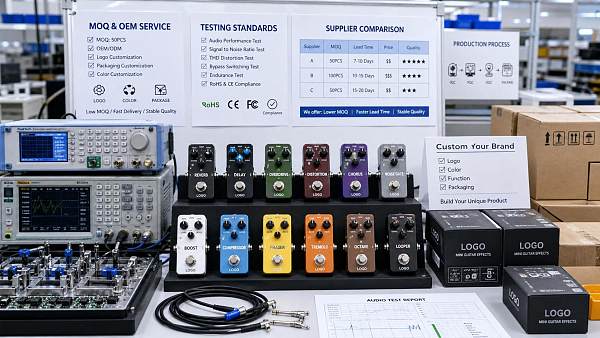
The better comparison method combines technical and operational signals.
That broader view fits the kind of sourcing intelligence GCT emphasizes across premium commercial categories: consistency is often the real competitive advantage.
Where do buyers misjudge risk in effect pedals wholesale?
The most common mistake is assuming all pedal categories behave the same. They do not.
Analog classics may have broad demand, while experimental modulation pedals can attract attention but move slower. Inventory age becomes a real margin issue.
Another weak point is incomplete compliance review. Even compact electronics can trigger problems if labeling, power specifications, or test documentation are inconsistent.
In actual orders, packaging approval is also underestimated. Print color mismatch, missing manuals, or barcode errors can delay export release.
There is also a brand positioning risk. A premium-looking pedal with unstable components damages trust faster than a basic pedal with dependable performance.
A more careful approach includes these checks:
- Confirm target price bands before locking the assortment.
- Match pedal types to realistic demand, not just sample appeal.
- Review compliance documents before deposit payment.
- Approve packaging and labeling from production-ready files.
- Set defect thresholds and replacement procedures in writing.
What is the smartest next step before placing an order?
The best next move is to build a compact comparison sheet before negotiation starts. That keeps effect pedals wholesale decisions grounded in measurable trade-offs.
List MOQ structure, brand route, compliance status, packaging options, lead time, target margin, and expected repeat order flexibility.
Then test the range as a commercial system, not as separate products. A workable assortment usually combines fast movers, margin builders, and one or two differentiators.
That is the practical logic behind better effect pedals wholesale sourcing. It connects market demand with operational control and reduces surprises after launch.
For organizations following GCT-driven sourcing standards, the goal is not simply to buy more pedals. It is to source a portfolio that supports quality perception, compliance confidence, and repeatable profit.
If the shortlist is still unclear, compare two or three suppliers against the same decision matrix, verify the hidden MOQ conditions, and model the landed margin before confirming production.
Search News
Hot Articles
- Outdoor RidesIAAPA Launches Insurance Solution for North American Attractions IndustryOct 21, 2026
- Watch OEM & SmartwatchesWatch Movement Parts: How to Check Compatibility With a Specific CaliberOct 21, 2026
- Outdoor RidesEnergylandia Announces Rokan, Set to Be Europe’s Tallest and Longest B&M Wing CoasterOct 20, 2026
Popular Tags
Need ExpertConsultation?
Connect with our specialized leisureengineering team for procurementstrategies.
Recommended News
 Oct 20, 2026Choosing a Classical Guitar Manufacturer in China: Quality Checks Before OrderingSearching for “classical guitars manufacturer China”? Discover essential checks for materials, playability, and factory quality control to reduce costly returns and order with confidence.● Pro Audio Engineer
 Oct 17, 2026Professional String Instruments: How to Evaluate Tone, Response, and ProjectionCompare professional string instruments with expert tips on tone, response, and projection. Learn practical tests to choose the right instrument for your performance needs.● Pro Audio Engineer
 Oct 21, 2026How Do You Assess a Musical Instrument Manufacturer’s Export Capability?Learn how to assess a musical instrument manufacturer export capability. Discover six key checks for quality, compliance, shipping, and support to reduce risks and source confidently.● Pro Audio Engineer
 Oct 15, 2026How Do You Choose Music Education Equipment for a New Campus?Learn how to choose music education equipment for a new campus with practical tips on curriculum fit, acoustics, suppliers, and ownership costs. Equip classrooms confidently and avoid costly mistakes.● Pro Audio Engineer
 Oct 10, 2026A Practical Guide to Identifying Wooden Orchestral Instruments by Family and ToneWooden orchestral instruments made simple: identify strings, flutes, clarinets, oboes, and bassoons by sound source, design, and tone.● Pro Audio Engineer
 Sep 11, 2026How to Choose Touring Instrument Cases for Flights, Trucks, and Daily Load-InsInstrument cases for touring: learn how to balance flight protection, truck durability, weight, fit, and serviceable hardware for safer, faster load-ins.● Pro Audio Engineer
 Sep 07, 2026How to Choose Wood Frame Tambourines for Sound Quality and Long-Term UseWood frame tambourines: learn how to compare frame construction, jingle tone, head options, durability, and supplier quality for reliable long-term performance.● Pro Audio Engineer
 Sep 05, 2026How Often Should Music Education Equipment Be Serviced?How often should music education equipment be serviced? Explore practical schedules, maintenance tips, and lifecycle planning to keep instruments and audio systems reliable.● Pro Audio Engineer
 Aug 21, 2026How to Choose Marching Band Drums for Sound Projection, Weight, and DurabilityMarching band drums buying guide: learn how to balance sound projection, weight, and durability for better field performance, easier carrying, and longer-lasting value.● Pro Audio Engineer
 Aug 09, 2026How to Evaluate a MIDI Cable Manufacturer for Audio Quality and OEM ReliabilityMIDI cable manufacturer evaluation guide: learn how to assess signal stability, connector quality, OEM process control, and batch consistency to reduce failures and source with confidence.● Pro Audio Engineer
 Aug 08, 2026How to Evaluate a Trumpets OEM Manufacturer for Quality, MOQ, and Custom DesignTrumpets OEM manufacturer selection starts with quality, MOQ, and custom design control. Learn how to compare suppliers, reduce sourcing risk, and choose a reliable long-term factory partner.● Pro Audio Engineer
 Jul 27, 2026How to Source Conga Drums in Bulk for Schools, Bands, and Event ProgramsConga drums bulk sourcing for schools, bands, and event programs made easier. Learn how to compare quality, durability, compliance, and total cost before you place a large order.● Pro Audio Engineer
 Jul 24, 2026How to Choose Low Dust Violin Rosin for Cleaner Practice and Better Bow ControlLow dust violin rosin buying guide: learn how to compare formula, climate fit, grip, and string compatibility for cleaner practice, better bow control, and smarter purchase decisions.● Pro Audio Engineer
 Jul 15, 2026Plastic Tambourines Bulk Buying Guide: Sizes, Materials, and MOQ QuestionsPlastic tambourines bulk buying guide covering sizes, ABS vs PP materials, sound consistency, customization, and MOQ questions to help buyers cut risk and choose the right supplier.● Pro Audio Engineer
 Jul 13, 2026Acoustic Guitars Wholesale China: How to Evaluate Build Quality and OEM OptionsAcoustic guitars wholesale China guide: learn how to assess build quality, factory consistency, and OEM options to choose reliable suppliers and reduce sourcing risk.● Pro Audio Engineer
 Jul 12, 2026Mini Effect Pedals Wholesale: MOQ, OEM Options, Testing, and Supplier ComparisonMini effect pedals wholesale guide covering MOQ, OEM options, testing standards, and supplier comparison to help buyers reduce risk, improve margins, and choose reliable partners.● Pro Audio Engineer
 Jul 11, 2026DJ Turntables OEM Guide: Key Torque, Drive, and Build Specs to CompareDJ turntables OEM guide covering torque, drive type, speed stability, platter build, and manufacturing consistency. Compare the specs that impact performance, reliability, and sourcing confidence.● Pro Audio Engineer
 Jul 08, 2026Guitar Capos Wholesale: What Materials, Clamp Types, and MOQ Terms Should You Compare?Guitar capos wholesale buying starts with more than price. Compare materials, clamp types, quality checks, and MOQ terms to reduce returns, protect margins, and choose a supplier with confidence.● Pro Audio Engineer
 Jul 07, 2026Birch Drum Kits Manufacturer Comparison: Shell Construction, Hardware Quality, and OEM OptionsBirch drum kits manufacturer comparison covering shell construction, hardware quality, and OEM options to help buyers reduce sourcing risk and choose reliable suppliers.● Pro Audio Engineer
 Jul 06, 2026Spruce Top Acoustic Guitars Explained: Tone, Wood Grades, and Who They Suit BestSpruce top acoustic guitars explained: compare tone, wood grades, and build quality to find the best fit for players, retailers, and commercial buyers.● Pro Audio Engineer
 Jun 30, 2026Xylophones and Glockenspiels: Key Differences in Range, Tone, and Classroom UseXylophones and glockenspiels compared: discover key differences in range, tone, durability, and classroom use to choose the right instrument for teaching, buying, or school programs.● Pro Audio Engineer
 Jun 25, 2026Musical Instrument Industry Report: Key Market Segments, Demand Drivers, and Price TrendsMusical instrument industry report covering key market segments, demand drivers, and price trends. Explore sourcing risks, premium growth, and where buyer demand is shifting next.● Pro Audio Engineer
 Jun 23, 2026Metronomes and Tuners Explained: Types, Key Features, and Who Needs BothMetronomes and tuners explained: compare types, key features, and who needs both. Learn how to choose the right tool for better timing, pitch, and practical daily use.● Pro Audio Engineer
 Jun 22, 2026How the Musical Instrument Industry Supply Chain Affects Lead Times, Cost, and QualityMusical instrument industry supply chain trends now shape lead times, cost, and quality. Discover how smarter sourcing and supplier transparency reduce risk and improve buying outcomes.● Pro Audio Engineer