DJ Turntables OEM Guide: Key Torque, Drive, and Build Specs to Compare
DJ Turntables OEM Guide: Key Torque, Drive, and Build Specs to Compare
Choosing the right dj turntables oem partner requires more than comparing price sheets.
For technical evaluation, performance starts with measurable specs, not brochure claims.
Startup torque, speed stability, platter mass, damping, and assembly consistency usually decide long-term value.
In practical sourcing, these details affect user feel, field reliability, and warranty exposure.
This guide explains what to compare when screening a dj turntables oem for professional audio brands and commercial buyers.
Why Torque Is Usually the First Filter
Torque defines how fast the platter reaches target speed and how firmly it recovers under load.
For a dj turntables oem project, quoted torque numbers need context.
Ask whether the value is startup torque, holding torque, or peak motor torque.
Those numbers are not interchangeable, and weak definitions often hide real performance gaps.
Direct-drive DJ platforms commonly target strong startup behavior for scratching and cueing.
Higher torque can improve response, but too much torque may feel abrupt or mechanically aggressive.
That is why test conditions matter as much as the published figure.
- Request time-to-speed data for 33 1/3 and 45 RPM.
- Confirm whether slipmat, record weight, and AC input range were controlled.
- Check speed recovery after manual drag on the platter edge.
- Compare torque variance across multiple production samples.
A capable dj turntables oem should provide repeatable torque data, not one favorable lab sample.
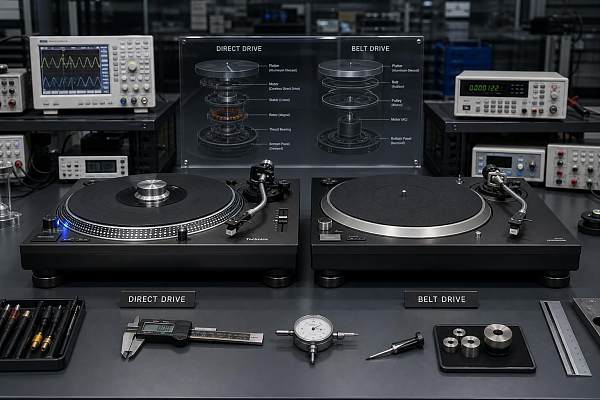
Direct Drive vs Belt Drive in OEM Development
Drive architecture shapes performance, maintenance profile, and brand positioning.
Most dj turntables oem programs for club or battle use lean toward direct drive.
The motor couples directly to the platter, which supports fast startup and stable recovery.
Belt-drive systems isolate motor vibration well, but they respond slower under aggressive handling.
For OEM evaluation, the decision should follow the end-use profile.
Club installations, education labs, rental fleets, and branded retail products need different priorities.
A serious dj turntables oem will discuss the tradeoff openly instead of pushing one universal solution.
Speed Accuracy, Wow and Flutter, and Control Logic
Stable speed is the next major checkpoint.
Poor control logic can make a turntable feel inconsistent even when torque looks strong on paper.
When assessing a dj turntables oem, ask for wow and flutter methods, reference standards, and sample count.
Low wow and flutter helps pitch stability, beat matching, and cleaner playback in commercial environments.
Quartz lock, servo tuning, and pitch fader calibration all influence real-world consistency.
More importantly, the control system should remain stable under heat, long sessions, and voltage fluctuation.
- Check RPM drift after one hour of continuous operation.
- Measure pitch range accuracy at center and end points.
- Review calibration procedure for post-assembly adjustment.
- Verify whether firmware or analog control revisions were documented.
These checks reveal whether a dj turntables oem can maintain performance beyond the prototype stage.
Platter Material, Mass, and Rotational Behavior
Platter design affects inertia, resonance, and tactile control.
That makes it a core review point in any dj turntables oem comparison.
Common materials include aluminum alloy, die-cast structures, and composite builds with damping layers.
A heavier platter can smooth rotational behavior, but excess mass may slow response if the motor is undersized.
The useful question is balance, not maximum weight.
Also review machining tolerance, surface flatness, and center bore accuracy.
Small errors here can create audible or tactile issues across production batches.
- Ask for platter runout data.
- Review dynamic balance process.
- Confirm whether damping material changes by model tier.
- Check consistency between pilot run and mass production units.
A reliable dj turntables oem treats the platter as a controlled mechanical system, not a cosmetic metal part.
Chassis Rigidity, Isolation, and Acoustic Control
In commercial use, vibration control is often underestimated.
Booths, event venues, retail activations, and training rooms all introduce structural vibration and acoustic feedback.
For that reason, dj turntables oem evaluation should include the full isolation stack.
Look at chassis material, internal ribs, bottom plate stiffness, and foot design.
Rubber compounds, spring systems, and multi-layer damping can all help, but execution matters more than marketing terms.
A unit that measures well on a bench can still fail on a bass-heavy installation site.
Ask the dj turntables oem to share vibration or feedback test conditions, especially under speaker proximity.
Tonearm Assembly and Mechanical Tolerances
Even when the sourcing focus is on motor performance, the tonearm cannot be ignored.
A dj turntables oem with weak tonearm control will struggle to deliver reliable tracking.
Check bearing play, anti-skate repeatability, cueing lift consistency, and arm height mechanism durability.
S-shaped arms remain common in DJ products, but geometry quality matters more than shape alone.
In OEM programs, tonearm failure often appears as batch inconsistency rather than total design failure.
That is why incoming inspection limits and assembly fixtures deserve close review.
If a dj turntables oem cannot define tonearm tolerance windows, build consistency is probably not mature.
Power, Connectors, and Compliance Readiness
Technical review also needs to cover power architecture and certification planning.
For global deployment, a dj turntables oem should support stable operation across target voltage regions.
Check grounding design, detachable cable options, RCA output integrity, and USB integration if included.
Compliance readiness may involve CE, FCC, RoHS, or other destination-specific requirements.
More importantly, verify whether test reports match the actual shipping configuration.
A strong dj turntables oem keeps engineering documents, BOM control, and certification files aligned.
Manufacturing Consistency and OEM Risk Signals
From a sourcing perspective, the final decision often comes down to process discipline.
A polished sample does not guarantee mass-production reliability.
When auditing a dj turntables oem, review incoming quality control, aging tests, and traceability methods.
Also ask how the factory manages supplier substitutions for motors, ICs, feet, and tonearm parts.
The bigger risk is not always visible failure.
It is gradual drift between production lots, which damages brand trust and service economics.
- Request pilot-run reports and field-return summaries.
- Compare test records across at least three units per batch.
- Review ECO handling and revision labeling.
- Confirm spare parts availability for after-sales programs.
A dependable dj turntables oem should be able to show process evidence, not just promise flexibility.
How to Compare DJ Turntables OEM Options Efficiently
A practical scorecard keeps discussions grounded.
Use weighted categories for torque, speed stability, platter quality, isolation, tonearm precision, and process control.
Then compare each dj turntables oem using the same test protocol and acceptance limits.
That approach reduces subjective bias and makes supplier discussions more productive.
In current market conditions, the better signal is consistency under repeat testing.
This also helps identify which dj turntables oem can support future customization without breaking core performance.
The strongest OEM partner is rarely the one with the longest spec sheet.
It is the one that can explain, measure, and repeatedly manufacture the specs that actually matter.
Search News
Hot Articles
- Musical InstrumentsA Practical Guide to Identifying Wooden Orchestral Instruments by Family and ToneOct 10, 2026
- Indoor PlaygroundHow to Choose Animatronic Haunted House Props for High-Throughput AttractionsOct 08, 2026
- Fashion & Gem JewelryThermal Diamond Testers: How They Work and When They Can Misidentify StonesOct 07, 2026
Popular Tags
Need ExpertConsultation?
Connect with our specialized leisureengineering team for procurementstrategies.
Recommended News
 Oct 10, 2026A Practical Guide to Identifying Wooden Orchestral Instruments by Family and ToneWooden orchestral instruments made simple: identify strings, flutes, clarinets, oboes, and bassoons by sound source, design, and tone.● Pro Audio Engineer
 Sep 11, 2026How to Choose Touring Instrument Cases for Flights, Trucks, and Daily Load-InsInstrument cases for touring: learn how to balance flight protection, truck durability, weight, fit, and serviceable hardware for safer, faster load-ins.● Pro Audio Engineer
 Sep 07, 2026How to Choose Wood Frame Tambourines for Sound Quality and Long-Term UseWood frame tambourines: learn how to compare frame construction, jingle tone, head options, durability, and supplier quality for reliable long-term performance.● Pro Audio Engineer
 Sep 05, 2026How Often Should Music Education Equipment Be Serviced?How often should music education equipment be serviced? Explore practical schedules, maintenance tips, and lifecycle planning to keep instruments and audio systems reliable.● Pro Audio Engineer
 Aug 21, 2026How to Choose Marching Band Drums for Sound Projection, Weight, and DurabilityMarching band drums buying guide: learn how to balance sound projection, weight, and durability for better field performance, easier carrying, and longer-lasting value.● Pro Audio Engineer
 Aug 09, 2026How to Evaluate a MIDI Cable Manufacturer for Audio Quality and OEM ReliabilityMIDI cable manufacturer evaluation guide: learn how to assess signal stability, connector quality, OEM process control, and batch consistency to reduce failures and source with confidence.● Pro Audio Engineer
 Aug 08, 2026How to Evaluate a Trumpets OEM Manufacturer for Quality, MOQ, and Custom DesignTrumpets OEM manufacturer selection starts with quality, MOQ, and custom design control. Learn how to compare suppliers, reduce sourcing risk, and choose a reliable long-term factory partner.● Pro Audio Engineer
 Jul 27, 2026How to Source Conga Drums in Bulk for Schools, Bands, and Event ProgramsConga drums bulk sourcing for schools, bands, and event programs made easier. Learn how to compare quality, durability, compliance, and total cost before you place a large order.● Pro Audio Engineer
 Jul 24, 2026How to Choose Low Dust Violin Rosin for Cleaner Practice and Better Bow ControlLow dust violin rosin buying guide: learn how to compare formula, climate fit, grip, and string compatibility for cleaner practice, better bow control, and smarter purchase decisions.● Pro Audio Engineer
 Jul 15, 2026Plastic Tambourines Bulk Buying Guide: Sizes, Materials, and MOQ QuestionsPlastic tambourines bulk buying guide covering sizes, ABS vs PP materials, sound consistency, customization, and MOQ questions to help buyers cut risk and choose the right supplier.● Pro Audio Engineer
 Jul 13, 2026Acoustic Guitars Wholesale China: How to Evaluate Build Quality and OEM OptionsAcoustic guitars wholesale China guide: learn how to assess build quality, factory consistency, and OEM options to choose reliable suppliers and reduce sourcing risk.● Pro Audio Engineer
 Jul 12, 2026Mini Effect Pedals Wholesale: MOQ, OEM Options, Testing, and Supplier ComparisonMini effect pedals wholesale guide covering MOQ, OEM options, testing standards, and supplier comparison to help buyers reduce risk, improve margins, and choose reliable partners.● Pro Audio Engineer
 Jul 11, 2026DJ Turntables OEM Guide: Key Torque, Drive, and Build Specs to CompareDJ turntables OEM guide covering torque, drive type, speed stability, platter build, and manufacturing consistency. Compare the specs that impact performance, reliability, and sourcing confidence.● Pro Audio Engineer
 Jul 08, 2026Guitar Capos Wholesale: What Materials, Clamp Types, and MOQ Terms Should You Compare?Guitar capos wholesale buying starts with more than price. Compare materials, clamp types, quality checks, and MOQ terms to reduce returns, protect margins, and choose a supplier with confidence.● Pro Audio Engineer
 Jul 07, 2026Birch Drum Kits Manufacturer Comparison: Shell Construction, Hardware Quality, and OEM OptionsBirch drum kits manufacturer comparison covering shell construction, hardware quality, and OEM options to help buyers reduce sourcing risk and choose reliable suppliers.● Pro Audio Engineer
 Jul 06, 2026Spruce Top Acoustic Guitars Explained: Tone, Wood Grades, and Who They Suit BestSpruce top acoustic guitars explained: compare tone, wood grades, and build quality to find the best fit for players, retailers, and commercial buyers.● Pro Audio Engineer
 Jun 30, 2026Xylophones and Glockenspiels: Key Differences in Range, Tone, and Classroom UseXylophones and glockenspiels compared: discover key differences in range, tone, durability, and classroom use to choose the right instrument for teaching, buying, or school programs.● Pro Audio Engineer
 Jun 25, 2026Musical Instrument Industry Report: Key Market Segments, Demand Drivers, and Price TrendsMusical instrument industry report covering key market segments, demand drivers, and price trends. Explore sourcing risks, premium growth, and where buyer demand is shifting next.● Pro Audio Engineer
 Jun 23, 2026Metronomes and Tuners Explained: Types, Key Features, and Who Needs BothMetronomes and tuners explained: compare types, key features, and who needs both. Learn how to choose the right tool for better timing, pitch, and practical daily use.● Pro Audio Engineer
 Jun 22, 2026How the Musical Instrument Industry Supply Chain Affects Lead Times, Cost, and QualityMusical instrument industry supply chain trends now shape lead times, cost, and quality. Discover how smarter sourcing and supplier transparency reduce risk and improve buying outcomes.● Pro Audio Engineer
 Jun 20, 2026DJ Headphones Wholesale Buying Guide: OEM Options, MOQ, and Audio Specs to CompareDJ headphones wholesale guide covering OEM options, MOQ strategy, and key audio specs. Compare build quality, compliance, and total cost to source smarter and reduce returns.● Pro Audio Engineer
 Jun 19, 2026Acoustic Guitars Wholesale: 7 Specs Buyers Should Compare Before Placing an OrderAcoustic guitars wholesale buyers can compare 7 key specs before ordering, from tonewoods and playability to OEM, packaging, and QC, to reduce risk and protect margins.● Pro Audio Engineer
 Jun 15, 2026Tambourines Bulk Buying Guide: Materials, Sound Quality, and Pack Size DifferencesTambourines bulk buying guide covering material choices, sound consistency, and pack size differences. Compare suppliers smarter, reduce risk, and choose the best fit for schools, retail, and events.● Pro Audio Engineer
 Jun 14, 2026Professional Musical Instruments Explained: Types, Skill Levels, and Buying CriteriaProfessional musical instruments explained: discover key types, ideal skill levels, and practical buying criteria to choose reliable, high-performance instruments with confidence.● Pro Audio Engineer