Buying Tenor Ukuleles Wholesale: How to Evaluate Suppliers and MOQs
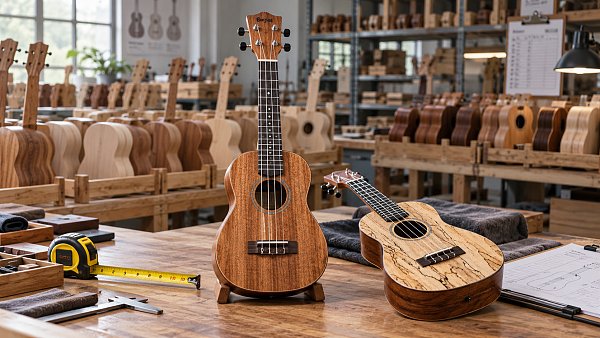
Buying tenor ukuleles wholesale involves more than comparing unit prices. Suppliers must deliver consistent instruments, dependable lead times, and minimum order quantities that match demand.
For procurement professionals, the strongest offer combines an acceptable landed cost with verified production capability, clear quality standards, and purchasing terms that limit inventory exposure.
Start with a documented product specification and a realistic sales forecast. Then compare suppliers using samples, production evidence, total costs, and their willingness to resolve defects.
What Should You Define Before Contacting Suppliers?
Decide who will buy the instruments and where they will be sold. A beginner retail range and a premium private-label collection require different materials, finishes, and inspection standards.
Specify the tenor size using actual dimensions, including scale length, overall length, nut width, and body depth. Suppliers may interpret product names differently, so dimensions matter.
Document the target construction, including solid or laminated woods, neck material, fretboard, bridge, tuners, strings, finish, and whether electronics or a gig bag are required.
Separate essential requirements from preferences. For example, consistent intonation and stable necks may be nonnegotiable, while binding color or packaging artwork can remain flexible.
Estimate demand by model and sales channel, not just total volume. Include seasonal peaks, promotional commitments, replenishment time, and the stock you can reasonably finance.
Share the same specification and forecast with each prospective supplier. Comparable requests make differences in pricing, lead time, and production assumptions easier to identify.
How Can You Tell Whether a Supplier Is Reliable?
Begin by establishing whether the company is a manufacturer, trading company, or distributor. Each can be suitable, but responsibility for production and quality must be clear.
A manufacturer may offer closer access to production decisions, while a trading company can coordinate multiple factories. Ask who owns the tooling and who handles defects.
Request a company profile, business registration details, factory location, main export markets, and examples of comparable instruments. Verify claims using independent records where available.
Ask for references relevant to your order size and product category. A supplier serving large guitar brands may still struggle with a small, customized ukulele program.
Discuss current capacity, typical order volumes, peak-season constraints, and subcontracted processes. A credible supplier should explain how it will accommodate your order without promising unrealistic dates.
Where practical, conduct a factory visit or arrange an independent audit. Focus on material storage, woodworking, assembly, finishing, instrument setup, and final inspection records.
For remote assessments, request a live video walkthrough and recent production documents. These can supplement due diligence, although they do not replace an on-site audit.
Be cautious when a supplier avoids identifying its production site, changes specifications without approval, or offers unusually low prices without explaining the underlying material and construction differences.
What Should You Check in a Tenor Ukulele Sample?
Order samples before committing to production, preferably from more than one supplier. Confirm whether each sample represents standard production or has received special preparation.
Compare samples against your written specification, not appearance alone. Record dimensions, materials, hardware, finish, labeling, packaging, and any deviations the supplier disclosed or failed to disclose.
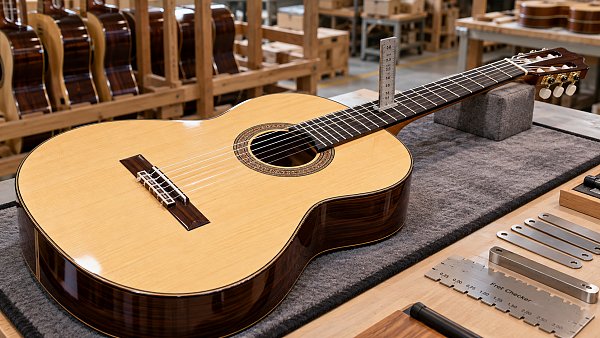
Check the instrument for uneven frets, sharp fret ends, loose tuners, bridge gaps, finish defects, and visible cracks. Inspect inside the body where practical.
Have a qualified player or technician assess tuning stability, intonation, playability, and sound. Test across the fretboard and listen for buzzing, dead notes, or unwanted rattles.
Measure string action at agreed locations and assess neck alignment. Set acceptable tolerances with the supplier because preferred setup can vary by customer and string type.
Test any installed electronics through an amplifier, checking output, controls, noise, and battery access. Confirm whether batteries are included and how they will be shipped.
Evaluate the case or packaging as part of the product. Protective materials, carton strength, and internal movement affect damage rates during transport and retail handling.
Retain an approved sample as the production reference. Record its specifications and any permitted variations in writing, and ensure the supplier keeps an equivalent reference.
How Do You Assess MOQs Without Taking Excess Inventory?
A minimum order quantity is the smallest order a supplier accepts under stated conditions. It may apply per order, model, color, finish, or custom feature.
Ask suppliers to identify every MOQ separately. An attractive total minimum can still be impractical if each color or private-label design requires a large commitment.
For example, a quoted minimum of 300 instruments may mean 100 units across each of three finishes, rather than any combination totaling 300. Confirm before forecasting.
Compare those quantities with expected sales during the replenishment period and your available storage budget. Include a contingency for slower demand and potential warranty replacements.
Calculate the inventory exposure before accepting a lower unit price. A discount is less valuable if excess stock ties up cash, incurs storage charges, or requires markdowns.
Request price breaks at several quantities and ask which costs drive the minimum. Setup, material purchasing, finish changes, packaging, and supplier capacity can affect the answer.
When negotiating, consider a smaller first order, shared components across models, standard finishes, or a limited assortment. These options may reduce production complexity without compromising essentials.
A blanket purchase agreement with scheduled releases can also help, but clarify whether the supplier requires a firm commitment for the full quantity and when ownership transfers.
Do not assume a deposit secures future pricing or capacity. Specify the committed volume, release schedule, price validity, cancellation rights, and treatment of unused materials.
How Should You Compare Wholesale Prices and Landed Costs?
Ask every supplier to quote against the same specification, order quantity, currency, delivery point, and Incoterms rule. State the applicable Incoterms edition in the agreement.
The instrument price is only one component of landed cost. Include freight, insurance where applicable, import duties, taxes, customs services, inspection fees, and inland delivery.
Also account for sample charges, tooling, artwork, packaging, payment fees, and likely rework. Identify one-time costs separately from recurring costs to compare initial and repeat orders.
For illustration, 300 instruments at $50 each cost $15,000. If freight, duty, and other import costs total $3,000, landed cost is $60 per instrument.
That example excludes financing, storage, and defects. If some units cannot be sold at full price, the effective cost per saleable instrument increases further.
Confirm the tariff classification, duty treatment, and product rules with a qualified customs broker in the destination market. Do not assume the supplier's estimate is definitive.
Compare payment terms alongside price. A larger deposit may improve the quote but increases exposure if production is late, specifications change, or the supplier cannot perform.
What Quality Controls Should Be Agreed Before Production?
Translate the approved sample into a written quality agreement covering materials, dimensions, finish, setup, packaging, labeling, and functional checks. Define measurable tolerances wherever practical.
Agree on defect categories and acceptance criteria before inspection. Distinguish cosmetic variations from issues that affect safety, playability, structural integrity, or compliance with the specification.
Use a documented sampling plan, potentially based on an agreed inspection standard. Specify the inspection level, acceptable quality limits, and how the parties handle failed inspections.
Clarify who pays for initial inspection, reinspection, repairs, replacement, or disposal. A sampling plan reduces uncertainty but cannot guarantee that every individual instrument is defect-free.
For higher-risk orders, inspect at multiple stages: materials before production, assembly or finishing during production, and finished goods before shipment. Match inspection intensity to order value.
Ask the supplier to record batch details and retain production records. Traceability helps identify affected units if a bridge, tuner, finish, or electronic component fails later.
Wood can respond to humidity and temperature changes. Discuss material conditioning, storage, packaging, and transport conditions, particularly when instruments will move between different climates.
Which Compliance and Documentation Issues Matter?
Requirements depend on the destination market, materials, electronics, and intended users. Confirm applicable rules before ordering rather than relying on a generic compliance statement.
Ask for the species and origin of wood and other regulated materials. Certain species or products may require permits or documentation under wildlife trade rules.
Check applicable import restrictions, labeling requirements, and chemical rules for finishes, adhesives, and packaging. Request relevant test reports where required and verify their scope and validity.
If the instrument includes powered electronics, assess applicable electrical, battery, and transport requirements. A report for a different component or model does not automatically cover yours.
Agree on the documents needed for customs clearance, including commercial invoices, packing lists, and any applicable origin or material certificates. Review them before shipment.
What Terms Protect Your Order After You Choose a Supplier?
Set milestones for sample approval, deposit, production, inspection, shipment, and final payment. Define lead time from a specific trigger, such as receipt of both deposit and approved artwork.
Put the agreed specification, MOQ, unit price, delivery terms, and inspection procedure in the purchase order or contract. Attach approved artwork and packaging requirements.
Define how changes are authorized. Substitutions in wood, hardware, strings, or production location should require written approval, even when the supplier believes they are equivalent.
Set out remedies for late delivery and nonconforming goods, including repair, replacement, credit, or refund where agreed. State notification deadlines and the evidence needed for claims.
For private-label orders, clarify ownership and permitted use of trademarks, artwork, tooling, and product designs. Address confidentiality and any restrictions on selling identical branded goods elsewhere.
Confirm warranty responsibilities and spare-parts availability. A supplier's replacement policy should align with your own obligations to retailers and end customers in the destination market.
Use a qualified legal adviser for contracts and dispute resolution, particularly across jurisdictions. Ensure the agreement identifies the governing law and a workable process for resolving disputes.
How Can You Make the Final Supplier Decision?
Score shortlisted suppliers against the factors that matter most: sample quality, production controls, landed cost, MOQ flexibility, lead time, documentation, and responsiveness to corrective actions.
Weight the criteria to reflect your business. A retailer testing a new range may prioritize low inventory exposure, while an established distributor may emphasize capacity and consistency.
Before placing a large order, consider a controlled initial purchase with agreed inspection and performance measures. Track defect rates, delivery accuracy, customer returns, and communication quality.
For ongoing purchases of tenor ukuleles wholesale, review these results before increasing volume. The best supplier is the one that consistently meets your specification at an acceptable total cost.
Search News
Hot Articles
Popular Tags
Need ExpertConsultation?
Connect with our specialized leisureengineering team for procurementstrategies.
Recommended News
 Oct 31, 2026Buying Tenor Ukuleles Wholesale: How to Evaluate Suppliers and MOQsBuying tenor ukuleles wholesale? Learn how to evaluate suppliers, negotiate MOQs, compare landed costs, and secure consistent quality with less inventory risk.● Pro Audio Engineer
 Oct 28, 2026Music China 2026 Opens Tomorrow, With 800-Plus Events Connecting TradeMusic China 2026 runs October 28–31 in Shanghai with 800-plus events. Explore industry forums, business matchmaking and sourcing insights for musical instrument buyers and suppliers.● Pro Audio Engineer
 Oct 20, 2026Choosing a Classical Guitar Manufacturer in China: Quality Checks Before OrderingSearching for “classical guitars manufacturer China”? Discover essential checks for materials, playability, and factory quality control to reduce costly returns and order with confidence.● Pro Audio Engineer
 Oct 17, 2026Professional String Instruments: How to Evaluate Tone, Response, and ProjectionCompare professional string instruments with expert tips on tone, response, and projection. Learn practical tests to choose the right instrument for your performance needs.● Pro Audio Engineer
 Oct 21, 2026How Do You Assess a Musical Instrument Manufacturer’s Export Capability?Learn how to assess a musical instrument manufacturer export capability. Discover six key checks for quality, compliance, shipping, and support to reduce risks and source confidently.● Pro Audio Engineer
 Oct 15, 2026How Do You Choose Music Education Equipment for a New Campus?Learn how to choose music education equipment for a new campus with practical tips on curriculum fit, acoustics, suppliers, and ownership costs. Equip classrooms confidently and avoid costly mistakes.● Pro Audio Engineer
 Oct 10, 2026A Practical Guide to Identifying Wooden Orchestral Instruments by Family and ToneWooden orchestral instruments made simple: identify strings, flutes, clarinets, oboes, and bassoons by sound source, design, and tone.● Pro Audio Engineer
 Sep 11, 2026How to Choose Touring Instrument Cases for Flights, Trucks, and Daily Load-InsInstrument cases for touring: learn how to balance flight protection, truck durability, weight, fit, and serviceable hardware for safer, faster load-ins.● Pro Audio Engineer
 Sep 07, 2026How to Choose Wood Frame Tambourines for Sound Quality and Long-Term UseWood frame tambourines: learn how to compare frame construction, jingle tone, head options, durability, and supplier quality for reliable long-term performance.● Pro Audio Engineer
 Sep 05, 2026How Often Should Music Education Equipment Be Serviced?How often should music education equipment be serviced? Explore practical schedules, maintenance tips, and lifecycle planning to keep instruments and audio systems reliable.● Pro Audio Engineer
 Aug 21, 2026How to Choose Marching Band Drums for Sound Projection, Weight, and DurabilityMarching band drums buying guide: learn how to balance sound projection, weight, and durability for better field performance, easier carrying, and longer-lasting value.● Pro Audio Engineer
 Aug 09, 2026How to Evaluate a MIDI Cable Manufacturer for Audio Quality and OEM ReliabilityMIDI cable manufacturer evaluation guide: learn how to assess signal stability, connector quality, OEM process control, and batch consistency to reduce failures and source with confidence.● Pro Audio Engineer
 Aug 08, 2026How to Evaluate a Trumpets OEM Manufacturer for Quality, MOQ, and Custom DesignTrumpets OEM manufacturer selection starts with quality, MOQ, and custom design control. Learn how to compare suppliers, reduce sourcing risk, and choose a reliable long-term factory partner.● Pro Audio Engineer
 Jul 27, 2026How to Source Conga Drums in Bulk for Schools, Bands, and Event ProgramsConga drums bulk sourcing for schools, bands, and event programs made easier. Learn how to compare quality, durability, compliance, and total cost before you place a large order.● Pro Audio Engineer
 Jul 24, 2026How to Choose Low Dust Violin Rosin for Cleaner Practice and Better Bow ControlLow dust violin rosin buying guide: learn how to compare formula, climate fit, grip, and string compatibility for cleaner practice, better bow control, and smarter purchase decisions.● Pro Audio Engineer
 Jul 15, 2026Plastic Tambourines Bulk Buying Guide: Sizes, Materials, and MOQ QuestionsPlastic tambourines bulk buying guide covering sizes, ABS vs PP materials, sound consistency, customization, and MOQ questions to help buyers cut risk and choose the right supplier.● Pro Audio Engineer
 Jul 13, 2026Acoustic Guitars Wholesale China: How to Evaluate Build Quality and OEM OptionsAcoustic guitars wholesale China guide: learn how to assess build quality, factory consistency, and OEM options to choose reliable suppliers and reduce sourcing risk.● Pro Audio Engineer
 Jul 12, 2026Mini Effect Pedals Wholesale: MOQ, OEM Options, Testing, and Supplier ComparisonMini effect pedals wholesale guide covering MOQ, OEM options, testing standards, and supplier comparison to help buyers reduce risk, improve margins, and choose reliable partners.● Pro Audio Engineer
 Jul 11, 2026DJ Turntables OEM Guide: Key Torque, Drive, and Build Specs to CompareDJ turntables OEM guide covering torque, drive type, speed stability, platter build, and manufacturing consistency. Compare the specs that impact performance, reliability, and sourcing confidence.● Pro Audio Engineer
 Jul 08, 2026Guitar Capos Wholesale: What Materials, Clamp Types, and MOQ Terms Should You Compare?Guitar capos wholesale buying starts with more than price. Compare materials, clamp types, quality checks, and MOQ terms to reduce returns, protect margins, and choose a supplier with confidence.● Pro Audio Engineer
 Jul 07, 2026Birch Drum Kits Manufacturer Comparison: Shell Construction, Hardware Quality, and OEM OptionsBirch drum kits manufacturer comparison covering shell construction, hardware quality, and OEM options to help buyers reduce sourcing risk and choose reliable suppliers.● Pro Audio Engineer
 Jul 06, 2026Spruce Top Acoustic Guitars Explained: Tone, Wood Grades, and Who They Suit BestSpruce top acoustic guitars explained: compare tone, wood grades, and build quality to find the best fit for players, retailers, and commercial buyers.● Pro Audio Engineer
 Jun 30, 2026Xylophones and Glockenspiels: Key Differences in Range, Tone, and Classroom UseXylophones and glockenspiels compared: discover key differences in range, tone, durability, and classroom use to choose the right instrument for teaching, buying, or school programs.● Pro Audio Engineer
 Jun 25, 2026Musical Instrument Industry Report: Key Market Segments, Demand Drivers, and Price TrendsMusical instrument industry report covering key market segments, demand drivers, and price trends. Explore sourcing risks, premium growth, and where buyer demand is shifting next.● Pro Audio Engineer