How Do You Assess a Musical Instrument Manufacturer’s Export Capability?
Assess a musical instrument manufacturer’s export capability by verifying six things: its legal and commercial identity, repeatable production quality, destination-specific compliance, realistic capacity, shipping controls, and after-sales support. A competitive quotation and a well-finished sample are not enough. The stronger test is whether the supplier can reproduce the approved instrument, document the shipment correctly, and resolve defects after delivery.
This matters when a distributor is planning a seasonal launch or a school supplier has a fixed installation date. Instruments may arrive on time but require extensive setup, lack necessary documentation, or suffer moisture damage in transit. Understanding how to assess a musical instrument manufacturer’s export capability means tracing evidence from the factory floor through customs clearance to the receiving warehouse—not simply asking whether the company “exports worldwide.”
Define the export job before judging the supplier
Start with a written purchasing brief. Export capability is specific to the product, destination, order size, and service expectations. A factory shipping acoustic guitars successfully to one market may not be ready to supply electronic keyboards to another, particularly when electrical requirements, labeling, and repair arrangements differ.
Specify the instrument models, materials, destination country, expected quantity, delivery window, packaging format, and intended use. Include private-label requirements and whether instruments must arrive retail-ready, individually inspected, or prepared for institutional distribution.
- Acoustic instruments: Define setup requirements, finish quality, wood species, dimensional tolerances, and protection against environmental changes.
- Electronic instruments: Identify power supplies, plugs, battery configurations, connectivity, firmware, and applicable electrical or electromagnetic requirements.
- Large or fragile instruments: Establish handling restrictions, crating, delivery access, and responsibility for installation or adjustment.
Use this brief as the reference for every supplier discussion. Otherwise, a manufacturer can answer accurately about its general operations while leaving the requirements of your actual order unresolved.
Verify who manufactures, who sells, and who exports
Request the supplier’s legal name, registration details, factory address, contracting entity, and payment beneficiary. These may differ legitimately, but the relationship should be explained and documented. An unexplained bank-account change or payment request to an unrelated entity warrants investigation before funds move.
Determine whether the supplier owns the factory, coordinates subcontractors, or operates as a trading company. None of these arrangements automatically disqualifies a supplier. The issue is whether it controls specifications, production changes, inspection access, and corrective action.
Ask for recent, redacted evidence of comparable exports: commercial invoices, packing lists, transport documents, and references that can be contacted with permission. Compare product categories, shipment dates, destinations, and company names across documents. Confidential information can be concealed without removing all evidence of the transaction.
Export volume alone is a weak indicator. More useful questions are whether previous shipments involved similar instruments, comparable quantities, and the same destination requirements. Ask who handles customs documentation and whether an external export agent is involved. A reliable partner should describe responsibilities clearly rather than presenting its freight forwarder’s capabilities as its own.
Test repeatability, not just sample quality
A showroom sample may receive more attention than a production unit. Request samples tied to the proposed manufacturing process, then preserve an approved reference instrument and a written specification. Record hardware, materials, dimensions, finish, setup, accessories, labeling, and packaging. Agree that substitutions require written approval.
Quality checks should match the instrument. For fretted instruments, inspect neck geometry, fretwork, action, intonation, tuning stability, and electronics where fitted. For wind instruments, evaluate key operation, leaks, assembly fit, and playing response. Percussion checks may include shell geometry, hardware seating, tuning function, and finish integrity.
Separate measurable requirements from subjective judgments. “Good sound” is not an acceptance criterion unless the evaluation method is defined. Use agreed playing tests, reference samples, and competent evaluators for characteristics that cannot be reduced to dimensions.
Ask the factory to show how it controls:
- Incoming materials and components, including traceability where needed.
- Environmental conditions for moisture-sensitive materials.
- In-process checks before defects become difficult to repair.
- Final testing, setup, and segregation of rejected instruments.
- Inspection records linked to production lots or serial numbers.
A factory visit, live walkthrough, or independent audit should follow actual production rather than only finished-product displays. Trace one batch from material receipt to packing. Pay particular attention to outsourced finishing, electronics assembly, or other operations that may sit outside the visible factory.
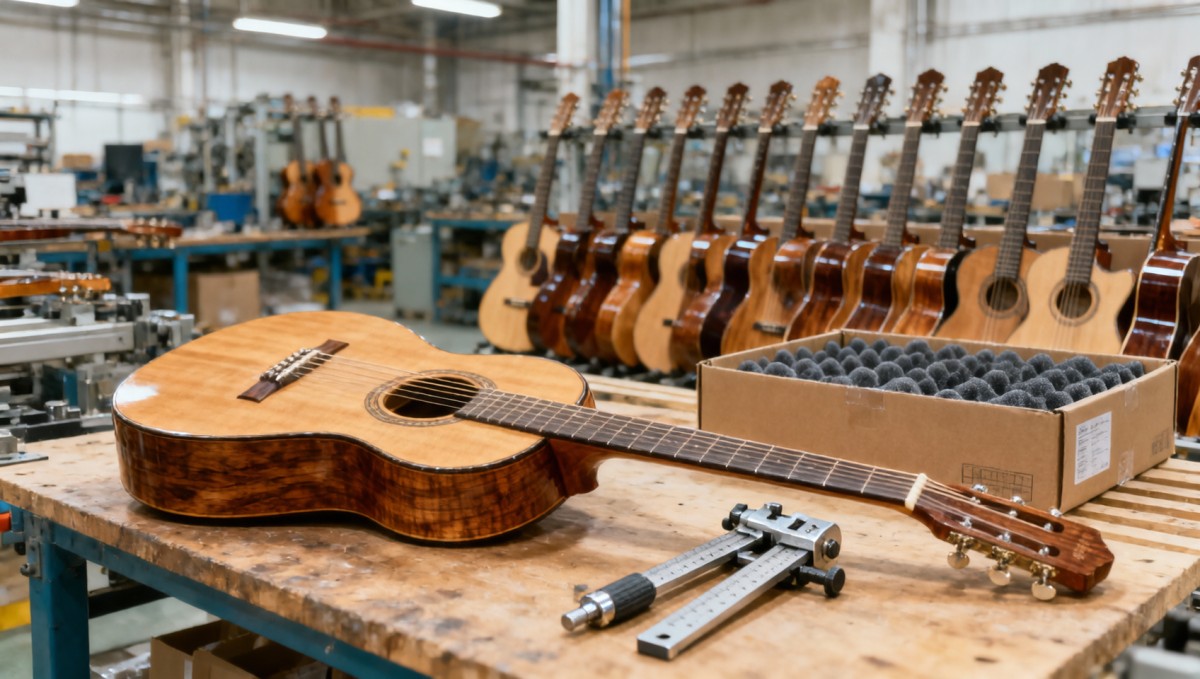
Agree on defect categories and inspection sampling before placing the order. Sampling reduces inspection effort but cannot guarantee that every unit is acceptable. Instruments intended for demanding use may also need individual functional checks. Define which defects trigger rejection, rework, replacement, or expanded inspection.
Build a destination-specific compliance file
Do not accept “internationally certified” as a complete answer. Ask which requirements apply to the exact product in its destination market, who is responsible for meeting them, and what evidence supports compliance. Requirements can differ between purely acoustic instruments, powered instruments, wireless products, and products marketed to children.
A certificate for one model does not automatically cover a visually similar model. Check model identifiers, report scope, issuing organization, and whether component changes affect the evidence. A quality-management certificate, if supplied, is not proof of product compliance.
Confirm uncertain requirements with a qualified compliance specialist or customs broker before production. This is particularly important for protected materials, wireless functions, batteries, and children’s products. Compliance gaps discovered after packing can prevent shipment or sale.
Check whether the delivery promise survives a capacity review
Ask for a production schedule showing material procurement, manufacturing, finishing or curing, assembly, final testing, packing, and dispatch. A single lead-time figure hides bottlenecks. Distinguish goods ready for collection from arrival at your warehouse.
Review current order commitments, available capacity, staffing, and dependence on critical subcontractors. Request evidence appropriate to the order, such as a capacity plan or production records with confidential details removed. Claimed monthly output is less useful than demonstrated output for instruments of similar complexity.
Discuss what happens when a component is delayed or a batch fails inspection. A credible supplier identifies the constraint, proposes a revised schedule, and seeks approval for changes. Automatic promises that every deadline can be met should prompt closer scrutiny.
For repeat purchasing, review on-time dispatch and arrival separately. Customs holds, carrier delays, and factory delays have different causes. Ask how previous disruptions were recorded and corrected rather than relying only on an overall delivery percentage.
Examine the shipping process as part of product quality
Instruments can leave the factory correctly adjusted and arrive damaged or unstable. Packaging must account for impacts, vibration, stacking, handling, and environmental exposure. Review how the instrument is supported internally, how moving parts are secured, and how accessories are prevented from striking the product.
Ask for packaging specifications and available test records. Tests should reflect the proposed shipping mode and package configuration. Where evidence is insufficient, agree on suitable transport testing before a full shipment. Do not assume that thicker cartons alone solve damage risk.
Moisture protection requires a product-specific approach. Ask about material conditioning, conditions at packing, storage before loading, and receiving instructions. Desiccants or barrier bags should form part of a defined packaging method, not substitute for controlling wet materials.
Review a draft document set before dispatch. Product descriptions, quantities, values, origin information, and package counts should agree across the invoice and packing list. Verify tariff classification with the importer or broker rather than copying a previous shipment without review.
State the agreed Incoterms rule, version, and named place in the contract. Confirm responsibility for freight, insurance, clearance, unloading, and damage claims. Commercial delivery terms do not, by themselves, define instrument acceptance standards or warranty obligations.
Make after-sales capability visible before ordering
Ask who receives technical complaints and who can authorize remedies. A salesperson’s promise of “full support” is not an operating process. Establish the evidence required for a claim, response expectations, escalation contact, and responsibility for replacement parts, repair labor, and freight.
For repairable instruments, request a spare-parts list and discuss availability beyond the initial order. Proprietary tuners, keys, circuit boards, or power supplies can make a minor defect difficult to resolve locally. Confirm whether parts remain interchangeable if production specifications change.
Warranty terms should distinguish manufacturing defects from transit damage, normal wear, setup needs, and environmental damage. They should also explain how disputed causes will be assessed. Avoid agreements that require every defective instrument to be returned internationally without addressing cost and practical feasibility.
Use a pilot order to make the approval decision
Run a controlled pilot through the intended production, packaging, documentation, and logistics route. Choose a quantity that exposes batch variation without creating unacceptable inventory risk. A hand-carried sample or courier parcel cannot fully validate a planned consolidated shipment.
- Before production: Approve the specification, reference sample, compliance file, packaging, and acceptance criteria.
- Before shipment: Verify inspection findings, corrective actions, documents, and the actual packed goods.
- On arrival: Inspect packaging, reconcile quantities and identifiers, and test instruments using the agreed procedure.
- After receiving checks: Review defects, setup work, document corrections, delivery performance, and claim handling before scaling up.
Record findings in an approval sheet that separates mandatory conditions from performance improvements. Legal identity, necessary compliance evidence, unauthorized substitutions, and unresolved serious defects should be approval gates—not weaknesses offset by a low price. Minor documentation or communication issues may be manageable if corrective actions have owners and deadlines.
Approve the manufacturer for a defined scope: specified models, destination, order size, and shipping method. Expand that approval only when evidence supports the change. A supplier proven on one acoustic-instrument shipment still needs additional assessment before taking on powered products, unfamiliar materials, or substantially larger volumes.
Search News
Hot Articles
- Outdoor RidesIAAPA Launches Insurance Solution for North American Attractions IndustryOct 21, 2026
- Watch OEM & SmartwatchesWatch Movement Parts: How to Check Compatibility With a Specific CaliberOct 21, 2026
- Outdoor RidesEnergylandia Announces Rokan, Set to Be Europe’s Tallest and Longest B&M Wing CoasterOct 20, 2026
Popular Tags
Need ExpertConsultation?
Connect with our specialized leisureengineering team for procurementstrategies.
Recommended News
 Oct 20, 2026Choosing a Classical Guitar Manufacturer in China: Quality Checks Before OrderingSearching for “classical guitars manufacturer China”? Discover essential checks for materials, playability, and factory quality control to reduce costly returns and order with confidence.● Pro Audio Engineer
 Oct 17, 2026Professional String Instruments: How to Evaluate Tone, Response, and ProjectionCompare professional string instruments with expert tips on tone, response, and projection. Learn practical tests to choose the right instrument for your performance needs.● Pro Audio Engineer
 Oct 21, 2026How Do You Assess a Musical Instrument Manufacturer’s Export Capability?Learn how to assess a musical instrument manufacturer export capability. Discover six key checks for quality, compliance, shipping, and support to reduce risks and source confidently.● Pro Audio Engineer
 Oct 15, 2026How Do You Choose Music Education Equipment for a New Campus?Learn how to choose music education equipment for a new campus with practical tips on curriculum fit, acoustics, suppliers, and ownership costs. Equip classrooms confidently and avoid costly mistakes.● Pro Audio Engineer
 Oct 10, 2026A Practical Guide to Identifying Wooden Orchestral Instruments by Family and ToneWooden orchestral instruments made simple: identify strings, flutes, clarinets, oboes, and bassoons by sound source, design, and tone.● Pro Audio Engineer
 Sep 11, 2026How to Choose Touring Instrument Cases for Flights, Trucks, and Daily Load-InsInstrument cases for touring: learn how to balance flight protection, truck durability, weight, fit, and serviceable hardware for safer, faster load-ins.● Pro Audio Engineer
 Sep 07, 2026How to Choose Wood Frame Tambourines for Sound Quality and Long-Term UseWood frame tambourines: learn how to compare frame construction, jingle tone, head options, durability, and supplier quality for reliable long-term performance.● Pro Audio Engineer
 Sep 05, 2026How Often Should Music Education Equipment Be Serviced?How often should music education equipment be serviced? Explore practical schedules, maintenance tips, and lifecycle planning to keep instruments and audio systems reliable.● Pro Audio Engineer
 Aug 21, 2026How to Choose Marching Band Drums for Sound Projection, Weight, and DurabilityMarching band drums buying guide: learn how to balance sound projection, weight, and durability for better field performance, easier carrying, and longer-lasting value.● Pro Audio Engineer
 Aug 09, 2026How to Evaluate a MIDI Cable Manufacturer for Audio Quality and OEM ReliabilityMIDI cable manufacturer evaluation guide: learn how to assess signal stability, connector quality, OEM process control, and batch consistency to reduce failures and source with confidence.● Pro Audio Engineer
 Aug 08, 2026How to Evaluate a Trumpets OEM Manufacturer for Quality, MOQ, and Custom DesignTrumpets OEM manufacturer selection starts with quality, MOQ, and custom design control. Learn how to compare suppliers, reduce sourcing risk, and choose a reliable long-term factory partner.● Pro Audio Engineer
 Jul 27, 2026How to Source Conga Drums in Bulk for Schools, Bands, and Event ProgramsConga drums bulk sourcing for schools, bands, and event programs made easier. Learn how to compare quality, durability, compliance, and total cost before you place a large order.● Pro Audio Engineer
 Jul 24, 2026How to Choose Low Dust Violin Rosin for Cleaner Practice and Better Bow ControlLow dust violin rosin buying guide: learn how to compare formula, climate fit, grip, and string compatibility for cleaner practice, better bow control, and smarter purchase decisions.● Pro Audio Engineer
 Jul 15, 2026Plastic Tambourines Bulk Buying Guide: Sizes, Materials, and MOQ QuestionsPlastic tambourines bulk buying guide covering sizes, ABS vs PP materials, sound consistency, customization, and MOQ questions to help buyers cut risk and choose the right supplier.● Pro Audio Engineer
 Jul 13, 2026Acoustic Guitars Wholesale China: How to Evaluate Build Quality and OEM OptionsAcoustic guitars wholesale China guide: learn how to assess build quality, factory consistency, and OEM options to choose reliable suppliers and reduce sourcing risk.● Pro Audio Engineer
 Jul 12, 2026Mini Effect Pedals Wholesale: MOQ, OEM Options, Testing, and Supplier ComparisonMini effect pedals wholesale guide covering MOQ, OEM options, testing standards, and supplier comparison to help buyers reduce risk, improve margins, and choose reliable partners.● Pro Audio Engineer
 Jul 11, 2026DJ Turntables OEM Guide: Key Torque, Drive, and Build Specs to CompareDJ turntables OEM guide covering torque, drive type, speed stability, platter build, and manufacturing consistency. Compare the specs that impact performance, reliability, and sourcing confidence.● Pro Audio Engineer
 Jul 08, 2026Guitar Capos Wholesale: What Materials, Clamp Types, and MOQ Terms Should You Compare?Guitar capos wholesale buying starts with more than price. Compare materials, clamp types, quality checks, and MOQ terms to reduce returns, protect margins, and choose a supplier with confidence.● Pro Audio Engineer
 Jul 07, 2026Birch Drum Kits Manufacturer Comparison: Shell Construction, Hardware Quality, and OEM OptionsBirch drum kits manufacturer comparison covering shell construction, hardware quality, and OEM options to help buyers reduce sourcing risk and choose reliable suppliers.● Pro Audio Engineer
 Jul 06, 2026Spruce Top Acoustic Guitars Explained: Tone, Wood Grades, and Who They Suit BestSpruce top acoustic guitars explained: compare tone, wood grades, and build quality to find the best fit for players, retailers, and commercial buyers.● Pro Audio Engineer
 Jun 30, 2026Xylophones and Glockenspiels: Key Differences in Range, Tone, and Classroom UseXylophones and glockenspiels compared: discover key differences in range, tone, durability, and classroom use to choose the right instrument for teaching, buying, or school programs.● Pro Audio Engineer
 Jun 25, 2026Musical Instrument Industry Report: Key Market Segments, Demand Drivers, and Price TrendsMusical instrument industry report covering key market segments, demand drivers, and price trends. Explore sourcing risks, premium growth, and where buyer demand is shifting next.● Pro Audio Engineer
 Jun 23, 2026Metronomes and Tuners Explained: Types, Key Features, and Who Needs BothMetronomes and tuners explained: compare types, key features, and who needs both. Learn how to choose the right tool for better timing, pitch, and practical daily use.● Pro Audio Engineer
 Jun 22, 2026How the Musical Instrument Industry Supply Chain Affects Lead Times, Cost, and QualityMusical instrument industry supply chain trends now shape lead times, cost, and quality. Discover how smarter sourcing and supplier transparency reduce risk and improve buying outcomes.● Pro Audio Engineer