How to Source Conga Drums in Bulk for Schools, Bands, and Event Programs
How to Source Conga Drums in Bulk for Schools, Bands, and Event Programs
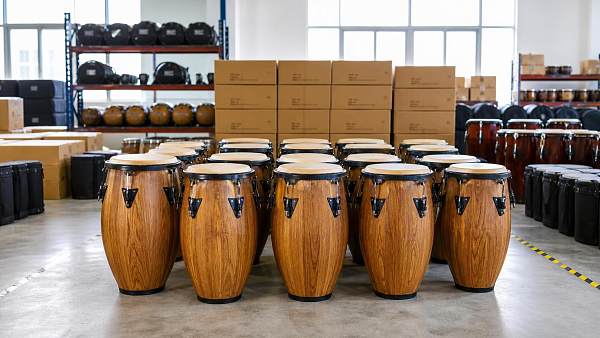
Sourcing conga drums bulk for schools, bands, and event programs requires more than comparing prices. The real work is in controlling inconsistency before it lands in your warehouse or rehearsal room. For procurement teams, a cheap batch that arrives with uneven tuning hardware, poor shell finish, or missing accessories usually costs more once returns, complaints, and replacement orders start stacking up. The safer approach is to treat conga procurement as a fit-for-use decision: who will play them, how often, in what environment, and how much maintenance your organization can realistically absorb.
For institutional buyers, the usual priority list looks familiar: durability, acceptable sound quality across the batch, safety, lead time, and landed cost. But in practice, congas have a few traps that general buyers often miss. They are not just decorative percussion pieces. In schools and community programs, they get moved, stacked, loaned out, struck hard by beginners, and stored in rooms with unstable humidity. For event programs, the pressure point is different: appearance matters, fast setup matters, and replacement availability matters. A supplier that works for a small music retailer may not be the right one for a 50-unit institutional order.
Start with the use case, not the catalog
Before asking for quotations, define the program type. A middle-school music lab, a university percussion department, and an outdoor event contractor do not need the same instrument profile.
- For general classroom use, buyers usually need stable, forgiving instruments that can tolerate rough handling more than premium tonal nuance.
- For performance ensembles, consistency in tone and tuning response across multiple units matters more.
- For event rental or activation programs, cosmetic finish, transport resilience, and quick hardware checks become more important than fine studio-level sound.
This sounds obvious, but it changes your specification sheet immediately. If you skip this step, suppliers will quote against their standard line, and you will spend the rest of the process trying to correct the mismatch.
Build a specification sheet that prevents vague quoting
A serious bulk RFQ for conga drums should be specific enough that suppliers cannot hide quality differences behind a single unit price. At minimum, ask them to confirm shell material, head material, drum sizes, finish type, hardware plating or coating, included accessories, packing method, and carton labeling.
Do not assume “school model” means the same thing across factories. One supplier may quote lightweight shells with entry-level hardware; another may quote heavier units with better lugs and stronger rims. On paper both are “student congas.” In service life, they are not equal.
Check the shell and hardware like someone who expects abuse
In bulk school and program purchases, shell and hardware quality usually decide whether the order ages well. Congas live hard lives in shared environments. Students drag them. Event crews load them fast. Volunteer staff rarely maintain them properly. So the question is not whether the drums sound good on day one. The question is how they behave after repeated transport, retuning, and inconsistent storage.
Ask for close-up production photos or pre-shipment inspection images showing lug installation, hoop finish, bottom edge quality, and seam consistency. If the hardware alignment looks uneven in photos, it usually looks worse in person. Watch for sharp edges around rims or brackets as well. In educational settings, that becomes a safety and liability issue, not just a cosmetic complaint.
If samples are possible, handle them with a simple test mindset: tune up, tune down, move the drum, set it on the floor, recheck tension, inspect for wobble, and see whether fittings loosen easily. You do not need a virtuoso player for this stage. You need someone practical enough to notice weak points.
Do not ignore head material and replacement strategy
Many buyers focus on the drum and forget the head until the first damage claim arrives. For institutions, replacement access is part of the sourcing decision. If the drum uses a nonstandard size or a difficult-to-source component, your low purchase price may lock you into expensive future maintenance.
Clarify whether heads are natural or synthetic, what sizes are used, and whether replacements can be supplied with the initial order or on a rolling basis. In some markets, synthetic options are preferred because they are more predictable in variable climates and lower-maintenance for beginner programs. That said, buyer preference differs by program and musical expectation, so this should be matched to end use rather than treated as a universal rule.
A small note that saves headaches later: buy spare tuning keys, spare hardware packs, and at least a defined spare-parts list at the same time. Trying to source matching pieces six months later through a distributor chain is rarely efficient.
Compare total landed cost, not just the ex-factory number
This is where a lot of conga drums bulk deals become misleading. A lower quoted unit price can disappear once you add freight class, packaging inefficiency, duty treatment, inspection costs, replacement parts, and damage allowance. Percussion products are awkward to ship. Shape, nested packing options, and accessory configuration all influence logistics cost.
Ask each supplier the same commercial questions:
- What is included in the unit price?
- How are the drums packed for export?
- Are stands or accessories packed separately or together?
- What is the standard spare-parts support window?
- What is the acceptable defect or shortage handling process?
If two offers are close, the supplier with cleaner packing logic and clearer after-sales support often wins on total cost. Not because the drums are cheaper, but because your receiving team, finance team, and end users spend less time untangling problems.
Ask for compliance documents early, especially for schools
For education and public-sector procurement, compliance review should not wait until the supplier has already been shortlisted. The exact requirements vary by country and institution, but buyers often need declarations or test-related documentation tied to materials, coatings, packaging, or general product safety expectations. Because conga drums can include wood-based components, metal hardware, adhesives, coatings, and retail packaging, compliance questions are broader than many first-time buyers expect.
Do not guess here. Request the current documentation set and let your compliance or import team review it against destination-market requirements. If a supplier says documents can be arranged later, treat that as a yellow flag. Not always a deal-breaker, but it usually signals that your order is not moving through a mature export system.
Where certification claims are made, verify the scope and issuing body. If anything looks incomplete or generic, mark it 【待核实】 internally until your team confirms it.
Supplier reliability matters more than an impressive sample
A polished sample is easy to produce. Consistent batch execution is harder. For schools and event programs, you are usually buying repeatability: same finish, same dimensions, same accessory set, same carton marks, same reasonable lead time.
Useful questions to ask a supplier include whether they handle OEM or ODM work, whether they maintain standard export SKUs, how they manage component substitutions, and what happens if a production delay affects a seasonal delivery. Event buyers should pay particular attention to this. Missing a term start date is bad. Missing an event launch window is worse because the instruments are often tied to a contracted program date.
If you cannot conduct a factory audit, at least insist on structured pre-shipment checks. Count verification, finish consistency, accessory inclusion, and random tuning hardware inspection are basic controls worth paying for.
Think about storage, handling, and user fit before you place the order
Procurement mistakes often show up after delivery. A school receives good instruments, then realizes the drums are too tall for younger students, too heavy for routine movement, or too bulky for the assigned storage room. For event teams, the issue may be transport cases, not the drums themselves.
Check practical details early: unit weight, packed dimensions, whether stands are required, whether the program has shelving or rack space, and who will be responsible for retuning and minor repairs. A slightly simpler model with better institutional fit is often the smarter buy than a more ambitious model that demands careful handling nobody can provide.
A short buyer's checklist before approval
- The intended use case is defined clearly enough to write a real specification.
- The supplier quote confirms shell, head, hardware, finish, accessories, and packing.
- Replacement heads and basic spare parts are available.
- Compliance documents have been requested and reviewed for the target market.
- Inspection steps are written into the purchase process, not assumed.
- The cost comparison includes freight, damage risk, and after-sales support.
- Storage, transport, and user-fit issues have been checked with the actual end users.
For procurement professionals, the best conga drums bulk decision is usually not the one with the lowest opening quote. It is the order that arrives complete, survives the first year of real use, and does not force your team into avoidable follow-up purchasing. If a supplier can answer detailed questions cleanly, support spare parts, and show consistency across the batch, that is usually a stronger buying signal than a flashy finish or an aggressive discount.
That is the standard worth using when the buyer is responsible not just for purchase price, but for everything that happens after the drums are unpacked.
Search News
Hot Articles
- Outdoor RidesSix Flags to Add Seat Belts to Goliath and Eight Other Coasters to Improve SafetyOct 25, 2026
- Commercial KitchenChoosing an Electric Shawarma Machine: Capacity and Power RequirementsOct 25, 2026
- Pro Stage AudioRME Launches ADI-2/4 PRO EX Audio Converter with Integrated ProcessingOct 24, 2026
Popular Tags
Need ExpertConsultation?
Connect with our specialized leisureengineering team for procurementstrategies.
Recommended News
 Oct 20, 2026Choosing a Classical Guitar Manufacturer in China: Quality Checks Before OrderingSearching for “classical guitars manufacturer China”? Discover essential checks for materials, playability, and factory quality control to reduce costly returns and order with confidence.● Pro Audio Engineer
 Oct 17, 2026Professional String Instruments: How to Evaluate Tone, Response, and ProjectionCompare professional string instruments with expert tips on tone, response, and projection. Learn practical tests to choose the right instrument for your performance needs.● Pro Audio Engineer
 Oct 21, 2026How Do You Assess a Musical Instrument Manufacturer’s Export Capability?Learn how to assess a musical instrument manufacturer export capability. Discover six key checks for quality, compliance, shipping, and support to reduce risks and source confidently.● Pro Audio Engineer
 Oct 15, 2026How Do You Choose Music Education Equipment for a New Campus?Learn how to choose music education equipment for a new campus with practical tips on curriculum fit, acoustics, suppliers, and ownership costs. Equip classrooms confidently and avoid costly mistakes.● Pro Audio Engineer
 Oct 10, 2026A Practical Guide to Identifying Wooden Orchestral Instruments by Family and ToneWooden orchestral instruments made simple: identify strings, flutes, clarinets, oboes, and bassoons by sound source, design, and tone.● Pro Audio Engineer
 Sep 11, 2026How to Choose Touring Instrument Cases for Flights, Trucks, and Daily Load-InsInstrument cases for touring: learn how to balance flight protection, truck durability, weight, fit, and serviceable hardware for safer, faster load-ins.● Pro Audio Engineer
 Sep 07, 2026How to Choose Wood Frame Tambourines for Sound Quality and Long-Term UseWood frame tambourines: learn how to compare frame construction, jingle tone, head options, durability, and supplier quality for reliable long-term performance.● Pro Audio Engineer
 Sep 05, 2026How Often Should Music Education Equipment Be Serviced?How often should music education equipment be serviced? Explore practical schedules, maintenance tips, and lifecycle planning to keep instruments and audio systems reliable.● Pro Audio Engineer
 Aug 21, 2026How to Choose Marching Band Drums for Sound Projection, Weight, and DurabilityMarching band drums buying guide: learn how to balance sound projection, weight, and durability for better field performance, easier carrying, and longer-lasting value.● Pro Audio Engineer
 Aug 09, 2026How to Evaluate a MIDI Cable Manufacturer for Audio Quality and OEM ReliabilityMIDI cable manufacturer evaluation guide: learn how to assess signal stability, connector quality, OEM process control, and batch consistency to reduce failures and source with confidence.● Pro Audio Engineer
 Aug 08, 2026How to Evaluate a Trumpets OEM Manufacturer for Quality, MOQ, and Custom DesignTrumpets OEM manufacturer selection starts with quality, MOQ, and custom design control. Learn how to compare suppliers, reduce sourcing risk, and choose a reliable long-term factory partner.● Pro Audio Engineer
 Jul 27, 2026How to Source Conga Drums in Bulk for Schools, Bands, and Event ProgramsConga drums bulk sourcing for schools, bands, and event programs made easier. Learn how to compare quality, durability, compliance, and total cost before you place a large order.● Pro Audio Engineer
 Jul 24, 2026How to Choose Low Dust Violin Rosin for Cleaner Practice and Better Bow ControlLow dust violin rosin buying guide: learn how to compare formula, climate fit, grip, and string compatibility for cleaner practice, better bow control, and smarter purchase decisions.● Pro Audio Engineer
 Jul 15, 2026Plastic Tambourines Bulk Buying Guide: Sizes, Materials, and MOQ QuestionsPlastic tambourines bulk buying guide covering sizes, ABS vs PP materials, sound consistency, customization, and MOQ questions to help buyers cut risk and choose the right supplier.● Pro Audio Engineer
 Jul 13, 2026Acoustic Guitars Wholesale China: How to Evaluate Build Quality and OEM OptionsAcoustic guitars wholesale China guide: learn how to assess build quality, factory consistency, and OEM options to choose reliable suppliers and reduce sourcing risk.● Pro Audio Engineer
 Jul 12, 2026Mini Effect Pedals Wholesale: MOQ, OEM Options, Testing, and Supplier ComparisonMini effect pedals wholesale guide covering MOQ, OEM options, testing standards, and supplier comparison to help buyers reduce risk, improve margins, and choose reliable partners.● Pro Audio Engineer
 Jul 11, 2026DJ Turntables OEM Guide: Key Torque, Drive, and Build Specs to CompareDJ turntables OEM guide covering torque, drive type, speed stability, platter build, and manufacturing consistency. Compare the specs that impact performance, reliability, and sourcing confidence.● Pro Audio Engineer
 Jul 08, 2026Guitar Capos Wholesale: What Materials, Clamp Types, and MOQ Terms Should You Compare?Guitar capos wholesale buying starts with more than price. Compare materials, clamp types, quality checks, and MOQ terms to reduce returns, protect margins, and choose a supplier with confidence.● Pro Audio Engineer
 Jul 07, 2026Birch Drum Kits Manufacturer Comparison: Shell Construction, Hardware Quality, and OEM OptionsBirch drum kits manufacturer comparison covering shell construction, hardware quality, and OEM options to help buyers reduce sourcing risk and choose reliable suppliers.● Pro Audio Engineer
 Jul 06, 2026Spruce Top Acoustic Guitars Explained: Tone, Wood Grades, and Who They Suit BestSpruce top acoustic guitars explained: compare tone, wood grades, and build quality to find the best fit for players, retailers, and commercial buyers.● Pro Audio Engineer
 Jun 30, 2026Xylophones and Glockenspiels: Key Differences in Range, Tone, and Classroom UseXylophones and glockenspiels compared: discover key differences in range, tone, durability, and classroom use to choose the right instrument for teaching, buying, or school programs.● Pro Audio Engineer
 Jun 25, 2026Musical Instrument Industry Report: Key Market Segments, Demand Drivers, and Price TrendsMusical instrument industry report covering key market segments, demand drivers, and price trends. Explore sourcing risks, premium growth, and where buyer demand is shifting next.● Pro Audio Engineer
 Jun 23, 2026Metronomes and Tuners Explained: Types, Key Features, and Who Needs BothMetronomes and tuners explained: compare types, key features, and who needs both. Learn how to choose the right tool for better timing, pitch, and practical daily use.● Pro Audio Engineer
 Jun 22, 2026How the Musical Instrument Industry Supply Chain Affects Lead Times, Cost, and QualityMusical instrument industry supply chain trends now shape lead times, cost, and quality. Discover how smarter sourcing and supplier transparency reduce risk and improve buying outcomes.● Pro Audio Engineer