Choosing an Electric Shawarma Machine: Capacity and Power Requirements
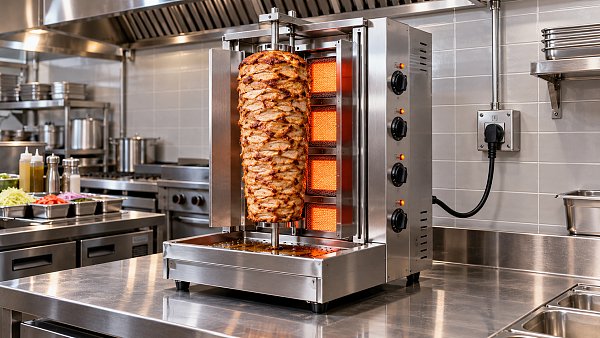
Choosing an electric shawarma machine starts with matching production capacity to your kitchen’s electrical infrastructure—not simply buying the largest model within budget. For procurement teams, meat load, peak-hour demand, heating performance, and supply compatibility all influence whether a purchase works in practice.
The pressure becomes obvious during lunch service: orders arrive faster than the outer layer cooks, staff begin shaving too early, and the queue grows. Yet a larger spit alone may not solve the problem. Reliable output depends on how quickly the machine cooks successive layers, how consistently operators carve them, and whether the kitchen can safely supply the required power.
A useful evaluation therefore separates three questions: how much meat the machine can hold, how much cooked product it can deliver, and what the site must provide to support that output.
Start with the busiest service period, not the daily sales total
Daily volume helps estimate purchasing and preparation needs, but it is a poor basis for sizing a vertical broiler. A restaurant selling most of its shawarma within a short lunch window has different requirements from a hotel outlet serving the same quantity throughout the day.
Build your demand estimate from portions and cooked meat weight:
Required cooked output per hour = peak portions per hour × cooked meat per portion
For example, 80 portions containing 120 grams of cooked meat require 9.6 kilograms of cooked product per hour. These are planning assumptions, not a performance benchmark for any machine.
Then examine the busiest interval within that hour. If many orders arrive together, hourly averages can conceal a service bottleneck. Include delivery orders, catering commitments, and realistic growth, but avoid adding an arbitrary margin that doubles the specification without evidence.
Keep raw and cooked weights separate. If your own production trials show a usable cooked yield of 70%, delivering 9.6 kilograms of cooked meat would require approximately 13.7 kilograms of raw meat. Actual yield varies with the cut, fat content, marinade, trimming, and cooking method. Use your recipe data rather than a supplier’s unexplained conversion factor.
What “capacity” really tells you about an electric shawarma machine
A specification stating “40 kg capacity” usually describes a maximum meat load, not guaranteed hourly production. It may also depend on a particular cone shape and loading arrangement. Treat that figure as one limit within a larger operating envelope.
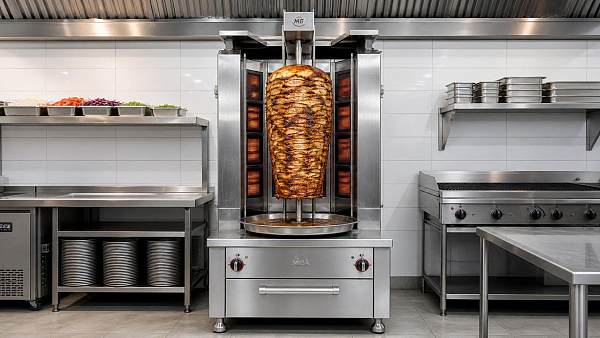
A tall, narrow cone and a shorter, wider cone can contain similar weights but expose different surfaces to the heaters. That changes browning, carving access, and the rate at which the next layer becomes ready. Cone geometry is therefore part of the purchasing specification, not merely an operator preference.
Ask for maximum and recommended operating loads separately. Also request confirmation of the spit assembly’s load rating, drive arrangement, and any loading restrictions. A machine that physically accepts a heavy cone is not necessarily intended to rotate it reliably throughout service.
The smaller-load question buyers often miss
Maximum capacity attracts attention, but minimum practical load matters just as much. An oversized unit may be awkward during quiet periods if a small cone sits outside the most effective heating area or requires unnecessary zones to remain active.
Independently controlled heaters and adjustable spit-to-heater distance can improve flexibility. However, their value depends on the actual arrangement. Ask suppliers to show how the proposed machine handles both your normal load and your lowest-volume service.
Read rated power as an installation requirement—not an output guarantee
Rated electrical input tells you the load the installation must accommodate. It does not directly establish kilograms of cooked meat per hour. Two machines with similar ratings can perform differently because of heater layout, distance from the cone, controls, shielding, and operating conditions.
Higher power can support greater heating demand, but only when the machine transfers heat effectively across the working surface. An attractive total-kilowatt figure does little good if the top and bottom of your cone cook unevenly.
For each shortlisted electric shawarma machine, request:
- Total rated input, including heaters, motor, and controls.
- Power assigned to each heating zone.
- Rated voltage, frequency, and phase configuration.
- Rated current and the manufacturer’s installation instructions.
- Connection method, including any neutral and protective-earth requirements.
Voltage and phase must match the site’s available supply. Do not assume a machine offered for one market can be connected in another simply by changing the plug. Heating elements, motors, controls, and internal wiring may differ between versions.
Use current calculations only as an early screening tool
For a predominantly resistive single-phase load, approximate current is power divided by voltage. A hypothetical 6 kW appliance at 230 V would draw about 26 A. For a balanced, predominantly resistive three-phase load, approximate line current is power divided by the product of the square root of three and line-to-line voltage. A hypothetical 9 kW unit at 400 V would draw about 13 A per phase.
These examples are not circuit-design instructions. Actual nameplate current, internal load distribution, local electrical rules, protective devices, cable routing, ambient conditions, and other installation factors must be assessed by a qualified electrician. A kitchen can have sufficient overall supply capacity while lacking a suitable circuit at the intended workstation.
Verify sustained output before comparing purchase prices
The most useful supplier demonstration resembles your service, not a brief video of a fully browned cone. Initial browning and sustained carving are different tasks: after staff remove the cooked exterior, the newly exposed layer needs sufficient cooking before the next cut.
Request a documented test using a comparable meat type, cone size, starting condition, and portion requirement. Record warm-up time separately from steady-service output. Otherwise, one supplier may quote production after a long preheat while another includes start-up in its calculation.
A meaningful test record should identify:
- Raw load weight, cone dimensions, and whether the product starts chilled or frozen.
- Heater settings, active zones, and spit position.
- Cooking time before the first serving and the subsequent carving intervals.
- Usable cooked weight collected over a defined period.
- Operator involvement and any secondary cooking step.
Evaluate food safety alongside speed. Surface colour alone does not demonstrate that meat is safe to serve. Require a validated cooking and handling procedure appropriate to the product and local regulations, including temperature verification and secondary cooking where necessary. Frozen cones should only be used where the equipment instructions and validated process permit them.
If a supplier cannot substantiate hourly output, treat the figure as unverified. For a high-volume outlet or multi-site rollout, a witnessed trial can be more valuable than a small discount.
Check whether the kitchen can support the machine
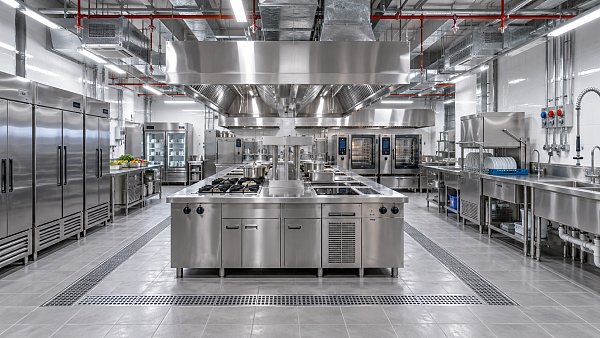
Electrical compatibility is only one part of installation readiness. The selected position also needs suitable extraction, working clearances, a stable support surface, and access for loading, carving, and cleaning.
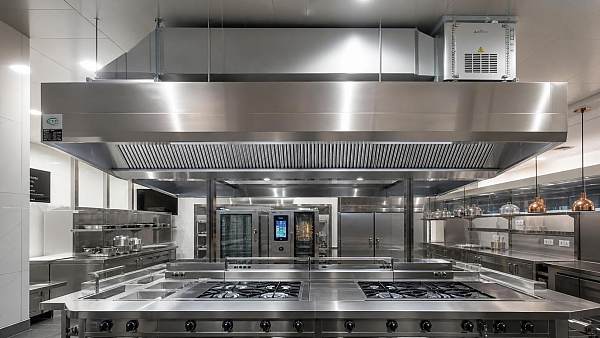
Electric heating does not eliminate ventilation requirements. Cooking meat still produces heat, grease-laden emissions, and odours. Have the applicable extraction and fire-protection requirements confirmed locally rather than assuming that removing gas removes the need for a hood.
Assess the appliance at its maximum operating envelope, including the loaded cone and any adjustable movement. A unit may fit on the counter yet leave insufficient room for a knife, collection tray, or safe removal of the spit. Nearby refrigerated equipment and combustible finishes also need consideration under the installation instructions.
For replacement purchases, verify the existing supply rather than relying on the old machine’s appearance. A similar-sized replacement may have a different electrical rating or connection arrangement.
Compare operating cost without confusing kilowatts and kilowatt-hours
Kilowatts describe power; kilowatt-hours measure energy consumed over time. Multiplying nameplate power by opening hours gives a full-power scenario, not necessarily actual consumption. Zone selection, controls, preheating, idle periods, and loading patterns affect the result.
For illustration, an appliance averaging 5 kW over six operating hours consumes 30 kWh. Multiply that by the applicable electricity tariff to estimate energy cost, then account for any relevant demand charges. The assumed average must come from measurements or a defensible operating profile—not guesswork presented as a saving.
For comparable machines, measured energy per kilogram of usable cooked product is more informative than rated wattage alone. Keep recipe, output, and test conditions consistent. A lower-power model that cannot meet service demand is not a cheaper solution if it forces additional equipment or disrupts sales.
Include installation, ventilation alterations, cleaning labour, and maintenance in the comparison. Heater elements, drive motors, switches, and controls are practical service considerations. Request spare-part prices, availability, warranty terms, and local service arrangements before committing to an imported model.
Turn the shortlist into a purchase specification
For procurement teams sourcing through Global Commercial Trade (GCT), a consistent request for quotation makes competing offers easier to assess. Give every supplier the same demand profile and site information, then require written responses against it.
Your purchase brief should define peak cooked output, portion weight, intended recipe, typical and maximum cone dimensions, service duration, and available electrical supply. Ask suppliers to identify any assumptions or limitations rather than simply confirming that the machine is “suitable.”
Attach the required installation drawing, connection details, cleaning instructions, and model-specific compliance documentation for the destination market. Check that documents cover the exact electrical version being quoted; a generic certificate or catalogue logo is not enough to establish suitability.
The final decision should pass three gates: demonstrated output for your menu, confirmed compatibility with your site, and an acceptable support and ownership-cost profile. Only then does purchase price become a meaningful comparison.
The right electric shawarma machine is not necessarily the largest or most powerful option. It is the one that delivers safely cooked portions at the pace your customers order them, within the limits your kitchen can reliably support.
Search News
Hot Articles
Popular Tags
Need ExpertConsultation?
Connect with our specialized leisureengineering team for procurementstrategies.
Recommended News
 Oct 25, 2026Choosing an Electric Shawarma Machine: Capacity and Power RequirementsChoose the right electric shawarma machine by comparing capacity, power requirements, and peak-hour output. Discover practical buying tips to avoid costly mistakes and keep service moving.● Hospitality Sourcing Dir
 Oct 06, 2026What Is Driving Demand for Commercial Hospitality Projects Across the GCC?Commercial hospitality GCC demand is rising through destination-led tourism, mixed-use development, and premium operational standards. Explore the procurement strategies shaping resilient projects.● Hospitality Sourcing Dir
 Sep 24, 2026Conveyor Pizza Oven Price: What Buyers Should Budget for Capacity and FeaturesConveyor pizza oven price guide: compare capacity, features, installation costs, and quote factors to choose the right commercial oven for your operation.● Hospitality Sourcing Dir
 Sep 23, 2026How Restaurant Buyers Can Source Hospitality Supplies Without OverorderingHospitality supplies for restaurants: learn practical sourcing strategies to cut excess inventory, protect cash flow, improve supplier reliability, and keep every service running smoothly.● Hospitality Sourcing Dir
 Sep 22, 2026Commercial Kitchen Design Price: Budgeting by Layout, Equipment, and MEP ScopeCommercial kitchen design price explained: budget smarter for layout, equipment, MEP scope, compliance, installation, and long-term operational performance.● Hospitality Sourcing Dir
 Sep 19, 2026How to Select a Spiral Dough Mixer for Bakery Batch Size and Dough HydrationSpiral dough mixer bakery guide: match batch size, flour load, and hydration to select reliable torque, temperature control, and consistent dough results.● Hospitality Sourcing Dir
 Sep 14, 2026How Restaurants Can Choose Disposable Wooden Cutlery for Takeout and CateringDisposable wooden cutlery fork spoon knife guide for restaurants: compare strength, finish, packaging, food-contact needs, and catering performance.● Hospitality Sourcing Dir
 Sep 12, 2026How to Size a Restaurant Walk-In Cooler for Peak Inventory and Kitchen LayoutRestaurant walk in coolers sized for peak inventory and kitchen workflow help improve food safety, staff efficiency, storage access, and long-term operational performance.● Hospitality Sourcing Dir
 Sep 10, 2026How to Choose a CE Hot Dog Roller for Safe, High-Volume Food Service?Choose a CE hot dog roller with confidence: compare compliance documents, heating consistency, cleaning design, capacity, and total cost for safe, high-volume food service.● Hospitality Sourcing Dir
 Sep 04, 2026How to Evaluate a Commercial Food Warmer Manufacturer for Bulk Catering ProjectsCommercial food warmer manufacturer evaluation guide for bulk catering projects: compare thermal performance, compliance, customization, costs, and after-sales support.● Hospitality Sourcing Dir
 Aug 30, 2026How Can Buyers Verify Supplier Qualifications Before a Bulk Order?How to confirm supplier qualifications before placing a bulk order: verify legal identity, factory capability, certificates, samples, quality controls, and payment safeguards.● Hospitality Sourcing Dir
 Aug 28, 2026Commercial Kitchen Design Standards: A Planning Checklist for Code-Compliant LayoutsCommercial kitchen design standards: use this practical checklist to plan safer, code-compliant layouts, streamline approvals, and avoid costly rework.● Hospitality Sourcing Dir
 Aug 06, 2026How to Choose Flake Ice Makers for Seafood Displays, Bars, and Food Prep?Flake ice makers buying guide: compare output, hygiene, storage, energy use, and reliability to choose the best solution for seafood displays, bars, and food prep.● Hospitality Sourcing Dir
 Aug 03, 2026Commercial Kitchen Design Price: What Drives Cost in a New Build Project?Commercial kitchen design price explained: discover what drives cost in a new build, from layout and equipment to ventilation, compliance, and hidden budget risks.● Hospitality Sourcing Dir
 Jul 30, 2026How to Choose a Countertop Commercial Pizza Oven for Capacity, Speed, and Space?Countertop commercial pizza oven buying guide: learn how to match capacity, bake speed, and kitchen space for consistent output, lower costs, and smarter purchasing decisions.● Hospitality Sourcing Dir
 Jul 22, 2026How to Evaluate a Cotton Candy Machine Supplier for Quality, Lead Time, and MOQCotton candy machine supplier selection starts with quality, lead time, and MOQ. Learn how to compare suppliers, reduce sourcing risk, and choose a partner that supports reliable growth.● Hospitality Sourcing Dir
 Jul 21, 2026How to Choose a Charcoal Commercial Grill for Capacity, Heat Control, and Menu FitCharcoal commercial grill buying guide: learn how to match capacity, heat control, and menu fit to boost consistency, service speed, and ROI in commercial kitchens.● Hospitality Sourcing Dir
 Jul 10, 2026FDA Import Alert Adds NSF/ANSI 50-2026 for Commercial Kitchen EquipmentFDA Import Alert now highlights NSF/ANSI 50-2026 for commercial kitchen equipment. Learn how dishwashers, ice machines, and steam cabinets can avoid U.S. port detention.● Hospitality Sourcing Dir
 Jul 05, 2026How to Select Energy Efficient Display Cabinets for Food Retail and HospitalityEnergy efficient display cabinets can cut operating costs while improving food safety, visibility, and service efficiency. Learn how to choose the right model for retail and hospitality.● Hospitality Sourcing Dir
 Jul 04, 2026CPSC Flags New UL 2595 Label Rule for Commercial Ice MakersCPSC flags a new UL 2595 label rule for commercial ice makers entering the U.S. after Aug. 1, 2026. Learn who is affected, key compliance steps, and how to avoid port delays and recall risk.● Hospitality Sourcing Dir
 Jun 29, 2026How to Choose Thermal Receipt Printers for Retail and Restaurant CountersThermal receipt printers for retail and restaurant counters: learn how to compare speed, durability, connectivity, and total operating cost to choose a model that supports smoother service.● Hospitality Sourcing Dir
 Jun 28, 2026Stainless Steel Kitchen Ventilation Systems: Key Specifications for Commercial ProjectsStainless steel kitchen ventilation systems: compare material grades, airflow capture, hygiene, fire safety, and installation specs for commercial projects before you buy.● Hospitality Sourcing Dir
 Jun 27, 2026Commercial Shawarma Machines: What to Check Before Buying for High-Volume ServiceShawarma machines commercial buying guide: learn how to compare capacity, heat control, durability, compliance, and lifecycle cost before choosing equipment for high-volume service.● Hospitality Sourcing Dir
 Jun 26, 2026Restaurant POS Systems: How to Compare Features, Costs, and ScalabilityRestaurant POS systems: compare features, costs, and scalability to find the best fit for your restaurant and boost long-term efficiency.● Hospitality Sourcing Dir