Restaurant POS Systems: How to Compare Features, Costs, and Scalability
Restaurant POS Systems: How to Compare Features, Costs, and Scalability
Choosing the right restaurant POS systems can directly shape service speed, cost control, and long-term operational efficiency. For procurement teams, the real challenge is not finding a system that “works,” but finding one that fits today’s workflow and tomorrow’s growth.
That means looking beyond the demo screen. A strong comparison should cover core features, total ownership cost, integration depth, support quality, and scalability. When restaurant POS systems are evaluated with those factors in mind, sourcing decisions become clearer and less risky.
Start with the operating model
Before comparing vendors, define how the system will be used. A quick-service outlet needs speed, simple workflows, and reliable payment handling. A full-service venue may need table management, split bills, kitchen routing, and more detailed reporting.
This is where many procurement projects go off track. A feature-rich platform is not automatically a better fit. The best restaurant POS systems support the actual service model without creating extra clicks, training burden, or hidden complexity.
It also helps to map peak-hour pressure. If your locations handle heavy lunch traffic, delivery orders, and multiple payment types at once, the system must stay stable under load. That operational reality should guide the shortlist.
Compare the features that affect daily use
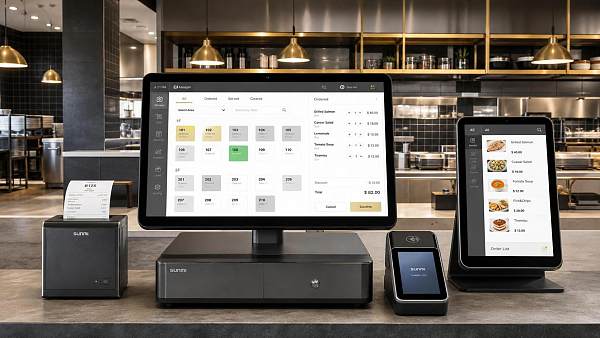
A useful feature review should focus on daily execution, not marketing lists. The most valuable restaurant POS systems usually cover order entry, table mapping, menu customization, payment processing, and kitchen communication in one workflow.
- Fast order entry with minimal training
- Flexible menu and modifier setup
- Split payments, tips, refunds, and void control
- Kitchen display or printer integration
- Sales and labor reporting with export options
Inventory tools also matter, especially if food cost control is a priority. Some restaurant POS systems provide basic stock alerts, while others support ingredient-level tracking and recipe depletion. The deeper the visibility, the easier it is to spot waste and margin pressure.
Do not overlook user permissions. Good role control reduces error and improves accountability. Managers should approve sensitive actions, while front-line staff should only see what they need to serve guests quickly.
Look beyond the sticker price
Upfront pricing is only one part of the equation. The real cost of restaurant POS systems includes hardware, software subscriptions, payment fees, installation, training, support, upgrades, and possible contract penalties.
Cloud-based systems often look affordable at first, but monthly fees can add up across multiple sites. On-premise options may require more initial investment, yet they can offer better control in some operating environments. Procurement teams should model both over a three- to five-year horizon.
A clean total cost of ownership view helps avoid surprise expenses later. It also makes restaurant POS systems easier to compare on equal terms, especially when one vendor bundles services and another charges separately.
Check integration depth and data flow
In practice, a POS is only as good as the systems around it. Restaurant POS systems should connect smoothly with accounting tools, inventory platforms, payroll software, reservation tools, loyalty programs, and online ordering channels.
Weak integration creates manual work and reporting gaps. Strong integration reduces duplicate entry and gives decision-makers a more accurate view of sales, labor, and purchasing. That matters when the buying team needs cleaner data for planning and replenishment.
Ask vendors whether integrations are native, API-based, or third-party add-ons. Native connections are usually easier to maintain. Third-party links may still work well, but they should be tested carefully before signing.
Judge scalability from the start
Scalability is not only about adding more terminals. It is about whether restaurant POS systems can support new locations, new menus, higher transaction volume, and different service formats without a major overhaul.
For multi-site operators, centralized reporting and menu control are especially important. Headquarters should be able to update pricing, promotions, and permissions across stores with minimal delay. That kind of control lowers operating friction as the business expands.
It is also worth checking whether the vendor has a clear upgrade path. A system that fits one location today may become a bottleneck later if it cannot handle more users, more devices, or more complex workflows.
Use a practical vendor comparison checklist
A structured checklist keeps comparisons objective and easier to defend internally. When reviewing restaurant POS systems, procurement teams can ask the same set of questions across every supplier.
- Does the system match the restaurant format and order volume?
- What is included in the quoted price, and what is extra?
- How strong are reporting, inventory, and user control functions?
- Which integrations are native, and which require custom work?
- Can the platform scale across more sites and more users?
- What support response times and training services are guaranteed?
Pilot testing is a smart next step. A short trial in one location can reveal issues that never show up in a sales demo, such as slow workflows, awkward permissions, or unreliable syncing during busy periods.
Make the final decision with long-term value in mind
The best restaurant POS systems are not necessarily the cheapest or the most feature-heavy. They are the ones that balance usability, cost control, and growth potential in a way that fits the business model.
For procurement professionals, that means comparing more than software demos. It means checking total ownership cost, integration quality, operational fit, and scalability with the same level of discipline used in any strategic sourcing decision.
When the evaluation is done well, restaurant POS systems become more than a transaction tool. They become a stable platform for faster service, better control, and smarter expansion.
Search News
Hot Articles
- Restaurant FurnitureFast-Casual Restaurant Interiors: Design Choices That Improve Speed and Guest FlowOct 04, 2026
- Outdoor RidesHow to Select Leisure Park Equipment for Safe, High-Throughput Visitor AreasOct 03, 2026
- Fashion & Gem JewelryDiamond Tester Wholesale: How to Vet Accuracy, Calibration, and MOQ Before OrderingOct 02, 2026
Popular Tags
Need ExpertConsultation?
Connect with our specialized leisureengineering team for procurementstrategies.
Recommended News
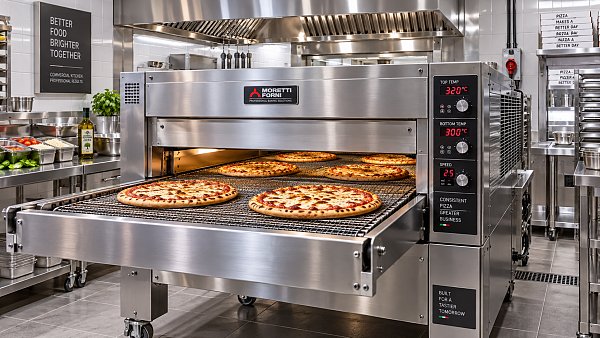
 Sep 24, 2026Conveyor Pizza Oven Price: What Buyers Should Budget for Capacity and FeaturesConveyor pizza oven price guide: compare capacity, features, installation costs, and quote factors to choose the right commercial oven for your operation.● Hospitality Sourcing Dir
 Sep 23, 2026How Restaurant Buyers Can Source Hospitality Supplies Without OverorderingHospitality supplies for restaurants: learn practical sourcing strategies to cut excess inventory, protect cash flow, improve supplier reliability, and keep every service running smoothly.● Hospitality Sourcing Dir
 Sep 22, 2026Commercial Kitchen Design Price: Budgeting by Layout, Equipment, and MEP ScopeCommercial kitchen design price explained: budget smarter for layout, equipment, MEP scope, compliance, installation, and long-term operational performance.● Hospitality Sourcing Dir
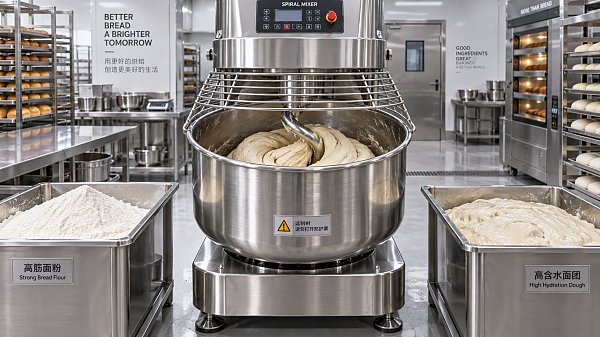
 Sep 19, 2026How to Select a Spiral Dough Mixer for Bakery Batch Size and Dough HydrationSpiral dough mixer bakery guide: match batch size, flour load, and hydration to select reliable torque, temperature control, and consistent dough results.● Hospitality Sourcing Dir
 Sep 14, 2026How Restaurants Can Choose Disposable Wooden Cutlery for Takeout and CateringDisposable wooden cutlery fork spoon knife guide for restaurants: compare strength, finish, packaging, food-contact needs, and catering performance.● Hospitality Sourcing Dir
 Sep 12, 2026How to Size a Restaurant Walk-In Cooler for Peak Inventory and Kitchen LayoutRestaurant walk in coolers sized for peak inventory and kitchen workflow help improve food safety, staff efficiency, storage access, and long-term operational performance.● Hospitality Sourcing Dir
 Sep 10, 2026How to Choose a CE Hot Dog Roller for Safe, High-Volume Food Service?Choose a CE hot dog roller with confidence: compare compliance documents, heating consistency, cleaning design, capacity, and total cost for safe, high-volume food service.● Hospitality Sourcing Dir
 Sep 04, 2026How to Evaluate a Commercial Food Warmer Manufacturer for Bulk Catering ProjectsCommercial food warmer manufacturer evaluation guide for bulk catering projects: compare thermal performance, compliance, customization, costs, and after-sales support.● Hospitality Sourcing Dir
 Aug 30, 2026How Can Buyers Verify Supplier Qualifications Before a Bulk Order?How to confirm supplier qualifications before placing a bulk order: verify legal identity, factory capability, certificates, samples, quality controls, and payment safeguards.● Hospitality Sourcing Dir
 Aug 28, 2026Commercial Kitchen Design Standards: A Planning Checklist for Code-Compliant LayoutsCommercial kitchen design standards: use this practical checklist to plan safer, code-compliant layouts, streamline approvals, and avoid costly rework.● Hospitality Sourcing Dir
 Aug 06, 2026How to Choose Flake Ice Makers for Seafood Displays, Bars, and Food Prep?Flake ice makers buying guide: compare output, hygiene, storage, energy use, and reliability to choose the best solution for seafood displays, bars, and food prep.● Hospitality Sourcing Dir
 Aug 03, 2026Commercial Kitchen Design Price: What Drives Cost in a New Build Project?Commercial kitchen design price explained: discover what drives cost in a new build, from layout and equipment to ventilation, compliance, and hidden budget risks.● Hospitality Sourcing Dir
 Jul 30, 2026How to Choose a Countertop Commercial Pizza Oven for Capacity, Speed, and Space?Countertop commercial pizza oven buying guide: learn how to match capacity, bake speed, and kitchen space for consistent output, lower costs, and smarter purchasing decisions.● Hospitality Sourcing Dir
 Jul 22, 2026How to Evaluate a Cotton Candy Machine Supplier for Quality, Lead Time, and MOQCotton candy machine supplier selection starts with quality, lead time, and MOQ. Learn how to compare suppliers, reduce sourcing risk, and choose a partner that supports reliable growth.● Hospitality Sourcing Dir
 Jul 21, 2026How to Choose a Charcoal Commercial Grill for Capacity, Heat Control, and Menu FitCharcoal commercial grill buying guide: learn how to match capacity, heat control, and menu fit to boost consistency, service speed, and ROI in commercial kitchens.● Hospitality Sourcing Dir
 Jul 10, 2026FDA Import Alert Adds NSF/ANSI 50-2026 for Commercial Kitchen EquipmentFDA Import Alert now highlights NSF/ANSI 50-2026 for commercial kitchen equipment. Learn how dishwashers, ice machines, and steam cabinets can avoid U.S. port detention.● Hospitality Sourcing Dir
 Jul 05, 2026How to Select Energy Efficient Display Cabinets for Food Retail and HospitalityEnergy efficient display cabinets can cut operating costs while improving food safety, visibility, and service efficiency. Learn how to choose the right model for retail and hospitality.● Hospitality Sourcing Dir
 Jul 04, 2026CPSC Flags New UL 2595 Label Rule for Commercial Ice MakersCPSC flags a new UL 2595 label rule for commercial ice makers entering the U.S. after Aug. 1, 2026. Learn who is affected, key compliance steps, and how to avoid port delays and recall risk.● Hospitality Sourcing Dir
 Jun 29, 2026How to Choose Thermal Receipt Printers for Retail and Restaurant CountersThermal receipt printers for retail and restaurant counters: learn how to compare speed, durability, connectivity, and total operating cost to choose a model that supports smoother service.● Hospitality Sourcing Dir
 Jun 28, 2026Stainless Steel Kitchen Ventilation Systems: Key Specifications for Commercial ProjectsStainless steel kitchen ventilation systems: compare material grades, airflow capture, hygiene, fire safety, and installation specs for commercial projects before you buy.● Hospitality Sourcing Dir
 Jun 27, 2026Commercial Shawarma Machines: What to Check Before Buying for High-Volume ServiceShawarma machines commercial buying guide: learn how to compare capacity, heat control, durability, compliance, and lifecycle cost before choosing equipment for high-volume service.● Hospitality Sourcing Dir
 Jun 26, 2026Restaurant POS Systems: How to Compare Features, Costs, and ScalabilityRestaurant POS systems: compare features, costs, and scalability to find the best fit for your restaurant and boost long-term efficiency.● Hospitality Sourcing Dir
 Jun 25, 2026Kitchen Ventilation Systems Design: How to Size Hoods, Airflow, and Make-Up AirKitchen ventilation systems design explained clearly: learn how to size hoods, set exhaust airflow, and balance make-up air for safer, more efficient commercial kitchens.● Hospitality Sourcing Dir
 Jun 14, 2026Hot Dog Rollers for Convenience Stores and Cafes: Capacity, Heating Zones, and Cleaning TipsHot dog rollers buying guide for convenience stores and cafes: compare real capacity, heating zones, energy use, and cleaning tips to choose a smarter, lower-waste setup.● Hospitality Sourcing Dir