Kitchen Ventilation Systems Design: How to Size Hoods, Airflow, and Make-Up Air
Kitchen Ventilation Systems Design: How to Size Hoods, Airflow, and Make-Up Air
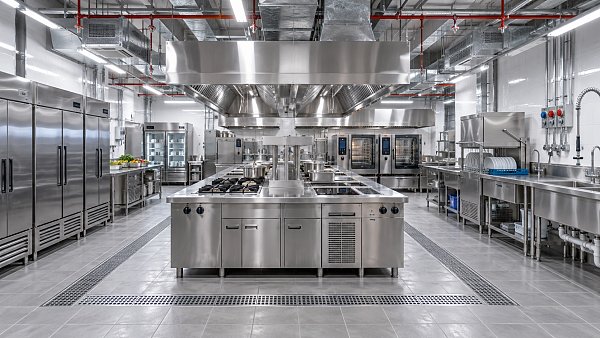
Effective kitchen ventilation systems design starts with control. Heat, grease, smoke, moisture, and odors must be captured early, not after they spread.
In commercial projects, this affects safety, inspections, energy bills, and kitchen comfort. It also shapes duct sizing, fan selection, and equipment layout.
For hotels, campuses, hospitals, and food halls, poor design often creates the same problems. Hoods spill smoke, doors slam, and HVAC balance becomes unstable.
A better approach is practical and calculation-led. You define appliance duty, hood geometry, exhaust volume, and make-up air strategy as one system.
That is the core of reliable kitchen ventilation systems design. When these choices align, commissioning becomes easier and lifecycle performance improves.
Why kitchen ventilation systems design matters early
Ventilation should not be treated as a late mechanical package. It connects architecture, fire protection, kitchen operations, and electrical loads from day one.
From a project viewpoint, early kitchen ventilation systems design reduces rework. It prevents clashes above ceilings and avoids undersized shafts or misplaced utilities.
It also supports code compliance. Local rules often reference IMC, NFPA 96, ASHRAE guidance, and regional energy requirements.
In actual procurement, this means technical submittals must show more than airflow numbers. Reviewers expect hood type, duty classification, capture method, and make-up air logic.
The four performance targets
- Capture and contain grease-laden vapors at the source.
- Maintain safe pressure relationships across the kitchen and adjacent spaces.
- Limit wasted conditioned air through balanced make-up air delivery.
- Support cleaning access, fire safety, and long-term maintenance.
Step one: classify the cooking load correctly
Before sizing anything, define what the hood must handle. Light, medium, heavy, and extra-heavy duty equipment create very different exhaust demands.
A dishwasher area is not a charbroiler line. A combi oven behaves differently from a wok range or conveyor fryer.
This matters because kitchen ventilation systems design depends on plume strength. Higher heat and grease loads require stronger capture and greater containment margins.
At this stage, verify these inputs:
- Appliance type, width, depth, and input rating.
- Fuel source, especially gas versus electric.
- Menu profile and production peaks.
- Operating diversity during breakfast, lunch, and dinner cycles.
- Future expansion or equipment swaps.
If these assumptions are wrong, every later calculation becomes unreliable. That is one of the most common root causes of underperforming systems.
Step two: size the hood for capture, not just coverage
Many teams focus on hood length only. In practice, kitchen ventilation systems design must prioritize overhang, mounting height, hood style, and appliance arrangement.
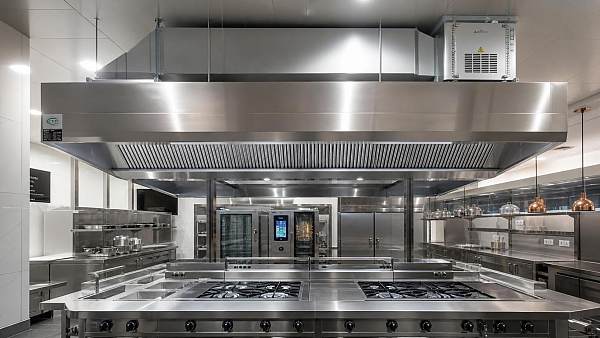
Wall canopy hoods usually perform more efficiently than island hoods. Island layouts lose the stabilizing wall effect and often need more exhaust air.
As a working rule, the hood should extend beyond the cooking equipment footprint. This extra overhang improves capture when thermal plumes spread outward.
Key hood sizing checks
- Use hood types listed for grease or condensate, depending on the process.
- Confirm side panels where cross drafts are expected.
- Keep mounting height within manufacturer and code limits.
- Group similar-duty appliances under the same hood when possible.
- Avoid placing high-output equipment at exposed hood ends.
A hood that is technically wide enough can still fail. Real performance depends on airflow pattern and containment under busy operating conditions.
Step three: calculate exhaust airflow with realistic assumptions
Exhaust airflow is usually expressed in CFM. The correct target depends on hood type, appliance duty, hood length, and whether the hood is wall-mounted or island-style.
Some teams use a simple CFM per linear foot shortcut. That can work for early budgeting, but detailed kitchen ventilation systems design needs manufacturer data and code alignment.
A practical process often looks like this:
- Define hood configuration and net hood length.
- Match appliance duty to the required exhaust rate.
- Adjust for end exposure, side panels, and ceiling height.
- Review diversity if all appliances do not peak together.
- Check fan static pressure after duct routing is finalized.
More importantly, avoid sizing from catalog averages alone. A compact quick-service kitchen behaves differently from a banquet production line with heavy frying peaks.
This is where experienced review helps most. Small errors in assumed airflow can create major changes in fan power, noise, and air balance.
Step four: make-up air should support capture, not fight it
Every exhaust system removes air that must be replaced. In kitchen ventilation systems design, make-up air is not a secondary issue. It is central to hood performance.
If replacement air is too low, the kitchen becomes excessively negative. Doors become hard to open, pilot stability suffers, and unconditioned air enters from random paths.
If replacement air is delivered too aggressively near the hood face, it can push the thermal plume out of the capture zone.
Good make-up air design principles
- Replace a large share of exhaust air, but preserve controlled room pressure.
- Use low-velocity delivery near occupied zones.
- Avoid directing supply jets across the hood opening.
- Coordinate air temperature with comfort and HVAC energy goals.
- Confirm transfer air paths from adjacent spaces where allowed.
In many projects, roughly balanced replacement is preferred, with a slight negative pressure in the kitchen. The exact value should follow local code and whole-building strategy.
Ductwork, fan selection, and pressure losses
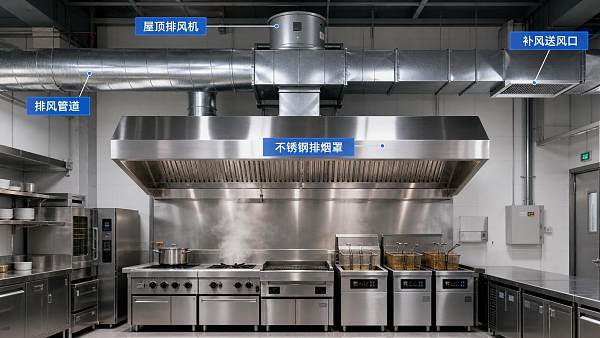
Even well-sized hoods fail when the duct path is poorly planned. Kitchen ventilation systems design must account for grease duct routing, access panels, and pressure drop.
Long runs, sharp elbows, and roof transitions raise static pressure. That increases fan energy and may shift operating airflow away from the design point.
Review these items before release:
- Duct velocity appropriate for grease transport and noise control.
- Access for inspection and cleaning at required intervals.
- Fan type suitable for grease exhaust and roof conditions.
- Allowance for filters, silencers, and future system fouling.
- Vibration isolation and roof curb coordination.
It is also smart to confirm service access. A fan that meets airflow but cannot be maintained easily becomes a long-term operational risk.
Controls, energy performance, and commissioning
Recent projects increasingly use demand control kitchen ventilation. These systems adjust fan speed based on temperature or optical sensing above cooking lines.
When the application fits, this approach can reduce fan energy and conditioned make-up air costs. It is especially useful where load profiles vary by daypart.
Still, controls do not replace sound kitchen ventilation systems design. Base capture performance must be correct before any turndown strategy is introduced.
Commissioning checklist
- Verify installed hood dimensions and mounting height.
- Measure exhaust and make-up air under operating conditions.
- Test capture with full cooking load, not idle equipment.
- Check space pressure at doors and adjacent rooms.
- Confirm interlocks with fire suppression and gas valves.
This phase often reveals field issues such as misplaced diffusers or altered duct runs. Catching them before handover saves time and protects project credibility.
Common mistakes that raise risk and cost
Several issues appear repeatedly across commercial kitchen projects:
- Choosing hood style from layout preference instead of capture needs.
- Ignoring end exposure and nearby cross drafts.
- Applying generic CFM rules without appliance-duty validation.
- Supplying make-up air too close to the hood face.
- Underestimating duct static pressure and access needs.
- Skipping full-load commissioning before final acceptance.
Each error looks minor in design review. Combined, they can damage capture efficiency, worker comfort, and schedule certainty.
A practical sourcing and design review framework
When comparing vendors, request more than brochures. Strong kitchen ventilation systems design depends on verified performance data and coordinated engineering support.
A useful review package should include:
- Hood listing details, filter type, and grease management features.
- Recommended exhaust ranges by duty and mounting condition.
- Make-up air integration options and diffuser guidance.
- Fan curves, sound data, and external static assumptions.
- Cleaning access, spare parts support, and compliance documents.
For global projects, supplier responsiveness matters as much as hardware quality. Fast submittal revisions and clear compliance records reduce approval delays.
That is especially relevant for hospitality and institutional builds with tight opening dates. A reliable sourcing partner helps keep kitchen ventilation systems design aligned with procurement and site realities.
In the end, the best results come from treating hood sizing, airflow, make-up air, duct losses, and controls as one coordinated system. That approach lowers risk, improves compliance, and gives the kitchen a stable foundation for daily operation.
Search News
Hot Articles
- Restaurant FurnitureFast-Casual Restaurant Interiors: Design Choices That Improve Speed and Guest FlowOct 04, 2026
- Outdoor RidesHow to Select Leisure Park Equipment for Safe, High-Throughput Visitor AreasOct 03, 2026
- Fashion & Gem JewelryDiamond Tester Wholesale: How to Vet Accuracy, Calibration, and MOQ Before OrderingOct 02, 2026
Popular Tags
Need ExpertConsultation?
Connect with our specialized leisureengineering team for procurementstrategies.
Recommended News
 Sep 24, 2026Conveyor Pizza Oven Price: What Buyers Should Budget for Capacity and FeaturesConveyor pizza oven price guide: compare capacity, features, installation costs, and quote factors to choose the right commercial oven for your operation.● Hospitality Sourcing Dir
 Sep 23, 2026How Restaurant Buyers Can Source Hospitality Supplies Without OverorderingHospitality supplies for restaurants: learn practical sourcing strategies to cut excess inventory, protect cash flow, improve supplier reliability, and keep every service running smoothly.● Hospitality Sourcing Dir
 Sep 22, 2026Commercial Kitchen Design Price: Budgeting by Layout, Equipment, and MEP ScopeCommercial kitchen design price explained: budget smarter for layout, equipment, MEP scope, compliance, installation, and long-term operational performance.● Hospitality Sourcing Dir
 Sep 19, 2026How to Select a Spiral Dough Mixer for Bakery Batch Size and Dough HydrationSpiral dough mixer bakery guide: match batch size, flour load, and hydration to select reliable torque, temperature control, and consistent dough results.● Hospitality Sourcing Dir
 Sep 14, 2026How Restaurants Can Choose Disposable Wooden Cutlery for Takeout and CateringDisposable wooden cutlery fork spoon knife guide for restaurants: compare strength, finish, packaging, food-contact needs, and catering performance.● Hospitality Sourcing Dir
 Sep 12, 2026How to Size a Restaurant Walk-In Cooler for Peak Inventory and Kitchen LayoutRestaurant walk in coolers sized for peak inventory and kitchen workflow help improve food safety, staff efficiency, storage access, and long-term operational performance.● Hospitality Sourcing Dir
 Sep 10, 2026How to Choose a CE Hot Dog Roller for Safe, High-Volume Food Service?Choose a CE hot dog roller with confidence: compare compliance documents, heating consistency, cleaning design, capacity, and total cost for safe, high-volume food service.● Hospitality Sourcing Dir
 Sep 04, 2026How to Evaluate a Commercial Food Warmer Manufacturer for Bulk Catering ProjectsCommercial food warmer manufacturer evaluation guide for bulk catering projects: compare thermal performance, compliance, customization, costs, and after-sales support.● Hospitality Sourcing Dir
 Aug 30, 2026How Can Buyers Verify Supplier Qualifications Before a Bulk Order?How to confirm supplier qualifications before placing a bulk order: verify legal identity, factory capability, certificates, samples, quality controls, and payment safeguards.● Hospitality Sourcing Dir
 Aug 28, 2026Commercial Kitchen Design Standards: A Planning Checklist for Code-Compliant LayoutsCommercial kitchen design standards: use this practical checklist to plan safer, code-compliant layouts, streamline approvals, and avoid costly rework.● Hospitality Sourcing Dir
 Aug 06, 2026How to Choose Flake Ice Makers for Seafood Displays, Bars, and Food Prep?Flake ice makers buying guide: compare output, hygiene, storage, energy use, and reliability to choose the best solution for seafood displays, bars, and food prep.● Hospitality Sourcing Dir
 Aug 03, 2026Commercial Kitchen Design Price: What Drives Cost in a New Build Project?Commercial kitchen design price explained: discover what drives cost in a new build, from layout and equipment to ventilation, compliance, and hidden budget risks.● Hospitality Sourcing Dir
 Jul 30, 2026How to Choose a Countertop Commercial Pizza Oven for Capacity, Speed, and Space?Countertop commercial pizza oven buying guide: learn how to match capacity, bake speed, and kitchen space for consistent output, lower costs, and smarter purchasing decisions.● Hospitality Sourcing Dir
 Jul 22, 2026How to Evaluate a Cotton Candy Machine Supplier for Quality, Lead Time, and MOQCotton candy machine supplier selection starts with quality, lead time, and MOQ. Learn how to compare suppliers, reduce sourcing risk, and choose a partner that supports reliable growth.● Hospitality Sourcing Dir
 Jul 21, 2026How to Choose a Charcoal Commercial Grill for Capacity, Heat Control, and Menu FitCharcoal commercial grill buying guide: learn how to match capacity, heat control, and menu fit to boost consistency, service speed, and ROI in commercial kitchens.● Hospitality Sourcing Dir
 Jul 10, 2026FDA Import Alert Adds NSF/ANSI 50-2026 for Commercial Kitchen EquipmentFDA Import Alert now highlights NSF/ANSI 50-2026 for commercial kitchen equipment. Learn how dishwashers, ice machines, and steam cabinets can avoid U.S. port detention.● Hospitality Sourcing Dir
 Jul 05, 2026How to Select Energy Efficient Display Cabinets for Food Retail and HospitalityEnergy efficient display cabinets can cut operating costs while improving food safety, visibility, and service efficiency. Learn how to choose the right model for retail and hospitality.● Hospitality Sourcing Dir
 Jul 04, 2026CPSC Flags New UL 2595 Label Rule for Commercial Ice MakersCPSC flags a new UL 2595 label rule for commercial ice makers entering the U.S. after Aug. 1, 2026. Learn who is affected, key compliance steps, and how to avoid port delays and recall risk.● Hospitality Sourcing Dir
 Jun 29, 2026How to Choose Thermal Receipt Printers for Retail and Restaurant CountersThermal receipt printers for retail and restaurant counters: learn how to compare speed, durability, connectivity, and total operating cost to choose a model that supports smoother service.● Hospitality Sourcing Dir
 Jun 28, 2026Stainless Steel Kitchen Ventilation Systems: Key Specifications for Commercial ProjectsStainless steel kitchen ventilation systems: compare material grades, airflow capture, hygiene, fire safety, and installation specs for commercial projects before you buy.● Hospitality Sourcing Dir
 Jun 27, 2026Commercial Shawarma Machines: What to Check Before Buying for High-Volume ServiceShawarma machines commercial buying guide: learn how to compare capacity, heat control, durability, compliance, and lifecycle cost before choosing equipment for high-volume service.● Hospitality Sourcing Dir
 Jun 26, 2026Restaurant POS Systems: How to Compare Features, Costs, and ScalabilityRestaurant POS systems: compare features, costs, and scalability to find the best fit for your restaurant and boost long-term efficiency.● Hospitality Sourcing Dir
 Jun 25, 2026Kitchen Ventilation Systems Design: How to Size Hoods, Airflow, and Make-Up AirKitchen ventilation systems design explained clearly: learn how to size hoods, set exhaust airflow, and balance make-up air for safer, more efficient commercial kitchens.● Hospitality Sourcing Dir
 Jun 14, 2026Hot Dog Rollers for Convenience Stores and Cafes: Capacity, Heating Zones, and Cleaning TipsHot dog rollers buying guide for convenience stores and cafes: compare real capacity, heating zones, energy use, and cleaning tips to choose a smarter, lower-waste setup.● Hospitality Sourcing Dir