LED PAR Cans Wholesale: What to Compare in Wattage, Beam Angle, and DMX Control
Why does led par cans wholesale comparison matter before asking for quotes?
In commercial lighting, price alone rarely predicts project success.
A lower quote can still create higher costs through weak output, poor control response, or fixture mismatch.
That is why led par cans wholesale decisions usually start with three technical filters.
Those filters are wattage, beam angle, and DMX control compatibility.
Together, they shape brightness, coverage, programming flexibility, installation density, and operating efficiency.
In practice, the right fixture for a hotel ballroom may fail in a themed attraction or school auditorium.
Global Commercial Trade follows this specification-first approach because commercial spaces depend on design consistency, compliance, and dependable sourcing.
When reviewing led par cans wholesale offers, the useful question is not only “How much?”
A better question is “What output, spread, and control result will this unit actually deliver on site?”
Is higher wattage always better for led par cans wholesale projects?
Not always, and this is where many buying mistakes begin.
Wattage shows power consumption, but it does not tell the whole story about usable light.
Fixture efficiency, LED chip quality, lens design, and color mixing all influence visible output.
A well-built 120W unit can outperform a weaker 180W design in real venue conditions.
For led par cans wholesale evaluation, wattage should be linked to mounting height and throw distance.
Short-throw architectural uplighting may need moderate wattage with stable color rendering.
Stage wash in larger event halls often needs more punch to remain visible against ambient light.
Outdoor entertainment zones may need even more output because surfaces absorb light differently.
A practical comparison table helps turn wattage into procurement logic.
The more reliable comparison method is fixture output per application, not wattage in isolation.
Request photometric data, housing temperature range, and real power draw before final supplier selection.
How should beam angle be judged for different commercial spaces?
Beam angle decides how tightly or broadly light spreads across a target area.
It affects both visual impact and fixture count, so it strongly influences total project cost.
Narrow beams, such as 15° or 25°, concentrate intensity on columns, stage zones, or scenic highlights.
Wide beams, such as 40° or 60°, are better for wall washing and general color coverage.
In actual applications, over-wide beams often waste light and flatten the intended atmosphere.
Over-narrow beams can create hotspots, forcing extra fixtures to fill dark gaps.
That is why led par cans wholesale sourcing should match beam angle to the design objective first.
- For hotel facades and ballroom accents, medium beams often balance elegance and fixture efficiency.
- For concert backdrops, narrow beams provide stronger color presence through haze and stage depth.
- For retail displays or exhibit corners, adjustable or replaceable lenses improve layout flexibility.
- For educational halls, wider beams reduce patchy coverage during speeches and performances.
If the supplier offers optional lenses, that can reduce future replacement needs.
Still, lens options should be checked for stocking stability, not just catalog availability.
DMX control sounds standard, so what still needs checking?
Many fixtures say DMX512, yet integration problems still appear during installation.
The issue is usually not the presence of DMX, but the depth of control and system behavior.
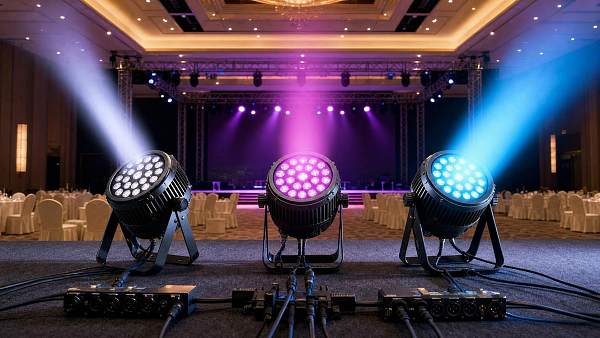
Some led par cans wholesale models support only basic dimmer and color channels.
Others include macros, strobe modes, virtual color wheels, or multiple channel personalities.
Those differences matter when the fixtures join a larger lighting network.
For example, a hospitality venue may prefer simple operation and scene recall.
A touring or themed entertainment setup may need finer programming control.
Before placing a led par cans wholesale order, confirm these points carefully.
- Channel modes and whether they match the existing console library
- Dimming curve quality, especially at low output levels
- DMX input and output connector type
- RDM support for remote addressing and diagnostics
- Master-slave behavior for simple standalone scenes
This is also where sourcing intelligence becomes useful.
GCT-style commercial evaluation favors documentation quality, firmware stability, and after-sales responsiveness, not just technical labels.
Where do cost overruns usually happen in led par cans wholesale orders?
The visible unit price is only one layer of cost.
Extra spending often appears through wrong beam choice, oversized wattage, or control incompatibility.
A fixture that is too weak increases quantity and rigging labor.
A fixture that is too powerful can create glare, thermal stress, and unnecessary energy use.
Control issues may require new splitters, readdressing time, or programming workarounds.
Shipping and compliance can also shift the real budget.
If the project spans hospitality, education, or entertainment environments, certification needs may differ by region.
That means the same led par cans wholesale model is not always equally deployable everywhere.
A simple pre-order checklist helps reduce surprises.
- Confirm lux targets instead of comparing wattage labels only.
- Map beam angle against ceiling height and surface width.
- Verify DMX mode sheets before approving production.
- Check certification, voltage, and plug requirements by destination market.
- Review spare parts lead time for power supplies, LEDs, and fans.
These checks are especially valuable when ordering mixed batches for multiple venues.
What supplier questions lead to better led par cans wholesale decisions?
The strongest questions move beyond catalog specifications and into project proof.
A serious supplier should explain not only what the fixture is, but where it performs best.
That matters in commercial sourcing, where consistency across sites often matters more than isolated peak performance.
Useful questions include the following.
- Can you provide photometric files or measured center lux at specific distances?
- Which beam angles are standard, and which require special production lead time?
- How many DMX personalities are available, and can they be demonstrated?
- What is the failure rate history for drivers, fans, and power boards?
- Are replacement parts and matching batches available after the first shipment?
This type of discussion reveals whether a supplier supports long-term commercial rollouts.
It also aligns with the GCT view that sourcing quality depends on trust signals, documentation, and repeatable delivery.
If answers remain vague, the risk usually appears later in installation or maintenance.
So, how should the final shortlist be built?
A smart shortlist usually balances technical fit, total cost, and supply reliability.
For led par cans wholesale sourcing, start by separating decorative lighting from performance lighting.
Then compare each candidate by output need, beam requirement, and control depth.
If two models appear similar, prioritize the one with clearer testing data and steadier post-sale support.
That choice often protects budget better than chasing the lowest opening price.
In the end, led par cans wholesale decisions work best when the fixture is judged in context.
Wattage should serve the venue, beam angle should serve the visual plan, and DMX control should serve the operating system.
The next practical step is to build a simple comparison sheet for each project zone.
List throw distance, mounting height, desired effect, control method, certification needs, and spare parts expectations.
That framework makes supplier offers easier to judge and helps avoid costly mismatches before production begins.
Search News
Hot Articles
- Restaurant FurnitureFast-Casual Restaurant Interiors: Design Choices That Improve Speed and Guest FlowOct 04, 2026
- Outdoor RidesHow to Select Leisure Park Equipment for Safe, High-Throughput Visitor AreasOct 03, 2026
- Fashion & Gem JewelryDiamond Tester Wholesale: How to Vet Accuracy, Calibration, and MOQ Before OrderingOct 02, 2026
Popular Tags
Need ExpertConsultation?
Connect with our specialized leisureengineering team for procurementstrategies.
Recommended News
 Jul 13, 2026Stage Riser Platforms Explained: Types, Load Ratings, and Best-Fit Event UsesStage riser platforms explained clearly: compare types, load ratings, safety factors, and best-fit event uses to choose smarter, safer solutions for conferences, schools, hotels, and live shows.● Pro Audio Engineer
 Jul 09, 2026SASO Fast Track Cuts Stage Lighting Export Lead TimeSASO Fast Track cuts stage lighting export lead time from 45 days to 12 working days. Learn how Saudi certification changes affect truss suppliers, OEMs, buyers, and shipment planning.● Pro Audio Engineer
 Jul 08, 2026SASO Updates Stage Lighting Label Rules for LED Moving HeadsSASO updates stage lighting label rules for LED moving heads, requiring three-level energy efficiency values and bilingual labels. See what exporters and buyers must do before October 2026.● Pro Audio Engineer
 Jul 07, 2026SASO Adds Energy Label Rules for Stage Lighting ImportsSASO Adds Energy Label Rules for Stage Lighting Imports: learn which stage lighting products now need Arabic energy labels and SASO-recognized test reports before Sept. 1, 2026.● Pro Audio Engineer
 Jul 06, 2026Saudi SASO Sets A+ Rule for Stage LED LightingSaudi SASO sets A+ rule for stage LED lighting from Oct 1, 2026. Learn how the new SASO label and IEC 62722-2-1:2026 standard impact compliance, shipping, and market access.● Pro Audio Engineer
 Jul 04, 2026SASO Tightens RF Test Rules for Wireless Stage ControlsSASO tightens RF test rules for wireless stage controls in Saudi Arabia. Learn how the new IEC 62368-3 requirement impacts stage lighting exports, compliance, and delivery.● Pro Audio Engineer
 Jul 03, 2026Saudi SASO Adds RF Approval Rule for Stage LightingSaudi SASO adds RF approval rule for stage lighting. Learn how the new SASO RoHS+RF certification affects wireless lighting, truss control exports, retail access, and project delivery in Saudi Arabia.● Pro Audio Engineer
 Jul 02, 2026SASO Starts EMC Pilot for Smart Stage Lighting in SaudiSASO starts an EMC pilot for smart stage lighting in Saudi Arabia, impacting dimming controllers, cloud access, and project compliance. See what suppliers and integrators must do now.● Pro Audio Engineer
 Jul 01, 2026Saudi SASO Tightens UV-C Limits for Stage LightingSaudi SASO tightens UV-C limits for stage lighting and truss products. Learn the 2026 SASO IEC 62471 update, retesting deadline, customs risks, and how to protect Saudi shipments.● Pro Audio Engineer
 Jun 30, 2026EN 62471:2026 Adds UV-C Limit for Stage LightingEN 62471:2026 adds a UV-C limit for stage lighting, impacting LED moving heads, laser fixtures, and truss lighting. Learn what changes before Dec 1, 2026.● Pro Audio Engineer
 Jun 29, 2026TUV Adds Wi-Fi 7 EMC Test for Stage LightingTUV Adds Wi-Fi 7 EMC Test for Stage Lighting sold into the EU. Learn the Oct 1, 2026 deadline, retesting rules, and how EN 55032:2024 impacts certificates, shipments, and compliance planning.● Pro Audio Engineer
 Jun 25, 2026LED PAR Cans Wholesale: What to Compare in Wattage, Beam Angle, and DMX ControlLED par cans wholesale buyers should compare wattage, beam angle, and DMX control before requesting quotes. Learn how to avoid costly mismatches and choose fixtures that fit each venue.● Pro Audio Engineer
 Jun 16, 2026Stage Lighting Equipment List for Small Venues: What You Need and How to Plan ItStage lighting equipment for small venues: discover a practical equipment list, planning tips, and smart setup ideas to improve performance, flexibility, and long-term value.● Pro Audio Engineer
 Jun 12, 2026Vietnam Tightens EMC Rules for Stage Lighting LEDsVietnam Tightens EMC Rules for Stage Lighting LEDs: learn how QCVN 139:2026 impacts imports, testing, sourcing, and delivery planning for stage lighting businesses.● Pro Audio Engineer
 Jun 11, 2026LPGA Shanghai Debut Lifts Stage Lighting OrdersStage lighting and truss demand is rising as LPGA Shanghai debuts in 2026. Learn how tighter delivery windows, compliance, and project execution are reshaping global orders.● Pro Audio Engineer
 Jun 04, 2026UK EPR Rules Expand to Stage Lighting and TrussUK EPR rules for stage lighting and truss expand in Q3 2026. Learn how UKCA-linked registration, reporting, recycling fees, and material documentation will affect compliance and market access.● Pro Audio Engineer
 Jun 03, 2026UK EPR Fee Hits Stage Truss Textiles in Q3 2026UK EPR Fee for stage truss textiles starts in Q3 2026. Learn what new recycling charges and UKCA-Flame rules mean for lighting and truss suppliers.● Pro Audio Engineer
 Jun 02, 2026UK EPR Fee Hits Stage Lighting & TrussUK EPR Fee Hits Stage Lighting & Truss products with textile components in 2026. Learn compliance risks, BOM updates, and cost impacts for UK exporters.● Pro Audio Engineer
 May 25, 2026China's Carbon Fiber Truss Strength Up 32% at 2026 Sports ExpoCarbon fiber truss strength up 32% at 2026 Sports Expo—UL 1598 certified, CE+UL ready. Discover how China’s stage infrastructure is winning European music festivals & global tenders.● Pro Audio Engineer
 May 23, 2026Vietnam Mandates Bilingual MSDS for Stage Lighting & Truss ImportsVietnam mandates bilingual MSDS (Vietnamese & Chinese) for stage lighting and truss imports — ensure compliance by July 1, 2026 to avoid shipment rejection.● Pro Audio Engineer
 May 20, 20263 Chinese Stage Lighting Firms Join LA28 Olympic Supplier List3 Chinese stage lighting firms join LA28 Olympic supplier list — showcasing ISO 20121 & UL 1574 compliance, sustainability leadership, and global credibility in live-event infrastructure.● Pro Audio Engineer
 May 20, 2026What matters most when choosing lighting stands crank up?Lighting stands crank up: learn what really matters beyond height—load capacity, crank safety, stability, compatibility, and serviceability—to choose the right stand with confidence.● Pro Audio Engineer
 May 19, 20263 Chinese Stage Lighting Firms Join IOC’s 2028 LA Olympics Supplier ListChinese stage lighting firms join IOC's 2028 LA Olympics supplier list — a major validation for OEM/ODM exporters and tech integrators in global sports & entertainment lighting.● Pro Audio Engineer
 May 19, 2026When are chain hoists for stage the better rigging choiceChain hoists for stage are the better rigging choice when you need precise lifting, compact headroom use, and reliable repeat performance. See key use cases and buyer tips.● Pro Audio Engineer