When are chain hoists for stage the better rigging choice
For project managers and engineering leads, choosing the right lifting solution can directly affect safety, setup speed, and budget control. Understanding when chain hoists for stage are the better rigging choice helps you balance load precision, operational reliability, and compliance in demanding event or venue installations. This guide outlines the practical scenarios where they deliver the strongest performance and long-term value.
In stage production, venue fit-out, themed entertainment, and commercial event delivery, rigging decisions are rarely just technical. They influence labor planning, commissioning time, roof load strategy, and ongoing maintenance exposure. For teams managing touring systems, fixed installations, or multi-use venues, selecting chain hoists for stage can be the difference between a controlled lift plan and an expensive operational compromise.
This article focuses on the situations where chain hoists are the better option than manual lifting tools, wire-rope hoists, or less specialized rigging approaches. It also explains the specification, procurement, and implementation factors that matter most to commercial buyers and project stakeholders.
Where chain hoists for stage deliver the strongest operational advantage
Chain hoists for stage are most valuable when the project requires repeatable vertical lifting, compact rigging geometry, and controlled motion over loads ranging from 250 kg to 2,000 kg. In many live event and venue settings, these three factors matter more than headline lifting speed alone.
For project managers, the practical question is not whether a hoist can lift a load once. The better question is whether the system can lift it safely 20, 50, or 200 times across rehearsals, changeovers, and maintenance cycles without creating excessive downtime.
Typical commercial and venue scenarios
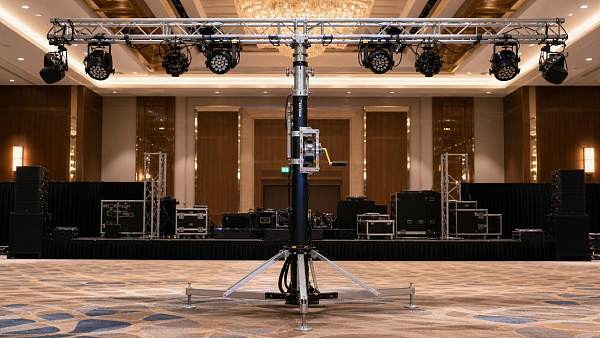
Chain hoists for stage are commonly preferred in theaters, convention halls, hotel ballrooms, houses of worship, university auditoriums, and indoor amusement venues. These spaces often have limited rigging clearances, mixed-use schedules, and a need for predictable setup windows of 4 to 12 hours.
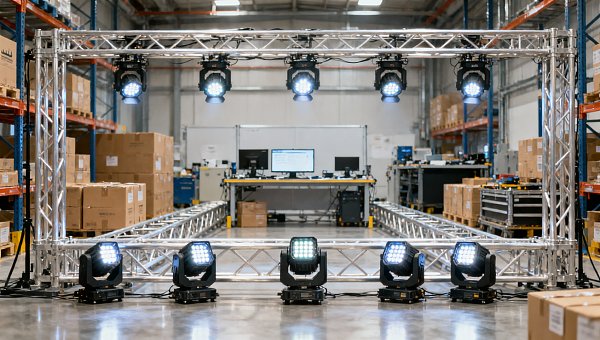
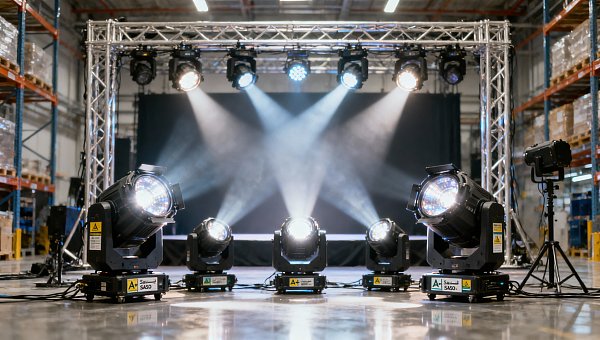
- Suspending lighting trusses in medium-span halls
- Lifting LED walls during exhibition or launch event builds
- Handling speaker arrays and scenic elements in controlled indoor environments
- Supporting recurring maintenance access for overhead production systems
- Managing multi-point lifts where synchronized motion is required
In these conditions, chain-based lifting often offers better packaging, easier headroom management, and more stable low-speed control than general-purpose alternatives. That becomes especially important when crews are working around installed seating, finished interiors, or premium architectural surfaces.
When precision matters more than raw speed
A stage environment usually rewards precision over maximum travel rate. Raising a truss by 6 meters in a controlled, even movement can be more valuable than completing the lift 90 seconds faster. Slow and steady travel reduces swing, protects attached equipment, and helps the crew maintain alignment during final positioning.
This is why chain hoists for stage are often selected for productions with lighting bars, scenic pieces, or video structures that must stop within tight tolerances. Even a few centimeters of unwanted drift can complicate focus, trim height consistency, or attachment alignment.
Why compact body size changes the rigging plan
In ballrooms, black box theaters, and retrofit venues, available headroom may be restricted to 500 mm to 1,200 mm above the trim zone. A compact hoist body can make the difference between achieving design height and having to redesign the flown system. That directly affects scenic sightlines, throw angles, and cable routing.
For engineering leads, this means the better rigging choice is often the solution that preserves usable height while still supporting duty cycle, control integration, and service access. Chain hoists for stage frequently meet that requirement well.
The comparison below shows where chain hoists usually fit best against other common lifting options in project planning.
The key takeaway is that chain hoists for stage are not a universal answer. They become the better rigging choice when vertical accuracy, overhead compactness, and repeated use under a managed control system outweigh the need for simple one-off lifting.
How to decide if chain hoists for stage fit your project scope
A sound selection process should evaluate five dimensions: load, travel, duty cycle, control method, and venue constraints. If one of these is misread early in the project, the resulting rework can affect steel verification, cable schedules, and installation sequencing.
1. Load profile and point distribution
Start by defining the real working load, not just the equipment weight on paper. A flown assembly may include truss, luminaires, cable looms, clamps, safety devices, scenic dressing, and future additions. A nominal 400 kg truss line can easily approach 550 kg to 700 kg in operational use.
For multi-point systems, point loading matters as much as total weight. Four hoists lifting 1,200 kg do not automatically mean each point sees 300 kg. Uneven center of gravity, pickup placement, and dynamic effects can create a 15% to 30% imbalance between points.
2. Lift height and chain storage needs
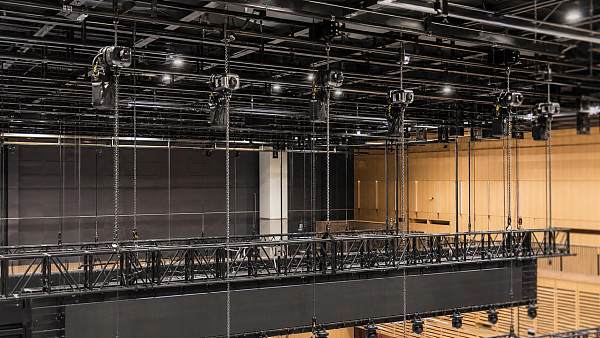
If the venue needs 8 meters of travel, the chain path and chain bag capacity must be reviewed carefully. In compact ceiling voids, chain accumulation can interfere with architectural finishes, drape lines, or maintenance access. That is one reason chain hoists for stage should be selected as part of the full rigging layout, not as a last-minute hardware substitution.
3. Duty cycle and event frequency
A venue with 6 major changeovers per year has different needs from a convention hall with 3 setup cycles per week. Frequent operation increases the importance of motor thermal limits, brake performance, service intervals, and spare parts availability. Over a 3-year period, lifecycle cost can outweigh purchase price by a meaningful margin.
4. Control architecture
Single-hoist pendant control may be enough for basic lifts. However, synchronized systems are usually preferred when handling trusses, LED structures, or scenic frames over 4 meters wide. In those cases, centralized control reduces the risk of racking, uneven trim, and repeated manual correction.
5. Venue compliance and integration limits
Engineering teams should also check support steel capacity, power supply, emergency stop planning, access for inspections, and local operational requirements. In hospitality and institutional venues, these factors are often reviewed alongside fire routes, ceiling access plans, and acoustic treatment coordination.
The table below can help project teams qualify whether chain hoists for stage are operationally suitable before tender finalization.
If your project involves repeated overhead repositioning, multiple load points, and limited space above the trim line, chain hoists for stage are usually worth serious consideration during concept design rather than after procurement documents are locked.
Risk control, installation planning, and lifecycle value
For commercial buyers, the better rigging choice is not defined only by hardware specification. It is also defined by how the lifting system performs across installation, testing, operator handover, and scheduled service. A lower purchase price can quickly lose value if the system increases labor time or causes avoidable shutdowns.
Installation risks that should be addressed early
The most common project risks include incomplete load mapping, poor chain bag clearance, underspecified power distribution, and lack of access for future inspection. In multi-disciplinary projects, these issues often appear when architectural, MEP, and rigging packages are not coordinated in the same review cycle.
- Confirm dead load and live load assumptions for each suspension point.
- Verify headroom and chain collection space at every hoist location.
- Check control cable routes and isolation requirements before ceiling closure.
- Allow service access without dismantling adjacent finishes or scenic elements.
- Plan commissioning with no-load, partial-load, and full operational tests.
A 5-step review like this can prevent delays that otherwise add 3 to 10 days during final installation. For venues with premium operating schedules, that can be more costly than the hardware difference between two lifting options.
Maintenance realities in commercial venues
Chain hoists for stage should be evaluated as service assets, not only as installed equipment. Typical maintenance considerations include chain inspection, brake verification, control testing, lubrication intervals, and periodic load-related checks. High-use venues may need monthly visual checks and more detailed service at 6- or 12-month intervals, depending on operation intensity and local practice.
This serviceability matters in hotels, performing arts venues, campuses, and indoor leisure environments where operational interruption carries commercial impact. If access equipment, labor, or replacement parts are difficult to arrange, the total ownership burden rises quickly.
What buyers should ask suppliers before award
Before approving a stage rigging package, procurement and engineering teams should request a practical support scope. That should include lead time, recommended spare parts, control compatibility, installation guidance, and service documentation. For imported systems, the difference between a 2-week and 8-week spare parts response can materially affect venue continuity.
- What is the standard lead time for hoists, controllers, and accessories?
- Which wear items should be stocked locally for the first 12 months?
- Can the supplier support synchronized control requirements?
- What commissioning documents and inspection records are included?
- How is after-sales support handled across regions or project phases?
These questions help distinguish between a product seller and a sourcing partner capable of supporting full commercial deployment. That distinction is especially important for multi-site operators and international project teams.
Common buying mistakes and how project teams can avoid them
Even experienced teams can make avoidable errors when they treat stage lifting as a generic mechanical purchase. Chain hoists for stage interact with structure, control logic, venue programming, and safety workflow, so isolated buying decisions often create downstream problems.
Mistake 1: Choosing by rated capacity alone
A 1-ton hoist is not automatically the correct solution for a 700 kg suspended assembly. The real decision should also consider lift frequency, point balance, travel distance, and future expansion. Capacity without context is only one part of the engineering picture.
Mistake 2: Ignoring integration with venue operations
A venue that changes room format every week may prioritize fast repeatable trimming and low operator complexity. A fixed theater may focus more on precise scenic motion and controlled maintenance access. The better rigging choice depends on actual use over the next 3 to 5 years, not only opening-day requirements.
Mistake 3: Underestimating installation and commissioning time
Project schedules often reserve enough time for physical mounting but not enough for control setup, test lifting, snag rectification, and operator training. In practice, commissioning can add 1 to 3 extra days for simple systems and longer for grouped or synchronized lifts.
Mistake 4: Treating after-sales support as optional
When a venue depends on flown lighting or scenic systems, support responsiveness is part of project risk management. Buyers should evaluate not only unit pricing but also documentation quality, troubleshooting access, and realistic replacement timelines for critical components.
For most project managers, the most reliable approach is to combine mechanical selection with venue-use forecasting, service planning, and installation coordination. That is where chain hoists for stage often prove their value over less specialized or less scalable options.
Final decision guidance for project managers and engineering leads
Chain hoists for stage are the better rigging choice when your project demands controlled overhead lifting, repeatable performance, efficient use of headroom, and compatibility with professional venue operations. They are especially well suited to commercial spaces where safety, setup consistency, and long-term maintainability all influence project success.
If your venue or event environment includes multi-point lifts, frequent reconfiguration, compact rigging zones, or strict operational scheduling, chain-based stage lifting should be evaluated early as part of the complete system design. The strongest outcomes usually come from aligning hoist selection with structural review, control planning, and service strategy from the outset.
For sourcing teams, developers, and technical buyers seeking dependable solutions across entertainment, hospitality, education, and specialty commercial spaces, informed specification is the fastest path to lower risk and better lifecycle value. Contact us to discuss your project scope, request a tailored sourcing plan, or explore more stage rigging and commercial lifting solutions.
Search News
Hot Articles
- Restaurant FurnitureFast-Casual Restaurant Interiors: Design Choices That Improve Speed and Guest FlowOct 04, 2026
- Outdoor RidesHow to Select Leisure Park Equipment for Safe, High-Throughput Visitor AreasOct 03, 2026
- Fashion & Gem JewelryDiamond Tester Wholesale: How to Vet Accuracy, Calibration, and MOQ Before OrderingOct 02, 2026
Popular Tags
Need ExpertConsultation?
Connect with our specialized leisureengineering team for procurementstrategies.
Recommended News
 Jul 13, 2026Stage Riser Platforms Explained: Types, Load Ratings, and Best-Fit Event UsesStage riser platforms explained clearly: compare types, load ratings, safety factors, and best-fit event uses to choose smarter, safer solutions for conferences, schools, hotels, and live shows.● Pro Audio Engineer
 Jul 09, 2026SASO Fast Track Cuts Stage Lighting Export Lead TimeSASO Fast Track cuts stage lighting export lead time from 45 days to 12 working days. Learn how Saudi certification changes affect truss suppliers, OEMs, buyers, and shipment planning.● Pro Audio Engineer
 Jul 08, 2026SASO Updates Stage Lighting Label Rules for LED Moving HeadsSASO updates stage lighting label rules for LED moving heads, requiring three-level energy efficiency values and bilingual labels. See what exporters and buyers must do before October 2026.● Pro Audio Engineer
 Jul 07, 2026SASO Adds Energy Label Rules for Stage Lighting ImportsSASO Adds Energy Label Rules for Stage Lighting Imports: learn which stage lighting products now need Arabic energy labels and SASO-recognized test reports before Sept. 1, 2026.● Pro Audio Engineer
 Jul 06, 2026Saudi SASO Sets A+ Rule for Stage LED LightingSaudi SASO sets A+ rule for stage LED lighting from Oct 1, 2026. Learn how the new SASO label and IEC 62722-2-1:2026 standard impact compliance, shipping, and market access.● Pro Audio Engineer
 Jul 04, 2026SASO Tightens RF Test Rules for Wireless Stage ControlsSASO tightens RF test rules for wireless stage controls in Saudi Arabia. Learn how the new IEC 62368-3 requirement impacts stage lighting exports, compliance, and delivery.● Pro Audio Engineer
 Jul 03, 2026Saudi SASO Adds RF Approval Rule for Stage LightingSaudi SASO adds RF approval rule for stage lighting. Learn how the new SASO RoHS+RF certification affects wireless lighting, truss control exports, retail access, and project delivery in Saudi Arabia.● Pro Audio Engineer
 Jul 02, 2026SASO Starts EMC Pilot for Smart Stage Lighting in SaudiSASO starts an EMC pilot for smart stage lighting in Saudi Arabia, impacting dimming controllers, cloud access, and project compliance. See what suppliers and integrators must do now.● Pro Audio Engineer
 Jul 01, 2026Saudi SASO Tightens UV-C Limits for Stage LightingSaudi SASO tightens UV-C limits for stage lighting and truss products. Learn the 2026 SASO IEC 62471 update, retesting deadline, customs risks, and how to protect Saudi shipments.● Pro Audio Engineer
 Jun 30, 2026EN 62471:2026 Adds UV-C Limit for Stage LightingEN 62471:2026 adds a UV-C limit for stage lighting, impacting LED moving heads, laser fixtures, and truss lighting. Learn what changes before Dec 1, 2026.● Pro Audio Engineer
 Jun 29, 2026TUV Adds Wi-Fi 7 EMC Test for Stage LightingTUV Adds Wi-Fi 7 EMC Test for Stage Lighting sold into the EU. Learn the Oct 1, 2026 deadline, retesting rules, and how EN 55032:2024 impacts certificates, shipments, and compliance planning.● Pro Audio Engineer
 Jun 25, 2026LED PAR Cans Wholesale: What to Compare in Wattage, Beam Angle, and DMX ControlLED par cans wholesale buyers should compare wattage, beam angle, and DMX control before requesting quotes. Learn how to avoid costly mismatches and choose fixtures that fit each venue.● Pro Audio Engineer
 Jun 16, 2026Stage Lighting Equipment List for Small Venues: What You Need and How to Plan ItStage lighting equipment for small venues: discover a practical equipment list, planning tips, and smart setup ideas to improve performance, flexibility, and long-term value.● Pro Audio Engineer
 Jun 12, 2026Vietnam Tightens EMC Rules for Stage Lighting LEDsVietnam Tightens EMC Rules for Stage Lighting LEDs: learn how QCVN 139:2026 impacts imports, testing, sourcing, and delivery planning for stage lighting businesses.● Pro Audio Engineer
 Jun 11, 2026LPGA Shanghai Debut Lifts Stage Lighting OrdersStage lighting and truss demand is rising as LPGA Shanghai debuts in 2026. Learn how tighter delivery windows, compliance, and project execution are reshaping global orders.● Pro Audio Engineer
 Jun 04, 2026UK EPR Rules Expand to Stage Lighting and TrussUK EPR rules for stage lighting and truss expand in Q3 2026. Learn how UKCA-linked registration, reporting, recycling fees, and material documentation will affect compliance and market access.● Pro Audio Engineer
 Jun 03, 2026UK EPR Fee Hits Stage Truss Textiles in Q3 2026UK EPR Fee for stage truss textiles starts in Q3 2026. Learn what new recycling charges and UKCA-Flame rules mean for lighting and truss suppliers.● Pro Audio Engineer
 Jun 02, 2026UK EPR Fee Hits Stage Lighting & TrussUK EPR Fee Hits Stage Lighting & Truss products with textile components in 2026. Learn compliance risks, BOM updates, and cost impacts for UK exporters.● Pro Audio Engineer
 May 25, 2026China's Carbon Fiber Truss Strength Up 32% at 2026 Sports ExpoCarbon fiber truss strength up 32% at 2026 Sports Expo—UL 1598 certified, CE+UL ready. Discover how China’s stage infrastructure is winning European music festivals & global tenders.● Pro Audio Engineer
 May 23, 2026Vietnam Mandates Bilingual MSDS for Stage Lighting & Truss ImportsVietnam mandates bilingual MSDS (Vietnamese & Chinese) for stage lighting and truss imports — ensure compliance by July 1, 2026 to avoid shipment rejection.● Pro Audio Engineer
 May 20, 20263 Chinese Stage Lighting Firms Join LA28 Olympic Supplier List3 Chinese stage lighting firms join LA28 Olympic supplier list — showcasing ISO 20121 & UL 1574 compliance, sustainability leadership, and global credibility in live-event infrastructure.● Pro Audio Engineer
 May 20, 2026What matters most when choosing lighting stands crank up?Lighting stands crank up: learn what really matters beyond height—load capacity, crank safety, stability, compatibility, and serviceability—to choose the right stand with confidence.● Pro Audio Engineer
 May 19, 20263 Chinese Stage Lighting Firms Join IOC’s 2028 LA Olympics Supplier ListChinese stage lighting firms join IOC's 2028 LA Olympics supplier list — a major validation for OEM/ODM exporters and tech integrators in global sports & entertainment lighting.● Pro Audio Engineer
 May 19, 2026When are chain hoists for stage the better rigging choiceChain hoists for stage are the better rigging choice when you need precise lifting, compact headroom use, and reliable repeat performance. See key use cases and buyer tips.● Pro Audio Engineer