3 Chinese Stage Lighting Firms Added to LA28 Official Supplier List
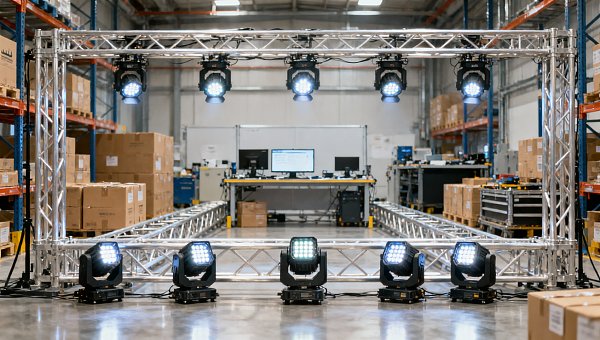
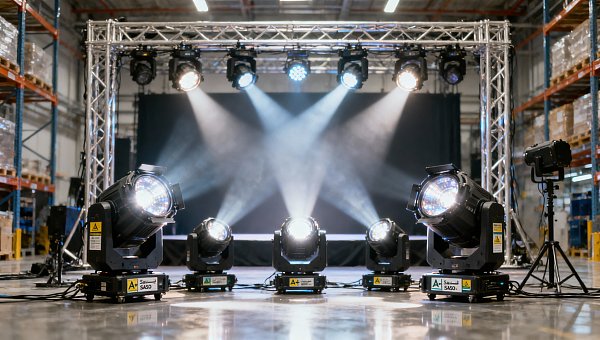
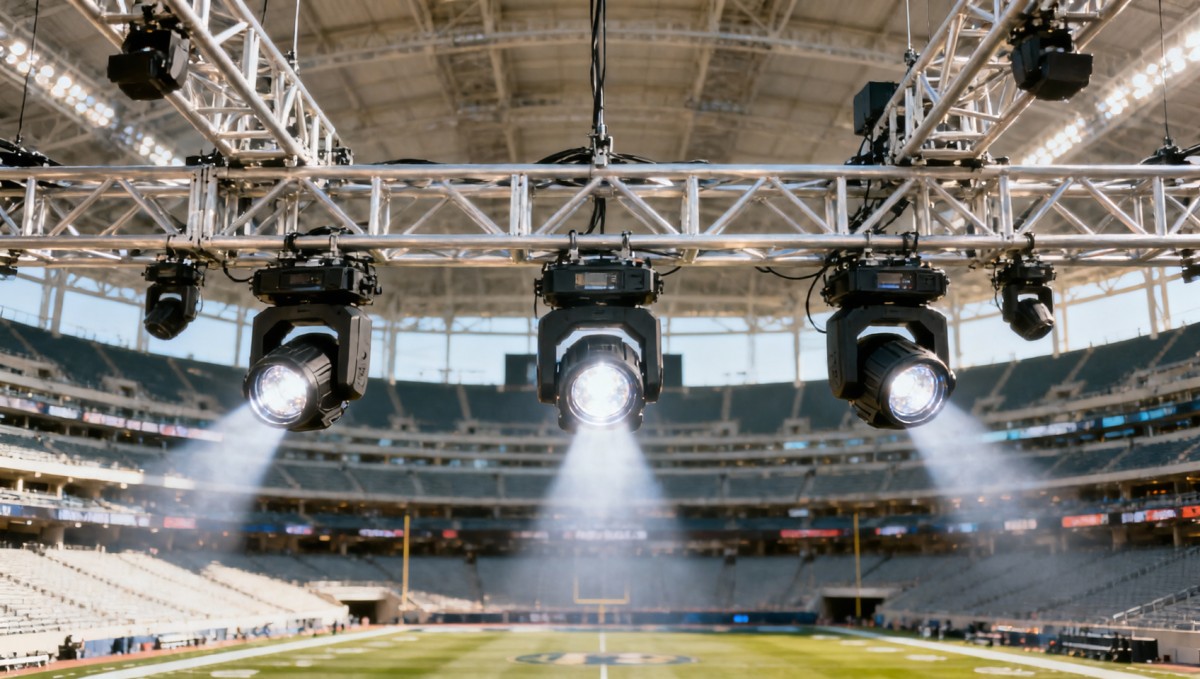
On May 13, 2026, the International Olympic Committee (IOC) updated the official supplier roster for the 2028 Los Angeles Olympic Games, adding three Chinese stage lighting and truss manufacturers to the ‘Official Lighting Solutions Provider’ tier. This development signals heightened international recognition for China’s professional lighting equipment sector — particularly for enterprises specializing in LED moving head fixtures and custom aluminum truss systems — and warrants close attention from lighting OEMs, export-focused manufacturers, and supply chain service providers serving global live-event infrastructure markets.
Event Overview
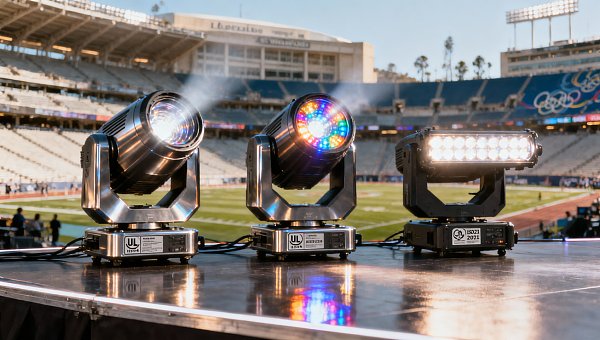
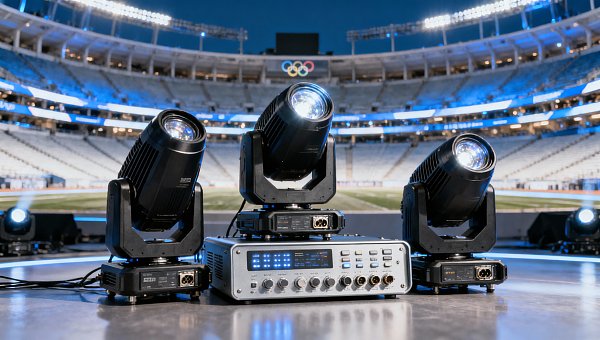
On May 13, 2026, the IOC published an updated list of official suppliers for the 2028 Los Angeles Olympics on its official website. Three Chinese companies — two LED moving head lamp OEM manufacturers and one custom aluminum truss fabricator — were newly included under the ‘Official Lighting Solutions Provider’ designation. All three must comply with UL 153 and UL 1598 full-scope certification requirements and disclose product-level carbon footprint data.
Industries Affected by This Update
Direct Export-Oriented Lighting Manufacturers
These firms face direct implications in terms of compliance benchmarking and market positioning. The inclusion confirms that UL 153/UL 1598 certification — historically more common among North American and EU-based lighting vendors — is now a de facto entry requirement for high-profile international event supply chains. Non-compliant manufacturers may find bid eligibility constrained for future IOC-affiliated projects.
Aluminum Truss Fabricators & Structural Component Suppliers
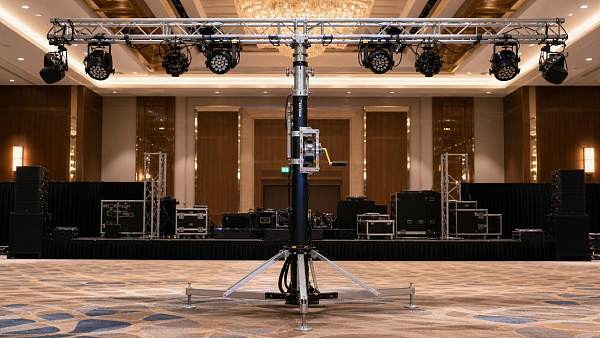
As one of the three newly listed entities is a custom aluminum truss manufacturer, structural rigging suppliers serving large-scale entertainment infrastructure are now subject to expanded expectations. The IOC’s explicit linkage of truss systems to ‘lighting solutions’ signals a shift toward integrated system-level qualification — not just component-level safety certification.
Supply Chain Compliance & Certification Service Providers
Third-party testing labs, certification consultants, and carbon accounting platforms supporting lighting and rigging exporters will likely see increased demand for UL 153/UL 1598 validation support and verified carbon footprint reporting aligned with ISO 14067. This update elevates compliance from a commercial differentiator to a mandatory gatekeeping criterion for elite-tier event contracts.
What Relevant Enterprises or Practitioners Should Focus On Now
Monitor IOC’s evolving supplier tier definitions and disclosure templates
The current ‘Official Lighting Solutions Provider’ tier includes carbon footprint disclosure as a stated requirement. Analysis shows this is not yet codified in a publicly available technical annex — meaning implementation details (e.g., scope boundaries, verification standards, reporting frequency) remain pending. Stakeholders should track IOC communications for formal guidance before initiating resource-intensive disclosure processes.
Prioritize UL 153/UL 1598 full-scope certification for core product lines
Observably, the IOC did not accept equivalent regional certifications (e.g., CE, CCC, or GB standards) as substitutes. For manufacturers targeting Olympic-tier opportunities, UL certification is now the baseline technical gateway — not an optional upgrade. Companies should assess lead times and capacity constraints at accredited UL testing facilities, especially those handling photometric, thermal, and electrical stress validation across multiple fixture configurations.
Distinguish between policy signal and immediate procurement impact
This listing reflects supplier eligibility status, not confirmed purchase orders or volume commitments. From industry perspective, it functions primarily as a pre-qualification endorsement — similar to inclusion in a government vendor registry. Actual contract awards depend on separate tender processes managed by LA28 Organizing Committee and its appointed technical contractors. Enterprises should avoid overinterpreting the listing as near-term revenue assurance.
Prepare documentation alignment across manufacturing, logistics, and sustainability reporting
Carbon footprint disclosure requires traceable input data across raw material sourcing, energy use in production, and transport logistics. Current more appropriate preparation involves mapping bill-of-materials (BOM) data to emission factors, validating energy metering systems, and establishing internal cross-functional coordination between engineering, procurement, and EHS teams — rather than rushing external verification without foundational data readiness.
Editorial Perspective / Industry Observation
This update is best understood as a strong regulatory signal — not yet a fully operationalized procurement framework. Analysis shows the IOC is progressively embedding sustainability and harmonized safety standards into its supplier governance model, using high-visibility events like LA28 to drive upstream conformity. It does not indicate a sudden expansion of direct IOC procurement authority (which remains limited), but rather reflects tightening alignment between global event organizers, venue operators, and technical integrators on shared compliance baselines. Continued observation is warranted for how subsequent updates define enforcement mechanisms, audit protocols, and scalability beyond the ‘Official Lighting Solutions Provider’ tier.
Conclusion: The inclusion of three Chinese stage lighting and truss firms in the LA28 official supplier list marks a procedural milestone — not a market inflection point. It confirms that UL certification and carbon transparency are becoming non-negotiable prerequisites for elite-tier international event supply chains. However, actual business impact remains contingent on downstream procurement decisions, technical integration requirements, and consistent application of disclosed standards. For now, this development is better interpreted as a forward-looking benchmark than an immediate commercial catalyst.
Source: International Olympic Committee (IOC) official website — 2028 Los Angeles Olympic Games Official Supplier List, updated May 13, 2026.
Note: Carbon footprint disclosure methodology, verification requirements, and tier-specific contractual obligations remain unconfirmed and are subject to further IOC publication.
Search News
Hot Articles
- Restaurant FurnitureFast-Casual Restaurant Interiors: Design Choices That Improve Speed and Guest FlowOct 04, 2026
- Outdoor RidesHow to Select Leisure Park Equipment for Safe, High-Throughput Visitor AreasOct 03, 2026
- Fashion & Gem JewelryDiamond Tester Wholesale: How to Vet Accuracy, Calibration, and MOQ Before OrderingOct 02, 2026
Popular Tags
Need ExpertConsultation?
Connect with our specialized leisureengineering team for procurementstrategies.
Recommended News
 Jul 13, 2026Stage Riser Platforms Explained: Types, Load Ratings, and Best-Fit Event UsesStage riser platforms explained clearly: compare types, load ratings, safety factors, and best-fit event uses to choose smarter, safer solutions for conferences, schools, hotels, and live shows.● Pro Audio Engineer
 Jul 09, 2026SASO Fast Track Cuts Stage Lighting Export Lead TimeSASO Fast Track cuts stage lighting export lead time from 45 days to 12 working days. Learn how Saudi certification changes affect truss suppliers, OEMs, buyers, and shipment planning.● Pro Audio Engineer
 Jul 08, 2026SASO Updates Stage Lighting Label Rules for LED Moving HeadsSASO updates stage lighting label rules for LED moving heads, requiring three-level energy efficiency values and bilingual labels. See what exporters and buyers must do before October 2026.● Pro Audio Engineer
 Jul 07, 2026SASO Adds Energy Label Rules for Stage Lighting ImportsSASO Adds Energy Label Rules for Stage Lighting Imports: learn which stage lighting products now need Arabic energy labels and SASO-recognized test reports before Sept. 1, 2026.● Pro Audio Engineer
 Jul 06, 2026Saudi SASO Sets A+ Rule for Stage LED LightingSaudi SASO sets A+ rule for stage LED lighting from Oct 1, 2026. Learn how the new SASO label and IEC 62722-2-1:2026 standard impact compliance, shipping, and market access.● Pro Audio Engineer
 Jul 04, 2026SASO Tightens RF Test Rules for Wireless Stage ControlsSASO tightens RF test rules for wireless stage controls in Saudi Arabia. Learn how the new IEC 62368-3 requirement impacts stage lighting exports, compliance, and delivery.● Pro Audio Engineer
 Jul 03, 2026Saudi SASO Adds RF Approval Rule for Stage LightingSaudi SASO adds RF approval rule for stage lighting. Learn how the new SASO RoHS+RF certification affects wireless lighting, truss control exports, retail access, and project delivery in Saudi Arabia.● Pro Audio Engineer
 Jul 02, 2026SASO Starts EMC Pilot for Smart Stage Lighting in SaudiSASO starts an EMC pilot for smart stage lighting in Saudi Arabia, impacting dimming controllers, cloud access, and project compliance. See what suppliers and integrators must do now.● Pro Audio Engineer
 Jul 01, 2026Saudi SASO Tightens UV-C Limits for Stage LightingSaudi SASO tightens UV-C limits for stage lighting and truss products. Learn the 2026 SASO IEC 62471 update, retesting deadline, customs risks, and how to protect Saudi shipments.● Pro Audio Engineer
 Jun 30, 2026EN 62471:2026 Adds UV-C Limit for Stage LightingEN 62471:2026 adds a UV-C limit for stage lighting, impacting LED moving heads, laser fixtures, and truss lighting. Learn what changes before Dec 1, 2026.● Pro Audio Engineer
 Jun 29, 2026TUV Adds Wi-Fi 7 EMC Test for Stage LightingTUV Adds Wi-Fi 7 EMC Test for Stage Lighting sold into the EU. Learn the Oct 1, 2026 deadline, retesting rules, and how EN 55032:2024 impacts certificates, shipments, and compliance planning.● Pro Audio Engineer
 Jun 25, 2026LED PAR Cans Wholesale: What to Compare in Wattage, Beam Angle, and DMX ControlLED par cans wholesale buyers should compare wattage, beam angle, and DMX control before requesting quotes. Learn how to avoid costly mismatches and choose fixtures that fit each venue.● Pro Audio Engineer
 Jun 16, 2026Stage Lighting Equipment List for Small Venues: What You Need and How to Plan ItStage lighting equipment for small venues: discover a practical equipment list, planning tips, and smart setup ideas to improve performance, flexibility, and long-term value.● Pro Audio Engineer
 Jun 12, 2026Vietnam Tightens EMC Rules for Stage Lighting LEDsVietnam Tightens EMC Rules for Stage Lighting LEDs: learn how QCVN 139:2026 impacts imports, testing, sourcing, and delivery planning for stage lighting businesses.● Pro Audio Engineer
 Jun 11, 2026LPGA Shanghai Debut Lifts Stage Lighting OrdersStage lighting and truss demand is rising as LPGA Shanghai debuts in 2026. Learn how tighter delivery windows, compliance, and project execution are reshaping global orders.● Pro Audio Engineer
 Jun 04, 2026UK EPR Rules Expand to Stage Lighting and TrussUK EPR rules for stage lighting and truss expand in Q3 2026. Learn how UKCA-linked registration, reporting, recycling fees, and material documentation will affect compliance and market access.● Pro Audio Engineer
 Jun 03, 2026UK EPR Fee Hits Stage Truss Textiles in Q3 2026UK EPR Fee for stage truss textiles starts in Q3 2026. Learn what new recycling charges and UKCA-Flame rules mean for lighting and truss suppliers.● Pro Audio Engineer
 Jun 02, 2026UK EPR Fee Hits Stage Lighting & TrussUK EPR Fee Hits Stage Lighting & Truss products with textile components in 2026. Learn compliance risks, BOM updates, and cost impacts for UK exporters.● Pro Audio Engineer
 May 25, 2026China's Carbon Fiber Truss Strength Up 32% at 2026 Sports ExpoCarbon fiber truss strength up 32% at 2026 Sports Expo—UL 1598 certified, CE+UL ready. Discover how China’s stage infrastructure is winning European music festivals & global tenders.● Pro Audio Engineer
 May 23, 2026Vietnam Mandates Bilingual MSDS for Stage Lighting & Truss ImportsVietnam mandates bilingual MSDS (Vietnamese & Chinese) for stage lighting and truss imports — ensure compliance by July 1, 2026 to avoid shipment rejection.● Pro Audio Engineer
 May 20, 20263 Chinese Stage Lighting Firms Join LA28 Olympic Supplier List3 Chinese stage lighting firms join LA28 Olympic supplier list — showcasing ISO 20121 & UL 1574 compliance, sustainability leadership, and global credibility in live-event infrastructure.● Pro Audio Engineer
 May 20, 2026What matters most when choosing lighting stands crank up?Lighting stands crank up: learn what really matters beyond height—load capacity, crank safety, stability, compatibility, and serviceability—to choose the right stand with confidence.● Pro Audio Engineer
 May 19, 20263 Chinese Stage Lighting Firms Join IOC’s 2028 LA Olympics Supplier ListChinese stage lighting firms join IOC's 2028 LA Olympics supplier list — a major validation for OEM/ODM exporters and tech integrators in global sports & entertainment lighting.● Pro Audio Engineer
 May 19, 2026When are chain hoists for stage the better rigging choiceChain hoists for stage are the better rigging choice when you need precise lifting, compact headroom use, and reliable repeat performance. See key use cases and buyer tips.● Pro Audio Engineer