2026 Inner Mongolia Football Super League Kicks Off May 15; LED Stadium Lighting Export Inquiries Up 28%
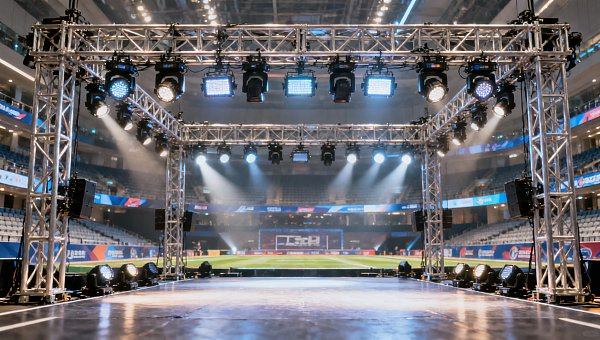
On May 15, 2026, the 2026 Inner Mongolia Football Super League will commence, with 12 professional football venues across the region deploying domestically manufactured LED stadium lighting systems compliant with both CJJ/T 163–2023 (China) and IESNA RP-6–22 (US) standards. This coordinated rollout has triggered a 28% year-on-year increase in export-related inquiry volume from sports facility operators in Mongolia, Kazakhstan, and other neighboring countries — highlighting emerging demand signals for cold-climate, high-reliability stadium lighting solutions in Central Asia.
Event Overview
The 2026 Inner Mongolia Football Super League officially begins on May 15, 2026. Twelve dedicated football stadiums across Inner Mongolia have simultaneously commissioned Chinese-made LED stadium lighting systems. These systems meet the dual technical specifications of CJJ/T 163–2023 (Chinese Urban Construction Industry Standard for Sports Venue Lighting) and IESNA RP-6–22 (Illuminating Engineering Society Recommended Practice for Sports Lighting). Concurrently, export inquiries from Mongolian and Kazakhstani sports venue operators have risen by 28%, with specific focus on IP66 ingress protection rating, reliable startup capability at –30°C, and localized after-sales maintenance response time.
Which Subsectors Are Affected
Direct Export Trading Firms
These firms are directly exposed to shifting regional demand patterns. The 28% surge in inbound inquiries reflects early-stage market validation for cold-climate LED sports lighting in Central Asia — not yet translated into firm orders, but indicating heightened commercial attention and qualification activity.
LED Luminaire Manufacturers (OEM/ODM)
Manufacturers supplying the Inner Mongolia venues now face follow-up technical and compliance questions from international buyers. The emphasis on IP66 rating and –30°C startup performance signals that product certifications and environmental testing capabilities — particularly for low-temperature operation — are becoming differentiating factors in cross-border tenders.
Supply Chain & After-Sales Service Providers
Localized maintenance response time is cited as a key evaluation criterion by regional operators. This implies growing importance for logistics partners capable of stocking certified spare parts in or near target markets (e.g., Ulaanbaatar, Almaty), and for service networks offering multilingual technical support.
What Relevant Enterprises or Practitioners Should Focus On Now
Monitor official procurement documentation from Central Asian national sports authorities
Current inquiries remain preliminary. Actual tender timelines, budget allocations, and formal technical requirements for upcoming stadium upgrades in Mongolia and Kazakhstan have not been publicly released. Tracking national sports infrastructure plans and public procurement portals is essential to distinguish signal from speculation.
Prioritize multilingual labeling and localized spare-part packaging for Central Asian markets
As noted in the source information, operators specifically requested multi-language nameplates (Russian, Mongolian, English) and pre-configured spare-part kits. Export-ready product variants — including translated installation manuals, warranty terms, and modular replacement components — should be prioritized ahead of formal tender submissions.
Differentiate between standard compliance and field-proven reliability
Meeting CJJ/T 163–2023 and IESNA RP-6–22 is necessary but insufficient. Buyers are actively verifying real-world low-temperature startup behavior and long-term dust/water resistance under steppe and semi-arid conditions. Third-party test reports from accredited labs simulating –30°C cycling and extended IP66 exposure carry increasing weight in technical evaluations.
Prepare for accelerated technical dialogue, not just quotation cycles
Inquiries are centered on engineering parameters (e.g., thermal management design, driver redundancy, optical distribution curves) rather than price alone. Sales and technical teams should align on standardized responses to queries about cold-start protocols, luminaire lifetime projections under diurnal temperature swings, and compatibility with existing control systems (e.g., DALI-2, KNX).
Editorial Perspective / Industry Observation
Observably, this event functions less as an immediate sales catalyst and more as a regional reference case — one that validates domestic LED stadium lighting against internationally recognized benchmarks while surfacing concrete technical expectations from adjacent markets. Analysis shows that buyer interest is grounded in verifiable performance attributes (not brand or pricing alone), suggesting maturation in procurement criteria among Central Asian sports infrastructure stakeholders. From an industry perspective, the Inner Mongolia rollout serves as a field-tested benchmark: it demonstrates scalability of certified Chinese lighting systems in demanding environments, but does not yet indicate broad policy-level adoption or financing mechanisms in target export countries. Current momentum remains inquiry-driven and technically focused — not contract-awarded or supply-chain committed.
Conclusion:
This development marks an early-stage inflection point for Chinese LED sports lighting exporters targeting cold-climate regions. It confirms rising technical scrutiny and localized service expectations in Central Asia, but does not yet represent a shift in procurement volume or regulatory alignment. It is better understood as a field-validated reference deployment — useful for qualification, not yet a commercial tipping point.
Source Attribution:
- Official announcement of 2026 Inner Mongolia Football Super League schedule and venue readiness (Inner Mongolia Autonomous Region Sports Bureau, April 2026)
- Export inquiry statistics and buyer specification priorities (Industry-sourced trade intelligence, April 2026)
Note: Tender issuance, contract awards, and financing arrangements in Mongolia and Kazakhstan remain unconfirmed and require ongoing monitoring.
Search News
Hot Articles
- Commercial KitchenCommercial Kitchen Design Price: Budgeting by Layout, Equipment, and MEP ScopeSep 22, 2026
- Stationery & UniformsHow Schools Can Cut Printing Costs When Buying Ink Cartridges in BulkSep 21, 2026
- Jewelry Packaging & DisplayHow to Evaluate a Luxury Retail Packaging Supplier for Premium Brand ConsistencySep 20, 2026
Popular Tags
Need ExpertConsultation?
Connect with our specialized leisureengineering team for procurementstrategies.
Recommended News
 Jul 13, 2026Stage Riser Platforms Explained: Types, Load Ratings, and Best-Fit Event UsesStage riser platforms explained clearly: compare types, load ratings, safety factors, and best-fit event uses to choose smarter, safer solutions for conferences, schools, hotels, and live shows.● Pro Audio Engineer
 Jul 09, 2026SASO Fast Track Cuts Stage Lighting Export Lead TimeSASO Fast Track cuts stage lighting export lead time from 45 days to 12 working days. Learn how Saudi certification changes affect truss suppliers, OEMs, buyers, and shipment planning.● Pro Audio Engineer
 Jul 08, 2026SASO Updates Stage Lighting Label Rules for LED Moving HeadsSASO updates stage lighting label rules for LED moving heads, requiring three-level energy efficiency values and bilingual labels. See what exporters and buyers must do before October 2026.● Pro Audio Engineer
 Jul 07, 2026SASO Adds Energy Label Rules for Stage Lighting ImportsSASO Adds Energy Label Rules for Stage Lighting Imports: learn which stage lighting products now need Arabic energy labels and SASO-recognized test reports before Sept. 1, 2026.● Pro Audio Engineer
 Jul 06, 2026Saudi SASO Sets A+ Rule for Stage LED LightingSaudi SASO sets A+ rule for stage LED lighting from Oct 1, 2026. Learn how the new SASO label and IEC 62722-2-1:2026 standard impact compliance, shipping, and market access.● Pro Audio Engineer
 Jul 04, 2026SASO Tightens RF Test Rules for Wireless Stage ControlsSASO tightens RF test rules for wireless stage controls in Saudi Arabia. Learn how the new IEC 62368-3 requirement impacts stage lighting exports, compliance, and delivery.● Pro Audio Engineer
 Jul 03, 2026Saudi SASO Adds RF Approval Rule for Stage LightingSaudi SASO adds RF approval rule for stage lighting. Learn how the new SASO RoHS+RF certification affects wireless lighting, truss control exports, retail access, and project delivery in Saudi Arabia.● Pro Audio Engineer
 Jul 02, 2026SASO Starts EMC Pilot for Smart Stage Lighting in SaudiSASO starts an EMC pilot for smart stage lighting in Saudi Arabia, impacting dimming controllers, cloud access, and project compliance. See what suppliers and integrators must do now.● Pro Audio Engineer
 Jul 01, 2026Saudi SASO Tightens UV-C Limits for Stage LightingSaudi SASO tightens UV-C limits for stage lighting and truss products. Learn the 2026 SASO IEC 62471 update, retesting deadline, customs risks, and how to protect Saudi shipments.● Pro Audio Engineer
 Jun 30, 2026EN 62471:2026 Adds UV-C Limit for Stage LightingEN 62471:2026 adds a UV-C limit for stage lighting, impacting LED moving heads, laser fixtures, and truss lighting. Learn what changes before Dec 1, 2026.● Pro Audio Engineer
 Jun 29, 2026TUV Adds Wi-Fi 7 EMC Test for Stage LightingTUV Adds Wi-Fi 7 EMC Test for Stage Lighting sold into the EU. Learn the Oct 1, 2026 deadline, retesting rules, and how EN 55032:2024 impacts certificates, shipments, and compliance planning.● Pro Audio Engineer
 Jun 25, 2026LED PAR Cans Wholesale: What to Compare in Wattage, Beam Angle, and DMX ControlLED par cans wholesale buyers should compare wattage, beam angle, and DMX control before requesting quotes. Learn how to avoid costly mismatches and choose fixtures that fit each venue.● Pro Audio Engineer
 Jun 16, 2026Stage Lighting Equipment List for Small Venues: What You Need and How to Plan ItStage lighting equipment for small venues: discover a practical equipment list, planning tips, and smart setup ideas to improve performance, flexibility, and long-term value.● Pro Audio Engineer
 Jun 12, 2026Vietnam Tightens EMC Rules for Stage Lighting LEDsVietnam Tightens EMC Rules for Stage Lighting LEDs: learn how QCVN 139:2026 impacts imports, testing, sourcing, and delivery planning for stage lighting businesses.● Pro Audio Engineer
 Jun 11, 2026LPGA Shanghai Debut Lifts Stage Lighting OrdersStage lighting and truss demand is rising as LPGA Shanghai debuts in 2026. Learn how tighter delivery windows, compliance, and project execution are reshaping global orders.● Pro Audio Engineer
 Jun 04, 2026UK EPR Rules Expand to Stage Lighting and TrussUK EPR rules for stage lighting and truss expand in Q3 2026. Learn how UKCA-linked registration, reporting, recycling fees, and material documentation will affect compliance and market access.● Pro Audio Engineer
 Jun 03, 2026UK EPR Fee Hits Stage Truss Textiles in Q3 2026UK EPR Fee for stage truss textiles starts in Q3 2026. Learn what new recycling charges and UKCA-Flame rules mean for lighting and truss suppliers.● Pro Audio Engineer
 Jun 02, 2026UK EPR Fee Hits Stage Lighting & TrussUK EPR Fee Hits Stage Lighting & Truss products with textile components in 2026. Learn compliance risks, BOM updates, and cost impacts for UK exporters.● Pro Audio Engineer
 May 25, 2026China's Carbon Fiber Truss Strength Up 32% at 2026 Sports ExpoCarbon fiber truss strength up 32% at 2026 Sports Expo—UL 1598 certified, CE+UL ready. Discover how China’s stage infrastructure is winning European music festivals & global tenders.● Pro Audio Engineer
 May 23, 2026Vietnam Mandates Bilingual MSDS for Stage Lighting & Truss ImportsVietnam mandates bilingual MSDS (Vietnamese & Chinese) for stage lighting and truss imports — ensure compliance by July 1, 2026 to avoid shipment rejection.● Pro Audio Engineer
 May 20, 20263 Chinese Stage Lighting Firms Join LA28 Olympic Supplier List3 Chinese stage lighting firms join LA28 Olympic supplier list — showcasing ISO 20121 & UL 1574 compliance, sustainability leadership, and global credibility in live-event infrastructure.● Pro Audio Engineer
 May 20, 2026What matters most when choosing lighting stands crank up?Lighting stands crank up: learn what really matters beyond height—load capacity, crank safety, stability, compatibility, and serviceability—to choose the right stand with confidence.● Pro Audio Engineer
 May 19, 20263 Chinese Stage Lighting Firms Join IOC’s 2028 LA Olympics Supplier ListChinese stage lighting firms join IOC's 2028 LA Olympics supplier list — a major validation for OEM/ODM exporters and tech integrators in global sports & entertainment lighting.● Pro Audio Engineer
 May 19, 2026When are chain hoists for stage the better rigging choiceChain hoists for stage are the better rigging choice when you need precise lifting, compact headroom use, and reliable repeat performance. See key use cases and buyer tips.● Pro Audio Engineer