2026 National Rhythmic Gymnastics Championships in Chengdu Feature Export-Ready Smart Flooring & Lighting
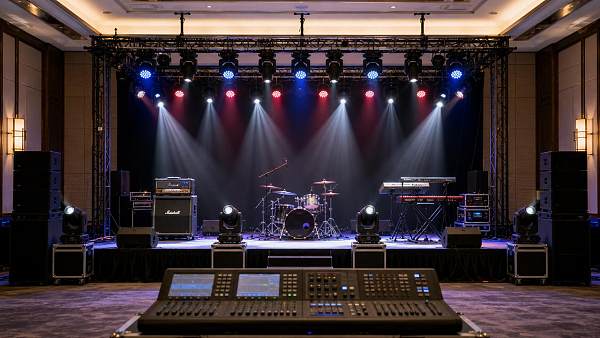
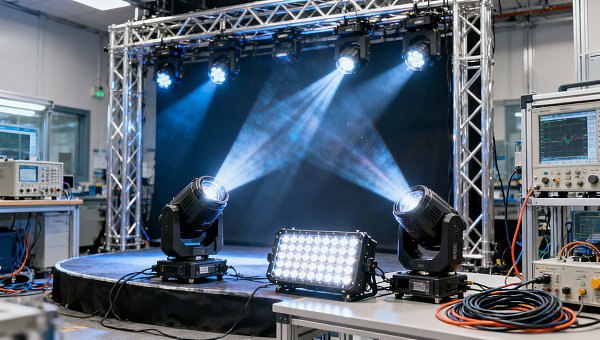
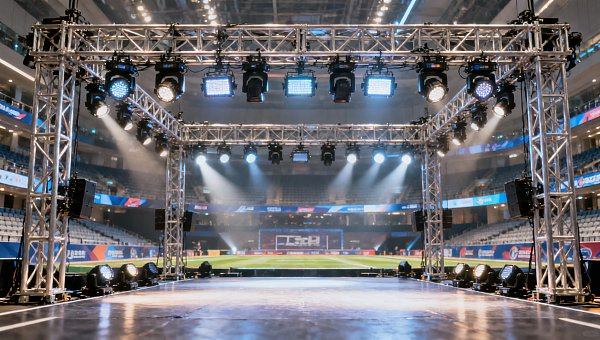
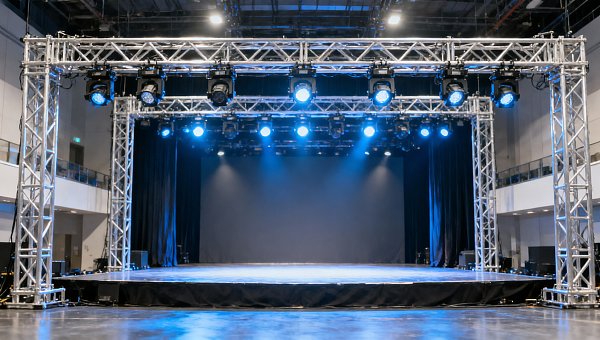
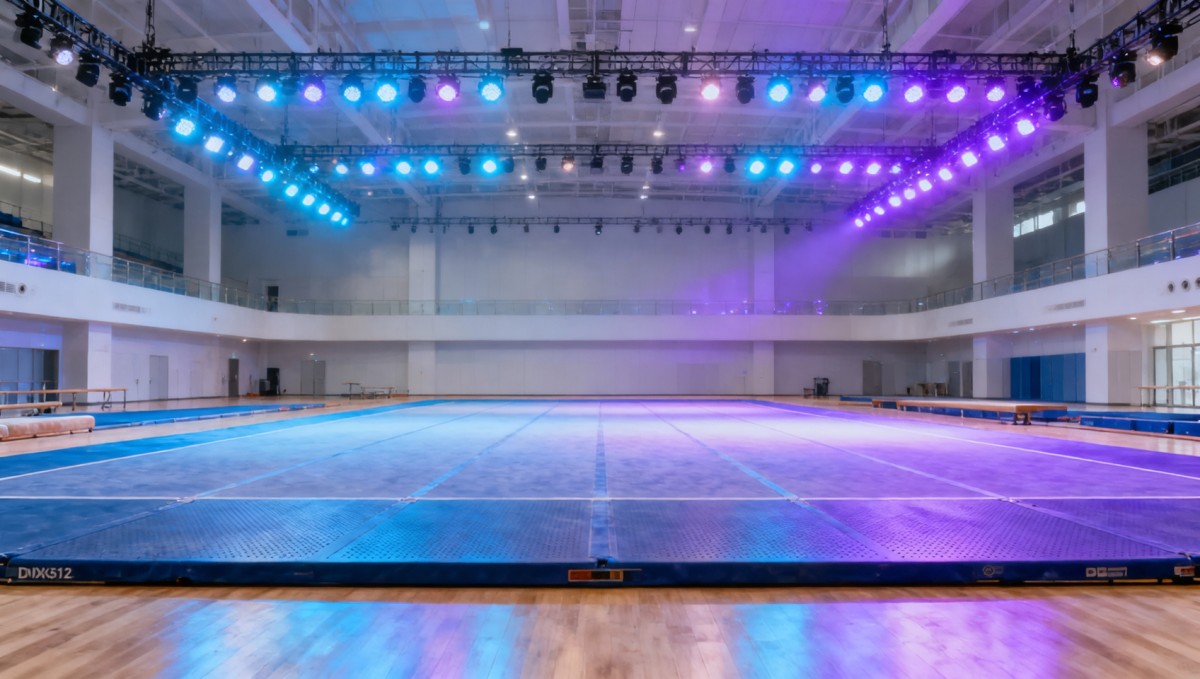
On May 9, 2026, the 2026 National Rhythmic Gymnastics Championships opened at Dong’an Lake Sports Park in Chengdu, deploying domestically manufactured smart shock-absorbing flooring with integrated pressure-sensing layers and DMX512 voice-controlled color-changing lighting systems across all competition venues. The system combination has received provisional certification from the International Gymnastics Federation (FIG), drawing on-site evaluation by procurement delegations from Brazil, Mexico, and Egypt—and triggering initial trial orders for three Chinese suppliers. This event signals emerging export readiness for specialized sports infrastructure components, particularly relevant to manufacturers of certified athletic flooring, intelligent venue lighting systems, and technical compliance service providers.
Event Overview
On May 9, 2026, the 2026 National Rhythmic Gymnastics Championships commenced at Dong’an Lake Sports Park in Chengdu. All competition venues used domestically produced smart shock-absorbing carpeting equipped with pressure-sensing layers and DMX512-based voice-controlled color-changing lighting systems. The integrated system has obtained provisional FIG certification. Procurement delegations from Brazil, Mexico, and Egypt conducted on-site assessments during the event. Three Chinese suppliers received initial trial orders, with explicit requirements for submission of an FIG Annex 4.2 report on audio-light synchronization accuracy and an ISO 10330:2022 test certificate for impact absorption rate of the carpeting.
Which Subsectors Are Affected
Direct Export-Oriented Manufacturers
Manufacturers supplying smart athletic flooring or DMX512-compatible venue lighting systems face new validation and documentation demands. The requirement for FIG Annex 4.2 reports and ISO 10330:2022 certification indicates that international procurement is shifting toward formalized, sport-specific technical compliance—not just general product performance.
Testing & Certification Service Providers
Laboratories and third-party testing bodies accredited for ISO 10330:2022 (impact absorption) or capable of measuring audio–light synchronization latency per FIG Annex 4.2 may see increased inquiry volume. These standards are niche; few domestic labs currently hold end-to-end capability for both metrics in rhythmic gymnastics contexts.
Supply Chain Integrators & System Solution Providers
Companies assembling turnkey venue solutions—including synchronized flooring–lighting integration—face heightened scrutiny on interoperability verification. The trial orders specify joint system performance (e.g., sound-triggered light response aligned with athlete movement captured via pressure sensors), not standalone component specs.
Raw Material Suppliers for High-Performance Carpeting
Suppliers of elastomeric underlay materials, piezoresistive sensor films, or flame-retardant synthetic fibers meeting ISO 10330:2022 impact absorption thresholds may experience upstream demand shifts. However, no material-level certifications were cited in the order requirements—only final-product test reports.
What Relevant Enterprises or Practitioners Should Focus On — And How to Respond Now
Monitor FIG’s official stance on provisional certification status
Provisional FIG certification does not equal full Annex 4 approval. Enterprises should track whether FIG publishes updated guidance or transitional pathways post-event—especially regarding whether Annex 4.2 reporting becomes mandatory for future international competitions beyond pilot deployments.
Prioritize documentation readiness over immediate capacity expansion
The trial orders explicitly require two specific technical documents—not volume production. Suppliers should verify current lab partnerships for ISO 10330:2022 testing and develop internal protocols to generate Annex 4.2-compliant latency reports before scaling output.
Distinguish between procurement delegation interest and binding commercial terms
Brazilian, Mexican, and Egyptian delegations conducted evaluations—but no signed contracts or MOUs were announced. Enterprises should treat this as a technical qualification step, not confirmed market entry. Follow-up engagement must focus on clarifying test report acceptance criteria, not lead-time or pricing negotiations.
Prepare cross-functional alignment between R&D, QA, and export documentation teams
Delivering an Annex 4.2 report requires coordination among acoustic engineers, lighting control programmers, and motion-capture technicians—not just sales or logistics. Companies lacking embedded measurement workflows should initiate internal gap assessments now, using publicly available FIG Annex 4.2 methodology outlines.
Editorial Perspective / Industry Observation
Observably, this event functions less as a commercial milestone and more as a technical inflection point: it confirms that Chinese-made venue infrastructure is reaching the threshold of internationally recognized sport-specific validation—not just generic industrial certification. Analysis shows the emphasis lies not on novelty but on traceable, auditable performance metrics (e.g., sub-50ms audio–light sync latency, ≥65% impact absorption). From an industry perspective, this signals a shift from ‘can it be built?’ to ‘can its behavior be independently verified per global sport federation protocol?’. It is currently best understood as a signal—not yet a result—because provisional FIG status remains conditional, and trial orders have not progressed to firm purchase commitments.
Conclusion: This event underscores growing technical maturity in China’s sports infrastructure supply chain, particularly in integrating sensor-enabled flooring with real-time responsive lighting. Yet its near-term industry significance lies not in export volume, but in raising the bar for verifiable, federation-aligned performance documentation. Enterprises should treat this as a calibration moment—not a trigger for rapid scale-up—but rather an opportunity to align internal testing, reporting, and cross-system integration practices with globally referenced sport-specific benchmarks.
Source: Official event announcement (2026 National Rhythmic Gymnastics Championships, Chengdu); Public statements from participating supplier representatives; FIG provisional certification notice (undated, referenced during event); ISO 10330:2022 and FIG Technical Regulations Annex 4.2 documentation (publicly available standards).
Note: FIG’s final decision on full Annex 4.2 recognition—and any timeline for removing ‘provisional’ status—remains pending and requires ongoing observation.
Search News
Hot Articles
- Commercial KitchenCommercial Kitchen Design Price: Budgeting by Layout, Equipment, and MEP ScopeSep 22, 2026
- Stationery & UniformsHow Schools Can Cut Printing Costs When Buying Ink Cartridges in BulkSep 21, 2026
- Jewelry Packaging & DisplayHow to Evaluate a Luxury Retail Packaging Supplier for Premium Brand ConsistencySep 20, 2026
Popular Tags
Need ExpertConsultation?
Connect with our specialized leisureengineering team for procurementstrategies.
Recommended News
 Jul 13, 2026Stage Riser Platforms Explained: Types, Load Ratings, and Best-Fit Event UsesStage riser platforms explained clearly: compare types, load ratings, safety factors, and best-fit event uses to choose smarter, safer solutions for conferences, schools, hotels, and live shows.● Pro Audio Engineer
 Jul 09, 2026SASO Fast Track Cuts Stage Lighting Export Lead TimeSASO Fast Track cuts stage lighting export lead time from 45 days to 12 working days. Learn how Saudi certification changes affect truss suppliers, OEMs, buyers, and shipment planning.● Pro Audio Engineer
 Jul 08, 2026SASO Updates Stage Lighting Label Rules for LED Moving HeadsSASO updates stage lighting label rules for LED moving heads, requiring three-level energy efficiency values and bilingual labels. See what exporters and buyers must do before October 2026.● Pro Audio Engineer
 Jul 07, 2026SASO Adds Energy Label Rules for Stage Lighting ImportsSASO Adds Energy Label Rules for Stage Lighting Imports: learn which stage lighting products now need Arabic energy labels and SASO-recognized test reports before Sept. 1, 2026.● Pro Audio Engineer
 Jul 06, 2026Saudi SASO Sets A+ Rule for Stage LED LightingSaudi SASO sets A+ rule for stage LED lighting from Oct 1, 2026. Learn how the new SASO label and IEC 62722-2-1:2026 standard impact compliance, shipping, and market access.● Pro Audio Engineer
 Jul 04, 2026SASO Tightens RF Test Rules for Wireless Stage ControlsSASO tightens RF test rules for wireless stage controls in Saudi Arabia. Learn how the new IEC 62368-3 requirement impacts stage lighting exports, compliance, and delivery.● Pro Audio Engineer
 Jul 03, 2026Saudi SASO Adds RF Approval Rule for Stage LightingSaudi SASO adds RF approval rule for stage lighting. Learn how the new SASO RoHS+RF certification affects wireless lighting, truss control exports, retail access, and project delivery in Saudi Arabia.● Pro Audio Engineer
 Jul 02, 2026SASO Starts EMC Pilot for Smart Stage Lighting in SaudiSASO starts an EMC pilot for smart stage lighting in Saudi Arabia, impacting dimming controllers, cloud access, and project compliance. See what suppliers and integrators must do now.● Pro Audio Engineer
 Jul 01, 2026Saudi SASO Tightens UV-C Limits for Stage LightingSaudi SASO tightens UV-C limits for stage lighting and truss products. Learn the 2026 SASO IEC 62471 update, retesting deadline, customs risks, and how to protect Saudi shipments.● Pro Audio Engineer
 Jun 30, 2026EN 62471:2026 Adds UV-C Limit for Stage LightingEN 62471:2026 adds a UV-C limit for stage lighting, impacting LED moving heads, laser fixtures, and truss lighting. Learn what changes before Dec 1, 2026.● Pro Audio Engineer
 Jun 29, 2026TUV Adds Wi-Fi 7 EMC Test for Stage LightingTUV Adds Wi-Fi 7 EMC Test for Stage Lighting sold into the EU. Learn the Oct 1, 2026 deadline, retesting rules, and how EN 55032:2024 impacts certificates, shipments, and compliance planning.● Pro Audio Engineer
 Jun 25, 2026LED PAR Cans Wholesale: What to Compare in Wattage, Beam Angle, and DMX ControlLED par cans wholesale buyers should compare wattage, beam angle, and DMX control before requesting quotes. Learn how to avoid costly mismatches and choose fixtures that fit each venue.● Pro Audio Engineer
 Jun 16, 2026Stage Lighting Equipment List for Small Venues: What You Need and How to Plan ItStage lighting equipment for small venues: discover a practical equipment list, planning tips, and smart setup ideas to improve performance, flexibility, and long-term value.● Pro Audio Engineer
 Jun 12, 2026Vietnam Tightens EMC Rules for Stage Lighting LEDsVietnam Tightens EMC Rules for Stage Lighting LEDs: learn how QCVN 139:2026 impacts imports, testing, sourcing, and delivery planning for stage lighting businesses.● Pro Audio Engineer
 Jun 11, 2026LPGA Shanghai Debut Lifts Stage Lighting OrdersStage lighting and truss demand is rising as LPGA Shanghai debuts in 2026. Learn how tighter delivery windows, compliance, and project execution are reshaping global orders.● Pro Audio Engineer
 Jun 04, 2026UK EPR Rules Expand to Stage Lighting and TrussUK EPR rules for stage lighting and truss expand in Q3 2026. Learn how UKCA-linked registration, reporting, recycling fees, and material documentation will affect compliance and market access.● Pro Audio Engineer
 Jun 03, 2026UK EPR Fee Hits Stage Truss Textiles in Q3 2026UK EPR Fee for stage truss textiles starts in Q3 2026. Learn what new recycling charges and UKCA-Flame rules mean for lighting and truss suppliers.● Pro Audio Engineer
 Jun 02, 2026UK EPR Fee Hits Stage Lighting & TrussUK EPR Fee Hits Stage Lighting & Truss products with textile components in 2026. Learn compliance risks, BOM updates, and cost impacts for UK exporters.● Pro Audio Engineer
 May 25, 2026China's Carbon Fiber Truss Strength Up 32% at 2026 Sports ExpoCarbon fiber truss strength up 32% at 2026 Sports Expo—UL 1598 certified, CE+UL ready. Discover how China’s stage infrastructure is winning European music festivals & global tenders.● Pro Audio Engineer
 May 23, 2026Vietnam Mandates Bilingual MSDS for Stage Lighting & Truss ImportsVietnam mandates bilingual MSDS (Vietnamese & Chinese) for stage lighting and truss imports — ensure compliance by July 1, 2026 to avoid shipment rejection.● Pro Audio Engineer
 May 20, 20263 Chinese Stage Lighting Firms Join LA28 Olympic Supplier List3 Chinese stage lighting firms join LA28 Olympic supplier list — showcasing ISO 20121 & UL 1574 compliance, sustainability leadership, and global credibility in live-event infrastructure.● Pro Audio Engineer
 May 20, 2026What matters most when choosing lighting stands crank up?Lighting stands crank up: learn what really matters beyond height—load capacity, crank safety, stability, compatibility, and serviceability—to choose the right stand with confidence.● Pro Audio Engineer
 May 19, 20263 Chinese Stage Lighting Firms Join IOC’s 2028 LA Olympics Supplier ListChinese stage lighting firms join IOC's 2028 LA Olympics supplier list — a major validation for OEM/ODM exporters and tech integrators in global sports & entertainment lighting.● Pro Audio Engineer
 May 19, 2026When are chain hoists for stage the better rigging choiceChain hoists for stage are the better rigging choice when you need precise lifting, compact headroom use, and reliable repeat performance. See key use cases and buyer tips.● Pro Audio Engineer