ASEAN Five Nations Impose New Tariffs on Stage Lighting Imports
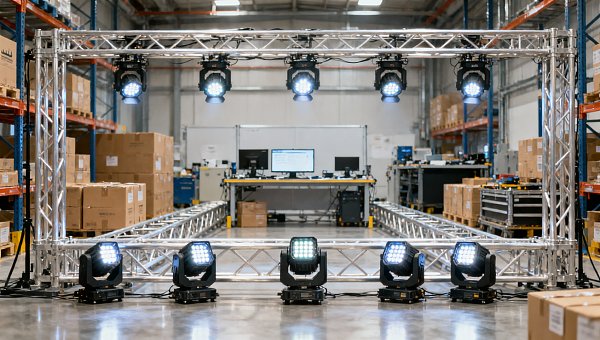
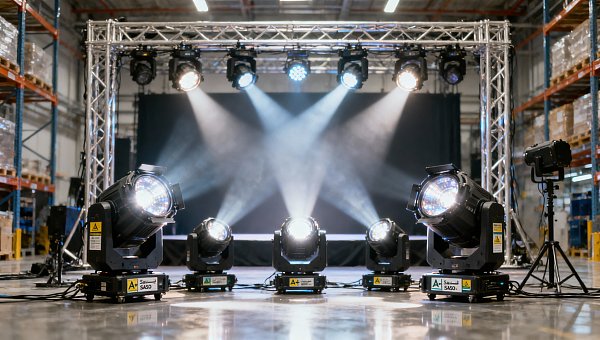
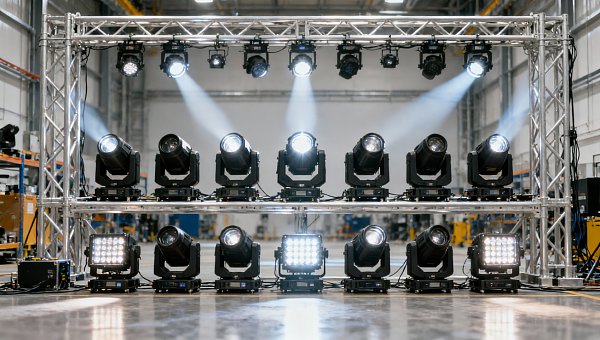
On May 12, 2026, five ASEAN countries — Vietnam, Thailand, Indonesia, Malaysia, and the Philippines — jointly imposed additional import duties on stage lighting equipment (HS code 9405.40), raising China’s export costs by 9.5%. This measure directly affects manufacturers, exporters, and supply chain operators involved in professional lighting systems, truss structures, and related integrated solutions.
Event Overview
On May 12, 2026, the governments of Vietnam, Thailand, Indonesia, Malaysia, and the Philippines jointly issued the Provisional Trade Measures Notice on Stage Lighting Equipment. The notice imposes special import tariffs ranging from 5% to 8% on products under HS code 9405.40 — covering stage lighting fixtures and associated truss systems. The measure entered into force immediately upon publication. According to calculations by the China Illuminating Engineering Society, the combined impact of these tariffs, exchange rate fluctuations, and rising ocean freight costs has increased China’s total export cost to the ASEAN region by 9.5%. Some export orders have already shifted toward local assembly models.
Industries Affected
Direct Exporters & Trading Firms
Companies exporting stage lighting and truss systems under HS code 9405.40 face immediate margin pressure. The new tariff range applies at customs clearance, requiring revised pricing strategies and updated commercial documentation for each destination country. Since rates vary by nation (5%–8%), firms must track and apply country-specific duty calculations per shipment.
Contract Manufacturers & OEM/ODM Producers
Manufacturers fulfilling export orders for international brands or regional distributors are affected indirectly but significantly. Rising landed costs may trigger renegotiation of ex-works or FOB terms. Some buyers are reportedly requesting localized assembly options — increasing demand for regional production support or partner coordination, even if no physical facility exists yet in ASEAN.
Supply Chain & Logistics Service Providers
Firms offering customs brokerage, bonded warehousing, or last-mile distribution in ASEAN markets face higher compliance complexity. The tariff is applied at import entry, meaning service providers must verify HS code classification accuracy and confirm eligibility for any potential exemptions (none currently announced). Documentation timelines and duty advance requirements may tighten.
Component Sourcing & Subassembly Suppliers
Suppliers providing key subcomponents — such as LED modules, control boards, or aluminum truss profiles — may see altered order patterns. If final assembly shifts locally, demand for complete kits (CKD/SKD) could rise, while demand for fully assembled units may soften. However, no official shift in component-level tariff treatment has been announced.
What Enterprises and Practitioners Should Monitor and Do Now
Track Official Updates and Implementation Guidance
While the notice was published on May 12, 2026, country-level customs authorities may issue supplementary implementation guidelines — including classification clarifications, valuation rules, or transitional provisions. Exporters should monitor national customs websites and engage licensed brokers for real-time updates.
Verify Product Classification Against HS Code 9405.40
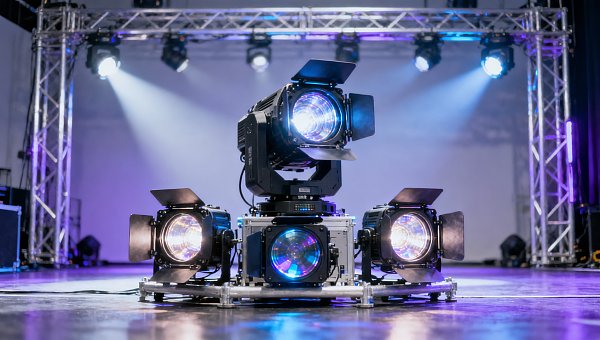
The tariff applies specifically to goods classified under HS 9405.40. Companies should reconfirm their product classifications with customs-certified experts — especially for hybrid or multifunctional units (e.g., lighting + rigging combos) that may fall outside the scope. Misclassification risks delays or penalty assessments.
Distinguish Between Policy Signal and Operational Impact
This is a coordinated, multilateral action — not an isolated national measure. Its timing and scope suggest a broader regional effort to strengthen domestic downstream capabilities. However, actual enforcement rigor, audit frequency, and exemption pathways remain unconfirmed and require observation over the next 60–90 days.
Prepare for Local Assembly Scenarios
Given reported shifts toward local assembly, firms should assess feasibility of CKD/SKD packaging, identify qualified regional partners (if applicable), and review logistics for partial shipments. Even without immediate investment, having preliminary operational blueprints supports faster response if buyer requests accelerate.
Editorial Perspective / Industry Observation
Observably, this measure functions less as an isolated trade barrier and more as a structural recalibration signal. It reflects growing regional emphasis on value-added manufacturing within ASEAN — particularly in segments where imported finished goods dominate market share. Analysis shows the 9.5% aggregate cost increase is not purely tariff-driven; it incorporates secondary pressures (currency, freight), indicating vulnerability across multiple layers of the export chain. From an industry perspective, this is best understood not as a short-term adjustment but as an early indicator of tightening regional trade conditions for standardized B2B lighting hardware — especially where local capacity expansion is underway.
Consequently, sustained monitoring is warranted: not only for possible extensions to adjacent HS codes (e.g., 9405.30 for studio lighting), but also for emerging bilateral exemptions or ASEAN-wide review timelines. The current policy lacks a stated expiration date or review clause — making its duration and scalability key unknowns.
Conclusion: This tariff action marks a material change in the ASEAN market access environment for Chinese stage lighting exporters. It introduces measurable cost pressure and accelerates strategic questions around localization, classification integrity, and supply chain resilience. Rather than representing a temporary friction point, it is better interpreted as a formalized inflection point — one that invites proactive reassessment of export architecture, not reactive cost absorption.
Source: Joint Announcement by the Governments of Vietnam, Thailand, Indonesia, Malaysia, and the Philippines — Provisional Trade Measures Notice on Stage Lighting Equipment, issued May 12, 2026; cost impact data from the China Illuminating Engineering Society (public statement, May 2026).
Further observation required on: national implementation guidance, classification dispute mechanisms, and potential extension to related HS codes.
Search News
Hot Articles
- Restaurant FurnitureFast-Casual Restaurant Interiors: Design Choices That Improve Speed and Guest FlowOct 04, 2026
- Outdoor RidesHow to Select Leisure Park Equipment for Safe, High-Throughput Visitor AreasOct 03, 2026
- Fashion & Gem JewelryDiamond Tester Wholesale: How to Vet Accuracy, Calibration, and MOQ Before OrderingOct 02, 2026
Popular Tags
Need ExpertConsultation?
Connect with our specialized leisureengineering team for procurementstrategies.
Recommended News
 Jul 13, 2026Stage Riser Platforms Explained: Types, Load Ratings, and Best-Fit Event UsesStage riser platforms explained clearly: compare types, load ratings, safety factors, and best-fit event uses to choose smarter, safer solutions for conferences, schools, hotels, and live shows.● Pro Audio Engineer
 Jul 09, 2026SASO Fast Track Cuts Stage Lighting Export Lead TimeSASO Fast Track cuts stage lighting export lead time from 45 days to 12 working days. Learn how Saudi certification changes affect truss suppliers, OEMs, buyers, and shipment planning.● Pro Audio Engineer
 Jul 08, 2026SASO Updates Stage Lighting Label Rules for LED Moving HeadsSASO updates stage lighting label rules for LED moving heads, requiring three-level energy efficiency values and bilingual labels. See what exporters and buyers must do before October 2026.● Pro Audio Engineer
 Jul 07, 2026SASO Adds Energy Label Rules for Stage Lighting ImportsSASO Adds Energy Label Rules for Stage Lighting Imports: learn which stage lighting products now need Arabic energy labels and SASO-recognized test reports before Sept. 1, 2026.● Pro Audio Engineer
 Jul 06, 2026Saudi SASO Sets A+ Rule for Stage LED LightingSaudi SASO sets A+ rule for stage LED lighting from Oct 1, 2026. Learn how the new SASO label and IEC 62722-2-1:2026 standard impact compliance, shipping, and market access.● Pro Audio Engineer
 Jul 04, 2026SASO Tightens RF Test Rules for Wireless Stage ControlsSASO tightens RF test rules for wireless stage controls in Saudi Arabia. Learn how the new IEC 62368-3 requirement impacts stage lighting exports, compliance, and delivery.● Pro Audio Engineer
 Jul 03, 2026Saudi SASO Adds RF Approval Rule for Stage LightingSaudi SASO adds RF approval rule for stage lighting. Learn how the new SASO RoHS+RF certification affects wireless lighting, truss control exports, retail access, and project delivery in Saudi Arabia.● Pro Audio Engineer
 Jul 02, 2026SASO Starts EMC Pilot for Smart Stage Lighting in SaudiSASO starts an EMC pilot for smart stage lighting in Saudi Arabia, impacting dimming controllers, cloud access, and project compliance. See what suppliers and integrators must do now.● Pro Audio Engineer
 Jul 01, 2026Saudi SASO Tightens UV-C Limits for Stage LightingSaudi SASO tightens UV-C limits for stage lighting and truss products. Learn the 2026 SASO IEC 62471 update, retesting deadline, customs risks, and how to protect Saudi shipments.● Pro Audio Engineer
 Jun 30, 2026EN 62471:2026 Adds UV-C Limit for Stage LightingEN 62471:2026 adds a UV-C limit for stage lighting, impacting LED moving heads, laser fixtures, and truss lighting. Learn what changes before Dec 1, 2026.● Pro Audio Engineer
 Jun 29, 2026TUV Adds Wi-Fi 7 EMC Test for Stage LightingTUV Adds Wi-Fi 7 EMC Test for Stage Lighting sold into the EU. Learn the Oct 1, 2026 deadline, retesting rules, and how EN 55032:2024 impacts certificates, shipments, and compliance planning.● Pro Audio Engineer
 Jun 25, 2026LED PAR Cans Wholesale: What to Compare in Wattage, Beam Angle, and DMX ControlLED par cans wholesale buyers should compare wattage, beam angle, and DMX control before requesting quotes. Learn how to avoid costly mismatches and choose fixtures that fit each venue.● Pro Audio Engineer
 Jun 16, 2026Stage Lighting Equipment List for Small Venues: What You Need and How to Plan ItStage lighting equipment for small venues: discover a practical equipment list, planning tips, and smart setup ideas to improve performance, flexibility, and long-term value.● Pro Audio Engineer
 Jun 12, 2026Vietnam Tightens EMC Rules for Stage Lighting LEDsVietnam Tightens EMC Rules for Stage Lighting LEDs: learn how QCVN 139:2026 impacts imports, testing, sourcing, and delivery planning for stage lighting businesses.● Pro Audio Engineer
 Jun 11, 2026LPGA Shanghai Debut Lifts Stage Lighting OrdersStage lighting and truss demand is rising as LPGA Shanghai debuts in 2026. Learn how tighter delivery windows, compliance, and project execution are reshaping global orders.● Pro Audio Engineer
 Jun 04, 2026UK EPR Rules Expand to Stage Lighting and TrussUK EPR rules for stage lighting and truss expand in Q3 2026. Learn how UKCA-linked registration, reporting, recycling fees, and material documentation will affect compliance and market access.● Pro Audio Engineer
 Jun 03, 2026UK EPR Fee Hits Stage Truss Textiles in Q3 2026UK EPR Fee for stage truss textiles starts in Q3 2026. Learn what new recycling charges and UKCA-Flame rules mean for lighting and truss suppliers.● Pro Audio Engineer
 Jun 02, 2026UK EPR Fee Hits Stage Lighting & TrussUK EPR Fee Hits Stage Lighting & Truss products with textile components in 2026. Learn compliance risks, BOM updates, and cost impacts for UK exporters.● Pro Audio Engineer
 May 25, 2026China's Carbon Fiber Truss Strength Up 32% at 2026 Sports ExpoCarbon fiber truss strength up 32% at 2026 Sports Expo—UL 1598 certified, CE+UL ready. Discover how China’s stage infrastructure is winning European music festivals & global tenders.● Pro Audio Engineer
 May 23, 2026Vietnam Mandates Bilingual MSDS for Stage Lighting & Truss ImportsVietnam mandates bilingual MSDS (Vietnamese & Chinese) for stage lighting and truss imports — ensure compliance by July 1, 2026 to avoid shipment rejection.● Pro Audio Engineer
 May 20, 20263 Chinese Stage Lighting Firms Join LA28 Olympic Supplier List3 Chinese stage lighting firms join LA28 Olympic supplier list — showcasing ISO 20121 & UL 1574 compliance, sustainability leadership, and global credibility in live-event infrastructure.● Pro Audio Engineer
 May 20, 2026What matters most when choosing lighting stands crank up?Lighting stands crank up: learn what really matters beyond height—load capacity, crank safety, stability, compatibility, and serviceability—to choose the right stand with confidence.● Pro Audio Engineer
 May 19, 20263 Chinese Stage Lighting Firms Join IOC’s 2028 LA Olympics Supplier ListChinese stage lighting firms join IOC's 2028 LA Olympics supplier list — a major validation for OEM/ODM exporters and tech integrators in global sports & entertainment lighting.● Pro Audio Engineer
 May 19, 2026When are chain hoists for stage the better rigging choiceChain hoists for stage are the better rigging choice when you need precise lifting, compact headroom use, and reliable repeat performance. See key use cases and buyer tips.● Pro Audio Engineer