SteamVR Opens Direct OEM Certification for Chinese VR Arcades
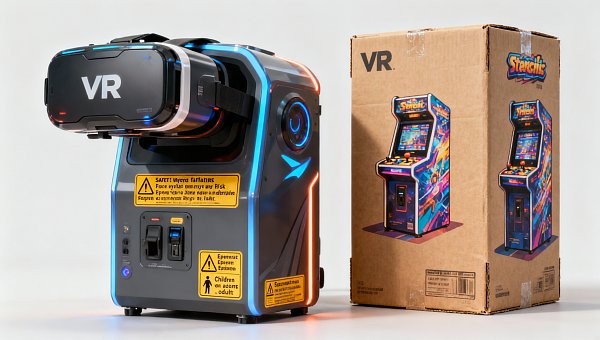
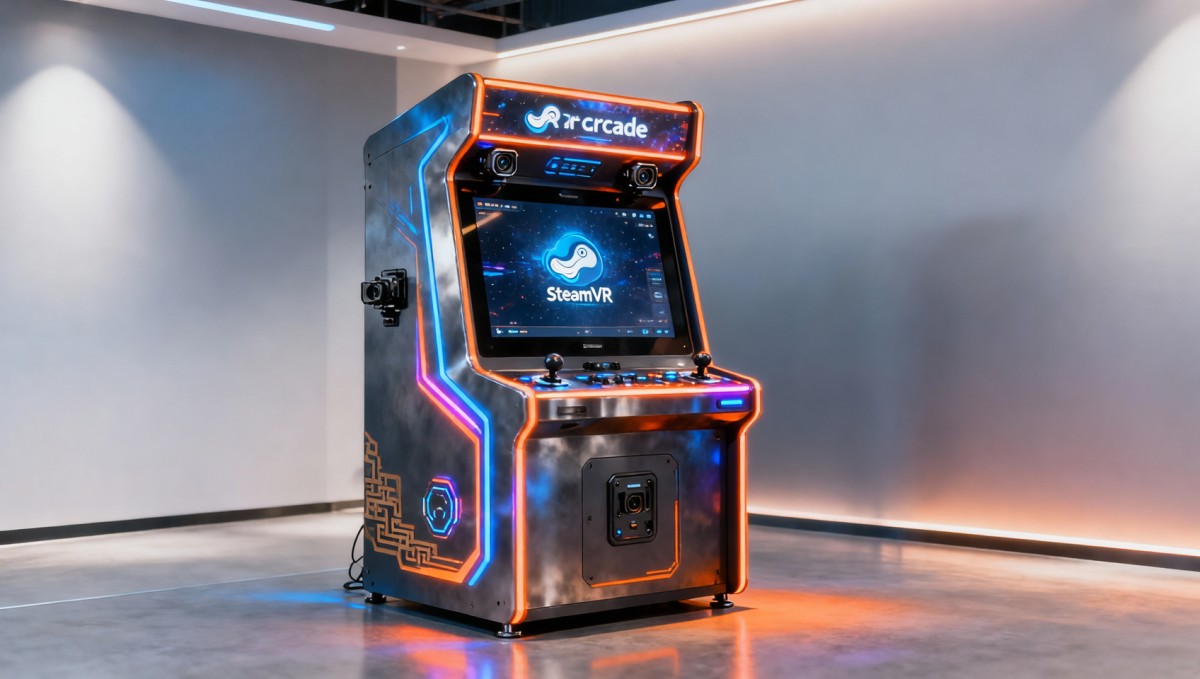
Valve Corporation announced on May 12, 2026, that SteamVR 2.5 SDK now supports ‘one-click direct certification’ for Chinese OEM arcade and VR machines—eliminating the need for custom middleware development. This policy shift lowers deployment barriers for domestic VR hardware vendors entering global markets, particularly in commercial VR entertainment and location-based entertainment (LBE) sectors, by streamlining access to SteamVR’s 28 million-user content ecosystem.
Event Overview
On May 12, 2026, Valve officially released SteamVR 2.5 SDK with native support for direct certification of Chinese OEM-built arcade cabinets and standalone VR machines. Certified devices gain immediate interoperability with SteamVR applications, runtime services, and storefront metadata without third-party abstraction layers. The certification process is standardized, publicly documented, and administered via Valve’s Developer Portal. No changes to existing SteamVR end-user licensing terms were announced.
Industries Affected
Direct Trade Enterprises: Export-oriented VR hardware vendors—especially those targeting LBE operators in North America, Western Europe, and Southeast Asia—now face significantly reduced time-to-market. Previously, integration required bespoke driver development and iterative compatibility testing; under the new framework, certified devices ship with pre-validated runtime hooks. Impact manifests as faster contract execution cycles, lower post-sale technical support overhead, and improved bid competitiveness in public RFPs for VR venue rollouts.
Raw Materials Procurement Firms: Suppliers of motion-tracking modules (e.g., IMU arrays, inside-out camera subsystems), haptic feedback actuators, and thermal management components may see modest demand shifts—not from volume increases, but from specification tightening. Certification mandates stricter latency thresholds (
Contract Manufacturing & Assembly Providers: EMS and ODM partners serving Chinese VR OEMs must now embed certification-ready firmware partitions and secure bootchains during production programming. This adds a discrete validation step to final test sequences and requires updated JTAG/debug interface provisioning. While not increasing BOM cost, it extends line-side QA duration by ~9–12 minutes per unit and necessitates staff retraining on Valve’s Hardware Certification Checklist v2.5.
Supply Chain Service Providers: Logistics and customs brokers specializing in cross-border tech hardware shipments will encounter revised documentation requirements: certified devices must carry Valve-issued hardware ID certificates (HIDCs) alongside standard CE/FCC filings. This introduces a new pre-clearance verification layer—particularly relevant for bonded warehousing in Singapore and Rotterdam—where HIDC authenticity checks are now integrated into automated customs risk-scoring algorithms.
Key Considerations and Recommended Actions
Validate Firmware Stack Against SDK 2.5 Compliance Matrix
OEMs should audit current bootloader, sensor fusion, and display synchronization modules against Valve’s published latency budget and memory mapping constraints—especially where Android-based OS stacks are used. Non-compliant implementations may pass basic enumeration but fail runtime stability tests during certification.
Initiate Early Engagement with Valve’s Hardware Certification Team
While public documentation is available, priority queue access and expedited review windows (reducing typical 6-week turnaround to ≤10 business days) require formal partnership registration via Steamworks Partner Program—available only to entities with ≥3 shipped commercial VR products in the prior 24 months.
Reassess Localized Content Bundling Strategy
With direct access to SteamVR’s global catalog, OEMs can de-emphasize region-locked app stores. However, commercial arcade operators still require offline-first operation modes and multi-language UI overlays. Vendors should allocate engineering resources toward modular localization frameworks—not full app repackaging—that comply with SteamVR’s dynamic language asset loading spec.
Editorial Perspective / Industry Observation
Observably, this move signals Valve’s strategic pivot from consumer-focused platform stewardship toward infrastructure-level enablement for commercial VR ecosystems. Unlike previous SDK iterations—which prioritized PC-tethered headsets—the 2.5 release explicitly accommodates embedded, ARM-based, fanless arcade systems. Analysis shows this reflects growing revenue contribution from LBE venues (up 37% YoY per 2025 IHS Markit data), suggesting Valve is aligning its developer incentives with real-world deployment economics rather than pure user-count metrics. Current more critical implication lies not in market access, but in standardization pressure: competing platforms (e.g., Meta Horizon Workrooms, Pico Enterprise Suite) may accelerate their own OEM certification programs to avoid fragmentation risk among hardware partners.
Conclusion
This certification pathway does not eliminate competitive differentiation—but reshapes its locus. Success will hinge less on proprietary runtime features and more on robustness under sustained commercial load, serviceability in unattended environments, and seamless integration with venue management systems (e.g., RFID ticketing, usage analytics dashboards). For the broader VR industry, it marks a maturation milestone: from fragmented, vendor-locked deployments toward interoperable, standards-based infrastructure—where value accrues to reliability, maintainability, and operator-centric design—not just novelty or specs.
Source Attribution
Official announcement: SteamVR Developer Blog, May 12, 2026. Technical specifications: OpenVR GitHub Repository (v2.5 tag). Certification portal: Steamworks Hardware Certification Dashboard.
Areas under ongoing observation: regional rollout sequencing (not all countries enabled at launch), long-term maintenance SLA for certified firmware versions, and potential future alignment with ISO/IEC 23053 (VR/AR system interoperability standard currently in DIS stage).
Search News
Hot Articles
- Restaurant FurnitureFast-Casual Restaurant Interiors: Design Choices That Improve Speed and Guest FlowOct 04, 2026
- Outdoor RidesHow to Select Leisure Park Equipment for Safe, High-Throughput Visitor AreasOct 03, 2026
- Fashion & Gem JewelryDiamond Tester Wholesale: How to Vet Accuracy, Calibration, and MOQ Before OrderingOct 02, 2026
Popular Tags
Need ExpertConsultation?
Connect with our specialized leisureengineering team for procurementstrategies.
Recommended News
 Sep 15, 2026How to Choose Coin-Operated Pool Tables for Bars, Hotels, and Arcade VenuesCoin operated pool tables for bars, hotels, and arcades: compare sizes, payment systems, durability, service access, and revenue potential.● Theme Park Strategist
 Sep 08, 2026What to Look for in a Flight Simulator Chair Manufacturer for Commercial VR CentersChoose a flight simulator chair manufacturer that delivers durable, safe, customizable seating for commercial VR centers. Explore key sourcing criteria now.● Theme Park Strategist
 Aug 25, 2026What to Evaluate Before Buying Commercial Self Service Photo Booths for VenuesCommercial self service photo booths for venues: learn how to evaluate durability, software stability, branding flexibility, support, and total ROI before you buy.● Theme Park Strategist
 Aug 23, 2026How to Evaluate Wholesale Vending Machines for Multi-Location Business DeploymentWholesale vending machines for multi-location deployment require more than low unit cost. Learn how to compare reliability, payments, telemetry, and supplier support to scale smarter.● Theme Park Strategist
 Aug 17, 2026U.S. CPSC Urges Bilingual Warnings for Arcade and VR MachinesU.S. CPSC urges bilingual safety warnings for Arcade & VR Machines—learn what exporters, importers, and distributors must do now to avoid delays and returns.● Theme Park Strategist
 Aug 16, 2026EU Enforces EN IEC 62368-1:2026 Certification for Arcade and VR MachinesEU Enforces EN IEC 62368-1:2026 certification for arcade and VR machines, reshaping EU market access, customs clearance, and compliance planning for exporters and distributors.● Theme Park Strategist
 Aug 13, 2026UFLPA’s new guidelines take effect: Exports of Arcade and VR equipment face full-link labor compliance requirementsUFLPA’s new guide takes effect: Arcade and VR machine exports to the U.S. now face full-chain labor compliance checks. Discover key risks and action steps.● Theme Park Strategist
 Aug 12, 2026EU PPWR takes effect, Arcade and VR packaging incorporate heavy metal and PFAS restrictionsEU PPWR now applies to Arcade and VR packaging, tightening heavy metal and PFAS compliance. Learn how exporters can avoid delays, fines, and customs risks.● Theme Park Strategist
 Aug 11, 2026CPSC Sets Bilingual Labels for Arcade and VR ImportsCPSC bilingual labels for arcade and VR imports become mandatory on October 1, 2026. Learn the new English-Spanish warning rules, customs risks, and key compliance steps now.● Theme Park Strategist
 Aug 10, 2026EU Rule Takes Effect for Arcade & VR Machine ClearanceArcade & VR Machine clearance in the EU now depends on EN IEC 62368-1:2026+A11:2026 compliance. Learn what changed, who is affected, and how to avoid customs delays.● Theme Park Strategist
 Aug 09, 2026CPSC Requires New Labels for Arcade and VR ImportsCPSC requires new labels for Arcade and VR imports starting Oct 1, 2026. Learn the multilingual warning rules, compliance risks, and key steps exporters and buyers must take now.● Theme Park Strategist
 Aug 08, 2026EU Entry Rule Tightens for Arcade & VR MachinesArcade & VR Machines entering the EU now face stricter CE compliance under EN IEC 62368-1:2026+A11:2026. Learn the new rule, risks, and what exporters must do now.● Theme Park Strategist
 Aug 07, 2026CPSC Notice Tightens U.S. Entry Rules for Arcade and VR MachinesCPSC Notice Tightens U.S. Entry Rules for Arcade and VR Machines: learn the new labeling, FCC, UN38.3, and compliance document requirements before October 1, 2026.● Theme Park Strategist
 Aug 06, 2026EU Rule Takes Effect for CE-UKCA Labels on Arcade & VR MachinesArcade & VR Machines face new CE-UKCA label and ECPD filing rules in the EU and UK. Learn what manufacturers, importers, and distributors must do now to avoid delays.● Theme Park Strategist
 Aug 05, 2026CPSC Recalls Arcade and VR Machines Over UL 62368-1CPSC recalls arcade and VR machines over UL 62368-1 non-compliance. Learn how this 2026 safety action may affect imports, distribution, customs clearance, and market access.● Theme Park Strategist
 Aug 02, 2026EU Sets New Certification Rule for Arcade and VR MachinesArcade and VR Machines face a new EU certification rule from Oct 1, 2026. Learn how EN IEC 62368-1:2026+A11:2026 affects CE marking, customs clearance, and market access.● Theme Park Strategist
 Aug 01, 2026CPSC Moves to Require Bilingual Warnings on Arcade and VR MachinesCPSC bilingual warnings for Arcade and VR Machines may reshape U.S. import compliance. Learn how English-Spanish labels affect packaging, customs risk, and shipment readiness.● Theme Park Strategist
 Jul 31, 2026EU Sets EN IEC 62368-1:2025 Rule for Arcade and VR MachinesEU Sets EN IEC 62368-1:2025 Rule for Arcade and VR Machines. Learn the new EU compliance deadlines, safety updates, and key actions for manufacturers, OEMs, and distributors.● Theme Park Strategist
 Jul 30, 2026CPSC Sets New Warning Label Rule for Arcade & VR MachinesCPSC sets a new warning label rule for Arcade & VR Machines effective August 15, 2026. Learn key compliance risks, multilingual label requirements, and shipment actions now.● Theme Park Strategist
 Jul 29, 2026EU Enforces New Safety Standard for Arcade and VR MachinesEU Enforces New Safety Standard for Arcade and VR Machines: learn how EN IEC 62368-1 affects CE compliance, customs clearance, and EU market access for exporters and buyers.● Theme Park Strategist
 Jul 28, 2026CPSC Sets ASTM F3472-26 Rule for Arcade & VR ImportsCPSC ASTM F3472-26 rule reshapes Arcade & VR imports to the U.S. Learn key compliance deadlines, certification risks, and what exporters, OEM/ODM suppliers, and buyers should do now.● Theme Park Strategist
 Jul 27, 2026EU Rule Takes Effect for Arcade & VR Machine CybersecurityEU Rule Takes Effect for Arcade & VR Machine Cybersecurity: learn how EN IEC 62443-3-3:2025 affects compliance, customs clearance, sales continuity, and supplier planning in the EU market.● Theme Park Strategist
 Jul 25, 2026CPSC Sets Bilingual Warning Rule for Arcade and VR ImportsCPSC bilingual warning rule for arcade and VR imports takes effect August 1, 2026. Learn how OEM/ODM exporters can avoid CBP delays, relabel shipments, and protect U.S. delivery timelines.● Theme Park Strategist
 Jul 24, 2026EU Enforces New Safety Standard for Arcade and VR MachinesEU Enforces New Safety Standard for Arcade and VR Machines: learn how EN IEC 62368-1:2026+A11:2026 reshapes EU compliance, CE documentation, testing timelines, and export readiness.● Theme Park Strategist