Commercial Pool Tables: Slate Thickness or Frame Strength First?
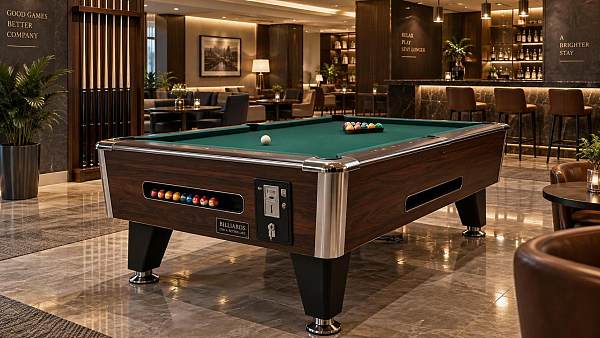
When evaluating commercial pool tables for demanding venues, the debate often starts with slate thickness but should never ignore frame strength. For technical assessors, the real benchmark is how these two factors work together to deliver stability, play consistency, structural durability, and lower lifecycle maintenance across high-traffic commercial environments.
Why the evaluation standard for commercial pool tables is changing
Across hospitality, entertainment, and mixed-use leisure spaces, the buying logic for commercial pool tables is shifting. A few years ago, many evaluations focused heavily on slate thickness because slate was seen as the clearest indicator of premium play. That view still matters, but it is no longer sufficient. Venue operators now expect tables to perform under longer operating hours, more varied user skill levels, frequent relocation during floorplan updates, and tighter maintenance budgets. As a result, technical assessors are increasingly moving from a single-spec mindset to a systems-based assessment.
This change is especially visible in hotels, family entertainment centers, sports bars, student recreation spaces, and cruise or resort environments. In these settings, a table is not only a game surface; it is also a commercial asset tied to guest satisfaction, brand image, safety risk, and asset life. A thick slate bed may support excellent roll quality, but if the frame lacks stiffness, load distribution, or joint integrity, the playing advantage can degrade quickly. That is why the question is no longer slate thickness or frame strength first in absolute terms, but which one limits real-world performance first in a given venue.
The strongest market signal: performance is now judged over lifecycle, not showroom impression
One of the clearest trends affecting commercial pool tables is the shift from initial specification comparison to lifecycle evaluation. Buyers are under pressure to justify total cost of ownership, not just purchase price or headline material claims. This changes the conversation in three important ways.
- First, play consistency is judged over months or years of use, not during installation week.
- Second, structural integrity is connected to maintenance frequency, level retention, and cloth wear.
- Third, procurement teams increasingly ask whether heavy components are properly supported by the base architecture.
For technical assessors, this means commercial pool tables must be reviewed as integrated assemblies. Slate thickness contributes to flatness, mass, and resistance to minor environmental variation. Frame strength contributes to load-bearing stability, resistance to racking, fastening durability, and long-term level retention. If slate is upgraded without a matching frame design, the heavier top can place additional stress on underbuilt supports. In practice, that can accelerate sagging, fastener loosening, or inconsistent rebound geometry.
What is driving the shift in buyer priorities
Several forces are pushing the market toward a more balanced technical review of commercial pool tables. None of them acts alone, but together they are changing specification standards.
These drivers explain why technical teams are asking deeper questions. They are no longer satisfied with broad claims such as “premium slate” or “commercial-grade frame.” Instead, they want to know how many support points are used, how the frame resists torsion, whether the slate is three-piece or one-piece, how rail alignment is maintained, and how the product behaves after repeated use cycles.
Slate thickness still matters, but its role is becoming more specific
In commercial pool tables, slate remains the benchmark material for serious play because it delivers mass, dimensional stability, and a reliable playing plane. Thicker slate generally improves resistance to minor irregularities and can support more consistent roll. That said, the market is becoming more nuanced about what slate thickness actually solves.
For technical assessors, the key question is not whether thicker slate is better in theory, but whether the venue can fully benefit from it in operation. A thicker slate bed offers value when the supporting frame, cabinet geometry, and leveling system are engineered to carry and stabilize the load. Without that support, the practical gain from extra thickness may be reduced. In some cases, improper support under a thick slate assembly creates more long-term risk than a slightly thinner slate installed on a stronger, better-braced frame.
This is why buyers of commercial pool tables increasingly evaluate slate in relation to support spacing, subframe rigidity, and installation conditions. In venues with stable flooring, controlled climate, and lower movement, slate thickness may remain the lead indicator of premium play. In venues with uneven load conditions, frequent repositioning, or high guest turnover, frame engineering often becomes the first risk-control factor.
Frame strength is moving from background feature to frontline decision factor
The rising attention on frame strength reflects a broader commercial reality: most service complaints do not begin with the slate itself. They begin with instability around it. A frame that twists under load, loses level at the corners, or transmits vibration poorly can affect ball roll, rail response, noise, and user confidence. In busy venues, these issues become visible fast.
Technical assessors should therefore treat frame strength as more than material thickness or overall weight. True structural performance includes bracing layout, joinery method, leg attachment design, fastener retention, metal-to-wood interface quality where applicable, and resistance to creep over time. For commercial pool tables, a well-designed frame protects the slate investment, supports consistent leveling, and reduces the frequency of corrective service calls.
This matters even more as venues favor multipurpose interiors. A billiards area may be part of a lobby activation zone, premium lounge, private club, or branded social space. Tables must hold their performance despite surrounding foot traffic, cleaning routines, furniture movement, and occasional misuse. In this operating context, frame strength often determines whether a table remains commercially reliable after the novelty of installation has passed.
How the impact differs by stakeholder
The changing evaluation logic for commercial pool tables affects different roles in different ways.
Signals technical buyers should watch in the next sourcing cycle
The next phase of sourcing for commercial pool tables will likely be shaped by several practical signals. None require speculation; they are already emerging in commercial buying behavior.
- More requests for technical drawings and support structure details before approval.
- Greater interest in installation method, re-leveling procedure, and service access.
- More scrutiny of mixed-material construction where premium finishes may hide weaker load paths.
- Preference for suppliers who can explain use-case fit rather than push a one-size-fits-all premium spec.
- Higher value placed on documented project references in hotels, clubs, campuses, and leisure facilities.
For GCT-oriented buyers operating across commercial sectors, these signals align with a broader sourcing trend: asset decisions are becoming more evidence-based. Commercial pool tables are evaluated less like decorative recreation products and more like operational equipment that must satisfy performance, durability, and brand standards at the same time.
A practical decision framework: which should come first in evaluation?
The most useful answer for technical assessors is conditional. If the venue’s main objective is competition-style accuracy in a controlled environment, slate thickness may be the starting point. If the venue’s main risk is heavy usage, movement, floor variation, or maintenance pressure, frame strength should come first. In most true commercial scenarios, however, the decision sequence should be integrated.
A practical evaluation order for commercial pool tables is often:
- Confirm the operating environment and traffic intensity.
- Review frame architecture, support points, and leveling design.
- Then match slate thickness to the verified support capability.
- Finally assess rails, cushions, cloth system, and serviceability.
This order reflects commercial reality. A strong frame can unlock the value of premium slate. Premium slate cannot compensate for a weak frame over time. Therefore, when forced to identify the first filter in many non-competition commercial applications, frame strength increasingly becomes the gatekeeper. Slate thickness remains essential, but it delivers best when the structural foundation is already credible.
What businesses should do now before specifying commercial pool tables
For companies sourcing commercial pool tables in the current market, the smartest next step is not to default to the thickest slate or the heaviest-looking base. Instead, build a short technical review process around fit-for-use evidence.
- Ask suppliers to explain how frame design supports the selected slate configuration.
- Request commercial project references with similar traffic patterns and operating conditions.
- Verify service and re-leveling requirements after installation and during normal use.
- Check whether decorative customization changes structural members or support spacing.
- Compare total ownership implications, not just acquisition cost or premium material claims.
This approach helps technical assessors move from spec reading to risk judgment. It also supports stronger alignment between procurement, operations, design, and maintenance teams. In a market where experiential quality and capital efficiency now intersect, that alignment is becoming a competitive advantage.
Final judgment for technical assessors
The trend is clear: evaluation standards for commercial pool tables are becoming more holistic, more operational, and more lifecycle-focused. Slate thickness still signals performance potential, but frame strength increasingly determines whether that potential survives commercial use. The better question is not which feature sounds more premium, but which structural combination best fits the venue’s real conditions.
If your business needs to judge how this trend affects a current or upcoming project, focus on four questions: What level of traffic will the table experience? How stable is the installation environment? How often might the table need adjustment or relocation? And does the supplier provide enough structural evidence to support the claimed play standard? Those answers will do more to improve sourcing outcomes than relying on slate thickness alone.
Search News
Hot Articles
- Stationery & UniformsHow Schools Can Cut Printing Costs When Buying Ink Cartridges in BulkSep 21, 2026
- Jewelry Packaging & DisplayHow to Evaluate a Luxury Retail Packaging Supplier for Premium Brand ConsistencySep 20, 2026
- Commercial KitchenHow to Select a Spiral Dough Mixer for Bakery Batch Size and Dough HydrationSep 19, 2026
Popular Tags
Need ExpertConsultation?
Connect with our specialized leisureengineering team for procurementstrategies.
Recommended News
 Sep 15, 2026How to Choose Coin-Operated Pool Tables for Bars, Hotels, and Arcade VenuesCoin operated pool tables for bars, hotels, and arcades: compare sizes, payment systems, durability, service access, and revenue potential.● Theme Park Strategist
 Sep 08, 2026What to Look for in a Flight Simulator Chair Manufacturer for Commercial VR CentersChoose a flight simulator chair manufacturer that delivers durable, safe, customizable seating for commercial VR centers. Explore key sourcing criteria now.● Theme Park Strategist
 Aug 25, 2026What to Evaluate Before Buying Commercial Self Service Photo Booths for VenuesCommercial self service photo booths for venues: learn how to evaluate durability, software stability, branding flexibility, support, and total ROI before you buy.● Theme Park Strategist
 Aug 23, 2026How to Evaluate Wholesale Vending Machines for Multi-Location Business DeploymentWholesale vending machines for multi-location deployment require more than low unit cost. Learn how to compare reliability, payments, telemetry, and supplier support to scale smarter.● Theme Park Strategist
 Aug 17, 2026U.S. CPSC Urges Bilingual Warnings for Arcade and VR MachinesU.S. CPSC urges bilingual safety warnings for Arcade & VR Machines—learn what exporters, importers, and distributors must do now to avoid delays and returns.● Theme Park Strategist
 Aug 16, 2026EU Enforces EN IEC 62368-1:2026 Certification for Arcade and VR MachinesEU Enforces EN IEC 62368-1:2026 certification for arcade and VR machines, reshaping EU market access, customs clearance, and compliance planning for exporters and distributors.● Theme Park Strategist
 Aug 13, 2026UFLPA’s new guidelines take effect: Exports of Arcade and VR equipment face full-link labor compliance requirementsUFLPA’s new guide takes effect: Arcade and VR machine exports to the U.S. now face full-chain labor compliance checks. Discover key risks and action steps.● Theme Park Strategist
 Aug 12, 2026EU PPWR takes effect, Arcade and VR packaging incorporate heavy metal and PFAS restrictionsEU PPWR now applies to Arcade and VR packaging, tightening heavy metal and PFAS compliance. Learn how exporters can avoid delays, fines, and customs risks.● Theme Park Strategist
 Aug 11, 2026CPSC Sets Bilingual Labels for Arcade and VR ImportsCPSC bilingual labels for arcade and VR imports become mandatory on October 1, 2026. Learn the new English-Spanish warning rules, customs risks, and key compliance steps now.● Theme Park Strategist
 Aug 10, 2026EU Rule Takes Effect for Arcade & VR Machine ClearanceArcade & VR Machine clearance in the EU now depends on EN IEC 62368-1:2026+A11:2026 compliance. Learn what changed, who is affected, and how to avoid customs delays.● Theme Park Strategist
 Aug 09, 2026CPSC Requires New Labels for Arcade and VR ImportsCPSC requires new labels for Arcade and VR imports starting Oct 1, 2026. Learn the multilingual warning rules, compliance risks, and key steps exporters and buyers must take now.● Theme Park Strategist
 Aug 08, 2026EU Entry Rule Tightens for Arcade & VR MachinesArcade & VR Machines entering the EU now face stricter CE compliance under EN IEC 62368-1:2026+A11:2026. Learn the new rule, risks, and what exporters must do now.● Theme Park Strategist
 Aug 07, 2026CPSC Notice Tightens U.S. Entry Rules for Arcade and VR MachinesCPSC Notice Tightens U.S. Entry Rules for Arcade and VR Machines: learn the new labeling, FCC, UN38.3, and compliance document requirements before October 1, 2026.● Theme Park Strategist
 Aug 06, 2026EU Rule Takes Effect for CE-UKCA Labels on Arcade & VR MachinesArcade & VR Machines face new CE-UKCA label and ECPD filing rules in the EU and UK. Learn what manufacturers, importers, and distributors must do now to avoid delays.● Theme Park Strategist
 Aug 05, 2026CPSC Recalls Arcade and VR Machines Over UL 62368-1CPSC recalls arcade and VR machines over UL 62368-1 non-compliance. Learn how this 2026 safety action may affect imports, distribution, customs clearance, and market access.● Theme Park Strategist
 Aug 02, 2026EU Sets New Certification Rule for Arcade and VR MachinesArcade and VR Machines face a new EU certification rule from Oct 1, 2026. Learn how EN IEC 62368-1:2026+A11:2026 affects CE marking, customs clearance, and market access.● Theme Park Strategist
 Aug 01, 2026CPSC Moves to Require Bilingual Warnings on Arcade and VR MachinesCPSC bilingual warnings for Arcade and VR Machines may reshape U.S. import compliance. Learn how English-Spanish labels affect packaging, customs risk, and shipment readiness.● Theme Park Strategist
 Jul 31, 2026EU Sets EN IEC 62368-1:2025 Rule for Arcade and VR MachinesEU Sets EN IEC 62368-1:2025 Rule for Arcade and VR Machines. Learn the new EU compliance deadlines, safety updates, and key actions for manufacturers, OEMs, and distributors.● Theme Park Strategist
 Jul 30, 2026CPSC Sets New Warning Label Rule for Arcade & VR MachinesCPSC sets a new warning label rule for Arcade & VR Machines effective August 15, 2026. Learn key compliance risks, multilingual label requirements, and shipment actions now.● Theme Park Strategist
 Jul 29, 2026EU Enforces New Safety Standard for Arcade and VR MachinesEU Enforces New Safety Standard for Arcade and VR Machines: learn how EN IEC 62368-1 affects CE compliance, customs clearance, and EU market access for exporters and buyers.● Theme Park Strategist
 Jul 28, 2026CPSC Sets ASTM F3472-26 Rule for Arcade & VR ImportsCPSC ASTM F3472-26 rule reshapes Arcade & VR imports to the U.S. Learn key compliance deadlines, certification risks, and what exporters, OEM/ODM suppliers, and buyers should do now.● Theme Park Strategist
 Jul 27, 2026EU Rule Takes Effect for Arcade & VR Machine CybersecurityEU Rule Takes Effect for Arcade & VR Machine Cybersecurity: learn how EN IEC 62443-3-3:2025 affects compliance, customs clearance, sales continuity, and supplier planning in the EU market.● Theme Park Strategist
 Jul 25, 2026CPSC Sets Bilingual Warning Rule for Arcade and VR ImportsCPSC bilingual warning rule for arcade and VR imports takes effect August 1, 2026. Learn how OEM/ODM exporters can avoid CBP delays, relabel shipments, and protect U.S. delivery timelines.● Theme Park Strategist
 Jul 24, 2026EU Enforces New Safety Standard for Arcade and VR MachinesEU Enforces New Safety Standard for Arcade and VR Machines: learn how EN IEC 62368-1:2026+A11:2026 reshapes EU compliance, CE documentation, testing timelines, and export readiness.● Theme Park Strategist