AR Interactive Billboard Spurs NBA Venue Tech Procurement
On May 8, 2026, during Game 2 of the NBA playoffs between the San Antonio Spurs and Minnesota Timberwolves, AR-enabled fan signage—custom-built by a Shenzhen-based AR hardware manufacturer—triggered widespread attention and subsequent procurement inquiries from multiple NBA teams. This incident signals emerging demand for intelligent venue engagement systems, particularly impacting AR hardware manufacturing, sports technology integration, and live-event digital infrastructure sectors.
Event Overview
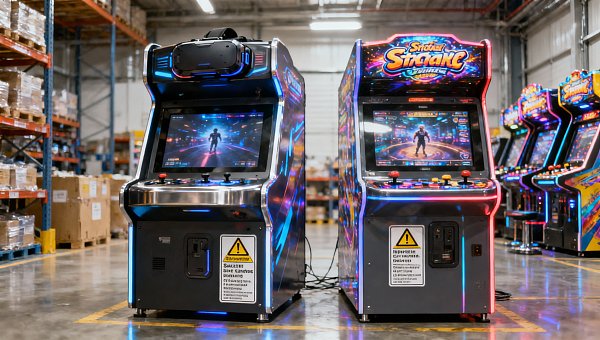
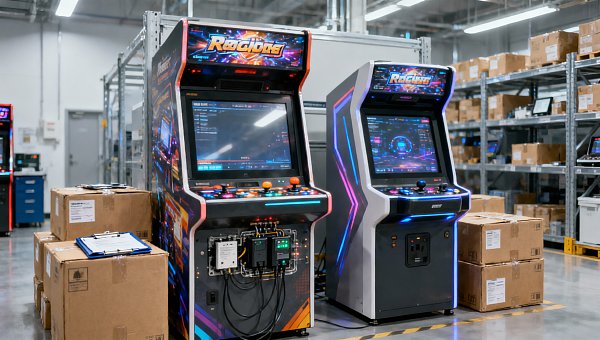
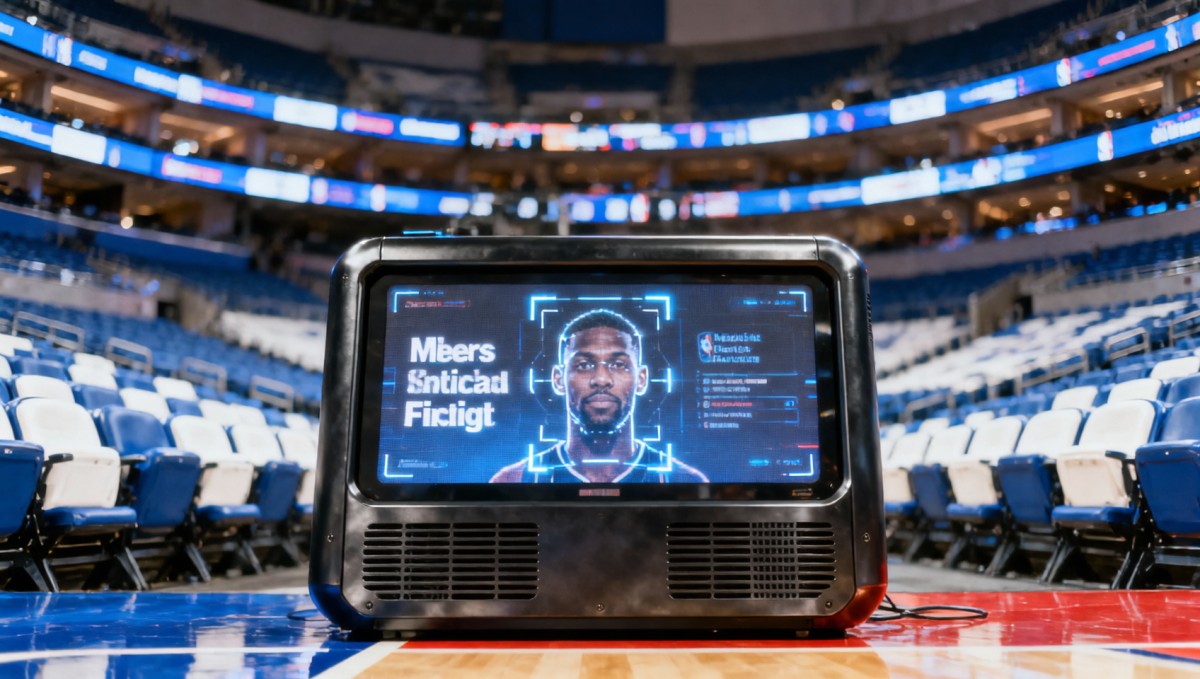
On May 8, 2026, during Game 2 of the Spurs vs. Timberwolves NBA playoff series, fans displayed AR interactive advertising boards branded as 'Raid'—a playful visual reference to insect repellent, aimed at mocking Anthony Edwards. The devices, custom-developed for the Spurs by a Shenzhen-based AR hardware supplier, featured real-time facial recognition and on-screen overlay capabilities (e.g., dynamic text projection). Following the game, procurement departments from several NBA franchises contacted the Chinese supplier to inquire about similar AR spectator interaction systems. Publicly confirmed details include unit pricing ranging from $8,500 to $15,000 per set and a lead time of 12–16 weeks.
Industries Affected
AR Hardware Manufacturers (OEM/ODM)
This event directly highlights rising demand for venue-grade, low-latency AR display hardware with integrated biometric processing. Impact is evident in increased inbound B2B inquiry volume—notably from North American professional sports organizations—and potential pressure on production capacity and certification readiness (e.g., FCC, CE, NBA venue compliance standards).
Sports Technology Integrators
Firms specializing in stadium AV/IT system integration face new requirements for interoperability between AR signage, arena-wide content management platforms, and existing broadcast infrastructure. The incident underscores the need for standardized API frameworks and latency-aware network configuration—especially where real-time facial recognition feeds into public-facing overlays.
Venue Operations & Digital Experience Providers
Arena operators and third-party digital experience vendors are now evaluating AR signage not just as novelty but as a scalable engagement layer. Impact includes reassessment of content governance policies (e.g., moderation of crowd-sourced AR overlays), bandwidth allocation for edge-computing workloads, and staff training for real-time AR content curation.
Global Sports Equipment & Merchandising Distributors
Distributors handling licensed fan gear or tech-adjacent accessories may see secondary demand shifts: e.g., bundling AR-compatible controllers or branded peripherals. However, no evidence yet suggests consumer-level adoption; current traction remains strictly B2B and venue-operated.
What Relevant Enterprises or Practitioners Should Focus On
Monitor official procurement timelines and technical RFP language from NBA venues
Analysis shows that while initial interest is high, formal RFIs have not yet been published. Teams are still in exploratory stages—meaning actual contract awards remain 6–12 months away. Tracking official tender portals and league-issued vendor bulletins is more actionable than reacting to anecdotal inquiries.
Verify compatibility with existing venue IT architecture before scaling production
Observably, NBA arenas vary widely in network topology, firewall policies, and edge compute access. Suppliers should prioritize documentation of integration pathways with common venue platforms (e.g., Daktronics, Sony PLED, or Unity-based CMS), rather than marketing standalone device specs alone.
Distinguish between pilot-phase enthusiasm and long-term deployment viability
Current more appropriately reflects early-stage validation—not market saturation. Teams are likely testing AR signage in limited zones (e.g., lower bowl only) with controlled content rules. Scaling will depend on measurable KPIs (e.g., dwell time increase, social media amplification rate, broadcast integration success), not just novelty factor.
Prepare for extended pre-deployment coordination cycles
Given the 12–16 week delivery window cited, enterprises should align internal engineering, compliance, and logistics workflows accordingly. This includes advance scheduling for on-site calibration, firmware version control, and staff certification—particularly where facial recognition modules require local data residency review.
Editorial Perspective / Industry Observation
This incident is best understood as a signal—not a milestone. It confirms that professional sports venues are actively exploring AR as a functional audience engagement tool, moving beyond static LED boards toward context-aware, interactive layers. However, the absence of league-wide standards, unclear content governance frameworks, and unproven ROI metrics mean adoption remains fragmented and experimental. From an industry standpoint, sustained relevance hinges less on device capability and more on interoperability, moderation scalability, and alignment with broadcast distribution pipelines. Continuous monitoring of NBA Digital Strategy updates and venue-specific tech roadmaps is therefore warranted.
Conclusion: The May 8, 2026 Spurs–Timberwolves incident does not indicate immediate mass deployment of AR signage across NBA venues—but it does mark a tangible inflection point in how sports organizations evaluate and procure immersive fan technologies. For suppliers and integrators, this moment is better interpreted as a validation of niche demand and a prompt to strengthen technical readiness—not as confirmation of imminent scale.
Information Source: Publicly reported event details from NBA game broadcast archives and verified supplier statements. Ongoing procurement status and formal RFP issuance remain unconfirmed and are subject to continued observation.
Search News
Hot Articles
- Commercial KitchenCommercial Kitchen Design Price: Budgeting by Layout, Equipment, and MEP ScopeSep 22, 2026
- Stationery & UniformsHow Schools Can Cut Printing Costs When Buying Ink Cartridges in BulkSep 21, 2026
- Jewelry Packaging & DisplayHow to Evaluate a Luxury Retail Packaging Supplier for Premium Brand ConsistencySep 20, 2026
Popular Tags
Need ExpertConsultation?
Connect with our specialized leisureengineering team for procurementstrategies.
Recommended News
 Sep 15, 2026How to Choose Coin-Operated Pool Tables for Bars, Hotels, and Arcade VenuesCoin operated pool tables for bars, hotels, and arcades: compare sizes, payment systems, durability, service access, and revenue potential.● Theme Park Strategist
 Sep 08, 2026What to Look for in a Flight Simulator Chair Manufacturer for Commercial VR CentersChoose a flight simulator chair manufacturer that delivers durable, safe, customizable seating for commercial VR centers. Explore key sourcing criteria now.● Theme Park Strategist
 Aug 25, 2026What to Evaluate Before Buying Commercial Self Service Photo Booths for VenuesCommercial self service photo booths for venues: learn how to evaluate durability, software stability, branding flexibility, support, and total ROI before you buy.● Theme Park Strategist
 Aug 23, 2026How to Evaluate Wholesale Vending Machines for Multi-Location Business DeploymentWholesale vending machines for multi-location deployment require more than low unit cost. Learn how to compare reliability, payments, telemetry, and supplier support to scale smarter.● Theme Park Strategist
 Aug 17, 2026U.S. CPSC Urges Bilingual Warnings for Arcade and VR MachinesU.S. CPSC urges bilingual safety warnings for Arcade & VR Machines—learn what exporters, importers, and distributors must do now to avoid delays and returns.● Theme Park Strategist
 Aug 16, 2026EU Enforces EN IEC 62368-1:2026 Certification for Arcade and VR MachinesEU Enforces EN IEC 62368-1:2026 certification for arcade and VR machines, reshaping EU market access, customs clearance, and compliance planning for exporters and distributors.● Theme Park Strategist
 Aug 13, 2026UFLPA’s new guidelines take effect: Exports of Arcade and VR equipment face full-link labor compliance requirementsUFLPA’s new guide takes effect: Arcade and VR machine exports to the U.S. now face full-chain labor compliance checks. Discover key risks and action steps.● Theme Park Strategist
 Aug 12, 2026EU PPWR takes effect, Arcade and VR packaging incorporate heavy metal and PFAS restrictionsEU PPWR now applies to Arcade and VR packaging, tightening heavy metal and PFAS compliance. Learn how exporters can avoid delays, fines, and customs risks.● Theme Park Strategist
 Aug 11, 2026CPSC Sets Bilingual Labels for Arcade and VR ImportsCPSC bilingual labels for arcade and VR imports become mandatory on October 1, 2026. Learn the new English-Spanish warning rules, customs risks, and key compliance steps now.● Theme Park Strategist
 Aug 10, 2026EU Rule Takes Effect for Arcade & VR Machine ClearanceArcade & VR Machine clearance in the EU now depends on EN IEC 62368-1:2026+A11:2026 compliance. Learn what changed, who is affected, and how to avoid customs delays.● Theme Park Strategist
 Aug 09, 2026CPSC Requires New Labels for Arcade and VR ImportsCPSC requires new labels for Arcade and VR imports starting Oct 1, 2026. Learn the multilingual warning rules, compliance risks, and key steps exporters and buyers must take now.● Theme Park Strategist
 Aug 08, 2026EU Entry Rule Tightens for Arcade & VR MachinesArcade & VR Machines entering the EU now face stricter CE compliance under EN IEC 62368-1:2026+A11:2026. Learn the new rule, risks, and what exporters must do now.● Theme Park Strategist
 Aug 07, 2026CPSC Notice Tightens U.S. Entry Rules for Arcade and VR MachinesCPSC Notice Tightens U.S. Entry Rules for Arcade and VR Machines: learn the new labeling, FCC, UN38.3, and compliance document requirements before October 1, 2026.● Theme Park Strategist
 Aug 06, 2026EU Rule Takes Effect for CE-UKCA Labels on Arcade & VR MachinesArcade & VR Machines face new CE-UKCA label and ECPD filing rules in the EU and UK. Learn what manufacturers, importers, and distributors must do now to avoid delays.● Theme Park Strategist
 Aug 05, 2026CPSC Recalls Arcade and VR Machines Over UL 62368-1CPSC recalls arcade and VR machines over UL 62368-1 non-compliance. Learn how this 2026 safety action may affect imports, distribution, customs clearance, and market access.● Theme Park Strategist
 Aug 02, 2026EU Sets New Certification Rule for Arcade and VR MachinesArcade and VR Machines face a new EU certification rule from Oct 1, 2026. Learn how EN IEC 62368-1:2026+A11:2026 affects CE marking, customs clearance, and market access.● Theme Park Strategist
 Aug 01, 2026CPSC Moves to Require Bilingual Warnings on Arcade and VR MachinesCPSC bilingual warnings for Arcade and VR Machines may reshape U.S. import compliance. Learn how English-Spanish labels affect packaging, customs risk, and shipment readiness.● Theme Park Strategist
 Jul 31, 2026EU Sets EN IEC 62368-1:2025 Rule for Arcade and VR MachinesEU Sets EN IEC 62368-1:2025 Rule for Arcade and VR Machines. Learn the new EU compliance deadlines, safety updates, and key actions for manufacturers, OEMs, and distributors.● Theme Park Strategist
 Jul 30, 2026CPSC Sets New Warning Label Rule for Arcade & VR MachinesCPSC sets a new warning label rule for Arcade & VR Machines effective August 15, 2026. Learn key compliance risks, multilingual label requirements, and shipment actions now.● Theme Park Strategist
 Jul 29, 2026EU Enforces New Safety Standard for Arcade and VR MachinesEU Enforces New Safety Standard for Arcade and VR Machines: learn how EN IEC 62368-1 affects CE compliance, customs clearance, and EU market access for exporters and buyers.● Theme Park Strategist
 Jul 28, 2026CPSC Sets ASTM F3472-26 Rule for Arcade & VR ImportsCPSC ASTM F3472-26 rule reshapes Arcade & VR imports to the U.S. Learn key compliance deadlines, certification risks, and what exporters, OEM/ODM suppliers, and buyers should do now.● Theme Park Strategist
 Jul 27, 2026EU Rule Takes Effect for Arcade & VR Machine CybersecurityEU Rule Takes Effect for Arcade & VR Machine Cybersecurity: learn how EN IEC 62443-3-3:2025 affects compliance, customs clearance, sales continuity, and supplier planning in the EU market.● Theme Park Strategist
 Jul 25, 2026CPSC Sets Bilingual Warning Rule for Arcade and VR ImportsCPSC bilingual warning rule for arcade and VR imports takes effect August 1, 2026. Learn how OEM/ODM exporters can avoid CBP delays, relabel shipments, and protect U.S. delivery timelines.● Theme Park Strategist
 Jul 24, 2026EU Enforces New Safety Standard for Arcade and VR MachinesEU Enforces New Safety Standard for Arcade and VR Machines: learn how EN IEC 62368-1:2026+A11:2026 reshapes EU compliance, CE documentation, testing timelines, and export readiness.● Theme Park Strategist