Basketball Arcade Games: What Players Notice First
Basketball arcade games make an impression long before players take their first shot. From cabinet design and lighting to hoop response, sound effects, and scoring speed, the first details people notice often shape their overall experience. For buyers, operators, and researchers, understanding these early touchpoints helps reveal what makes a machine more engaging, memorable, and commercially effective.
Why do first impressions matter so much in basketball arcade games?
In amusement and leisure settings, players often decide within seconds whether a machine feels exciting, premium, or outdated. That is especially true for basketball arcade games, where visual attraction, game rhythm, and physical feedback combine into a fast emotional judgment. A unit may have strong technical specifications, but if the first look feels dull or the first shot feels awkward, players may walk away before the operator earns meaningful play volume.
For information researchers, this matters beyond entertainment value. First-impression factors influence dwell time, repeat play, social visibility, and suitability for different commercial environments such as family entertainment centers, shopping malls, hotel recreation zones, educational campuses, and mixed-use leisure spaces. In B2B sourcing, the question is not only whether a machine works, but whether it immediately communicates quality, reliability, and fun.
- Players notice appearance before gameplay, so cabinet styling and lighting create the first filter.
- They judge fairness and responsiveness within the first few shots, which makes hoop rebound and ball return design critical.
- They remember sound, scoring pace, and crowd appeal, which affects repeat play and group participation.
The difference between player attention and buyer attention
A casual player reacts to excitement. A commercial buyer evaluates what creates that excitement consistently over time. Global Commercial Trade focuses on this decision gap by helping sourcing teams compare player-facing appeal with back-end realities such as materials, component durability, safety expectations, and supply-chain readiness. That distinction is useful when evaluating basketball arcade games for premium venues where appearance and uptime both affect revenue.
What players usually notice first: a practical breakdown
The earliest touchpoints in basketball arcade games can be grouped into sensory, mechanical, and operational signals. The table below helps researchers identify which visible or immediate features tend to shape user perception first, and why those signals matter in commercial placement decisions.
For researchers, the key insight is that early player reactions usually come from simple, visible elements rather than hidden specifications. That is why GCT-style sourcing analysis starts from front-end engagement cues and then connects them to build quality, parts choice, and operating fit.
The cabinet is not only decoration
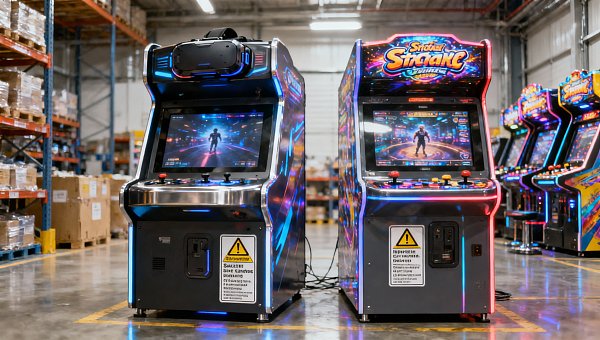
A well-designed cabinet helps basketball arcade games stand out in crowded environments. Shape, color contrast, illuminated signage, and finish quality all affect whether people approach the unit. In premium commercial spaces, the cabinet also has to match the broader interior language. A machine suitable for a high-energy arcade may look too aggressive for a hotel entertainment lounge, while a softer design may underperform in youth-heavy leisure centers.
The first shot is a trust test
When players take the first shot, they judge the machine’s fairness immediately. If the rim feels too rigid, the ball rebounds unnaturally, or the net area causes odd deflections, users may assume the machine is poorly maintained or cheaply built. For operators, that split-second doubt can reduce repeat plays. For buyers, it signals the importance of testing not only electronic features but also physical shot behavior.
Which features separate average basketball arcade games from memorable ones?
Not all basketball arcade games create the same first impression. Some units attract attention but fail during play. Others perform well technically but lack visual pull. The better commercial options balance attraction, responsiveness, durability, and venue fit. Buyers should compare both player-facing and operator-facing factors before shortlisting suppliers.
The table below compares common evaluation dimensions used during sourcing research. It is especially useful for mixed-industry buyers who may be evaluating amusement equipment alongside wider commercial projects.
This comparison does not imply one category fits every project. Instead, it shows why buyer research should begin with placement conditions and expected player volume. A unit installed in a seasonal leisure venue faces different demands from one placed in a year-round indoor entertainment complex.
Memorability comes from rhythm
Players remember rhythm more than specifications. Good basketball arcade games maintain a satisfying sequence: easy ball pickup, smooth release, readable score change, and immediate audio reward. If any link in that chain feels delayed, the machine loses momentum. For operators, this directly affects crowd formation and social replay behavior, especially in venues where guests choose between multiple attractions.
How should buyers assess technical performance without getting lost in specs?
Many buyers overfocus on headline numbers and underfocus on in-use performance. For basketball arcade games, technical assessment should combine physical inspection, gameplay simulation, maintenance access, and environment-specific safety review. This is where structured sourcing support adds value: it helps separate decorative claims from commercially relevant details.
Core technical checkpoints
- Frame stability: Check whether repeated shooting, leaning, and high-traffic use may loosen the structure over time.
- Hoop and backboard assembly: Evaluate shot consistency, rebound realism, and replaceability of wear components.
- Ball return system: Confirm whether balls return smoothly during fast play without jams or disruptive delays.
- Display and control electronics: Assess readability, response speed, and resistance to heavy public use.
- Service access: Review how quickly operators can reach common maintenance points such as sensors, score modules, and power sections.
Relevant compliance considerations
Depending on destination market, buyers may need to review general electrical safety, material compliance, labeling, and public-use equipment expectations. Requirements vary by region, but the sourcing process should address documentation readiness early. In international trade, delay often comes not from the machine itself but from missing paperwork, unclear component declarations, or mismatched voltage planning.
For multi-country projects, GCT’s cross-sector perspective is useful because amusement equipment does not exist in isolation. Buyers may also be planning fit-out schedules, shipping windows, customs timing, and compatibility with larger commercial rollout programs. That broader procurement context matters just as much as the product feature sheet.
Which application scenarios change what players notice first?
The same basketball arcade game can be perceived differently depending on venue type. In a shopping mall, brightness and approachability may matter most. In a family entertainment center, throughput and competitive excitement may dominate. In hospitality settings, noise control and design harmony often become more important than aggressive visual effects.
The following scenario guide helps researchers connect player perception with operational context.
This scenario lens prevents a common sourcing mistake: choosing basketball arcade games that test well in a showroom but underperform in the actual commercial environment. Placement context changes player expectations, and procurement criteria should reflect that reality.
What are the most common sourcing mistakes?
Information researchers often collect many brochures but still miss the factors that influence long-term value. In basketball arcade games, several recurring errors can distort decision-making and lead to mismatched purchases.
- Confusing visual novelty with commercial suitability. A striking cabinet may attract attention, but weak shot feel or difficult maintenance can hurt revenue over time.
- Ignoring acoustic fit. Strong audio can help in loud arcades but create friction in hospitality or educational environments.
- Underestimating service logistics. Spare parts availability, technical documentation, and after-sales communication often matter more than small price differences.
- Failing to test the machine under continuous play. Short demonstrations may not reveal ball return issues, sensor inconsistency, or display lag.
- Overlooking regional compliance needs until late in the buying cycle. This can delay shipment and site opening schedules.
A more reliable approach is to build a decision matrix that combines user impression, venue fit, maintenance burden, documentation readiness, and total project timing. GCT supports this style of research by connecting sourcing evaluation to wider commercial rollout requirements, not just single-product comparison.
FAQ: what do researchers and buyers ask most about basketball arcade games?
How do I evaluate basketball arcade games if I cannot test them in person?
Ask for detailed operation videos showing full rounds of play, close-ups of the hoop and backboard, score response timing, ball return behavior, and maintenance access points. Request footage from more than one angle and, if possible, under realistic public-use conditions. Also review packaging plans, parts lists, and documentation readiness alongside the visual evidence.
What matters more: appearance or gameplay?
In commercial settings, both matter, but in sequence. Appearance attracts the first approach. Gameplay decides repeat use. The best basketball arcade games convert attention into replay by pairing strong cabinet presence with fair shot feel, readable scoring, and smooth round pacing.
Are premium-looking units always better for hotels or upscale venues?
Not always. Premium-looking design is useful, but hospitality buyers should also review sound levels, finish durability, safety details, and how well the machine integrates with the guest environment. A highly aggressive arcade presentation may conflict with the tone of a refined leisure space.
What should I ask about lead time and delivery?
Focus on production scheduling, component sourcing stability, packaging protection, destination voltage requirements, and export documentation. If the project is part of a larger commercial opening, confirm milestone dates early so the basketball arcade games do not become the delay point in site readiness.
Why choose us for basketball arcade games sourcing research?
Global Commercial Trade supports buyers who need more than a product list. Our value is in helping procurement teams assess basketball arcade games as part of broader commercial experience planning. That means looking at user appeal, venue fit, supplier readiness, delivery coordination, and sourcing risk at the same time.
- We help compare cabinet style, gameplay feel, and operator practicality based on your target environment.
- We support parameter confirmation, including display behavior, shot flow, construction details, and maintenance access points.
- We assist with sourcing discussions around delivery windows, sample review, customization scope, and documentation expectations.
- We align amusement equipment selection with wider commercial programs across hospitality, education, leisure, and specialty retail environments.
If you are comparing basketball arcade games for a new venue, expansion program, or multi-market sourcing plan, contact us with your preferred cabinet style, target user group, project timeline, and destination market. We can help you review product selection logic, shortlist suitable suppliers, clarify certification-related questions, discuss customization options, and structure quotation conversations around real commercial requirements rather than guesswork.
Search News
Hot Articles
- Stationery & UniformsHow Schools Can Cut Printing Costs When Buying Ink Cartridges in BulkSep 21, 2026
- Jewelry Packaging & DisplayHow to Evaluate a Luxury Retail Packaging Supplier for Premium Brand ConsistencySep 20, 2026
- Commercial KitchenHow to Select a Spiral Dough Mixer for Bakery Batch Size and Dough HydrationSep 19, 2026
Popular Tags
Need ExpertConsultation?
Connect with our specialized leisureengineering team for procurementstrategies.
Recommended News
 Sep 15, 2026How to Choose Coin-Operated Pool Tables for Bars, Hotels, and Arcade VenuesCoin operated pool tables for bars, hotels, and arcades: compare sizes, payment systems, durability, service access, and revenue potential.● Theme Park Strategist
 Sep 08, 2026What to Look for in a Flight Simulator Chair Manufacturer for Commercial VR CentersChoose a flight simulator chair manufacturer that delivers durable, safe, customizable seating for commercial VR centers. Explore key sourcing criteria now.● Theme Park Strategist
 Aug 25, 2026What to Evaluate Before Buying Commercial Self Service Photo Booths for VenuesCommercial self service photo booths for venues: learn how to evaluate durability, software stability, branding flexibility, support, and total ROI before you buy.● Theme Park Strategist
 Aug 23, 2026How to Evaluate Wholesale Vending Machines for Multi-Location Business DeploymentWholesale vending machines for multi-location deployment require more than low unit cost. Learn how to compare reliability, payments, telemetry, and supplier support to scale smarter.● Theme Park Strategist
 Aug 17, 2026U.S. CPSC Urges Bilingual Warnings for Arcade and VR MachinesU.S. CPSC urges bilingual safety warnings for Arcade & VR Machines—learn what exporters, importers, and distributors must do now to avoid delays and returns.● Theme Park Strategist
 Aug 16, 2026EU Enforces EN IEC 62368-1:2026 Certification for Arcade and VR MachinesEU Enforces EN IEC 62368-1:2026 certification for arcade and VR machines, reshaping EU market access, customs clearance, and compliance planning for exporters and distributors.● Theme Park Strategist
 Aug 13, 2026UFLPA’s new guidelines take effect: Exports of Arcade and VR equipment face full-link labor compliance requirementsUFLPA’s new guide takes effect: Arcade and VR machine exports to the U.S. now face full-chain labor compliance checks. Discover key risks and action steps.● Theme Park Strategist
 Aug 12, 2026EU PPWR takes effect, Arcade and VR packaging incorporate heavy metal and PFAS restrictionsEU PPWR now applies to Arcade and VR packaging, tightening heavy metal and PFAS compliance. Learn how exporters can avoid delays, fines, and customs risks.● Theme Park Strategist
 Aug 11, 2026CPSC Sets Bilingual Labels for Arcade and VR ImportsCPSC bilingual labels for arcade and VR imports become mandatory on October 1, 2026. Learn the new English-Spanish warning rules, customs risks, and key compliance steps now.● Theme Park Strategist
 Aug 10, 2026EU Rule Takes Effect for Arcade & VR Machine ClearanceArcade & VR Machine clearance in the EU now depends on EN IEC 62368-1:2026+A11:2026 compliance. Learn what changed, who is affected, and how to avoid customs delays.● Theme Park Strategist
 Aug 09, 2026CPSC Requires New Labels for Arcade and VR ImportsCPSC requires new labels for Arcade and VR imports starting Oct 1, 2026. Learn the multilingual warning rules, compliance risks, and key steps exporters and buyers must take now.● Theme Park Strategist
 Aug 08, 2026EU Entry Rule Tightens for Arcade & VR MachinesArcade & VR Machines entering the EU now face stricter CE compliance under EN IEC 62368-1:2026+A11:2026. Learn the new rule, risks, and what exporters must do now.● Theme Park Strategist
 Aug 07, 2026CPSC Notice Tightens U.S. Entry Rules for Arcade and VR MachinesCPSC Notice Tightens U.S. Entry Rules for Arcade and VR Machines: learn the new labeling, FCC, UN38.3, and compliance document requirements before October 1, 2026.● Theme Park Strategist
 Aug 06, 2026EU Rule Takes Effect for CE-UKCA Labels on Arcade & VR MachinesArcade & VR Machines face new CE-UKCA label and ECPD filing rules in the EU and UK. Learn what manufacturers, importers, and distributors must do now to avoid delays.● Theme Park Strategist
 Aug 05, 2026CPSC Recalls Arcade and VR Machines Over UL 62368-1CPSC recalls arcade and VR machines over UL 62368-1 non-compliance. Learn how this 2026 safety action may affect imports, distribution, customs clearance, and market access.● Theme Park Strategist
 Aug 02, 2026EU Sets New Certification Rule for Arcade and VR MachinesArcade and VR Machines face a new EU certification rule from Oct 1, 2026. Learn how EN IEC 62368-1:2026+A11:2026 affects CE marking, customs clearance, and market access.● Theme Park Strategist
 Aug 01, 2026CPSC Moves to Require Bilingual Warnings on Arcade and VR MachinesCPSC bilingual warnings for Arcade and VR Machines may reshape U.S. import compliance. Learn how English-Spanish labels affect packaging, customs risk, and shipment readiness.● Theme Park Strategist
 Jul 31, 2026EU Sets EN IEC 62368-1:2025 Rule for Arcade and VR MachinesEU Sets EN IEC 62368-1:2025 Rule for Arcade and VR Machines. Learn the new EU compliance deadlines, safety updates, and key actions for manufacturers, OEMs, and distributors.● Theme Park Strategist
 Jul 30, 2026CPSC Sets New Warning Label Rule for Arcade & VR MachinesCPSC sets a new warning label rule for Arcade & VR Machines effective August 15, 2026. Learn key compliance risks, multilingual label requirements, and shipment actions now.● Theme Park Strategist
 Jul 29, 2026EU Enforces New Safety Standard for Arcade and VR MachinesEU Enforces New Safety Standard for Arcade and VR Machines: learn how EN IEC 62368-1 affects CE compliance, customs clearance, and EU market access for exporters and buyers.● Theme Park Strategist
 Jul 28, 2026CPSC Sets ASTM F3472-26 Rule for Arcade & VR ImportsCPSC ASTM F3472-26 rule reshapes Arcade & VR imports to the U.S. Learn key compliance deadlines, certification risks, and what exporters, OEM/ODM suppliers, and buyers should do now.● Theme Park Strategist
 Jul 27, 2026EU Rule Takes Effect for Arcade & VR Machine CybersecurityEU Rule Takes Effect for Arcade & VR Machine Cybersecurity: learn how EN IEC 62443-3-3:2025 affects compliance, customs clearance, sales continuity, and supplier planning in the EU market.● Theme Park Strategist
 Jul 25, 2026CPSC Sets Bilingual Warning Rule for Arcade and VR ImportsCPSC bilingual warning rule for arcade and VR imports takes effect August 1, 2026. Learn how OEM/ODM exporters can avoid CBP delays, relabel shipments, and protect U.S. delivery timelines.● Theme Park Strategist
 Jul 24, 2026EU Enforces New Safety Standard for Arcade and VR MachinesEU Enforces New Safety Standard for Arcade and VR Machines: learn how EN IEC 62368-1:2026+A11:2026 reshapes EU compliance, CE documentation, testing timelines, and export readiness.● Theme Park Strategist