Are Arcade Token Coins Still Worth Using in 2026?
As cashless systems and contactless payments become standard, many buyers and operators are asking whether arcade token coins still make sense in 2026. This article explores their value from both a business and user-experience perspective, examining cost, branding, security, and operational practicality to help information-focused readers understand where tokens still fit in modern amusement and leisure environments.
The 2026 Shift: Why the Debate Around Arcade Token Coins Has Changed
The question is no longer whether digital payment is growing. That shift has already happened. The more useful question in 2026 is where arcade token coins still create value inside a changing amusement ecosystem. Family entertainment centers, redemption arcades, bowling venues, mixed-use leisure parks, museums, and branded attractions are all under pressure to improve operational efficiency while protecting guest experience. In that context, tokens are no longer the default payment tool, but they are not automatically obsolete either.
What changed is the decision framework. A decade ago, operators often compared coins with paper cash. Today, arcade token coins are being compared with QR payments, reloadable cards, mobile wallets, RFID wristbands, app-based accounts, and hybrid self-service kiosks. That means their value must be judged more strategically: not just by machine compatibility, but by throughput, fraud exposure, maintenance burden, brand impact, and visitor behavior.
For information-focused readers, especially those involved in sourcing, planning, or upgrading amusement and leisure environments, the market signal is clear: tokens now occupy a narrower but still meaningful role. They are strongest in settings where tactile play, simple access, controlled circulation, and memorable branding matter more than frictionless digital integration alone.
What Is Driving the Reassessment of Arcade Token Coins?
Several industry forces are reshaping how operators evaluate arcade token coins in 2026. None of these forces work in isolation; together they explain why some venues are replacing tokens while others are deliberately keeping them.
The most important insight is that arcade token coins are increasingly judged as part payment tool, part brand asset, and part operational choice. Their future depends less on tradition and more on whether they solve a specific venue problem better than digital alternatives.
Where Arcade Token Coins Still Deliver Clear Value
Despite strong digital momentum, there are still practical reasons some operators continue using arcade token coins in 2026. Their value is especially visible in venues that prioritize simplicity, control, and themed play.
1. Fast onboarding for casual users
Not every guest wants to download an app, register a profile, or understand a stored-value card system. In high-footfall leisure settings with tourists, school groups, or young children, tokens remain intuitive. Buy tokens, insert token, play game. That simplicity still matters when the goal is immediate participation rather than long-term account retention.
2. Strong fit for retro, themed, and premium concept venues
A growing number of venues are using nostalgia as a commercial strategy. In these environments, arcade token coins can reinforce atmosphere. A custom token with embossed branding, themed graphics, or limited-edition design adds emotional texture that a QR code cannot replicate. For venues blending amusement with food, merchandising, or destination entertainment, that physical detail can support premium positioning.
3. Budget control and spend framing
Tokens help convert money into a play budget. This can be useful for parents, school coordinators, and event organizers who want predictable spend per guest. In some cases, arcade token coins function as a controlled internal currency that makes package pricing easier for parties, group bookings, or promotional campaigns.
4. Reduced payment friction in limited-connectivity environments
Not all leisure settings operate with flawless connectivity or fully integrated payment architecture. Seasonal attractions, temporary event zones, and certain legacy game floors may still find tokens easier to manage than a fragmented digital stack. In these cases, arcade token coins can remain a practical bridge solution while a broader modernization plan is phased in.
Where Tokens Are Losing Ground Fast
The strongest argument against arcade token coins is not fashion. It is operating complexity. In large multi-attraction venues, especially those pursuing integrated loyalty, real-time reporting, and dynamic promotions, tokens can become restrictive.
Cashless systems give operators visibility into usage patterns, machine performance, repeat visits, and promotion response. They also support centralized pricing changes and easier cross-selling across food service, merchandise, and attractions. A token-only environment usually cannot match that level of intelligence without additional system layers.
There are also logistical concerns. Physical inventory must be ordered, stored, counted, secured, and reconciled. Machines require compatible acceptors and maintenance. Lost or damaged tokens create shrinkage. Counterfeit risk, while manageable with quality manufacturing, still exists. For operators scaling across multiple sites, those burdens can outweigh the user experience benefits.
The Real Decision in 2026: Token-Only, Cashless-Only, or Hybrid?
In practice, the market is moving toward segmentation rather than one universal answer. The most resilient strategy in 2026 is often hybrid design. This means operators choose arcade token coins for selected zones, events, or experiences while using cashless infrastructure for the wider venue.
This is where buyers and operators should be careful. The wrong decision is often not choosing tokens or rejecting them. It is applying one model across every customer journey without checking where value is actually created.
What Buyers, Operators, and Suppliers Should Watch Next
For commercial decision-makers in amusement and leisure procurement, several signals deserve close attention over the next planning cycle.
Guest expectation is splitting, not converging
Some users expect seamless mobile payment everywhere. Others actively enjoy the physical ritual of play. That means venue segmentation matters more than broad assumptions. Arcade token coins may feel outdated in one environment and highly engaging in another.
Customization is becoming more important than commodity supply
If a venue uses tokens at all, generic pieces often offer limited strategic value. Custom arcade token coins can support anti-counterfeit protection, logo visibility, commemorative campaigns, and stronger alignment with venue identity. For sourcing teams, manufacturing quality, alloy consistency, edge design, and validator compatibility deserve more attention than unit cost alone.
Legacy equipment strategy still matters
Many venues do not replace every cabinet or amusement machine at once. Where legacy equipment remains commercially useful, tokens may continue as a cost-effective operating method. The decision should consider retrofit cost, expected machine life, and the operational disruption of full conversion.
Security now includes trust, not just theft prevention
In 2026, security is broader than guarding against counterfeit arcade token coins. It also includes supplier transparency, material consistency, predictable lead times, and machine acceptance reliability. Poor-quality tokens can damage not only equipment performance but also customer trust and staff efficiency.
A Practical Framework for Judging Whether Arcade Token Coins Are Still Worth Using
Rather than treating this as a yes-or-no question, decision-makers should use a structured evaluation. The following framework can help clarify whether tokens still fit a venue’s direction.
So, Are Arcade Token Coins Still Worth Using in 2026?
Yes, but only when their role is intentional. Arcade token coins are no longer the default answer for modern amusement payments. They are worth using when they strengthen the guest experience, simplify access, support themed branding, align with legacy equipment, or offer practical control in specific operating contexts. They are less compelling when the business depends on unified data, loyalty integration, flexible pricing, and low-touch multi-site management.
In other words, tokens have shifted from standard infrastructure to strategic option. That is the most important trend signal of 2026. Their future is not mass dominance, but selective relevance.
What to Confirm Before Making a Token Decision
If a business wants to judge the future role of arcade token coins more accurately, it should confirm a few practical questions: What kind of guest journey does the venue want to create? Where does physical interaction improve the experience? How much operational value comes from transaction data? Which machines are due for upgrade, and which are not? Can the supplier provide consistent quality, customization, and compatibility support?
For buyers, operators, and sourcing teams, those questions matter more than broad claims that tokens are either dead or timeless. In 2026, the smarter approach is to assess where arcade token coins still create measurable value inside a changing leisure economy, and where digital systems clearly do more.
Search News
Hot Articles
- Stationery & UniformsHow Schools Can Cut Printing Costs When Buying Ink Cartridges in BulkSep 21, 2026
- Jewelry Packaging & DisplayHow to Evaluate a Luxury Retail Packaging Supplier for Premium Brand ConsistencySep 20, 2026
- Commercial KitchenHow to Select a Spiral Dough Mixer for Bakery Batch Size and Dough HydrationSep 19, 2026
Popular Tags
Need ExpertConsultation?
Connect with our specialized leisureengineering team for procurementstrategies.
Recommended News
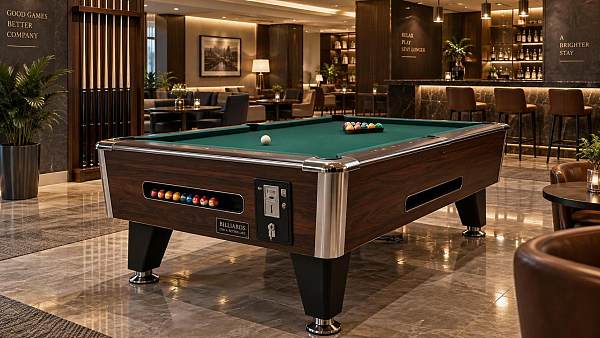
 Sep 15, 2026How to Choose Coin-Operated Pool Tables for Bars, Hotels, and Arcade VenuesCoin operated pool tables for bars, hotels, and arcades: compare sizes, payment systems, durability, service access, and revenue potential.● Theme Park Strategist
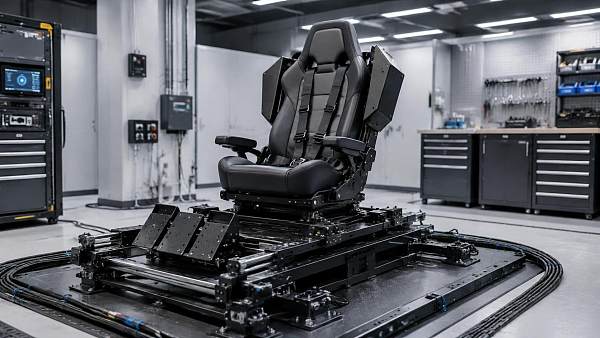
 Sep 08, 2026What to Look for in a Flight Simulator Chair Manufacturer for Commercial VR CentersChoose a flight simulator chair manufacturer that delivers durable, safe, customizable seating for commercial VR centers. Explore key sourcing criteria now.● Theme Park Strategist
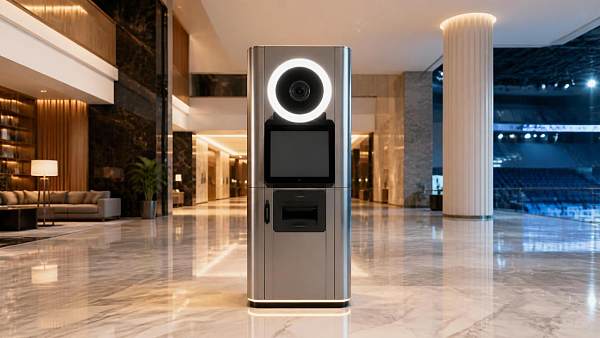
 Aug 25, 2026What to Evaluate Before Buying Commercial Self Service Photo Booths for VenuesCommercial self service photo booths for venues: learn how to evaluate durability, software stability, branding flexibility, support, and total ROI before you buy.● Theme Park Strategist
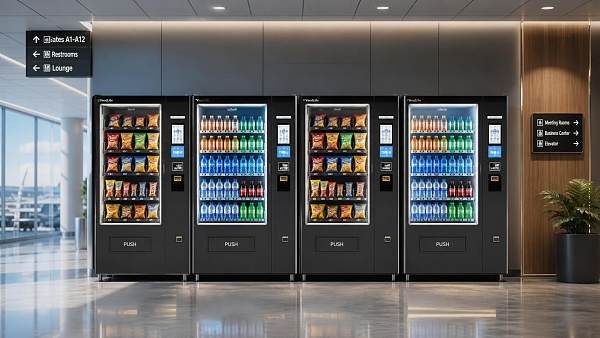
 Aug 23, 2026How to Evaluate Wholesale Vending Machines for Multi-Location Business DeploymentWholesale vending machines for multi-location deployment require more than low unit cost. Learn how to compare reliability, payments, telemetry, and supplier support to scale smarter.● Theme Park Strategist
 Aug 17, 2026U.S. CPSC Urges Bilingual Warnings for Arcade and VR MachinesU.S. CPSC urges bilingual safety warnings for Arcade & VR Machines—learn what exporters, importers, and distributors must do now to avoid delays and returns.● Theme Park Strategist
 Aug 16, 2026EU Enforces EN IEC 62368-1:2026 Certification for Arcade and VR MachinesEU Enforces EN IEC 62368-1:2026 certification for arcade and VR machines, reshaping EU market access, customs clearance, and compliance planning for exporters and distributors.● Theme Park Strategist
 Aug 13, 2026UFLPA’s new guidelines take effect: Exports of Arcade and VR equipment face full-link labor compliance requirementsUFLPA’s new guide takes effect: Arcade and VR machine exports to the U.S. now face full-chain labor compliance checks. Discover key risks and action steps.● Theme Park Strategist
 Aug 12, 2026EU PPWR takes effect, Arcade and VR packaging incorporate heavy metal and PFAS restrictionsEU PPWR now applies to Arcade and VR packaging, tightening heavy metal and PFAS compliance. Learn how exporters can avoid delays, fines, and customs risks.● Theme Park Strategist
 Aug 11, 2026CPSC Sets Bilingual Labels for Arcade and VR ImportsCPSC bilingual labels for arcade and VR imports become mandatory on October 1, 2026. Learn the new English-Spanish warning rules, customs risks, and key compliance steps now.● Theme Park Strategist
 Aug 10, 2026EU Rule Takes Effect for Arcade & VR Machine ClearanceArcade & VR Machine clearance in the EU now depends on EN IEC 62368-1:2026+A11:2026 compliance. Learn what changed, who is affected, and how to avoid customs delays.● Theme Park Strategist
 Aug 09, 2026CPSC Requires New Labels for Arcade and VR ImportsCPSC requires new labels for Arcade and VR imports starting Oct 1, 2026. Learn the multilingual warning rules, compliance risks, and key steps exporters and buyers must take now.● Theme Park Strategist
 Aug 08, 2026EU Entry Rule Tightens for Arcade & VR MachinesArcade & VR Machines entering the EU now face stricter CE compliance under EN IEC 62368-1:2026+A11:2026. Learn the new rule, risks, and what exporters must do now.● Theme Park Strategist
 Aug 07, 2026CPSC Notice Tightens U.S. Entry Rules for Arcade and VR MachinesCPSC Notice Tightens U.S. Entry Rules for Arcade and VR Machines: learn the new labeling, FCC, UN38.3, and compliance document requirements before October 1, 2026.● Theme Park Strategist
 Aug 06, 2026EU Rule Takes Effect for CE-UKCA Labels on Arcade & VR MachinesArcade & VR Machines face new CE-UKCA label and ECPD filing rules in the EU and UK. Learn what manufacturers, importers, and distributors must do now to avoid delays.● Theme Park Strategist
 Aug 05, 2026CPSC Recalls Arcade and VR Machines Over UL 62368-1CPSC recalls arcade and VR machines over UL 62368-1 non-compliance. Learn how this 2026 safety action may affect imports, distribution, customs clearance, and market access.● Theme Park Strategist
 Aug 02, 2026EU Sets New Certification Rule for Arcade and VR MachinesArcade and VR Machines face a new EU certification rule from Oct 1, 2026. Learn how EN IEC 62368-1:2026+A11:2026 affects CE marking, customs clearance, and market access.● Theme Park Strategist
 Aug 01, 2026CPSC Moves to Require Bilingual Warnings on Arcade and VR MachinesCPSC bilingual warnings for Arcade and VR Machines may reshape U.S. import compliance. Learn how English-Spanish labels affect packaging, customs risk, and shipment readiness.● Theme Park Strategist
 Jul 31, 2026EU Sets EN IEC 62368-1:2025 Rule for Arcade and VR MachinesEU Sets EN IEC 62368-1:2025 Rule for Arcade and VR Machines. Learn the new EU compliance deadlines, safety updates, and key actions for manufacturers, OEMs, and distributors.● Theme Park Strategist
 Jul 30, 2026CPSC Sets New Warning Label Rule for Arcade & VR MachinesCPSC sets a new warning label rule for Arcade & VR Machines effective August 15, 2026. Learn key compliance risks, multilingual label requirements, and shipment actions now.● Theme Park Strategist
 Jul 29, 2026EU Enforces New Safety Standard for Arcade and VR MachinesEU Enforces New Safety Standard for Arcade and VR Machines: learn how EN IEC 62368-1 affects CE compliance, customs clearance, and EU market access for exporters and buyers.● Theme Park Strategist
 Jul 28, 2026CPSC Sets ASTM F3472-26 Rule for Arcade & VR ImportsCPSC ASTM F3472-26 rule reshapes Arcade & VR imports to the U.S. Learn key compliance deadlines, certification risks, and what exporters, OEM/ODM suppliers, and buyers should do now.● Theme Park Strategist
 Jul 27, 2026EU Rule Takes Effect for Arcade & VR Machine CybersecurityEU Rule Takes Effect for Arcade & VR Machine Cybersecurity: learn how EN IEC 62443-3-3:2025 affects compliance, customs clearance, sales continuity, and supplier planning in the EU market.● Theme Park Strategist
 Jul 25, 2026CPSC Sets Bilingual Warning Rule for Arcade and VR ImportsCPSC bilingual warning rule for arcade and VR imports takes effect August 1, 2026. Learn how OEM/ODM exporters can avoid CBP delays, relabel shipments, and protect U.S. delivery timelines.● Theme Park Strategist
 Jul 24, 2026EU Enforces New Safety Standard for Arcade and VR MachinesEU Enforces New Safety Standard for Arcade and VR Machines: learn how EN IEC 62368-1:2026+A11:2026 reshapes EU compliance, CE documentation, testing timelines, and export readiness.● Theme Park Strategist