EU to Enforce Stricter Phthalates Limits for VR Haptic Suits from June 2026
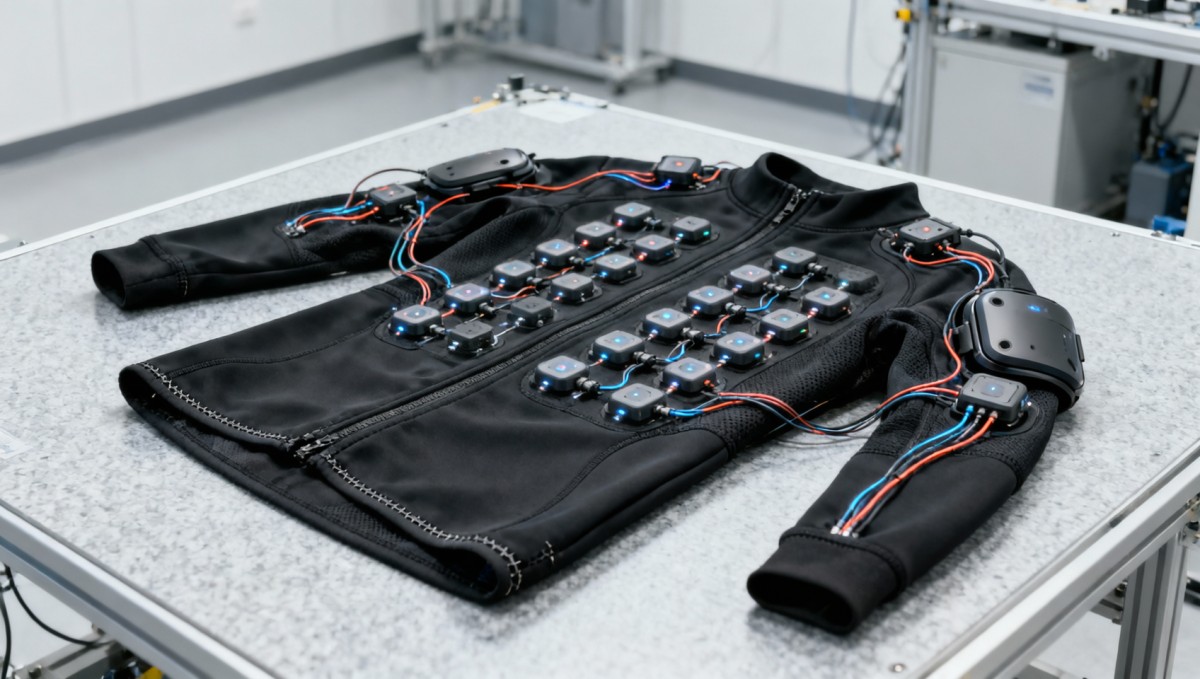
On May 8, 2026, the European Chemicals Agency (ECHA) published a draft amendment proposing stricter restrictions on three phthalates—DEHP, BBP, and DBP—in VR haptic feedback suits, lowering the threshold from 0.1% to 0.01% by weight. The regulation is set to take mandatory effect on June 1, 2026. This development directly affects exporters of smart sportswear and wearable tech from China—particularly ODM manufacturers in the Yangtze River Delta—and triggers urgent REACH SVHC notification upgrades and full-device biocompatibility testing.
Event Overview
On May 8, 2026, ECHA released a draft revision to Annex XVII of REACH, targeting VR haptic feedback suits containing pressure-sensing fabrics and flexible actuator modules. The draft proposes reducing the maximum allowable concentration of DEHP, BBP, and DBP from 0.1% to 0.01% by mass. Enforcement is scheduled to begin on June 1, 2026. According to the draft, over 85% of such products are manufactured in ODM facilities across China’s Yangtze River Delta region. The change mandates upgraded SVHC communication obligations under REACH Article 33 and new whole-unit biocompatibility assessments.
Industries Affected
Direct Exporters (EU-bound Smart Wearable Brands & OEM/ODM Firms)
These firms face immediate compliance pressure because VR haptic suits fall under REACH’s scope as ‘articles’ containing SVHCs above threshold levels. The tightened limit means previously compliant batches may now require retesting or reformulation. Impact includes extended lead times (2–3 weeks), increased testing costs (+22%), and potential shipment delays if documentation or test reports are not updated ahead of June 1.
Material Suppliers & Fabric Producers
Suppliers of pressure-sensing textiles, TPU-coated elastomers, and flexible circuit laminates must verify phthalate content at raw material and intermediate stages—not just final assembly. Since DEHP, BBP, and DBP are commonly used as plasticizers in PVC, TPE, and certain polyurethane systems, suppliers risk non-compliance if upstream formulations lack traceability or third-party verification.
Contract Manufacturers & Assembly Facilities
ODM factories—especially those integrating hardware modules into textile substrates—must now ensure all subcomponents (e.g., embedded sensors, power units, wiring harnesses) meet the 0.01% limit individually and cumulatively. This requires granular supplier declarations and revised incoming inspection protocols, as composite testing alone may no longer suffice under the revised interpretation.
Testing & Compliance Service Providers
Laboratories offering REACH testing services will see rising demand for low-level phthalate quantification (down to 100 ppm) in heterogeneous textile-electronic hybrids. Capacity constraints and method validation gaps for flexible, multi-layered wearables may affect turnaround times—especially for biocompatibility assessments, which are newly required for full devices rather than components alone.
What Enterprises and Practitioners Should Monitor and Do Now
Track Official Publication Status of the Draft Amendment
The ECHA draft remains subject to public consultation and formal adoption. Companies should monitor the ECHA website for confirmation of entry into force, any transitional provisions, and whether enforcement applies retroactively to stock already in EU distribution channels.
Identify High-Risk Product Lines and Subcomponents
Firms should audit current VR haptic suit BOMs for materials known to contain DEHP, BBP, or DBP—including plasticized cables, silicone gaskets, TPE strain reliefs, and coated fabric backings. Prioritize testing on items with highest surface-area-to-mass ratios and direct skin contact zones.
Distinguish Between Regulatory Signal and Operational Requirement
While the June 1, 2026 deadline is firm in the draft, actual enforcement posture (e.g., customs checks, market surveillance focus) may evolve post-adoption. Companies should treat this as a binding timeline for internal readiness—not just a signal—but avoid premature inventory write-offs until official adoption is confirmed.
Update Supplier Engagement Protocols Immediately
Require written declarations of phthalate content (≤0.01%) from all Tier-1 and Tier-2 material suppliers, backed by accredited lab reports. Integrate these requirements into procurement contracts and incoming quality checklists—starting with high-volume SKUs destined for EU shipments between June and December 2026.
Editorial Perspective / Industry Observation
Observably, this amendment reflects ECHA’s broader shift toward regulating complex, hybrid articles—especially where electronics and textiles converge—under substance-specific thresholds rather than relying solely on article-level exemptions. Analysis shows it is less a sudden policy rupture and more a logical extension of existing REACH enforcement trends targeting emerging wearable categories. From an industry perspective, it signals that regulatory scrutiny is now moving downstream from standalone electronics or apparel into integrated functional garments. Current monitoring is warranted not only for compliance but also as an indicator of how future updates may address other SVHCs (e.g., flame retardants or PFAS) in similar product classes.
This notice serves as a timely reminder that regulatory alignment for smart textiles is no longer optional—it is a prerequisite for market access. While the rule targets a niche segment today, its methodology may inform broader standards for next-generation human-machine interface wearables.
Source: European Chemicals Agency (ECHA), Draft Annex XVII Amendment published May 8, 2026. Note: Final adoption status and potential transitional arrangements remain pending and require ongoing observation.
Search News
Hot Articles
- Stationery & UniformsHow Schools Can Cut Printing Costs When Buying Ink Cartridges in BulkSep 21, 2026
- Jewelry Packaging & DisplayHow to Evaluate a Luxury Retail Packaging Supplier for Premium Brand ConsistencySep 20, 2026
- Commercial KitchenHow to Select a Spiral Dough Mixer for Bakery Batch Size and Dough HydrationSep 19, 2026
Popular Tags
Need ExpertConsultation?
Connect with our specialized leisureengineering team for procurementstrategies.
Recommended News
 Sep 15, 2026How to Choose Coin-Operated Pool Tables for Bars, Hotels, and Arcade VenuesCoin operated pool tables for bars, hotels, and arcades: compare sizes, payment systems, durability, service access, and revenue potential.● Theme Park Strategist
 Sep 08, 2026What to Look for in a Flight Simulator Chair Manufacturer for Commercial VR CentersChoose a flight simulator chair manufacturer that delivers durable, safe, customizable seating for commercial VR centers. Explore key sourcing criteria now.● Theme Park Strategist
 Aug 25, 2026What to Evaluate Before Buying Commercial Self Service Photo Booths for VenuesCommercial self service photo booths for venues: learn how to evaluate durability, software stability, branding flexibility, support, and total ROI before you buy.● Theme Park Strategist
 Aug 23, 2026How to Evaluate Wholesale Vending Machines for Multi-Location Business DeploymentWholesale vending machines for multi-location deployment require more than low unit cost. Learn how to compare reliability, payments, telemetry, and supplier support to scale smarter.● Theme Park Strategist
 Aug 17, 2026U.S. CPSC Urges Bilingual Warnings for Arcade and VR MachinesU.S. CPSC urges bilingual safety warnings for Arcade & VR Machines—learn what exporters, importers, and distributors must do now to avoid delays and returns.● Theme Park Strategist
 Aug 16, 2026EU Enforces EN IEC 62368-1:2026 Certification for Arcade and VR MachinesEU Enforces EN IEC 62368-1:2026 certification for arcade and VR machines, reshaping EU market access, customs clearance, and compliance planning for exporters and distributors.● Theme Park Strategist
 Aug 13, 2026UFLPA’s new guidelines take effect: Exports of Arcade and VR equipment face full-link labor compliance requirementsUFLPA’s new guide takes effect: Arcade and VR machine exports to the U.S. now face full-chain labor compliance checks. Discover key risks and action steps.● Theme Park Strategist
 Aug 12, 2026EU PPWR takes effect, Arcade and VR packaging incorporate heavy metal and PFAS restrictionsEU PPWR now applies to Arcade and VR packaging, tightening heavy metal and PFAS compliance. Learn how exporters can avoid delays, fines, and customs risks.● Theme Park Strategist
 Aug 11, 2026CPSC Sets Bilingual Labels for Arcade and VR ImportsCPSC bilingual labels for arcade and VR imports become mandatory on October 1, 2026. Learn the new English-Spanish warning rules, customs risks, and key compliance steps now.● Theme Park Strategist
 Aug 10, 2026EU Rule Takes Effect for Arcade & VR Machine ClearanceArcade & VR Machine clearance in the EU now depends on EN IEC 62368-1:2026+A11:2026 compliance. Learn what changed, who is affected, and how to avoid customs delays.● Theme Park Strategist
 Aug 09, 2026CPSC Requires New Labels for Arcade and VR ImportsCPSC requires new labels for Arcade and VR imports starting Oct 1, 2026. Learn the multilingual warning rules, compliance risks, and key steps exporters and buyers must take now.● Theme Park Strategist
 Aug 08, 2026EU Entry Rule Tightens for Arcade & VR MachinesArcade & VR Machines entering the EU now face stricter CE compliance under EN IEC 62368-1:2026+A11:2026. Learn the new rule, risks, and what exporters must do now.● Theme Park Strategist
 Aug 07, 2026CPSC Notice Tightens U.S. Entry Rules for Arcade and VR MachinesCPSC Notice Tightens U.S. Entry Rules for Arcade and VR Machines: learn the new labeling, FCC, UN38.3, and compliance document requirements before October 1, 2026.● Theme Park Strategist
 Aug 06, 2026EU Rule Takes Effect for CE-UKCA Labels on Arcade & VR MachinesArcade & VR Machines face new CE-UKCA label and ECPD filing rules in the EU and UK. Learn what manufacturers, importers, and distributors must do now to avoid delays.● Theme Park Strategist
 Aug 05, 2026CPSC Recalls Arcade and VR Machines Over UL 62368-1CPSC recalls arcade and VR machines over UL 62368-1 non-compliance. Learn how this 2026 safety action may affect imports, distribution, customs clearance, and market access.● Theme Park Strategist
 Aug 02, 2026EU Sets New Certification Rule for Arcade and VR MachinesArcade and VR Machines face a new EU certification rule from Oct 1, 2026. Learn how EN IEC 62368-1:2026+A11:2026 affects CE marking, customs clearance, and market access.● Theme Park Strategist
 Aug 01, 2026CPSC Moves to Require Bilingual Warnings on Arcade and VR MachinesCPSC bilingual warnings for Arcade and VR Machines may reshape U.S. import compliance. Learn how English-Spanish labels affect packaging, customs risk, and shipment readiness.● Theme Park Strategist
 Jul 31, 2026EU Sets EN IEC 62368-1:2025 Rule for Arcade and VR MachinesEU Sets EN IEC 62368-1:2025 Rule for Arcade and VR Machines. Learn the new EU compliance deadlines, safety updates, and key actions for manufacturers, OEMs, and distributors.● Theme Park Strategist
 Jul 30, 2026CPSC Sets New Warning Label Rule for Arcade & VR MachinesCPSC sets a new warning label rule for Arcade & VR Machines effective August 15, 2026. Learn key compliance risks, multilingual label requirements, and shipment actions now.● Theme Park Strategist
 Jul 29, 2026EU Enforces New Safety Standard for Arcade and VR MachinesEU Enforces New Safety Standard for Arcade and VR Machines: learn how EN IEC 62368-1 affects CE compliance, customs clearance, and EU market access for exporters and buyers.● Theme Park Strategist
 Jul 28, 2026CPSC Sets ASTM F3472-26 Rule for Arcade & VR ImportsCPSC ASTM F3472-26 rule reshapes Arcade & VR imports to the U.S. Learn key compliance deadlines, certification risks, and what exporters, OEM/ODM suppliers, and buyers should do now.● Theme Park Strategist
 Jul 27, 2026EU Rule Takes Effect for Arcade & VR Machine CybersecurityEU Rule Takes Effect for Arcade & VR Machine Cybersecurity: learn how EN IEC 62443-3-3:2025 affects compliance, customs clearance, sales continuity, and supplier planning in the EU market.● Theme Park Strategist
 Jul 25, 2026CPSC Sets Bilingual Warning Rule for Arcade and VR ImportsCPSC bilingual warning rule for arcade and VR imports takes effect August 1, 2026. Learn how OEM/ODM exporters can avoid CBP delays, relabel shipments, and protect U.S. delivery timelines.● Theme Park Strategist
 Jul 24, 2026EU Enforces New Safety Standard for Arcade and VR MachinesEU Enforces New Safety Standard for Arcade and VR Machines: learn how EN IEC 62368-1:2026+A11:2026 reshapes EU compliance, CE documentation, testing timelines, and export readiness.● Theme Park Strategist