US CPSC Recalls 3 Chinese-Made Kids' Outdoor Climbing Frames
On May 8, 2026, the U.S. Consumer Product Safety Commission (CPSC) issued an urgent recall (Recall ID: 26-217) for 124,000 units of outdoor children’s climbing frames manufactured in China — affecting three producers. The recall centers on structural integrity and pinch-hazard deficiencies, triggering immediate supply chain adjustments across North American retail and prompting parallel review by Health Canada. Exporters, importers, and compliance-focused supply chain stakeholders should treat this as a timely signal on ASTM F1487-23 enforcement rigor.
Event Overview
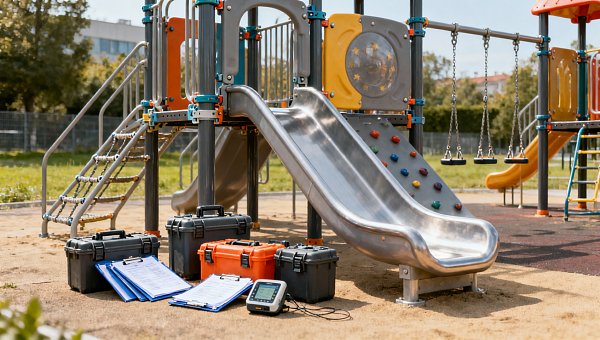
The U.S. Consumer Product Safety Commission (CPSC) announced a formal recall on May 8, 2026, under Recall ID 26-217. It covers 124,000 outdoor children’s climbing frames produced by three Chinese manufacturers. The stated reasons are failure to meet the ‘static load test’ requirement in ASTM F1487-23 and non-compliant finger-trap gaps (>5 mm) at movable joints. The recall is active and publicly listed on CPSC.gov. Canadian authorities (Health Canada) have initiated a concurrent safety review. Affected exporters are required to submit remediation verification reports within 72 hours.
Impact on Specific Industry Segments
Direct Exporters & Trading Companies
These entities face direct regulatory exposure and contractual liability with U.S. retailers. The 72-hour reporting deadline imposes immediate pressure on documentation, testing validation, and traceability systems. Non-compliance may affect future CPSC pre-market consultations or eligibility for Fast Track review pathways.
Manufacturers & OEM/ODM Producers
Factories supplying climbing frames — especially those without in-house ASTM F1487-23 testing capacity — must reassess design controls for static load performance and joint geometry. The recall highlights that gap measurement (
Distribution & Retail Channel Operators
North American mass-market retailers named in the recall notice face inventory holds and replenishment delays. Their procurement teams are likely reviewing open POs for similar products (e.g., multi-station outdoor play sets), particularly those certified only to older ASTM versions (e.g., F1487-17) or lacking third-party test reports covering both static load and pinch-point verification.
Compliance & Testing Service Providers
Laboratories accredited for ASTM F1487-23 testing — especially those offering joint-gap measurement protocols and full static load simulation — may see near-term demand spikes. However, service providers must ensure their test reports explicitly reference gap measurements per Section 8.9.2 and static load pass/fail thresholds per Section 7.2 — not just overall ‘compliance’ statements.
What Relevant Enterprises or Practitioners Should Focus On Now
Monitor Official Updates from CPSC and Health Canada
Track whether CPSC publishes supplemental guidance on acceptable gap measurement methodology or expands testing expectations to other product categories (e.g., swing sets, spring riders). Health Canada’s parallel review outcome — expected within 10–14 days — may indicate regional alignment on enforcement thresholds.
Prioritize Verification for High-Risk Product Categories and Markets
Focus internal audits on outdoor children’s equipment exported to the U.S. and Canada, especially items with hinged, pivoting, or sliding components. Confirm whether existing test reports cover both static load (Section 7.2) and finger-trap gaps (Section 8.9.2) under ASTM F1487-23 — not earlier editions.
Distinguish Between Regulatory Signal and Operational Requirement
This recall reflects enforcement of an existing standard — not introduction of new regulation. Companies should avoid interpreting it as a broad policy shift, but rather as evidence that CPSC is applying granular, clause-level scrutiny during post-market surveillance. Operational readiness (e.g., gap measurement SOPs, load-test calibration logs) matters more than general compliance posture.
Prepare Documentation and Supplier Coordination Protocols
Exporters should verify that upstream manufacturers retain raw test data (not just summary certificates), including digital load-cell readouts and calibrated gap gauge images. Internal checklists should include 72-hour response readiness — e.g., pre-drafted root-cause narratives, lab contact escalation paths, and version-controlled ASTM F1487-23 implementation records.
Editorial Perspective / Industry Observation
Observably, this recall functions less as an isolated incident and more as a calibration point for how ASTM F1487-23 is being operationally enforced in real time. Analysis shows that CPSC is no longer treating static load and pinch-point criteria as holistic design considerations — they are now discrete, measurable, and enforceable failure modes. From an industry perspective, the 72-hour reporting window signals growing expectation for rapid traceability and technical accountability — not just reactive recalls. Current practice suggests companies with documented, version-specific ASTM implementation workflows (e.g., gap tolerance mapping per joint type, load-test fixture calibration logs) are better positioned to respond without operational disruption.
This is not yet a systemic regulatory escalation — but it is a clear indicator that clause-level conformity is becoming non-negotiable for outdoor children’s equipment entering regulated markets. Sustained attention is warranted because follow-up actions by Health Canada or potential expansion to EU EN 1176 interpretations could amplify cross-border ripple effects.
Conclusion
This recall underscores a maturing phase in international playground equipment regulation: enforcement is shifting from outcome-based assessments to verifiable, component-level conformance. For affected enterprises, the priority is not broad strategic overhaul — but precise, evidence-backed alignment with ASTM F1487-23’s technical clauses. It is best understood not as a crisis, but as a procedural benchmark — one that rewards preparation, documentation discipline, and technical specificity over generalized compliance claims.
Information Sources
- U.S. Consumer Product Safety Commission (CPSC) official recall notice, Recall ID 26-217, published May 8, 2026
- Health Canada public safety review notification (pending final determination; status as of May 8, 2026)
- ASTM International Standard F1487-23, Standard Consumer Safety Performance Specification for Playground Equipment for Public Use
Note: Health Canada’s final determination and any CPSC follow-up guidance remain under observation.
Search News
Hot Articles
- Stationery & UniformsHow Schools Can Cut Printing Costs When Buying Ink Cartridges in BulkSep 21, 2026
- Jewelry Packaging & DisplayHow to Evaluate a Luxury Retail Packaging Supplier for Premium Brand ConsistencySep 20, 2026
- Commercial KitchenHow to Select a Spiral Dough Mixer for Bakery Batch Size and Dough HydrationSep 19, 2026
Popular Tags
Need ExpertConsultation?
Connect with our specialized leisureengineering team for procurementstrategies.
Recommended News
 Sep 18, 2026What Drives Animatronic Dinosaur Manufacturer Prices for Theme Park Projects?Animatronic dinosaurs manufacturer price guide: compare motion, materials, controls, installation, and lifecycle costs to plan a durable theme park attraction.● Theme Park Strategist
 Sep 06, 2026Do Amusement Ride Safety Compliance Requirements Change Every Year?Do amusement safety compliance requirements change annually? Learn what really changes, from standards and inspections to permits, upgrades, and local approvals.● Theme Park Strategist
 Sep 02, 2026How Long Does It Take to Receive Full Safety Documents From an OEM?How long does it take to get full safety documentation from OEM partners? Discover realistic timelines, common delays, and practical steps to secure compliant files faster.● Theme Park Strategist
 Sep 03, 2026Designing Adventure Park Safety Systems for Zip Lines, Ropes Courses, and Daily InspectionsAdventure park safety systems: learn how to design safer zip lines and ropes courses with daily inspections, defect controls, rescue readiness, and staff training.● Theme Park Strategist
 Aug 22, 2026What to Look for When Choosing Three Seat Jet Skis for Rental or Resort UseThree seat jet skis for rental or resort use should balance stability, safety, maintenance, and guest comfort. Learn how to choose models that boost uptime and guest satisfaction.● Theme Park Strategist
 Aug 17, 2026What Parts Matter Most in a Roller Coaster and How Do They Affect Ride Safety?Roller coaster parts determine ride safety more than most riders realize. Explore how tracks, restraints, brakes, wheels, and control systems work together to protect every ride.● Theme Park Strategist
 Aug 15, 20262026 China Sports Expo Sees 45.74% More Overseas Pre-registered Buyers as POB Expands Procurement Matching2026 China Sports Expo boosts overseas pre-registered buyers by 45.74% as POB expands procurement matching for fitness, outdoor, and venue suppliers.● Theme Park Strategist
 Aug 14, 2026What Should Buyers Check Before Choosing a Flying Chair Ride Exporter?Flying chair ride exporter buyers should check safety, structure, export support, and spare parts before purchase to reduce risk and choose a reliable supplier.● Theme Park Strategist
 Aug 04, 2026EU Issues EN 1176-1:2026 for Playground SafetyEU Issues EN 1176-1:2026 for Playground Safety: learn how the new standard impacts Outdoor Rides, CE certification, inventory checks, and EU compliance before March 2027.● Theme Park Strategist
 Aug 03, 2026CPSC Adopts ASTM F1487-26 for Imported Outdoor RidesOutdoor Rides face a major U.S. compliance shift as CPSC adopts ASTM F1487-26. Learn the new certification, testing, and customs risks before November 1, 2026.● Theme Park Strategist
 Jul 26, 2026Revised EN 1176:2026 Triggers Re-Certification for Outdoor RidesOutdoor Rides face immediate EN 1176:2026 re-certification for new CE applications. Learn how testing, documentation, and EU market access rules now affect exports and delivery plans.● Theme Park Strategist
 Jul 21, 2026CPSC Recall Flags Structural Risk in Outdoor RidesCPSC recall flags structural risk in outdoor rides: learn how ASTM F1487-23 failures affect importers, distributors, and compliance teams across the U.S., Canada, and Australia.● Theme Park Strategist
 Jul 19, 2026How to Choose Outdoor Fitness Equipment for Parks Based on Users, Space, and BudgetOutdoor fitness equipment for parks: learn how to choose the right mix based on users, space, and budget to improve safety, usage, and long-term value.● Theme Park Strategist
 Jul 15, 2026Ocean Freight Spike Pressures Outdoor Rides ExportsOcean Freight Spike Pressures Outdoor Rides Exports as Shanghai-Rotterdam rates surge 42%. See how rising freight costs, delays, and rerouting risks could reshape Europe-bound delivery plans.● Theme Park Strategist
 Jul 14, 2026EN 1176 Revision Takes Effect for Outdoor Ride Weld TestingEN 1176 revision takes effect for outdoor ride weld testing from Sept 1, 2026. Learn ISO 5817 level B, third-party NDT report rules, and key EU compliance steps.● Theme Park Strategist
 Jul 12, 2026Vietnam Requires AI Anti-Collision Systems for Imported Outdoor RidesVietnam Requires AI Anti-Collision Systems for Imported Outdoor Rides from Sept. 15, 2026. Learn compliance rules, VAST certification needs, and how importers can avoid delays.● Theme Park Strategist
 Jul 11, 2026Vietnam Tightens Rules for Imported Outdoor RidesVietnam Tightens Rules for Imported Outdoor Rides: learn how Vietnam’s 2026 compliance update adds AI anti-collision, Vietnamese logs, and local maintenance duties for importers and manufacturers.● Theme Park Strategist
 Jul 09, 2026How to Evaluate a Lazy River Equipment Supplier for Safety, Flow Design, and MaintenanceLazy river equipment supplier selection affects safety, flow design, and maintenance costs. Learn what to compare, what to ask, and how to choose a reliable partner.● Theme Park Strategist
 Jul 08, 2026RCEP Update Cuts ASEAN Tariffs to Zero for Outdoor RidesRCEP update cuts ASEAN tariffs to zero for outdoor rides from China. Learn how FSC-CoC, PEFC traceability, and e-CO compliance affect exports, sourcing, and buyer decisions.● Theme Park Strategist
 Jul 07, 2026RCEP Guide Adds Dual Wood Traceability for Outdoor RidesOutdoor Rides exporters face a new RCEP traceability rule: dual FSC-CoC and PEFC-STS 2023 codes for wood components. See what changes before Oct. 1, 2026.● Theme Park Strategist
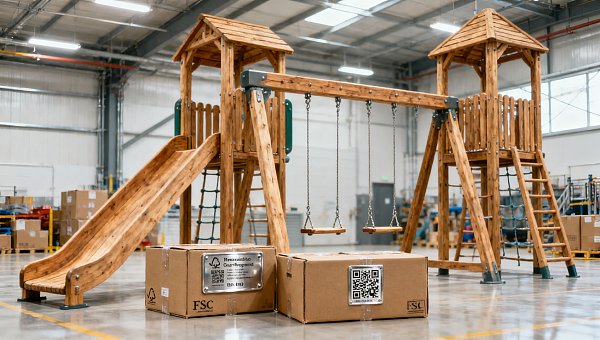
 Jul 06, 2026Vietnam Tightens RCEP Rules for Wooden Ride PartsVietnam Tightens RCEP Rules for Wooden Ride Parts: learn how FSC Chain-of-Custody and QR code requirements now affect outdoor rides, RCEP imports, and shipment compliance.● Theme Park Strategist
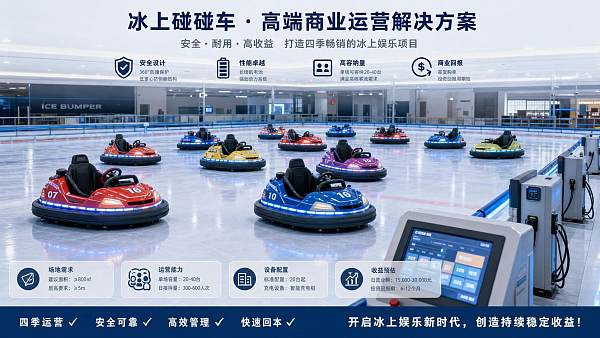
 Jul 06, 2026How to Evaluate a Bumper Cars on Ice Manufacturer for Safety, Capacity, and ROIBumper cars on ice manufacturer selection starts with safety, capacity, and ROI. Learn how to compare suppliers, reduce risk, and choose a partner built for long-term commercial success.● Theme Park Strategist
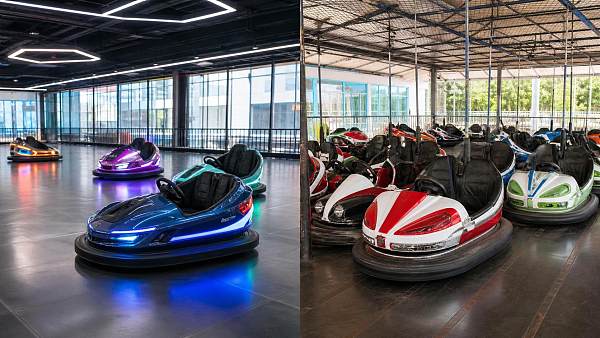
 Jul 04, 2026Electric Drift Bumper Cars vs Traditional Bumper Cars: Which Fits Your Venue Better?Electric drift bumper cars or traditional bumper cars? Compare installation, safety, maintenance, guest appeal, and ROI to choose the best fit for your venue.● Theme Park Strategist
 Jul 03, 2026EN 15330-2:2026 Takes Effect for Outdoor RidesEN 15330-2:2026 takes effect for Outdoor Rides in the EU on July 1, 2026. Learn how CE certification and ISO 13849-1 PLd impact market access, customs clearance, and export compliance.● Theme Park Strategist